
Deleting a Facebook comment might seem like a simple task, but doing it correctly—especially when you want it gone for good—requires more than just a few taps. Whether you’ve posted something regrettable, noticed an outdated opinion, or simply want to clean up your digital presence, knowing the exact steps ensures your content disappears without a trace. Unlike temporary edits, permanent deletion removes the comment from public view and Facebook’s servers entirely. This guide walks you through every method available across devices, highlights common pitfalls, and offers expert-backed strategies to maintain control over your online identity.
Why Deleting Comments Matters for Digital Privacy
Your social media history shapes how others perceive you—employers, friends, and even algorithms use past activity to form judgments. A single poorly timed comment can resurface years later with unintended consequences. According to a 2023 Pew Research study, over 54% of adults have deleted social media content due to privacy concerns or changing personal views. Facebook retains data longer than most users assume, so understanding how to fully erase comments is essential for managing your digital footprint.
“Once something is posted online, it exists in multiple caches—even after deletion. The key is acting swiftly and using verified removal tools.” — Dr. Lena Torres, Digital Forensics Analyst at CyberSecure Labs
Step-by-Step Guide to Permanently Delete a Facebook Comment
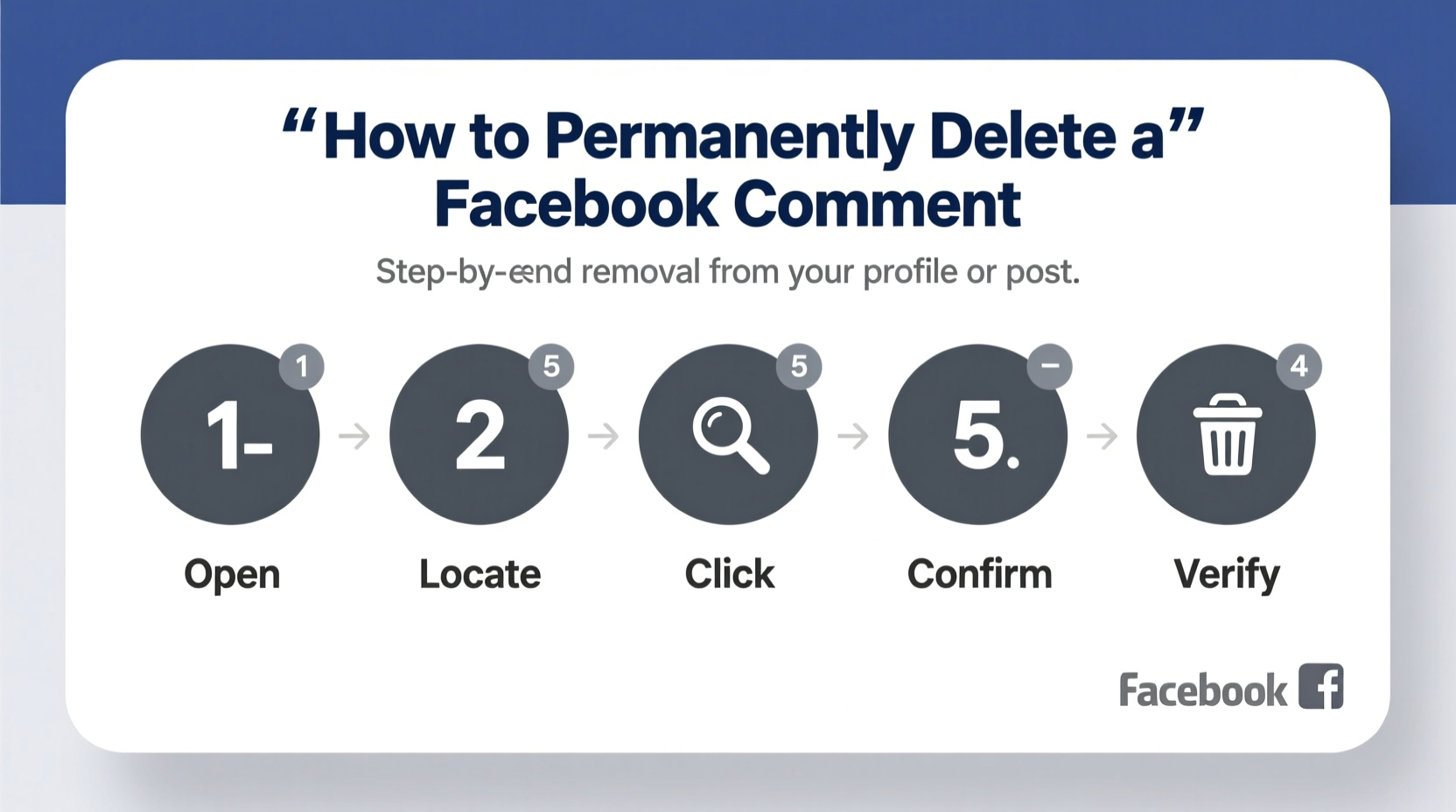
Follow these clear, device-specific instructions to remove any comment you've made on Facebook. These steps apply whether the comment was left on your own post, a friend’s timeline, or a public page.
On Desktop (Windows/Mac)
- Log in to your Facebook account via browser (Chrome, Firefox, Safari).
- Navigate to the post containing your comment. You can find this in your Activity Log or by searching your profile.
- Hover over your comment. A small pencil icon (edit) will appear on the right side.
- Click the pencil icon, then select Delete from the dropdown menu.
- Confirm the deletion when prompted.
On Mobile (iOS/Android App)
- Open the Facebook app and log in.
- Go to the post where your comment appears.
- Tap and hold your comment until a menu pops up.
- Select Delete.
- Tap Remove to confirm.
What Happens After Deletion? Understanding Facebook's Data Retention
When you delete a comment, it vanishes from public view instantly. However, Facebook may retain metadata and server logs for up to 90 days for internal auditing and legal compliance. While the content is no longer accessible to users or visible in feeds, complete data purging from backup systems takes time. For maximum assurance:
- Use Facebook’s “Download Your Information” tool monthly to audit what remains.
- Check the “Comments” section in your archive to verify removal.
- Enable two-factor authentication to prevent unauthorized access that could expose old data.
Common Mistakes That Prevent Permanent Removal
| Mistake | Why It’s Problematic | Solution |
|---|---|---|
| Editing instead of deleting | Edited comments remain in threads and search indexes | Always choose “Delete,” not “Edit” |
| Using third-party apps to mass-delete | These often violate Facebook’s policies and risk account suspension | Stick to native Facebook tools |
| Deleting only on mobile but not checking desktop | Inconsistent sync may leave traces | Cross-verify across all devices |
| Assuming auto-deletion over time | Facebook does not automatically purge old user content | Manually delete unwanted comments proactively |
Real Example: Cleaning Up a Professional Profile
Consider Sarah, a marketing professional updating her LinkedIn and social profiles before a job interview. During a routine review, she discovered a sarcastic comment she’d made on a political post from 2017. Though humorous at the time, it clashed with her current brand of neutrality and professionalism. She accessed her Facebook Activity Log, filtered by “Comments,” located the post, and deleted the comment within 45 seconds. She then used the “View As” feature to confirm it was no longer visible. By acting early and using proper tools, Sarah protected her reputation without drama or exposure.
Advanced Tips for Bulk Management and Prevention
If you're managing a large volume of old comments, manually deleting each one becomes impractical. Here’s how to streamline the process and prevent future issues:
Access Your Full Comment History
- Go to facebook.com and click your profile picture.
- Select “Activity Log” from the dropdown.
- In the left sidebar, click “Comments.”
- Use filters to sort by date, post type, or keyword.
- Delete items in batches by hovering and selecting the trash icon.
Prevent Future Regrets
- Wait 10 minutes before posting: Emotion-driven comments are the most commonly deleted. Pause before hitting send.
- Use private messaging: Sensitive opinions belong in DMs, not public threads.
- Set quarterly audits: Schedule reminders to review your Activity Log every three months.
Frequently Asked Questions
Can someone else delete my Facebook comment?
No. Only the original author or the post owner can delete a comment. Page admins or group moderators can remove comments on content they manage, but personal comments on public posts can only be deleted by you.
Will the person know I deleted my comment?
No. Facebook does not notify users when a comment is deleted. However, if they previously replied to your comment, they may notice a gap in the thread unless they check immediately after deletion.
Is there a way to recover a deleted Facebook comment?
No. Once deleted, comments cannot be restored through Facebook’s interface. If you need a backup, export your data regularly using the “Download Your Information” tool before making deletions.
Final Checklist: Ensure Complete Comment Removal
- ✅ Locate the comment via post or Activity Log
- ✅ Use the official delete function (not edit)
- ✅ Confirm deletion on both mobile and desktop
- ✅ Verify removal using “View As” or incognito mode
- ✅ Audit your comment history monthly
- ✅ Adjust privacy settings to limit future exposure
Take Control of Your Online Identity Today
Your digital legacy is built one post, like, and comment at a time. With the rise of AI-powered background checks and automated sentiment analysis, even minor social media entries can influence opportunities. Deleting a Facebook comment isn’t just about fixing a mistake—it’s about exercising ownership over your narrative. By following this guide, you’re not only removing isolated content but also building habits that support long-term digital hygiene. Don’t wait for a crisis to act. Start reviewing your Activity Log now, delete what no longer serves you, and reclaim control of your online presence.




 浙公网安备
33010002000092号
浙公网安备
33010002000092号 浙B2-20120091-4
Comments
No comments yet. Why don't you start the discussion?