
In today’s fast-paced world, direct and efficient communication matters. There are times when leaving a message is more appropriate than interrupting someone with a call—whether it’s avoiding disturbing them during work hours, reaching out after hours, or ensuring your message is heard without the pressure of an immediate response. One way to achieve this is by accessing a mobile phone’s voicemail directly, bypassing the ring. While this may sound like a feature reserved for spy movies, it’s actually possible under certain conditions—and entirely legal when used responsibly.
Understanding how to reach a mobile phone’s voicemail without ringing requires knowledge of carrier-specific features, account settings, and sometimes cooperation from the recipient. This guide explores proven methods, ethical considerations, and practical applications for direct voicemail access.
Understanding Voicemail Bypass: How It Works
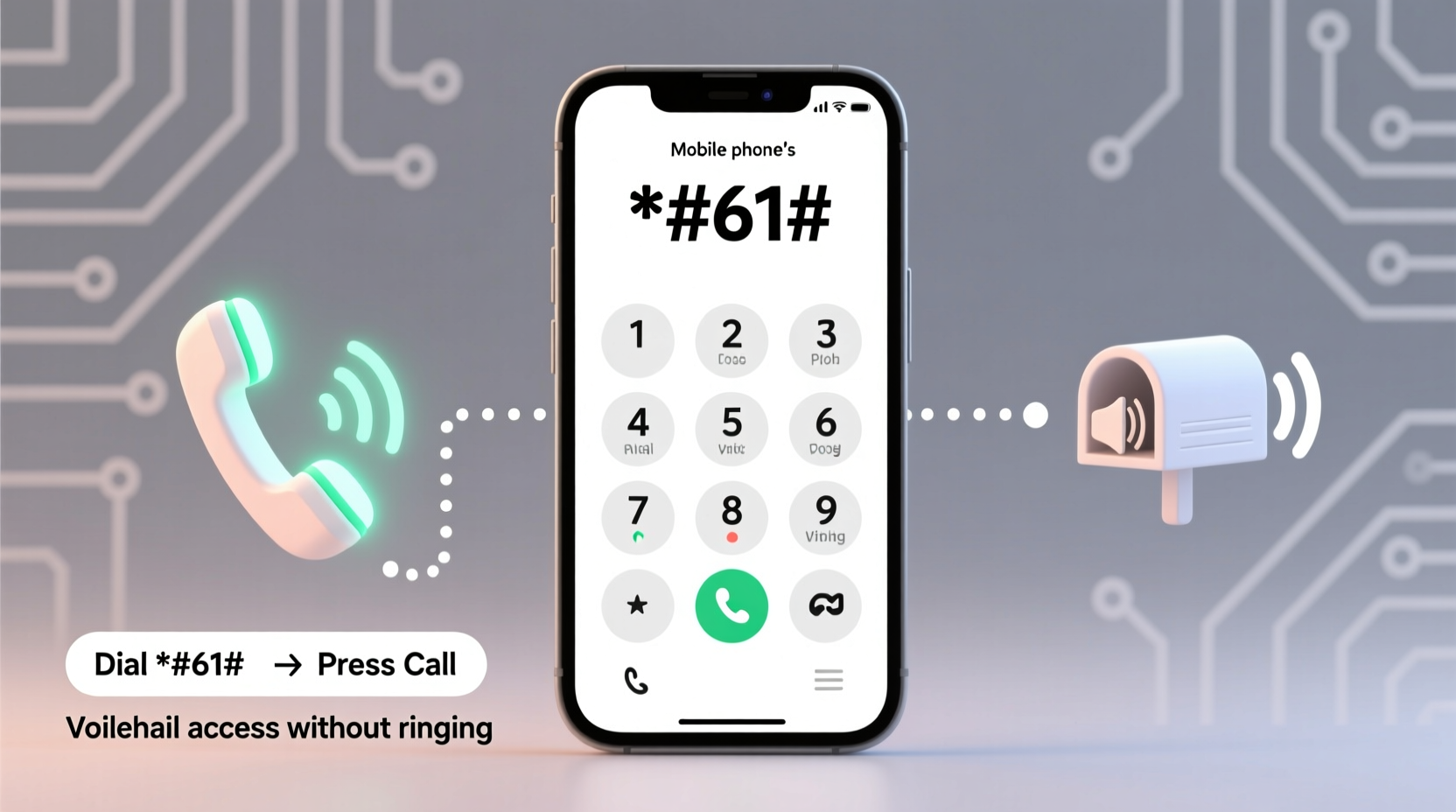
Direct voicemail access—also known as \"straight-to-voicemail\" or \"ringless voicemail\"—refers to the ability to leave a voice message on a mobile device without the phone ringing. This functionality isn’t universally available and depends on several factors: the mobile carrier, the recipient’s voicemail setup, and whether specific services or permissions are in place.
Unlike traditional calls that trigger a ring signal on the recipient’s device, direct voicemail uses backend routing to deposit messages directly into the voicemail system. This can be useful for professionals who want to deliver time-sensitive updates without disruption, or individuals trying to communicate discreetly.
It’s important to emphasize that bypassing rings should never be used to circumvent privacy or harass others. Legitimate use cases include:
- Business follow-ups where timing is critical
- Family members checking in during emergencies
- Scheduling confirmations or reminders
- Medical offices delivering non-urgent patient messages
Carrier-Specific Methods for Direct Voicemail Access
Most major carriers offer some form of direct voicemail access, but availability varies. The following table outlines common methods across top U.S. carriers:
| Carrier | Method | Requirements |
|---|---|---|
| Verizon | Dial *79 + number from landline or another Verizon line | Recipient must have Visual Voicemail; caller must be on same network |
| AT&T | Use AT&T Voicemail Access (*86) with linked accounts | Caller and recipient must share a family plan or linked voicemail access |
| T-Mobile | No universal code; limited to shared line features (e.g., DIGITS) | Requires app-based access or multi-device setup |
| Google Voice | Send voicemail directly via web interface | Recipient must use Google Voice; no ringing occurs |
| iMessage (Apple) | Voice messages sent through iMessage don’t ring if silenced | Both users on iOS; Wi-Fi or data connection required |
These methods rely heavily on pre-established relationships between devices or accounts. For example, parents monitoring a teen’s phone on a family plan may be able to access voicemail directly, provided the feature is enabled in carrier settings.
Step-by-Step Guide to Leave Ringless Voicemails
If you're authorized to access someone’s voicemail directly, follow these steps to do so correctly and respectfully:
- Verify Carrier Compatibility: Confirm both your number and the recipient’s are on the same network or support cross-access features.
- Enable Shared Voicemail (if applicable): Log into your carrier account online and look for “Voicemail Access” or “Family Features.” Activate shared access if available.
- Use the Correct Dialing Code: For example, on Verizon, dial *79 followed by the 10-digit number from another Verizon line.
- Authenticate if Prompted: Some systems require a PIN or password. Ensure you have permission before proceeding.
- Record Your Message Clearly: Speak slowly, state your name and purpose, and keep the message under two minutes.
- Hang Up and Confirm: Wait for a confirmation tone or check later to ensure the message was delivered.
This process only works when the recipient has not disabled shared voicemail access. If the call rings, the feature is either unavailable or inactive.
Real Example: A Medical Office Communication Workflow
Dr. Elena Martinez runs a small internal medicine clinic. Her office frequently needs to send test result updates to patients, many of whom are at work during business hours. To avoid disrupting their day, her staff uses a combination of Google Voice and patient-consented direct messaging.
Patients sign a consent form allowing the clinic to send non-urgent health updates via voicemail. Staff then log into Google Voice from a secure workstation and record messages directly to the patient’s voicemail inbox—no phone call is placed, so there’s no ringing.
“We’ve reduced callback volume by 40% since implementing this,” Dr. Martinez said. “Patients appreciate getting information without the stress of missing a call.”
“We balance efficiency with privacy. Direct voicemail only happens with explicit consent and for appropriate medical updates.” — Dr. Elena Martinez, Internal Medicine Physician
Third-Party Services and Ethical Considerations
A growing number of third-party platforms advertise \"ringless voicemail\" services for businesses. These allow companies to broadcast voice messages to multiple recipients without triggering a ring. Examples include Slydial (now defunct), NeoReach, and Juvvo.
While legal under the FCC’s TCPA (Telephone Consumer Protection Act) when recipients have opted in, misuse can lead to penalties. These services are designed for marketing, appointment reminders, or emergency alerts—not personal surveillance or harassment.
Key ethical guidelines:
- Obtain prior consent before sending ringless voicemails
- Provide an opt-out option in every message
- Never spoof numbers or impersonate others
- Respect time-of-day restrictions (e.g., no messages before 8 AM or after 9 PM)
Frequently Asked Questions
Can I send a voicemail without the phone ringing on any carrier?
No. Direct voicemail access is not universally supported. It depends on the carrier, account configuration, and whether shared access is enabled. Most consumer plans default to ringing on all incoming calls unless special features are activated.
Is it legal to access someone’s voicemail without ringing?
Yes, but only with proper authorization. Accessing another person’s voicemail without permission—even if technically possible—is illegal under the Electronic Communications Privacy Act (ECPA). Always ensure you have consent, especially in professional or familial contexts.
Are ringless voicemail services safe for small businesses?
Yes, when used responsibly. Platforms like NeoReach and Juvvo comply with TCPA regulations as long as businesses obtain written or recorded consent from recipients. They are ideal for appointment reminders, delivery updates, or event notifications.
Checklist: Setting Up Direct Voicemail Access
- ☐ Confirm both parties are on the same carrier or service (e.g., Verizon, Google Voice)
- ☐ Log into your account portal and enable shared voicemail or family access
- ☐ Set up a secure PIN for voicemail authentication
- ☐ Test the feature with a trusted contact to verify it works
- ☐ Document consent if used in a professional setting
- ☐ Respect privacy boundaries and avoid overuse
Conclusion
Reaching a mobile phone’s voicemail directly without ringing is not a myth—it’s a functional communication tool when used correctly. Whether you're a healthcare provider streamlining patient updates, a busy executive coordinating with team members, or a parent checking in on a child’s phone, understanding the technical and ethical framework is essential.
The key lies in permission, carrier support, and responsible usage. With the right setup, you can deliver timely messages efficiently while respecting the recipient’s peace and privacy.




 浙公网安备
33010002000092号
浙公网安备
33010002000092号 浙B2-20120091-4
Comments
No comments yet. Why don't you start the discussion?