
Emotional manipulation often creeps into relationships so subtly that many people don’t realize they’re being controlled until the damage is deep. Unlike physical abuse, which leaves visible marks, manipulation operates in silence—through guilt, gaslighting, isolation, and subtle coercion. The earlier you spot these patterns, the sooner you can reclaim your autonomy and set healthy boundaries. Recognizing manipulation isn’t about suspicion; it’s about awareness. This guide outlines key red flags, real-life examples, and practical steps to identify manipulative behavior before it takes root.
Understanding Emotional Manipulation
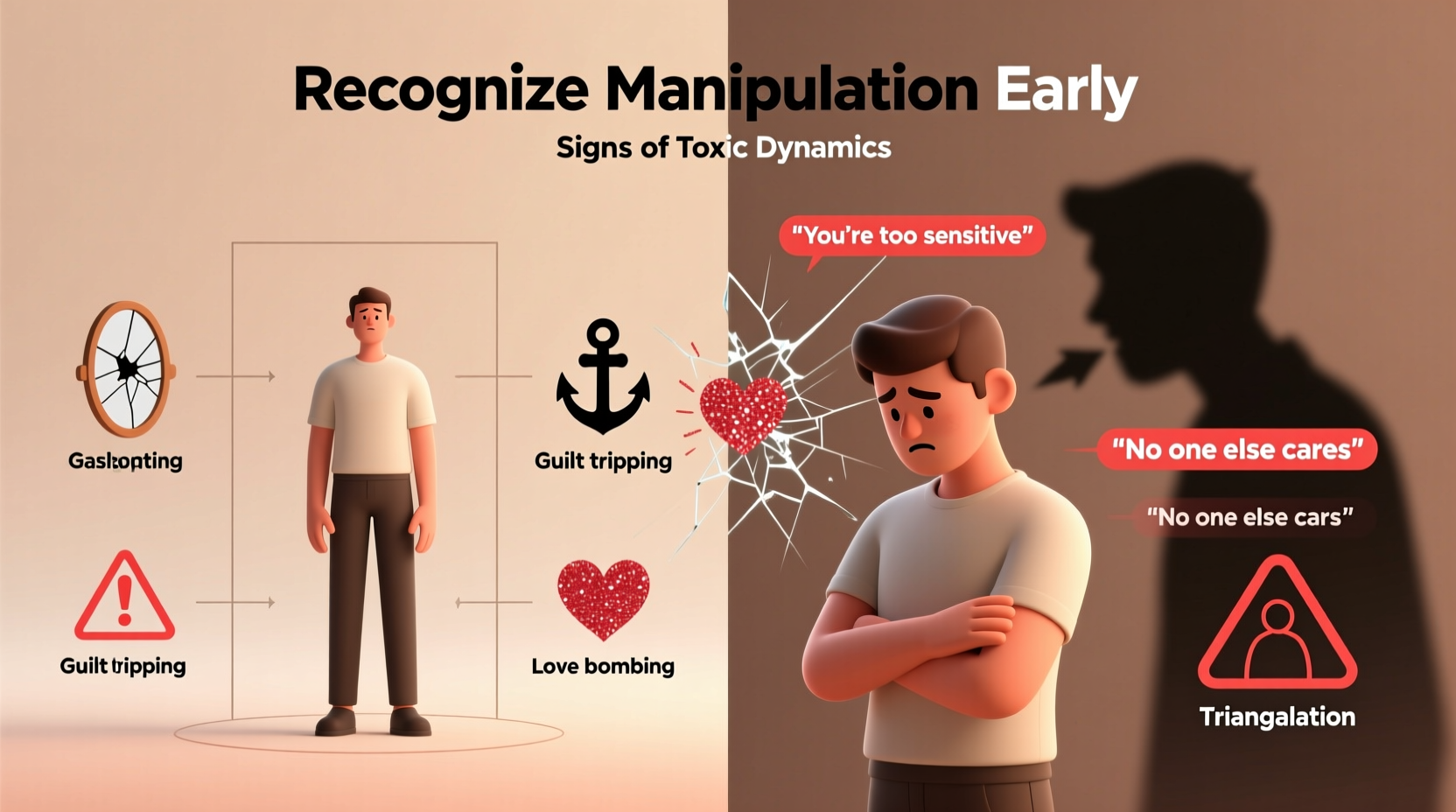
Emotional manipulation occurs when one person uses indirect, deceptive, or exploitative tactics to influence another’s thoughts, emotions, or behaviors for personal gain. It’s not always intentional—some manipulators were raised in environments where control was normalized—but the impact on the victim is consistently damaging. Over time, manipulation erodes self-trust, confidence, and independence.
Common goals of a manipulator include maintaining power, avoiding accountability, gaining sympathy, or securing compliance without open negotiation. These behaviors thrive in imbalanced relationships where one partner dominates decision-making, communication, or emotional regulation.
“Manipulation thrives in ambiguity. When someone consistently makes you question your memory, judgment, or worth, it’s rarely an accident—it’s a tactic.” — Dr. Lena Peterson, Clinical Psychologist and Author of *Boundaries That Heal*
7 Key Signs of Manipulation in Relationships
Early detection is critical. Below are seven common manipulation tactics to watch for, especially during the formative stages of a relationship.
1. Gaslighting: Making You Doubt Your Reality
Gaslighting involves distorting facts, denying previous conversations, or insisting you’re “too sensitive” or “imagining things.” A manipulator might say, “You’re remembering that wrong,” or “That never happened,” even when evidence exists. Over time, victims begin doubting their perception, memory, and sanity.
2. Love Bombing Followed by Withholding Affection
In the beginning, manipulators may overwhelm you with attention, gifts, and declarations of love—a tactic known as love bombing. Once attachment forms, they suddenly withdraw affection, creating emotional dependency. This push-pull dynamic keeps the victim striving for approval and confused about the relationship’s stability.
3. Guilt-Tripping to Control Behavior
Manipulators often use guilt to get what they want. Statements like “If you really loved me, you’d do this,” or “After everything I’ve done for you, this is how you treat me?” weaponize empathy. Healthy relationships involve mutual respect, not emotional blackmail.
4. Isolation from Friends and Family
A gradual effort to cut you off from support systems is a major red flag. The manipulator may criticize your loved ones, create conflict with them, or insist that “no one understands us like we do.” Isolation increases dependence and reduces opportunities for outside perspective.
5. Playing the Victim
Even when confronted, manipulators rarely take responsibility. Instead, they reframe themselves as the injured party: “You’re making me act this way,” or “I only did it because you pushed me.” This deflects accountability and reverses roles, leaving you feeling guilty for addressing the issue.
6. Triangulation: Using Third Parties to Create Insecurity
This involves bringing in other people—real or imagined—to provoke jealousy or competition. Examples include frequent comparisons (“My ex would never have treated me like this”), vague references to admirers, or sharing private details about you with others to undermine your confidence.
7. Moving Too Fast or Pressuring Decisions
Rushing intimacy, cohabitation, or major life decisions prevents critical evaluation. Manipulators may say, “We’re meant to be,” or “If you hesitate, you don’t truly care,” pressuring you into choices before you’re ready. Healthy relationships allow space for reflection and consent.
Do’s and Don’ts: How to Respond to Manipulative Behavior
| Do’s | Don’ts |
|---|---|
| Set clear boundaries and communicate them calmly but firmly. | Engage in circular arguments that go nowhere and drain your energy. |
| Document incidents to track patterns over time. | Justify or explain yourself excessively—manipulators exploit over-explanation. |
| Seek external feedback from trusted friends or a therapist. | Isolate yourself thinking no one will understand. |
| Practice saying no without apology when pressured. | Stay for fear of being alone or hurting the other person. |
| Trust your gut if something feels emotionally unsafe. | Minimize concerns with “It’s not that bad” or “They didn’t mean it.” |
Real-Life Example: A Subtle Pattern Unfolds
Sophie met Mark through a mutual friend. Within weeks, he declared her “the one,” sent daily love poems, and insisted she was unlike anyone he’d ever met. She felt flattered and secure. But after three months, Mark began criticizing her job, suggesting she was “too stressed” to spend time with friends. He’d cancel plans last minute, then accuse her of “not caring” when she expressed disappointment.
When Sophie mentioned seeing a therapist, Mark said, “I thought I was enough for you.” He’d apologize dramatically after outbursts, calling himself “broken” and “unlovable,” making her feel responsible for his mood. Over time, Sophie stopped going out, second-guessed her career choices, and felt increasingly anxious. It wasn’t until a close friend said, “He sounds controlling,” that Sophie began researching manipulation—and realized she wasn’t paranoid. She was being manipulated.
With therapy, Sophie rebuilt her self-trust, set firm boundaries, and eventually ended the relationship. Her story illustrates how manipulation often starts with charm, escalates through emotional pressure, and isolates the victim—all while masquerading as love.
Step-by-Step Guide: What to Do If You Suspect Manipulation
- Pause and Reflect: Step back from the emotional intensity. Ask yourself: Do I feel free to express my thoughts? Am I afraid of their reaction? Has my confidence declined since this relationship began?
- Identify Specific Incidents: List recent situations where you felt pressured, confused, or guilty. Note what was said, how you responded, and how you felt afterward.
- Compare Against Healthy Norms: In healthy relationships, disagreements are resolved respectfully, boundaries are honored, and both partners feel seen. Manipulative dynamics lack reciprocity and consistency.
- Reach Out for Perspective: Talk to a neutral third party—a counselor, mentor, or trusted friend—with specific examples. Avoid generalizations like “He’s just moody.” Share quotes and behaviors.
- Set a Boundary and Observe: Calmly state a limit: “I won’t accept yelling during arguments,” or “I need space to make my own decisions.” Watch how they respond. Defensiveness, retaliation, or guilt-tripping are warning signs.
- Reevaluate the Relationship: If the pattern persists despite boundaries, consider reducing contact or ending the relationship. Your mental health is non-negotiable.
- Prioritize Healing: Even after leaving, manipulation can leave lasting emotional scars. Therapy, journaling, and reconnecting with supportive people help restore clarity.
Frequently Asked Questions
Can manipulation happen in friendships or family relationships too?
Absolutely. While romantic relationships are common settings for manipulation, parents, siblings, friends, and coworkers can also use guilt, obligation, or emotional blackmail to control others. The same red flags apply: inconsistent behavior, deflection of blame, and erosion of your self-confidence.
What if the person doesn’t realize they’re being manipulative?
Intent doesn’t negate impact. Someone may have learned manipulative behaviors from childhood trauma or dysfunctional role models. However, unless they’re willing to acknowledge the harm and seek change—such as through therapy—the relationship remains unsafe. You’re not obligated to stay and educate them at your expense.
How do I rebuild trust in myself after manipulation?
Start by validating your experience. Journaling helps you reconnect with your inner voice. Practice small decisions independently and reflect on the outcomes. Therapy, particularly modalities like CBT or trauma-informed counseling, accelerates recovery by rebuilding cognitive and emotional self-trust.
Conclusion: Protect Your Peace Before It’s Too Late
Recognizing manipulation early isn’t about cynicism—it’s about self-respect. Toxic dynamics thrive in silence and secrecy, but awareness breaks their power. You don’t need dramatic abuse to justify walking away from a relationship that diminishes you. Quiet control, persistent doubt, and emotional exhaustion are valid reasons to step back.
Healthy love doesn’t require you to shrink, justify, or perform. It allows room for honesty, growth, and mutual care. If you notice manipulation taking hold, trust your instincts. Set boundaries. Seek support. And remember: leaving a toxic dynamic isn’t failure—it’s courage.




 浙公网安备
33010002000092号
浙公网安备
33010002000092号 浙B2-20120091-4
Comments
No comments yet. Why don't you start the discussion?