
Love often begins with chemistry, but lasting relationships are built on something deeper: compatibility. While passion can ignite a connection, it’s mutual understanding, shared values, and emotional safety that sustain it. Many people stay in relationships hoping that feelings will deepen or differences will fade, only to realize later that fundamental misalignments were present from the start. Recognizing true compatibility isn’t about finding someone perfect—it’s about identifying whether your core needs, life goals, and communication styles align in ways that foster growth, trust, and long-term fulfillment.
Understanding Compatibility Beyond Chemistry
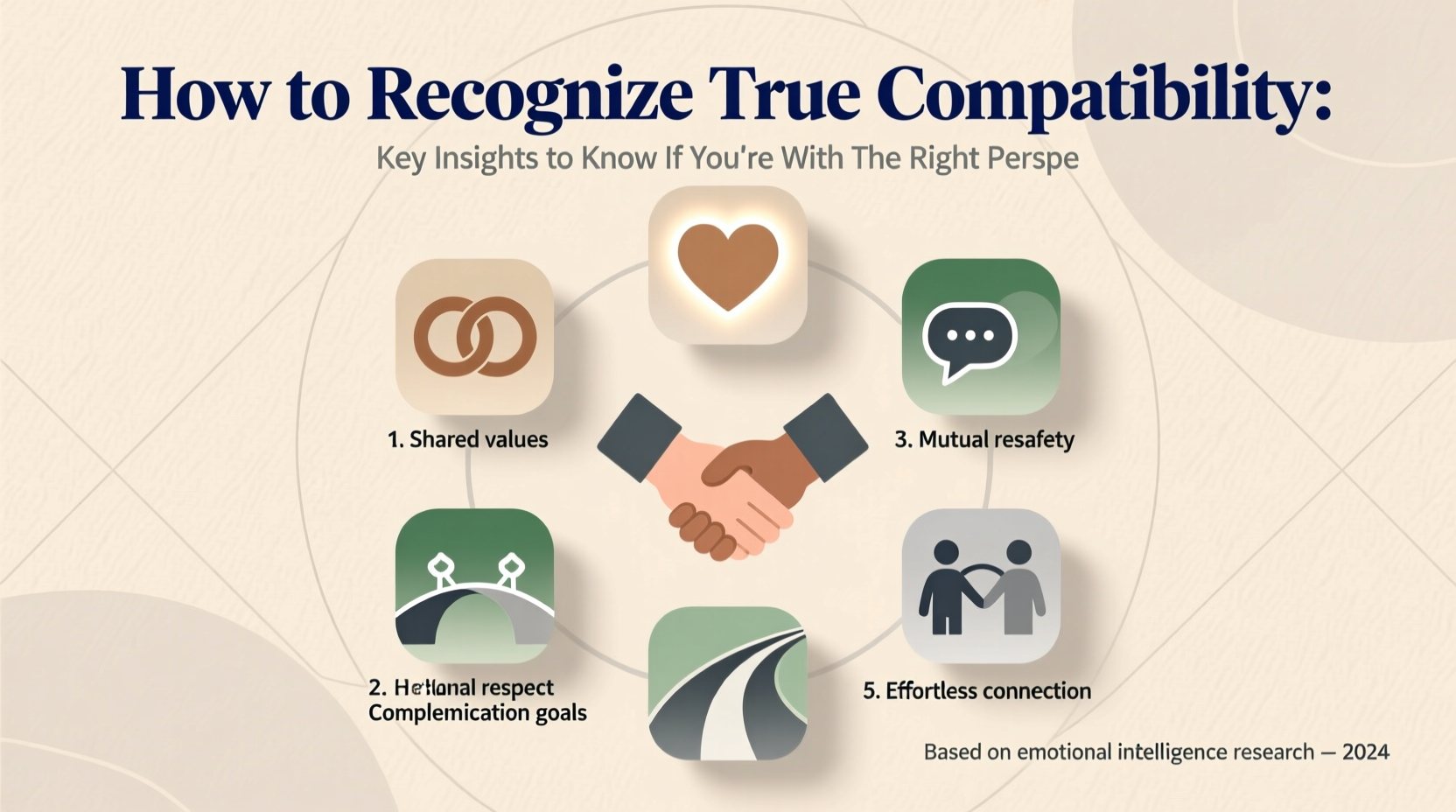
Chemistry is magnetic—eye contact that lingers, conversations that flow effortlessly, an undeniable spark. But chemistry alone is not compatibility. It's possible to feel intensely drawn to someone while being fundamentally mismatched in values, emotional maturity, or lifestyle priorities.
True compatibility operates on multiple levels: emotional, intellectual, logistical, and spiritual. Emotional compatibility means you feel safe expressing vulnerability. Intellectual compatibility involves stimulating conversation and mutual respect for each other’s thoughts. Logistical compatibility covers practical aspects like financial habits, family planning, and daily routines. Spiritual—or philosophical—compatibility refers to shared beliefs about life’s meaning, ethics, and purpose.
Core Signs of Genuine Compatibility
Recognizing compatibility requires observation, honesty, and self-awareness. Look beyond surface-level affection and assess these foundational indicators:
- Mutual respect – You honor each other’s boundaries, opinions, and individuality without manipulation or contempt.
- Conflict resolution style – Disagreements don’t escalate into personal attacks; instead, both partners seek understanding and compromise.
- Shared values – Core beliefs about money, family, integrity, and life goals are aligned or at least deeply respected.
- Emotional availability – Both partners are capable of intimacy, express emotions healthily, and support each other during stress.
- Growth orientation – You inspire each other to grow rather than drain each other’s energy or reinforce unhealthy patterns.
“Compatibility isn’t about never disagreeing—it’s about disagreeing in a way that deepens connection rather than erodes trust.” — Dr. Lena Torres, Clinical Psychologist & Relationship Researcher
Red Flags vs. Growth Opportunities
Not every challenge signals incompatibility. Some issues stem from poor communication habits that can improve with effort. Others point to irreconcilable differences. Learning to distinguish between the two is crucial.
| Red Flags (Likely Incompatibility) | Growth Opportunities (Can Improve) |
|---|---|
| Persistent disrespect or contempt | Occasional frustration due to stress |
| Differing views on having children | Disagreement on parenting styles (if both want kids) |
| Lying or secrecy about important matters | Struggling to open up emotionally (with willingness to work on it) |
| One partner avoids all conflict; the other escalates constantly | Both willing to learn healthier communication tools |
| Fundamental value clashes (e.g., honesty, loyalty, ambition) | Different hobbies or social preferences |
The key difference lies in willingness and capacity for change. A partner who acknowledges their shortcomings and actively works to improve—even slowly—is demonstrating commitment. One who denies problems, blames you exclusively, or refuses counseling may lack the emotional tools needed for long-term partnership.
A Real Example: Sarah and Mark
Sarah loved Mark’s humor and kindness, but they argued constantly about finances. She saved diligently; he lived paycheck to paycheck. Initially, she believed love would inspire him to change. After two years, no progress was made. He resisted budgeting, dismissed her concerns as “controlling,” and once maxed out a joint card without telling her.
Through therapy, Sarah realized this wasn’t a communication issue—it reflected a deeper misalignment in responsibility and values. Despite loving him, she acknowledged they weren’t compatible in a domain critical to her sense of security. Ending the relationship was painful, but it allowed her to later build a stable, trusting partnership with someone whose financial philosophy matched her own.
Practical Steps to Assess Your Compatibility
Self-reflection and intentional dialogue are essential. Use this step-by-step guide to evaluate your relationship objectively:
- Reflect on your non-negotiables – List your top five core values (e.g., honesty, family, independence). Are they honored in your relationship?
- Observe conflict patterns – Note how disagreements unfold. Do you feel heard? Does resolution bring closeness or distance?
- Discuss future visions – Talk openly about where you see yourselves in 5–10 years. Compare notes on career, location, children, and lifestyle.
- Test emotional responsiveness – Share a fear or insecurity. Does your partner respond with empathy, dismissal, or deflection?
- Seek external feedback – Ask trusted friends or a counselor for honest observations about your dynamic.
- Pause major decisions during high emotion – Avoid engagement, marriage, or cohabitation if unresolved core conflicts persist.
Compatibility Checklist: Are You With the Right Person?
Use this checklist to gauge alignment. The more boxes you can confidently check, the stronger your foundation:
- ✅ We can talk about difficult topics without fear of judgment or retaliation.
- ✅ Our core values (family, integrity, life goals) are aligned or respectfully accommodated.
- ✅ We feel emotionally safe being ourselves—not performing or hiding parts of our identity.
- ✅ We support each other’s personal growth, even when it challenges the status quo.
- ✅ Conflict leads to resolution, not prolonged resentment or silent treatment.
- ✅ We enjoy spending time together, but also respect each other’s need for space.
- ✅ Our lifestyles (routines, social needs, health habits) complement rather than clash.
- ✅ We share a similar sense of humor and find joy in simple moments together.
- ✅ We’re both willing to apologize, forgive, and repair after mistakes.
- ✅ When we imagine the future, we naturally include each other—without forcing it.
Frequently Asked Questions
Can compatibility grow over time?
Some aspects can deepen—emotional intimacy, shared experiences, teamwork. However, core values and fundamental life goals rarely shift dramatically. If those are misaligned, growth may not bridge the gap. Focus on whether the foundation is flexible, not whether you can reshape someone’s essence.
What if we’re compatible in some areas but not others?
All couples have mismatches in preferences or habits. The question is whether the incompatible areas affect essential needs. For example, differing tastes in music matter less than differing views on fidelity or emotional expression. Prioritize alignment in domains that impact daily well-being and long-term vision.
Should I stay in a relationship if I’m unsure about compatibility?
Uncertainty itself is data. Long-term ambivalence often signals unmet needs. Use it as motivation to reflect, communicate, or seek counseling. Staying indefinitely “to see” can lead to emotional stagnation. Clarity comes from honest inquiry, not prolonged waiting.
Final Thoughts: Choosing Love That Lasts
Recognizing true compatibility isn’t about finding someone who agrees with you on everything. It’s about finding someone whose presence makes you feel more like yourself—seen, valued, and encouraged. It’s noticing that your hard days are easier because they’re shared, and your good days are brighter because they’re celebrated.
If you’re questioning whether you’re with the right person, let that curiosity guide you toward deeper conversations, not quick conclusions. Examine not just how much you care, but how you care for each other. Look at patterns, not isolated moments. And remember: the right person won’t require you to shrink, silence your needs, or abandon your vision of a meaningful life.




 浙公网安备
33010002000092号
浙公网安备
33010002000092号 浙B2-20120091-4
Comments
No comments yet. Why don't you start the discussion?