
Each holiday season, millions of households across the United States bring home artificial Christmas trees—durable, reusable, and convenient. But when these trees reach the end of their lifespan, typically after 6 to 10 years, they often end up in landfills where they can take centuries to decompose. Unlike real trees, which are biodegradable and compostable, artificial trees are made from non-recyclable plastics like PVC and metal components that don’t break down naturally.
Responsible recycling of an artificial Christmas tree is not as straightforward as tossing it in the curbside bin. However, with a bit of planning and research, you can ensure your old tree doesn't contribute needlessly to environmental waste. This guide walks through the most effective ways to dispose of or repurpose your artificial tree, explores city-led programs, and offers sustainable alternatives for future holidays.
Why Artificial Trees Need Special Disposal
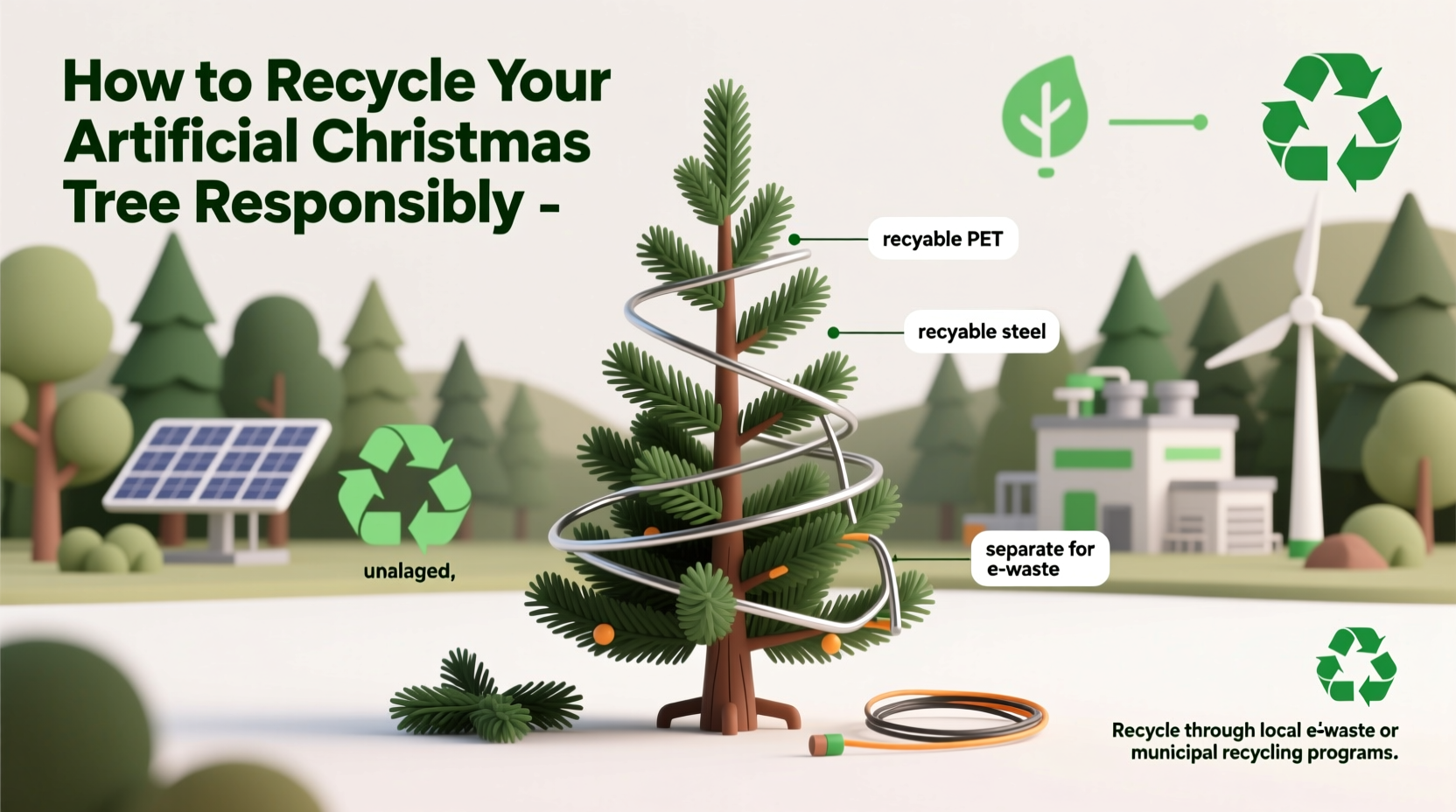
Artificial Christmas trees are primarily constructed from polyvinyl chloride (PVC), a type of plastic known for its durability and resistance to degradation. While this makes the tree last for many seasons, it also means that once discarded, it can persist in landfills for hundreds of years. According to the Environmental Protection Agency (EPA), only about 9% of all plastic waste in the U.S. gets recycled—the rest ends up in landfills or the environment.
Additionally, many artificial trees contain mixed materials such as steel frames, electronic wiring for lights, and fabric foliage, making them difficult to process in standard recycling facilities. These composite materials must be separated before any component can be recycled, a step most municipal systems aren’t equipped to handle.
Step-by-Step Guide to Recycling Your Artificial Tree
Recycling an artificial Christmas tree requires more effort than typical household items, but the environmental payoff is worth it. Follow this five-step process to responsibly manage your tree’s end-of-life phase.
- Assess the Condition: Before considering disposal, evaluate whether the tree can be reused. If it's still structurally sound and visually appealing, consider donating it or using it for another season.
- Dismantle Carefully: Remove all ornaments, tinsel, lights, and stands. These accessories should be recycled or disposed of separately—lights go to e-waste centers, metal stands to scrap metal recyclers.
- Check Local Programs: Contact your municipal waste department to ask if they offer seasonal collection for artificial trees. Some cities host special drop-off events in January.
- Search for Specialty Recyclers: Look for private companies or nonprofits that accept holiday decor. Organizations like Christmas Tree Recycling or regional waste management firms sometimes partner with retailers for take-back programs.
- Prepare for Drop-Off: If accepted, bundle the tree securely, ideally in its original storage bag. Avoid cutting it into pieces unless explicitly instructed by the facility.
Cities Leading the Way in Artificial Tree Recycling
A growing number of municipalities have recognized the environmental impact of discarded artificial trees and launched targeted recycling initiatives. For example, New York City has piloted a program through its Department of Sanitation, accepting trees at select greenmarkets in January. Similarly, San Francisco partners with Recology to disassemble trees and separate materials for proper processing.
In some cases, cities collaborate with retailers. In 2022, Home Depot partnered with TerraCycle on a pilot program allowing customers to return old trees to designated stores for responsible recycling. Though not nationwide, such efforts signal a shift toward circular solutions in seasonal decor.
“Cities that integrate seasonal waste streams into their recycling infrastructure see measurable reductions in landfill volume and public contamination.” — Dr. Lena Pruitt, Urban Sustainability Researcher at MIT
Donation and Repurposing Options
If your tree is still functional, donation is often a better option than recycling. Many organizations welcome gently used artificial trees, especially those serving low-income families, shelters, or community centers.
- Charities: Goodwill, The Salvation Army, and local thrift stores may accept trees during the post-holiday donation window (January).
- Schools and Theaters: Drama departments often use artificial trees as stage props and appreciate donations.
- Animal Shelters: Some shelters use trees for enrichment activities or holiday displays.
Even beyond donation, creative repurposing can extend a tree’s life. Crafters have turned branches into wreaths, garlands, or even pet toys. The metal frame might be salvaged for DIY garden supports or art projects.
Comparison: Recycling vs. Landfill vs. Donation
| Option | Environmental Impact | Effort Required | Best For |
|---|---|---|---|
| Curbside Trash (Landfill) | High – Non-biodegradable, long-term pollution | Low – Just bag and toss | Trees in poor condition with no other options |
| Specialty Recycling Program | Low to Moderate – Materials recovered when possible | High – Requires research and transportation | Trees in average to good condition |
| Donation | Very Low – Extends product life, reduces demand for new trees | Moderate – Needs cleaning and delivery | Trees still in usable shape |
| Repurposing | Negligible – Zero waste if done fully | Variable – Depends on project complexity | Creative individuals with time and tools |
Mini Case Study: How One Community Reduced Holiday Waste
In Boulder, Colorado, the local waste authority noticed a spike in bulky item disposal every January. A survey revealed that artificial Christmas trees were among the top contributors. In response, the city launched “Tree Turn-In,” a two-week January event offering free drop-off at the county recycling center.
The program included partnerships with local schools, who hosted collection drives and earned funding for each tree returned. Volunteers helped disassemble trees, sorting PVC branches, metal poles, and electrical components. Over three years, the initiative diverted over 1,200 trees from landfills and raised awareness about sustainable holiday practices.
“We didn’t expect such strong community engagement,” said Maria Tran, Boulder’s Sustainability Coordinator. “Families started treating tree retirement like a tradition—almost as meaningful as putting it up.”
Checklist: What to Do With Your Old Artificial Tree
Use this checklist to ensure you're handling your tree responsibly:
- ☐ Evaluate the tree’s condition—can it be reused?
- ☐ Remove all decorations, lights, and stands
- ☐ Clean the tree with a dry cloth to remove dust
- ☐ Contact your city’s waste management office about drop-off options
- ☐ Search for specialty recyclers or retailer take-back programs
- ☐ Consider donating to charity, school, or theater group
- ☐ Explore DIY repurposing ideas for branches or frame
- ☐ Schedule drop-off or pickup if recycling is available
- ☐ Keep records of donation for potential tax benefits
- ☐ Share your experience to encourage others
Frequently Asked Questions
Can I put my artificial Christmas tree in the regular recycling bin?
No. Most curbside recycling programs do not accept artificial trees due to their mixed materials and non-recyclable PVC content. Placing them in the bin can contaminate the recycling stream. Always check with your local facility for proper disposal methods.
How long does an artificial Christmas tree last?
On average, artificial trees last between 6 and 10 years with proper care. Signs it’s time to retire yours include shedding branches, difficulty standing upright, discoloration, or broken hinges. Extending its life through careful storage can delay the need for disposal.
Are there eco-friendly artificial trees available?
Yes. Some manufacturers now produce trees made from recyclable PE (polyethylene) plastics or incorporate more sustainable packaging. Additionally, “modular” trees that allow replacement of individual sections instead of the whole unit are emerging as a greener alternative. Look for brands that disclose material sourcing and support take-back programs.
Planning Ahead: Sustainable Alternatives for Future Holidays
While recycling is essential, reducing long-term environmental impact starts with smarter purchasing decisions. Consider these sustainable alternatives:
- Rent a Tree: Companies like Rent-a-Tree in the UK and similar startups in the U.S. offer rental services for both real and artificial trees, ensuring professional maintenance and end-of-life recycling.
- Buy Secondhand: Platforms like Facebook Marketplace or Craigslist often have gently used artificial trees at a fraction of retail cost—extending their lifecycle without new resource extraction.
- Choose Minimalist Designs: Trees with fewer components, no built-in lights, and simple metal frames are easier to dismantle and recycle later.
- Support Brands with Take-Back Policies: Some premium tree manufacturers now offer mail-back recycling for old models when you purchase a new one.
Ultimately, the most sustainable tree is one that stays in use as long as possible—whether in your home or someone else’s.
Conclusion: Make Your Holiday Legacy a Green One
Recycling an artificial Christmas tree responsibly isn’t just about disposal—it’s about rethinking our relationship with seasonal consumption. Every tree kept out of a landfill, donated to a family in need, or creatively repurposed represents a small victory for sustainability.
This January, instead of packing your tree away for good or sending it to a dump, take the extra step to find a better end-of-life solution. Whether you donate, recycle, or reimagine its parts, your actions set a precedent for mindful holiday traditions. The season of giving doesn’t have to end when the lights come down.




 浙公网安备
33010002000092号
浙公网安备
33010002000092号 浙B2-20120091-4
Comments
No comments yet. Why don't you start the discussion?