
Every year, millions of households across the United States take down their holiday decorations, only to face the same question: what should be done with old or broken Christmas lights? Tossing them in the trash may seem convenient, but it contributes to growing electronic waste. Fortunately, recycling options exist—many of which are free, accessible, and environmentally responsible. From community collection events to national mail-in services, recycling old Christmas lights is easier than ever. This guide walks you through practical ways to dispose of your holiday lighting sustainably, including where to go, how to prepare them, and what happens after they’re recycled.
Why Recycling Christmas Lights Matters
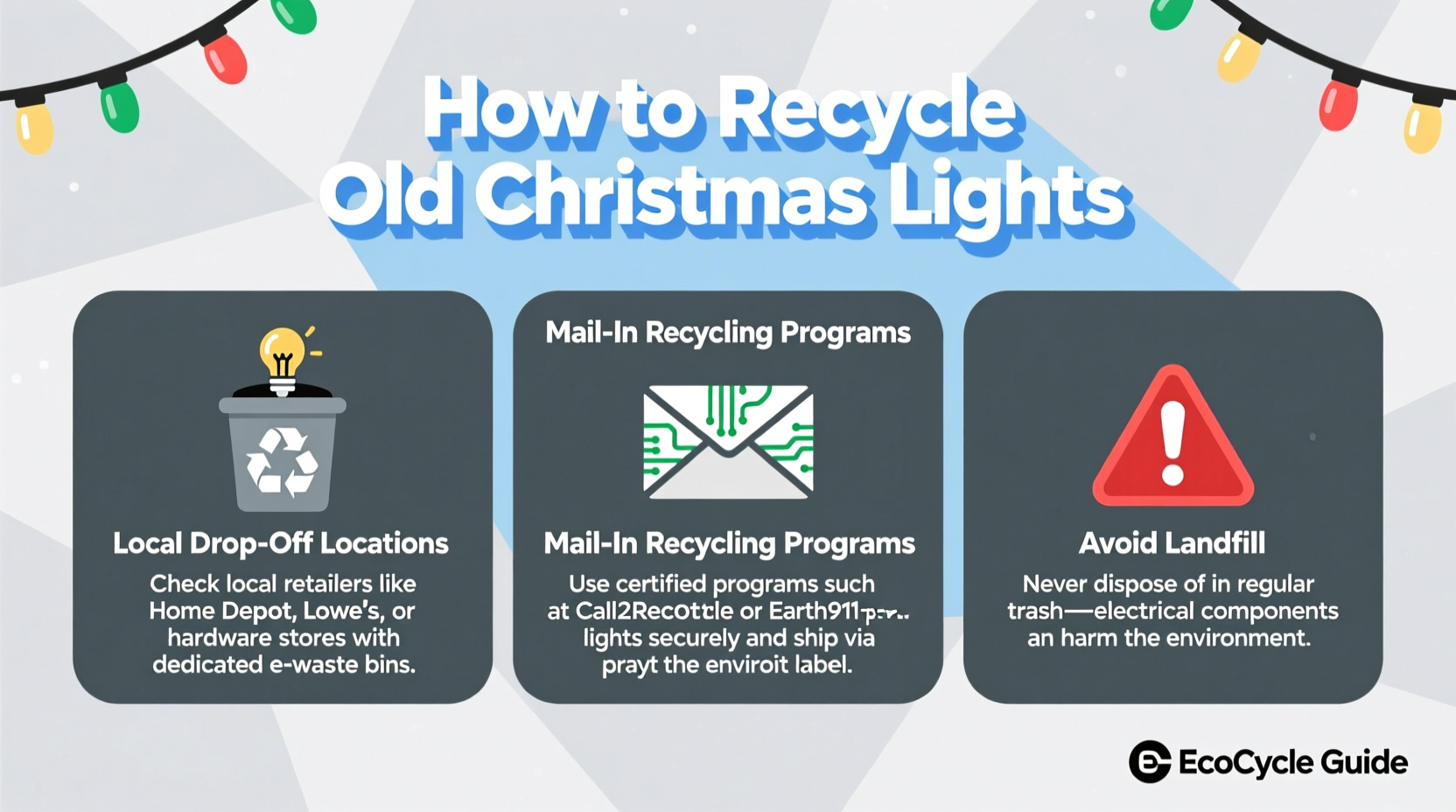
Christmas lights are classified as electronic waste, or e-waste, due to their copper wiring, plastic insulation, and small electrical components. When discarded in landfills, these materials can leach harmful substances into soil and water. More importantly, the copper inside holiday lights is a valuable, finite resource. Recycling recovers up to 90% of the copper used in production, reducing the need for new mining and lowering energy consumption.
According to the Environmental Protection Agency (EPA), less than 15% of e-waste in the U.S. gets properly recycled each year. Holiday lights contribute significantly to this waste stream, with an estimated 150 million sets thrown away annually. By choosing to recycle, you help conserve natural resources, reduce pollution, and support a circular economy.
“Recycling one ton of Christmas lights can recover over 6,000 pounds of copper—material that would otherwise sit buried in a landfill.” — National Waste & Recycling Association
How to Prepare Your Christmas Lights for Recycling
Before dropping off or mailing your lights, proper preparation ensures smoother processing and avoids rejection by recyclers. Follow these steps to get your strands ready:
- Untangle and inspect each strand: Recyclers prefer neatly coiled lights without excessive knots. Untangling helps facilities assess condition and identify non-recyclable attachments.
- Remove non-light components: Take off any decorative elements like figurines, hooks, timers, or power adapters. These items can interfere with sorting machinery.
- Check for plugs and fuses: Most programs accept lights with plugs attached, but verify with the specific program. Avoid cutting off plugs unless required.
- Group by type: Separate incandescent from LED strands if possible. Some recyclers sort by technology due to differences in material composition.
- Store in a labeled bag or box: Keep all strands together and label the container “For Recycling” to avoid confusion during storage or transit.
Local Drop-Off Options for Recycling Christmas Lights
Many communities offer seasonal or year-round drop-off locations for holiday light recycling. These programs are often run by municipalities, nonprofits, or retailers in partnership with certified e-waste processors.
Municipal E-Waste Collection Events
Cities and counties frequently host special e-waste collection days in January and February, timed to coincide with post-holiday cleanups. These events typically accept not only Christmas lights but also batteries, cables, small electronics, and other household e-waste.
To find a municipal event near you:
- Visit your city or county’s official website and search “e-waste recycling schedule.”
- Call your local public works department.
- Check community bulletin boards at libraries or grocery stores.
Retailer and Hardware Store Programs
Several major retailers have launched annual holiday light recycling initiatives:
| Organization | Drop-Off Period | Notes |
|---|---|---|
| Home Depot | Early January – Late February | Limited locations; check store participation online. |
| Lowes | Seasonal (varies by region) | Partnered with local recyclers; call ahead to confirm. |
| IKEA (select U.S. stores) | January only | Free drop-off; accepts strings up to 100 ft. |
| Best Buy | Year-round (e-waste) | Accepts lights under its general e-waste policy; small fee may apply. |
Nonprofit and Community Drives
Schools, scouts, churches, and environmental groups often organize holiday light recycling as fundraisers. These drives usually partner with professional recyclers who pay per pound for collected copper-rich strands. Proceeds support local causes, making your recycling doubly impactful.
A real-world example:
National Mail-In Recycling Programs
If no local drop-offs are available, mail-in programs provide a reliable alternative. These services send you a prepaid shipping label or recycling kit, allowing you to send lights directly to specialized processing facilities.
How Mail-In Programs Work
- Order a recycling kit or generate a shipping label online.
- Pack your lights securely in a box or reuse a sturdy container.
- Print and attach the prepaid label.
- Drop the package at a carrier location (e.g., UPS, FedEx, USPS).
- The recycler processes the lights and sends confirmation.
Top Reputable Mail-In Services
- RecycleNation (by TerraCycle): Offers branded holiday light recycling boxes. Priced per box (e.g., $48 for a 15-lb box), ideal for households or small offices.
- Christmas Light Source: Based in Minnesota, this company runs a popular mail-back program. Charges $6.95 per pound with no minimum. Includes free return label upon request.
- Waste Management E-Cycling Solutions: Provides bulk mail-in options for businesses and organizations. Custom pricing based on volume.
What Happens After You Mail Them?
Once received, lights go through a multi-step recycling process:
- Sorting: Strands are separated by type (LED vs. incandescent) and condition.
- Shredding: Machines break down the lights into raw materials.
- Separation: Copper wire, plastics, glass, and metal end caps are isolated using magnetic, density, and optical sorting.
- Refining: Copper is cleaned and prepared for resale to manufacturers.
- Resale: Recycled copper is used in new electronics, construction, and automotive parts.
No part goes to waste. Even the plastic coating is repurposed into industrial pellets for non-consumer products.
Common Mistakes to Avoid When Recycling Christmas Lights
Even well-intentioned efforts can fall short if basic guidelines aren’t followed. Here’s what not to do:
| Don’t | Do Instead |
|---|---|
| Throw lights in regular trash | Use designated e-waste channels |
| Leave tangled or damaged strands unsorted | Coil neatly and remove non-light accessories |
| Assume all retailers accept lights | Verify participation before visiting |
| Mail without checking weight limits | Weigh your shipment and choose appropriate service |
| Include extension cords or outlets | Recycle those separately through e-waste programs |
“Contamination is the biggest barrier to efficient e-waste recycling. Simple steps like removing ornaments and coiling wires make a huge difference.” — Sarah Lin, E-Waste Processing Manager at GreenCycle Technologies
Step-by-Step Guide to Recycling Old Christmas Lights
Follow this timeline to recycle efficiently every holiday season:
- December 26 – January 5: Take down lights carefully. Inspect for damage and separate working from broken strands.
- January 6 – 12: Search for local drop-offs using Earth911’s recycling locator or call nearby Home Depot/Lowes stores.
- January 13 – 15: Prepare lights—untangle, coil, and pack in a labeled container.
- January 16 – 20: Drop off at a participating location or order a mail-in kit if none are nearby.
- January 21 – 25: Ship your package or confirm receipt at drop-off site.
- February onward: Consider upgrading to LED lights, which last longer and use 75% less energy.
- ☐ Untangled and coiled strands
- ☐ Non-light decorations removed
- ☐ Plugs intact (unless specified otherwise)
- ☐ Weight estimated (for mail-in)
- ☐ Drop-off location confirmed or kit ordered
- ☐ Shipped or delivered by January 31
Frequently Asked Questions
Can I recycle broken Christmas lights?
Yes. Both functional and non-working lights can be recycled. The value lies in the materials, not performance. Just ensure they are unplugged from any power source and free of large attachments.
Are LED Christmas lights recyclable?
Absolutely. While LEDs contain semiconductors and less copper than incandescent bulbs, they still include recyclable metals and plastics. Many modern programs are equipped to handle both types.
Is there a cost to recycle Christmas lights?
Most local drop-offs are free, especially during seasonal events. Mail-in programs usually charge per pound or per box, ranging from $5 to $50 depending on size and provider. Some nonprofits accept donations to cover processing fees.
Conclusion: Turn Holiday Waste into Sustainable Action
Recycling old Christmas lights isn’t just about decluttering—it’s a meaningful step toward reducing electronic waste and conserving vital resources. With numerous local drop-off opportunities and convenient mail-in options, there’s no reason to let usable materials end up in landfills. Whether you’re motivated by environmental responsibility, community involvement, or simple convenience, taking action today ensures a greener holiday season tomorrow.
This January, instead of stuffing old lights into a closet or trash can, channel them into a system that gives back. Every strand recycled supports cleaner communities, stronger schools, and smarter manufacturing. Make sustainable disposal part of your annual tradition—and inspire others to do the same.




 浙公网安备
33010002000092号
浙公网安备
33010002000092号 浙B2-20120091-4
Comments
No comments yet. Why don't you start the discussion?