
Bread is one of the most cherished staples in kitchens around the world. Its warm crust, soft crumb, and comforting aroma make it a daily favorite. But even the best loaf can turn stale within hours if not stored properly. When bread loses moisture, its texture hardens, and what was once soft and springy becomes dry and unappealing. While many reach for the toaster or discard stale loaves altogether, there’s a far more effective method: reviving it in the oven with nothing but a simple spray bottle.
This technique isn’t just about convenience—it’s rooted in food science. By reintroducing moisture and briefly re-exposing the bread to heat, you reactivate the starches and restore much of the original texture. Whether it’s a baguette from yesterday’s bakery run or a slice of sourdough left out overnight, this method breathes new life into stale bread without compromising flavor or structure.
The Science Behind Stale Bread
Staling isn’t simply about drying out. While moisture loss plays a role, the primary culprit is a process called retrogradation. During baking, starch molecules absorb water and gelatinize, creating the soft, chewy texture we love. As bread cools and ages, these starches begin to recrystallize, pushing water out and making the crumb firm and leathery—even if the bread still feels moist.
Heat reverses this process. When you apply controlled heat and reintroduce surface moisture, the starches reabsorb water and partially re-gelatinize. This restores elasticity and softness, at least temporarily. The key is doing it quickly and evenly, which is where the oven and spray bottle come in.
“Reviving bread isn’t magic—it’s thermodynamics and hydration working together. A quick blast of steam and heat can reset the staling clock by several hours.” — Dr. Lena Torres, Food Scientist & Culinary Researcher
Step-by-Step Guide to Reviving Stale Bread
Follow this precise method to bring your stale bread back to near-fresh condition using only an oven and a clean spray bottle filled with water.
- Preheat the oven to 350°F (175°C). Allow it to fully reach temperature before introducing the bread. Consistent heat ensures even revival without burning.
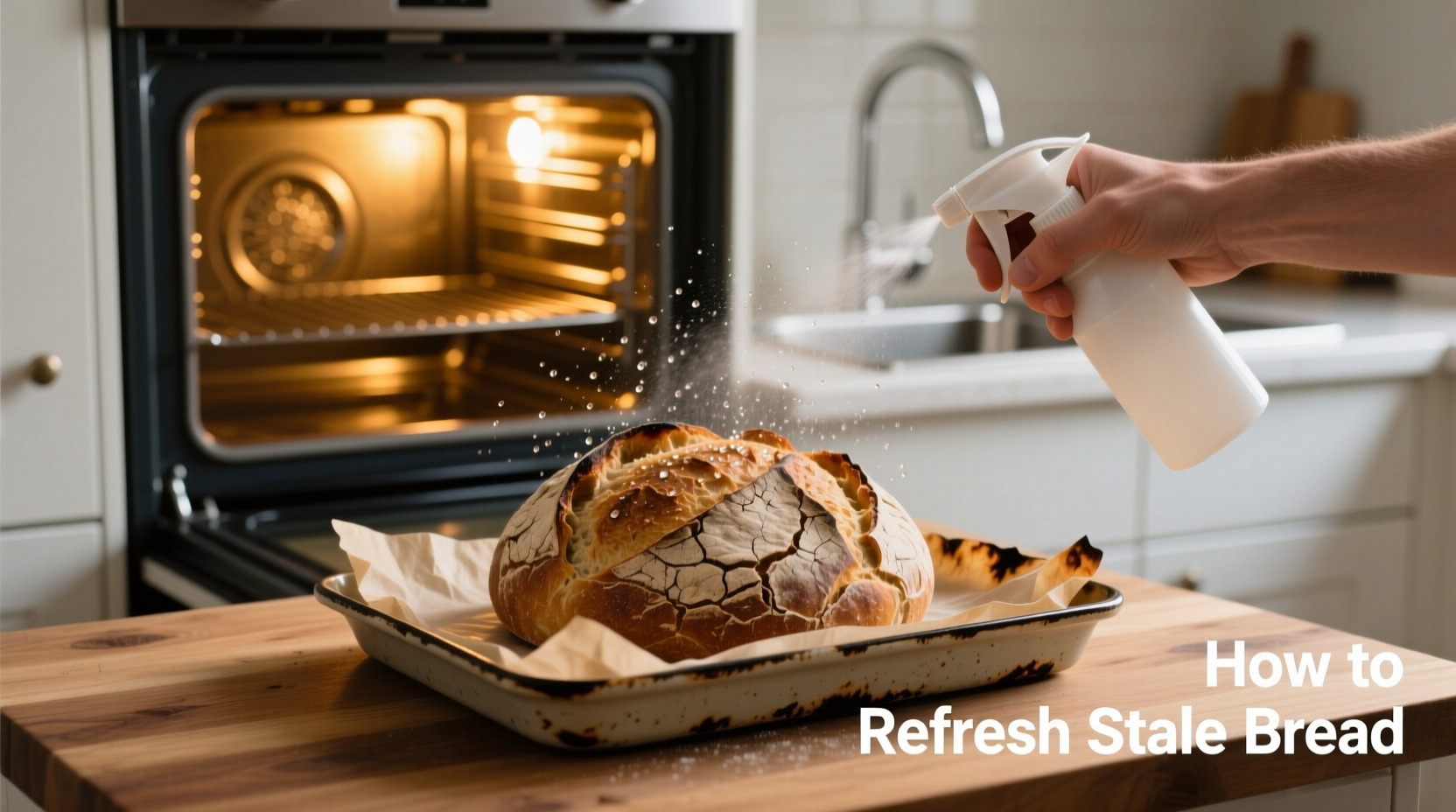
- Run the loaf or slices under tap water for 1–2 seconds, or lightly mist the exterior with a spray bottle. Focus on the crust—this surface moisture will turn to steam inside the oven, softening the hardened outer layer and preventing over-drying.
- Place the bread directly on the center rack (no baking sheet needed unless dealing with small crumbs). For sliced bread, lay pieces flat; for rolls or baguettes, place them seam-side down.
- Bake for 5 to 10 minutes. Thinner slices need 5 minutes; denser loaves like sourdough or rye may require up to 10. Watch closely—the goal is warmth and renewed crispness, not browning.
- Remove and let rest for 2–3 minutes. This allows internal moisture to redistribute. Cutting too soon releases trapped steam and leads to rapid re-staling.
Do’s and Don’ts of Bread Revival
| Do’s | Don’ts |
|---|---|
| Do mist the crust lightly—just enough to glisten. | Don’t soak the bread. Excess water makes it soggy or gummy. |
| Do use a convection oven if available—fan circulation promotes even heating. | Don’t exceed 10 minutes. Overbaking accelerates moisture loss. |
| Do revive bread just before serving. Results last 15–20 minutes. | Don’t store revived bread. It will stale faster than before due to moisture disruption. |
| Do wrap leftover fresh bread tightly in foil or beeswax wrap after revival—if you must save it. | Don’t refrigerate bread. Cold temperatures speed up staling. |
Real Example: Rescuing a Day-Old Baguette
Claire, a home cook in Portland, bought a rustic sourdough baguette from her local market on Saturday morning. By Sunday evening, it had hardened into what she jokingly called “a French weapon.” Instead of tossing it, she decided to try the oven-and-spray method.
She preheated her oven, gave the loaf a few spritzes along the top crust, and placed it directly on the rack at 350°F for 7 minutes. After removing it, she tapped the bottom—it sounded hollow and resonant, a sign of proper internal heat transfer. She sliced into it: the crust cracked satisfyingly, and the interior was soft, warm, and nearly indistinguishable from the day before. Claire served it with olive oil and sea salt for dinner, impressing her guests who assumed it was freshly baked.
“I’ve thrown away so much bread over the years,” she said later. “Now I keep a spray bottle in my pantry just for this. It’s changed how I think about leftovers.”
Tips for Different Types of Bread
Not all bread responds the same way to revival. Adjust timing and moisture based on structure and density.
- Baguettes & Crusty Rolls: Spray generously on the surface. These thrive on steam. Bake 6–8 minutes.
- Sliced Sandwich Bread: Light mist only. Too much water causes sogginess. Bake 4–6 minutes.
- Sourdough Loaves: Dense crumb holds moisture well. Spray moderately and bake 8–10 minutes.
- Brioche or Enriched Breads: High fat and egg content make them prone to greasiness when overheated. Mist sparingly and bake only 4–5 minutes.
- Gluten-Free Bread: Often dries out faster and revives less effectively. Best used within 24 hours. If attempting, spray lightly and bake 5 minutes max.
Why This Method Beats Alternatives
Many people default to toasters or microwaves when dealing with stale bread, but each has drawbacks.
Toasters work well for thin slices but can burn thick cuts or unevenly toast artisanal loaves. They also remove additional moisture, accelerating future staling.
Microwaves soften bread quickly but often create a rubbery or wet texture. Without radiant heat, the crust doesn’t crisp, and the internal structure collapses unevenly.
The oven-and-spray method combines the best of both: radiant heat restores structure while steam prevents desiccation. It’s the closest thing to rebaking without actually baking.
Checklist: How to Refresh Stale Bread Successfully
Before you begin, ensure you have everything ready. Follow this checklist for consistent results:
- ✅ Oven capable of reaching 350°F (175°C)
- ✅ Clean spray bottle filled with water (distilled preferred)
- ✅ Stale bread (not moldy or spoiled)
- ✅ Oven mitts for safe handling
- ✅ Timer set to avoid overbaking
- ✅ Cooling space (wire rack or plate)
- ✅ Optional: Pastry brush for post-bake oil or butter application
Frequently Asked Questions
Can I revive frozen bread using this method?
Yes, but thaw it first. Frozen bread should be brought to room temperature before spraying and baking. Attempting to revive it straight from the freezer leads to uneven heating and a cold, dense center. Once thawed, follow the same steps as with stale bread.
How long does revived bread stay fresh?
Only 15 to 20 minutes. The revival is temporary. Once removed from the oven, the retrogradation process resumes. Eat it immediately or repurpose it into croutons, breadcrumbs, or bread pudding.
Is it safe to revive bread that’s slightly moldy?
No. If you see any mold—fuzzy spots, discoloration, or musty smell—discard the entire loaf. Mold penetrates deeper than visible surfaces, especially in porous bread. Revival heat does not guarantee safety.
Conclusion: Waste Less, Enjoy More
Reviving stale bread with just an oven and a spray bottle is a small act with significant impact. It reduces food waste, saves money, and preserves the pleasure of eating quality bread at its best. This method respects the craft behind baking by giving each loaf a second chance—not as a substitute for freshness, but as a bridge to better utilization.
In a world where nearly 30% of food is wasted, mastering simple techniques like this one empowers us to make smarter, more sustainable choices. The next time you face a rock-hard baguette or a day-old sourdough, don’t reach for the trash can. Reach for your spray bottle instead.




 浙公网安备
33010002000092号
浙公网安备
33010002000092号 浙B2-20120091-4
Comments
No comments yet. Why don't you start the discussion?