
Coffee is a daily ritual for millions, but what happens when the grounds lose their freshness? Most people discard old or stale coffee without realizing its hidden potential. While they may no longer brew a satisfying cup, stale coffee grounds retain physical and chemical properties that make them valuable in other areas of the home. From odor absorption to skin exfoliation, these repurposed grounds can serve as eco-friendly alternatives to commercial products. The key lies not just in using them—but in refreshing them first to maximize effectiveness.
Stale doesn’t always mean useless. When properly revived and redirected, used or aged coffee grounds become powerful tools in cleaning, gardening, personal care, and even pest control. This guide explores how to restore vitality to stale coffee and apply it meaningfully across your household, turning waste into resource with minimal effort.
Understanding Stale Coffee Grounds
Coffee grounds go stale primarily due to oxidation and moisture loss after grinding. Once exposed to air, volatile compounds responsible for aroma and flavor degrade within hours. By 24–48 hours post-grind (especially if stored improperly), the beans’ oils break down, diminishing both taste and potency. However, this degradation affects only the brewing quality—not necessarily the structural or chemical utility of the grounds.
The coarse texture, nitrogen-rich composition, and mild acidity remain intact even in stale batches. These characteristics are precisely what make coffee useful outside the coffee maker. For instance, caffeine persists long after aroma fades, offering insect-repellent properties. Similarly, the gritty consistency works well as an abrasive scrub, while residual oils still attract and bind to odors.
How to Refresh Stale Coffee Grounds
“Refreshing” stale coffee isn’t about restoring drinkability—it’s about reactivating its functional qualities for non-brewing purposes. Depending on how long the grounds have been sitting and their storage conditions, different revival methods yield better results.
Step-by-Step Guide to Reviving Stale Grounds
- Evaluate Condition: Check for mold, sour smells, or clumping. If present, discard immediately—these indicate microbial growth unsuitable for reuse.
- Dry Thoroughly: Spread used or damp grounds on a baking sheet and bake at 175°F (80°C) for 20–30 minutes until completely dry and crumbly. This kills bacteria and restores abrasiveness.
- Break Up Clumps: Crumble hardened clusters by hand or pulse briefly in a spice grinder to regain uniform texture.
- Deodorize (Optional): Mix with a teaspoon of baking soda per cup of grounds to neutralize lingering off-odors before repurposing.
- Store Properly: Keep refreshed grounds in a sealed glass jar away from heat, light, and humidity. They’ll stay usable for up to six months.
This process revitalizes the physical structure and ensures safety for skin or surface contact. Dryness is critical—moisture encourages mold, especially when storing for later use.
Creative Uses for Refreshed Coffee Grounds
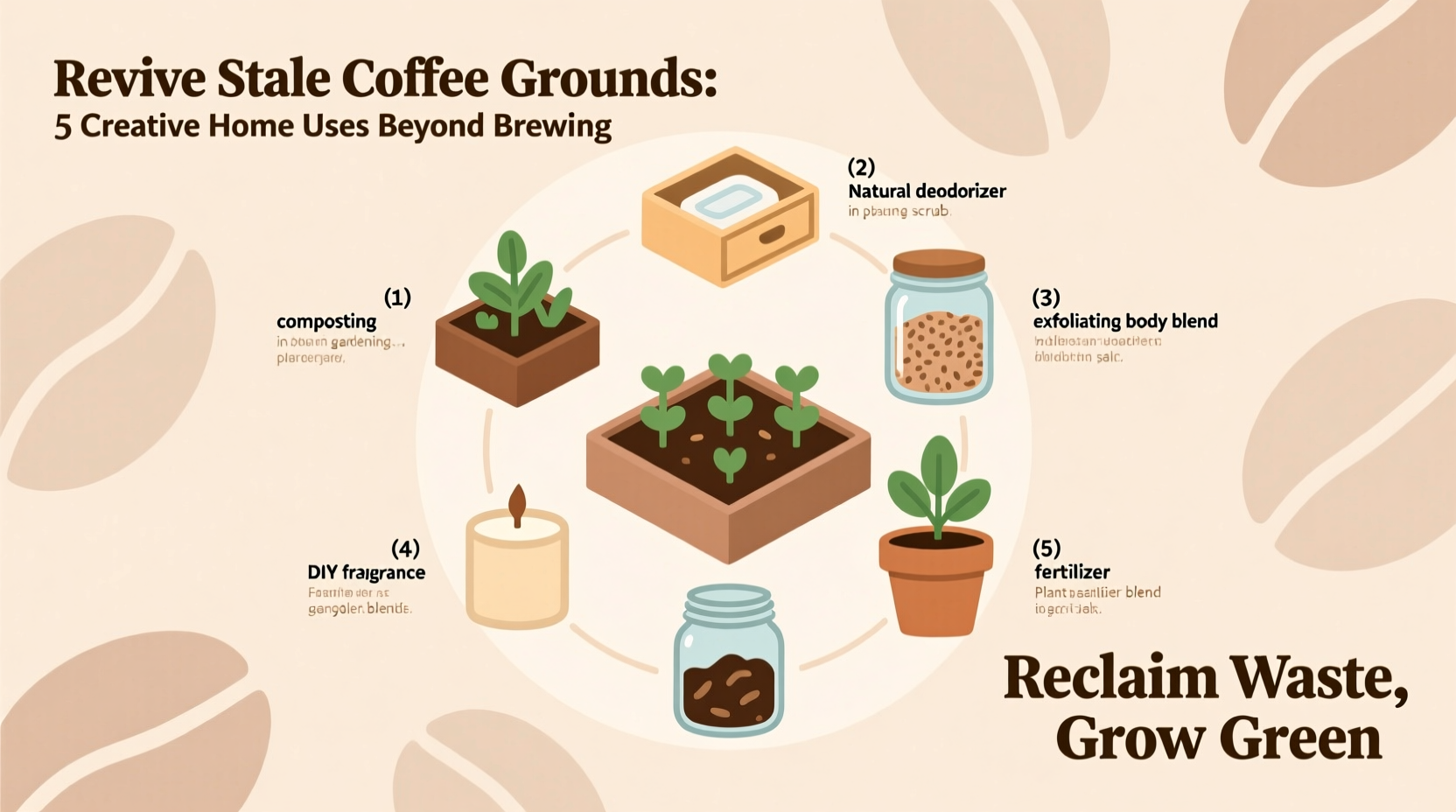
Once revived, stale coffee grounds can be applied in diverse, effective ways throughout the home. Below are five high-impact applications backed by real-world functionality.
1. Natural Odor Absorber
Coffee’s porous nature allows it to absorb airborne molecules responsible for unpleasant smells. Place refreshed grounds in breathable sachets or open bowls inside refrigerators, shoes, gym bags, or closets. Replace every two weeks for optimal performance.
| Location | Application Method | Replacement Frequency |
|---|---|---|
| Fridge | Small bowl covered with mesh | Every 10–14 days |
| Shoes | Sachet left overnight | After each use |
| Garbage Can | Layer at bottom under liner | Weekly |
2. Eco-Friendly Cleaning Scrub
Mix one part refreshed coffee grounds with two parts coconut oil or liquid castile soap to create a degreasing kitchen scrub. Ideal for scouring sinks, stovetops, and oven doors, the granules provide friction without scratching most surfaces. Avoid using on marble or delicate stone.
3. Skin Exfoliant & Circulation Booster
In skincare, caffeine constricts blood vessels temporarily, reducing puffiness and improving tone. Combine ½ cup dry grounds with ¼ cup coconut oil and 1 tablespoon brown sugar for a DIY body scrub. Gently massage onto damp skin in circular motions, then rinse. Particularly effective on cellulite-prone areas like thighs and buttocks.
“Topical caffeine has demonstrated measurable effects on microcirculation and dermal firmness.” — Dr. Lena Torres, Dermatological Researcher, Journal of Cosmetic Science (2021)
4. Garden Fertilizer & Pest Deterrent
Used coffee grounds are rich in nitrogen, magnesium, and potassium—essential nutrients for plant growth. After drying and breaking up clumps, sprinkle around acid-loving plants like blueberries, azaleas, and rhododendrons. Earthworms are attracted to the material, enhancing soil aeration.
Additionally, the bitter smell deters soft-bodied pests such as slugs and snails. Create a barrier ring around vulnerable seedlings to prevent infestation. Avoid over-application; excessive grounds can form a water-resistant crust.
5. Natural Dye & Craft Medium
Stale coffee makes an excellent natural dye for paper, fabric, and wood. Brew a strong concentrate using 1 cup of grounds and 4 cups of boiling water. Steep for 30 minutes, strain, and let cool. Soak materials for 15 minutes to several hours depending on desired darkness. Results range from warm beige to deep sepia.
This technique is popular among crafters making vintage-style journals, greeting cards, or distressed furniture finishes. The color ages beautifully and emits a subtle roasted scent.
Real Example: A Zero-Waste Kitchen Transformation
Sophie M., a sustainability consultant from Portland, OR, began repurposing her household’s weekly coffee waste after reading about urban composting limitations. With limited outdoor space, she couldn’t compost effectively and noticed mold forming in her countertop bin.
She started drying used grounds on a cookie sheet in her oven while baking meals, then stored them in mason jars. Within a month, she replaced three commercial products: a fridge deodorizer ($12), a body scrub ($18), and a sink cleanser ($6). She also dyed handmade gift tags for her daughter’s birthday party using a coffee bath.
“It felt absurd that I was throwing out something so useful,” Sophie said. “Now my kids help me sort the grounds. It’s turned into a little family ritual—and we’ve cut back on plastic packaging too.”
Her experience reflects a growing trend: treating kitchen byproducts not as trash, but as raw materials waiting for reinvention.
Do’s and Don’ts of Using Stale Coffee Grounds
| Action | Recommended? | Reason |
|---|---|---|
| Use on tomato plants | No | May inhibit growth due to allelopathic compounds |
| Mix with soil for roses | Yes | Improves drainage and adds nutrients |
| Apply directly to carpets | No | Can stain light fabrics and embed grit |
| Add to homemade soap bars | Yes | Provides gentle exfoliation and visual texture |
| Leave in sink drains | No | Can accumulate and cause clogs over time |
| Combine with essential oils | Yes | Enhances fragrance and antimicrobial effect |
Frequently Asked Questions
Can I reuse coffee grounds more than once for these purposes?
Generally, no. Once grounds have absorbed odors, been washed off skin, or mixed into soil, their active components are depleted. For hygiene and efficacy, treat each batch as single-use. Freshly refreshed grounds ensure consistent results.
Are there any health risks in using stale coffee on skin?
If properly dried and free of mold, used coffee is safe for topical use. However, those with sensitive skin should patch-test first. The coarse texture may irritate broken skin or eczema-prone areas. Discontinue use if redness or itching occurs.
Can I mix coffee grounds with other household waste for these projects?
Avoid mixing with food scraps containing dairy, oils, or meats, as these decompose differently and can introduce pathogens. Stick to clean, plant-based leftovers when combining organic materials. For crafts or scrubs, purity ensures predictable outcomes.
Checklist: Maximize Your Stale Coffee Grounds
- ☑ Inspect grounds for mold or foul odor before reuse
- ☑ Dry thoroughly in oven or sunlight before storage
- ☑ Store in airtight container away from moisture
- ☑ Label jar with date and intended use (e.g., “scrub” or “garden”)
- ☑ Test on small area before large-scale application (e.g., fabric dyeing)
- ☑ Rotate stock—use oldest batches first
- ☑ Pair with complementary ingredients (baking soda, oils, sugar) for enhanced effect
Conclusion: Turn Waste Into Worth
Discarding stale coffee grounds is a missed opportunity. With minimal effort, these remnants transform into versatile assets that support cleaner homes, healthier gardens, and more sustainable habits. The process of refreshing them extends far beyond salvage—it fosters mindfulness about consumption, waste, and resourcefulness.
Every scoop saved from the trash reduces landfill burden and lessens reliance on synthetic products. Whether you're revitalizing your skincare routine, boosting garden vitality, or crafting with natural dyes, the humble coffee ground proves that usefulness doesn’t end with the last drop of brew.




 浙公网安备
33010002000092号
浙公网安备
33010002000092号 浙B2-20120091-4
Comments
No comments yet. Why don't you start the discussion?