
Stale snacks are a common household frustration. Whether it's a forgotten bag of potato chips tucked behind the cereal or saltines left open too long, moisture is often the culprit behind that limp, lifeless texture. But before you toss them into the trash, consider this: most stale crackers, chips, and even pretzels can be revived with simple techniques already available in your kitchen. Not only does reviving stale snacks save money, but it also reduces food waste—one small step toward more sustainable living.
The science behind staleness lies in starch retrogradation—the process by which cooked starch molecules recrystallize as they cool and dry out. This leads to a hard, chewy, or brittle texture. The good news? Applying controlled heat or reintroducing moisture can reverse much of this effect, restoring crispness and flavor. With the right method, your once-unappealing snacks can taste nearly fresh again.
Why Snacks Go Stale (And How to Reverse It)
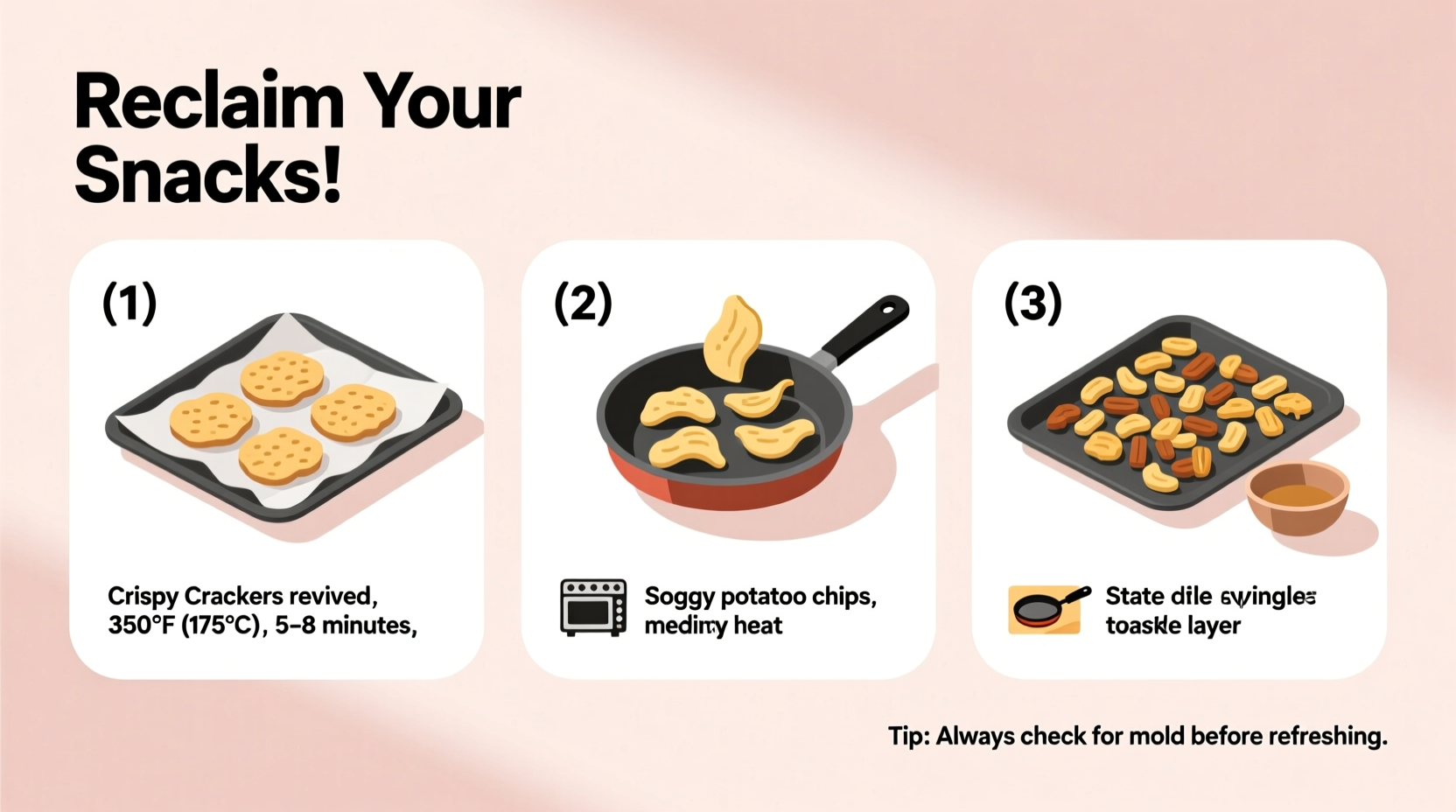
Most packaged snacks go stale due to exposure to air and humidity. While some foods spoil from microbial growth, staling in dry goods like crackers and chips is primarily a physical change—not a safety issue. When these items absorb moisture from the air, their structure softens. In other cases, excessive drying in low-humidity environments causes brittleness without sogginess.
The key to revival lies in understanding the type of staleness:
- Mildly soft or chewy: Often caused by slight moisture absorption. Best fixed with gentle reheating.
- Bland or flavorless: Usually due to prolonged storage. Aroma compounds degrade over time; reheating can help reawaken volatile flavors.
- Excessively dry or brittle: May benefit from a brief moisture boost before heating.
Revival isn’t just about texture—it’s also about restoring palatability. Heat helps volatilize flavor compounds, making the snack taste fresher. Additionally, crisping restores the satisfying crunch associated with quality chips and crackers.
“Crispness is a major driver of perceived freshness. Even if a chip has been stored for weeks, restoring its crunch tricks the brain into thinking it’s newly opened.” — Dr. Lena Patel, Food Sensory Scientist at Cornell University
Step-by-Step Guide to Reviving Different Types of Snacks
Not all snacks respond the same way to revival methods. Here’s a detailed timeline and procedure tailored to specific categories:
1. Potato Chips and Tortilla Chips
- Preheat oven to 300°F (150°C).
- Spread chips in a single layer on a baking sheet.
- Bake for 5–7 minutes, checking every 2 minutes after the 5-minute mark.
- Remove when crisp and slightly warm—do not let them brown.
- Cool completely before eating; they crisp further as they cool.
2. Crackers (Soda, Water, Whole Grain)
- Set oven to 325°F (160°C).
- Arrange crackers on an ungreased baking sheet.
- Heat for 3–5 minutes until dry and crisp.
- Let cool for 3–4 minutes—they continue crisping post-oven.
- Store in an airtight container immediately after cooling.
3. Pretzels (Hard Varieties)
- Preheat oven to 350°F (175°C).
- Lay pretzels flat on a baking sheet.
- Bake for 5–8 minutes, rotating halfway through.
- Watch closely—overbaking can cause burning, especially on salted areas.
- Cool before storing or consuming.
4. Cheese Puffs and Curls
- Use a microwave instead of an oven to prevent melting.
- Place puffs on a paper towel-lined plate.
- Microwave on high for 20–30 seconds in 10-second bursts.
- Check texture between intervals—stop once crisp returns.
- Do not overheat, as they can quickly turn leathery or burn.
Do’s and Don’ts: Table of Best Practices
| Snack Type | Do | Don’t |
|---|---|---|
| Potato Chips | Bake at low heat; use parchment paper | Overcrowd the pan or exceed 7 minutes |
| Tortilla Chips | Lightly oil before baking for better crisp | Use high heat—leads to charring |
| Crackers | Check frequently; store in glass jar post-revival | Add moisture—these should stay dry |
| Cheese Puffs | Microwave in short bursts; cool fully | Bake in oven—melting risk is high |
| Pretzels | Rotate tray halfway; use middle oven rack | Leave unattended during baking |
Real Example: Reviving a Week-Old Party Leftover
Sarah hosted a backyard barbecue last Saturday. After guests left, she noticed two partially opened bags of tortilla chips and a box of oyster crackers had been left on the patio table overnight. By Sunday morning, both were noticeably soft—especially the crackers, which had absorbed dew.
Instead of discarding them, Sarah decided to try oven revival. She preheated her oven to 300°F and spread the tortilla chips across a baking sheet. After 6 minutes, she rotated the pan and added the oyster crackers in a separate batch. Both came out crisp within 5 minutes. To enhance flavor, she lightly misted the tortillas with avocado oil and sprinkled smoked paprika before serving them at lunch with guacamole.
The result? Her family couldn’t tell the difference. “They tasted better than the new bag,” her son said. Sarah saved $5 worth of snacks and avoided unnecessary waste—all with less than 15 minutes of effort.
Tips for Long-Term Prevention of Staleness
Once you’ve successfully revived stale snacks, the next step is preventing recurrence. Proper storage makes a dramatic difference in shelf life.
- Use oxygen absorbers: Small sachets placed inside storage containers slow oxidation and moisture absorption.
- Avoid temperature swings: Keep snacks away from stoves, dishwashers, and windows where heat fluctuates.
- Label and rotate stock: Use older snacks first. Apply the “first in, first out” rule in your pantry.
- Vacuum sealing: For bulk purchases, vacuum seal portions to extend freshness up to 3x longer.
- Freeze backup supplies: Unopened bags of chips or crackers can be frozen for up to 6 months with no texture loss.
One overlooked factor is the original packaging. Many chip bags have a thin inner lining designed to block moisture—but once punctured, that protection diminishes rapidly. Resealable zippers often don’t create a true airtight seal. Upgrading to rigid containers is one of the most effective upgrades for snack longevity.
FAQ: Common Questions About Reviving Stale Snacks
Can I revive snacks more than once?
Yes, but with diminishing returns. Each round of heating accelerates oil oxidation, potentially leading to off-flavors. Ideally, revive only once and consume shortly after.
Is it safe to eat stale chips after revival?
Absolutely—if there’s no mold, rancid smell, or insect infestation, stale snacks are safe to eat after reheating. The process doesn’t introduce pathogens; it reverses textural degradation.
What if my chips smell bad or taste rancid?
If a snack smells soapy, metallic, or sour, it has likely undergone lipid oxidation—meaning the oils have gone bad. No amount of heating can fix this. Discard immediately, as rancid fats may contribute to inflammation over time.
Checklist: How to Successfully Refresh Stale Snacks
- Inspect snacks for mold, bugs, or strong off-odors.
- Choose the correct method: oven for most, microwave for cheese-based puffs.
- Preheat oven or set microwave timer carefully.
- Spread in a single layer to ensure even crisping.
- Heat in short intervals, checking progress frequently.
- Allow to cool completely before tasting—crispness develops during cooling.
- Store revived snacks in an airtight container away from heat and light.
- Label with date and consume within 2–3 days for best quality.
Conclusion: Waste Less, Enjoy More
Reviving stale crackers, chips, and snacks is more than a kitchen hack—it’s a mindset shift toward mindful consumption. With minimal time and energy, you can breathe new life into what might otherwise be discarded. These techniques empower you to make smarter use of resources, cut grocery costs, and reduce household waste.
Next time you find a limp bag of nachos or a box of lackluster graham crackers, pause before tossing them. Try one of these proven methods. You might be surprised at how close to fresh they can become. And once you master the art of revival, share the knowledge. Encourage friends to rethink expiration dates and embrace resourcefulness in everyday eating habits.




 浙公网安备
33010002000092号
浙公网安备
33010002000092号 浙B2-20120091-4
Comments
No comments yet. Why don't you start the discussion?