
Granola is a pantry staple loved for its satisfying crunch, wholesome ingredients, and versatility—whether sprinkled over yogurt, blended into smoothie bowls, or eaten straight from the jar. But even with careful storage, granola can lose its crispness over time, becoming soft, chewy, or just plain dull. The instinctive fix might be to add more honey or maple syrup and bake it again, but that turns a healthy snack into a sugary cluster with diminished nutritional value.
The good news: you don’t need extra sweeteners to revive stale granola. With smart techniques and minimal intervention, you can restore its texture and flavor while preserving its integrity. This guide covers science-backed methods, practical tips, and real-world adjustments so you can enjoy your favorite granola as if it were freshly made—without the sugar crash.
Why Granola Goes Stale (And Why Sugar Isn’t the Answer)
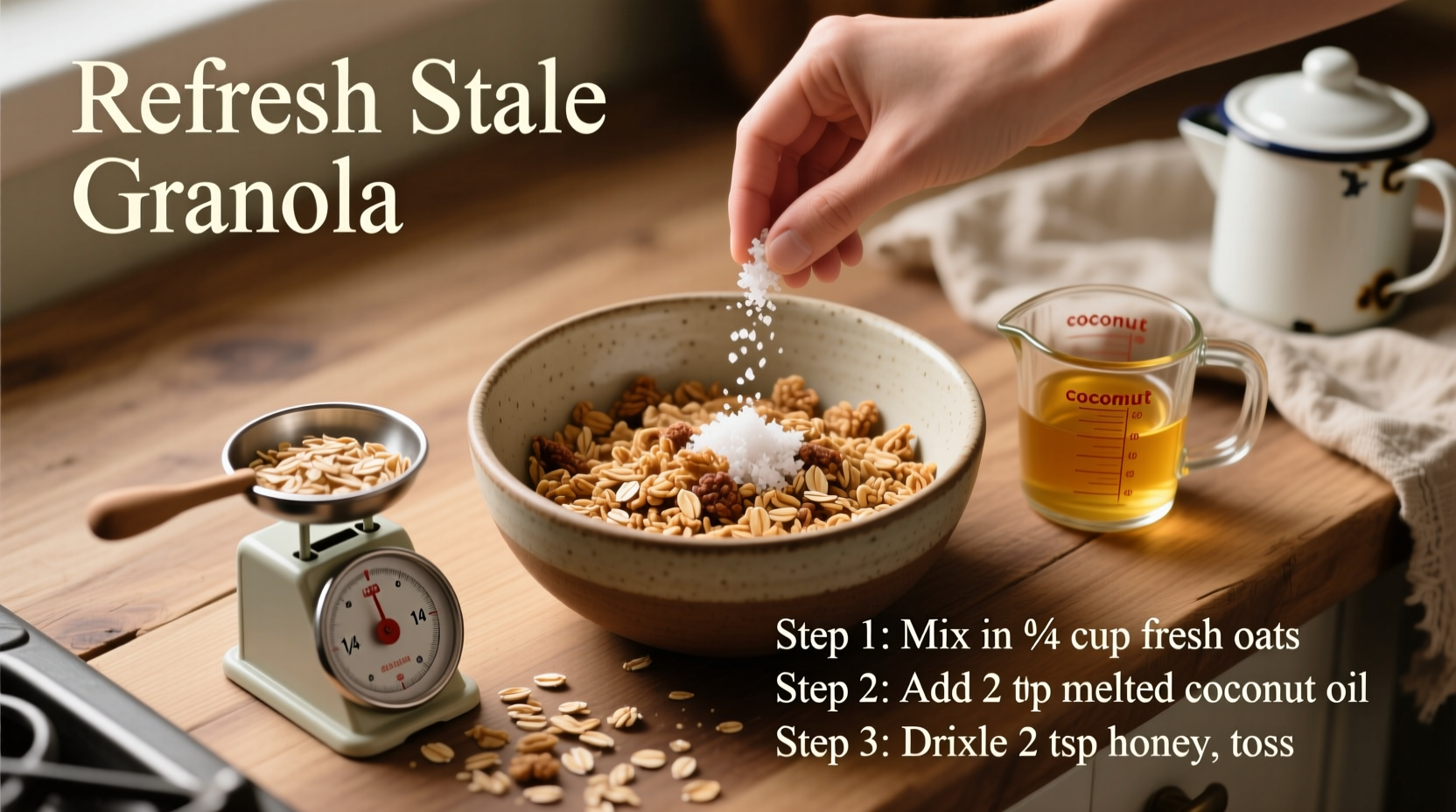
Staleness in granola isn't caused by spoilage—it's a moisture imbalance. Granola relies on low moisture content to maintain its signature crispness. When exposed to humidity or stored improperly, it absorbs ambient water vapor from the air. The oats, nuts, and seeds begin to soften, losing their snap and developing a leathery or chewy texture.
Adding more sweetener might seem logical because sticky syrups help bind clusters during initial baking. However, reheating granola with additional sugar introduces three problems:
- Increased sugar content: Most store-bought or homemade granolas already contain significant natural sugars. Reintroducing sweeteners pushes calorie and glycemic load higher.
- Over-browning or burning: Residual sugars caramelize quickly when reheated, leading to burnt edges and bitter flavors.
- Clumping and uneven texture: Extra syrup causes granola to fuse into dense clumps rather than reviving loose, airy clusters.
Instead of masking staleness with sweetness, the goal should be moisture removal—drying out the granola gently to re-crisp it without altering its composition.
“Reviving granola is about dehydration, not recarbohydration. The best method restores structure without compromising nutrition.” — Dr. Lena Patel, Food Scientist & Whole Grains Institute Advisor
Step-by-Step: How to Refresh Stale Granola Safely and Effectively
Follow this timeline-based approach to bring back your granola’s crunch using only heat and airflow—no added sugars required.
- Evaluate the condition (1–2 minutes): Check for signs of mold, off smells, or insect infestation. If present, discard immediately. If only texture has changed, proceed.
- Break up clumps (3 minutes): Use your fingers or a fork to gently separate large clusters. This ensures even heating and prevents under-dried pockets.
- Preheat oven to 300°F (150°C): A moderate temperature prevents scorching while allowing slow moisture release.
- Spread evenly on a baking sheet (1 minute): Use parchment paper or a silicone mat. Keep layer thin—no more than ½ inch deep.
- Bake for 10–15 minutes: Stir every 5 minutes to promote uniform drying. Watch closely after 10 minutes; color should deepen slightly but not darken.
- Cool completely (30–45 minutes): Cooling is critical. As granola cools, it re-crisps. Do not skip this step.
- Store properly (ongoing): Transfer to an airtight container away from heat and humidity.
This method works whether your granola is store-bought, homemade, nut-heavy, or seed-based. It preserves existing flavors while restoring mouthfeel.
Alternative Methods: When You Don’t Want to Use the Oven
Not everyone wants to heat their kitchen, especially in summer. Fortunately, there are other effective ways to refresh stale granola without sugar or high temperatures.
Air Fryer Method
Fast and energy-efficient. Use at 300°F (150°C), shaking basket every 3 minutes. Takes 6–10 minutes total. Ideal for small batches (1–2 cups).
Stovetop Revival
Heat a dry skillet over medium-low. Add granola in a single layer and stir frequently for 5–7 minutes until warm and crisp. Best for urgent use—don’t walk away, as direct heat increases burn risk.
Pantry-Only Drying (No Heat)
If granola is only slightly soft, place it in a breathable cotton bag or open bowl near a dehumidifier or fan for 24–48 hours. Rotate occasionally. This slow method avoids any thermal change and maintains raw-food integrity.
| Method | Time Required | Sugar Needed? | Best For |
|---|---|---|---|
| Oven Reheating | 20–30 min | No | Most granolas, especially dense or clustered types |
| Air Fryer | 8–10 min | No | Small portions, quick fixes |
| Stovetop | 5–7 min | No | Immediate use, no oven access |
| Ambient Drying | 24–48 hr | No | Raw granolas, low-energy preference |
| Added Syrup + Bake | 25 min | Yes | Avoid—leads to excessive sugar and clumping |
Tips Box: Smart Habits to Prevent Future Staleness
Tip: Add a food-safe silica gel packet (like those found in seaweed snacks) to absorb ambient moisture without touching the food.
Tip: Never scoop granola with a wet spoon. Introducing moisture starts the softening process immediately.
Mini Case Study: Reviving a Month-Old Homemade Batch
Sarah, a meal-prep enthusiast from Portland, makes large batches of homemade granola every four weeks. Her usual recipe includes rolled oats, almonds, sunflower seeds, cinnamon, olive oil, and a modest amount of maple syrup. After storing one batch in a ceramic jar with a loose lid, she noticed it had gone chewy by week three.
Rather than remake it, she tried the oven method: spread 3 cups on a parchment-lined tray, baked at 300°F for 12 minutes with two mid-way stirs. After cooling completely, the granola regained its snap. She noted no change in flavor and avoided adding any extra sweetener. She then transferred it to a lidded glass jar with a silica packet and reported it stayed fresh for another five weeks.
This case illustrates how proper revival and improved storage extend shelf life without sacrificing quality.
Checklist: Your Granola Rescue Protocol
- ☐ Inspect granola for spoilage (mold, odor, bugs)
- ☐ Break apart clumps by hand or fork
- ☐ Choose drying method: oven, air fryer, stovetop, or ambient
- ☐ Preheat equipment if needed (oven/fryer)
- ☐ Spread in thin, even layer
- ☐ Apply low, consistent heat (or none, if air-drying)
- ☐ Stir or shake periodically for even exposure
- ☐ Remove when lightly warmed and fragrant—not browned
- ☐ Cool completely before testing crispness
- ☐ Store in airtight container with moisture control
Following this checklist ensures success every time, regardless of granola type or origin.
Frequently Asked Questions
Can I freeze granola to keep it fresh longer?
Yes. Freezing is one of the most effective long-term storage methods. Place cooled granola in a vacuum-sealed or zip-top freezer bag, removing as much air as possible. Freeze for up to 6 months. Thaw at room temperature in the container to prevent condensation. No reheating needed—texture remains intact.
What if my granola tastes rancid after revival?
If granola smells musty, paint-like, or sour, it has likely oxidized due to high-fat ingredients (nuts, seeds, oils). This cannot be reversed by heating. Discard the batch. To prevent this, use fresh oils when making granola and consume within 2–3 months, even when stored properly.
Can I add new flavors during the revival process?
Light seasoning is possible—but skip liquids. Toss warm (not hot) granola with ground spices like cinnamon, cardamom, or cocoa powder. You can also add a pinch of sea salt or dried citrus zest. Avoid oils or syrups unless absolutely necessary, and if used, apply no more than ½ teaspoon per cup and rebake for 3–5 minutes to dry.
Expert Insight: The Science of Crispness
“The crispness of baked goods like granola depends on water activity—how much free moisture is available. Heating removes bound water slowly, shifting the equilibrium. Adding sugar reintroduces hygroscopic compounds that attract moisture faster, defeating the purpose.” — Dr. Alan Zhou, Post-Harvest Food Quality Specialist, UC Davis
This explains why sugar-based fixes fail long-term: they make granola more prone to reabsorbing humidity. True freshness comes from structural restoration, not superficial glazing.
Conclusion: Enjoy Fresh-Tasting Granola—Naturally
Reviving stale granola doesn’t require shortcuts or compromises. By understanding the role of moisture and applying gentle, controlled heat, you can restore its original texture without loading it with extra sugar. Whether you use the oven, air fryer, or a patience-driven air-dry method, the key is consistency and care.
Once revived, protect your investment with smart storage: airtight containers, cool environments, and moisture absorbers. These habits not only preserve texture but also honor the intention behind choosing granola—a nutritious, satisfying food that supports energy and well-being.
You’ve got the tools, knowledge, and confidence. Now go rescue that forgotten jar at the back of your pantry. Your taste buds—and your health—will thank you.




 浙公网安备
33010002000092号
浙公网安备
33010002000092号 浙B2-20120091-4
Comments
No comments yet. Why don't you start the discussion?