
Plastic surfaces are everywhere—in homes, cars, electronics, and appliances. Whether it's leftover tape glue, sticker remnants, or stubborn label adhesives, removing sticky residue can be frustrating. The challenge lies in eliminating the gunk without clouding, scratching, or weakening the plastic. Many people reach for harsh solvents or abrasive tools, only to end up with hazy streaks or permanent damage. The good news: there are safe, proven techniques that dissolve adhesive cleanly while preserving the integrity of even delicate plastics.
The key is understanding the type of plastic you're working with and choosing a method that matches its sensitivity. From polycarbonate screens to polypropylene containers and acrylic displays, not all plastics react the same way to cleaning agents. This guide covers gentle yet effective strategies using household items and specialty products, backed by material science and real-world testing.
Understanding Plastic Types and Adhesive Risks
Before applying any cleaner, identify the plastic type if possible. Common plastics include:
- Polyethylene (PE) – Found in bottles, bags, and containers; relatively chemical-resistant.
- Polypropylene (PP) – Used in food storage, automotive parts; heat and solvent tolerant.
- Polystyrene (PS) – Present in disposable cutlery, CD cases; prone to cracking with strong solvents.
- Acrylic (PMMA) – Often used in displays and lenses; scratches easily and dissolves in acetone.
- Polycarbonate (PC) – In electronics, safety glasses; impact-resistant but sensitive to ammonia.
Adhesives bond through tackifiers—sticky compounds in glues and tapes—that cling aggressively to smooth surfaces. Over time, exposure to heat or sunlight can cause these residues to polymerize, making them harder to remove. Aggressive scraping or chemical use may seem like a quick fix, but they risk leaving micro-scratches, etching, or discoloration.
“Always test your cleaning method on an inconspicuous area first. A small patch test can prevent costly mistakes.” — Dr. Lena Torres, Materials Scientist at GreenSurface Labs
Safe and Effective Removal Methods
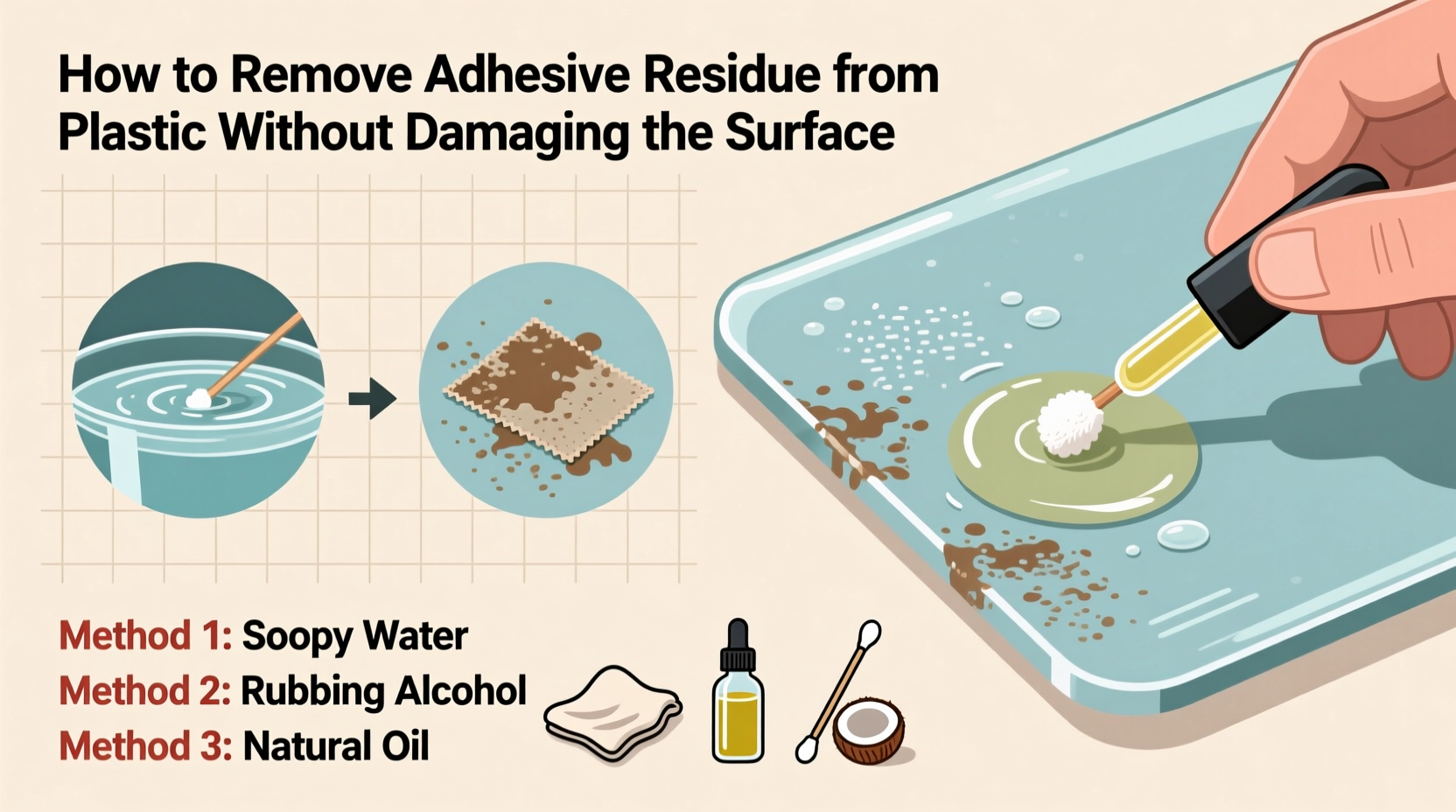
The best approach combines patience, mild solvents, and soft tools. Below are five reliable techniques ranked by effectiveness and safety across most plastic types.
1. Warm Soapy Water and Manual Rubbing
For fresh or light adhesive residue, start simple. Warm water softens many pressure-sensitive adhesives, especially when combined with dish soap.
- Soak a soft cloth or sponge in warm, soapy water (use a mild detergent).
- Lay it over the sticky area for 5–10 minutes to loosen the bond.
- Gently rub in circular motions with the cloth. Avoid steel wool or scouring pads.
- Rinse with clean water and dry thoroughly.
This method works well on polyethylene and polypropylene but may struggle with aged glue.
2. Vegetable Oil or Cooking Oil
Oil breaks down adhesive by penetrating and dissolving the tackifier polymers. It’s non-toxic and widely available.
Apply a few drops of olive, canola, or coconut oil to the affected zone. Use a cotton pad to spread it evenly. After soaking, wipe with a microfiber cloth. Follow up with soapy water to remove oily film.
3. Rubbing Alcohol (Isopropyl Alcohol, 70%)
Alcohol is a moderate-strength solvent effective on dried adhesives. It evaporates quickly and doesn’t leave residue.
Dampen a lint-free cloth with rubbing alcohol—never pour directly onto plastic. Gently rub the area in small circles. Check frequently to avoid over-wiping. Stop immediately if the surface appears cloudy.
Note: Avoid using alcohol on acrylic or polycarbonate unless confirmed safe by the manufacturer. Some screen protectors and electronic housings degrade under prolonged exposure.
4. White Vinegar Solution
A natural alternative, white vinegar contains acetic acid that helps dissolve glue without harsh fumes.
Mix equal parts vinegar and water. Apply with a spray bottle or soaked cloth. Let it sit for 5–10 minutes, then gently scrub with a soft sponge. Rinse afterward to neutralize acidity.
Vinegar is less aggressive than alcohol but may require multiple applications for heavy buildup.
5. Commercial Adhesive Removers (Use with Caution)
Products like Goo Gone, 3M Adhesive Remover, or WD-40 are powerful but risky on plastics. Always read labels for plastic compatibility.
If using, apply sparingly to a cloth—not the surface—and wipe briefly. Immediately follow with a damp cloth and mild soap to remove chemical traces. Never use petroleum-based removers on polystyrene or acrylic.
| Method | Safety on Most Plastics | Effectiveness | Best For |
|---|---|---|---|
| Warm Soapy Water | ★★★★★ | ★★☆☆☆ | Fresh residue, food-safe items |
| Cooking Oil | ★★★★☆ | ★★★☆☆ | Light to medium stickiness |
| Rubbing Alcohol (70%) | ★★★☆☆ | ★★★★☆ | Dried tape, shipping labels |
| White Vinegar Mix | ★★★★☆ | ★★★☆☆ | Natural cleaning preference |
| Commercial Removers | ★★☆☆☆ | ★★★★★ | Heavy-duty jobs (with caution) |
Step-by-Step Guide: Removing Residue Safely
Follow this timeline-based process to maximize results without damage:
- Identify the plastic: Look for recycling symbols (♳–♷) or consult product manuals.
- Test in a hidden spot: Apply your chosen method to a small, inconspicuous area. Wait 5 minutes and inspect for clouding or softening.
- Start with the mildest option: Begin with soapy water or oil. Escalate only if needed.
- Let the solvent dwell: Allow time for penetration—typically 5–15 minutes.
- Wipe gently with microfiber: Use light pressure and circular motion. Replace cloths as they pick up gunk.
- Rinse and dry: Remove any residual cleaner to prevent long-term effects.
- Buff to restore shine: Use a dry microfiber cloth to polish the surface.
Repeat steps 3–6 if residue persists. Patience prevents rushed decisions that lead to scratches.
Tools and Materials Checklist
- Soft microfiber cloths (lint-free)
- Cotton pads or swabs
- Mild dish soap
- Vegetable oil or rubbing alcohol
- White vinegar
- Warm water
- Plastic scraper (e.g., old credit card)
- Gloves (optional, for prolonged contact)
Avoid metal scrapers, paper towels (can scratch), and undiluted bleach or acetone.
Real-World Example: Cleaning a Child’s Toy Bin
Sarah, a parent in Portland, bought a secondhand toy bin made of high-density polyethylene (HDPE). It had several price tags and tape strips with hardened glue. She tried peeling them off, which left behind sticky patches and faint scratches.
She began by soaking a cloth in warm, soapy water and placing it over one section for 10 minutes. Most residue softened enough to wipe away. On stubborn spots, she applied a drop of olive oil, waited 15 minutes, and gently rubbed with a cotton pad. After two rounds, the entire bin was clean. She rinsed it with a damp cloth and dried it completely. No damage occurred, and the bin looked nearly new.
Sarah noted that rushing with a knife would have ruined the container. Instead, slow, consistent effort preserved both appearance and function.
Do’s and Don’ts When Cleaning Plastic Surfaces
| Action | Recommendation |
|---|---|
| Do perform a patch test | Essential for avoiding irreversible damage |
| Do use soft, non-abrasive cloths | Microfiber or cotton are ideal |
| Do allow dwell time for solvents | Gives chemicals time to work without scrubbing |
| Don’t use acetone or nail polish remover | Dissolves acrylic and damages many plastics |
| Don’t soak plastic for hours | Can cause warping or delamination |
| Don’t apply pressure with sharp tools | Even plastic scrapers should be used lightly |
Frequently Asked Questions
Can I use a hairdryer to soften adhesive on plastic?
Yes, but with caution. Low heat can loosen glue, making it easier to wipe away with a cloth. Keep the dryer at least 6 inches away and move continuously to prevent melting. Never use high heat on thin or flexible plastics like PVC or polystyrene.
Will baking soda damage plastic if used as a scrub?
Baking soda is mildly abrasive. While safe on durable plastics like HDPE or PP, it can scratch softer or glossy surfaces such as acrylic or polycarbonate. If using, mix with water into a paste and test first. Avoid on transparent screens or finishes requiring optical clarity.
How do I remove residue from a car’s interior plastic trim?
Interior trims are often made of ABS or TPO plastics, which tolerate mild solvents. Use rubbing alcohol on a microfiber cloth—never spray directly. Wipe gently, then follow with a dry cloth. Avoid silicone-based cleaners that can attract dust over time.
Expert Insight: Preserving Long-Term Surface Integrity
“The goal isn’t just to remove the adhesive—it’s to maintain the material’s original condition. Over-cleaning or using mismatched chemicals accelerates aging. When in doubt, slower and gentler wins.” — Marcus Reed, Senior Restoration Technician at AutoFinish Pro
Professional detailers emphasize that repeated exposure to solvents—even safe ones—can degrade plastic over time. Occasional cleaning with appropriate methods poses little risk, but daily use of alcohol wipes on dashboard panels, for example, can lead to fading and brittleness within months.
Final Recommendations and Prevention Tips
Once the residue is gone, consider preventive measures:
- Use removable vinyl decals instead of glued stickers on valuable items.
- Label plastic containers with washable markers or reusable tags.
- Remove stickers promptly after purchase—fresh adhesive is easier to manage.
- Store plastic items away from direct sunlight to prevent adhesive hardening.
For ongoing maintenance, keep a microfiber cloth and small bottle of rubbing alcohol (for compatible plastics) in your cleaning kit. Address spills and stickiness early before they set in.
Conclusion
Removing adhesive residue from plastic doesn’t require harsh chemicals or risky tools. With a clear understanding of material types and the right technique, you can restore surfaces safely and effectively. Prioritize gentle methods, test first, and work patiently. Whether it’s a child’s toy, kitchen container, or electronic housing, preserving the finish matters as much as removing the stickiness.




 浙公网安备
33010002000092号
浙公网安备
33010002000092号 浙B2-20120091-4
Comments
No comments yet. Why don't you start the discussion?