
A burnt smell lingering in your microwave isn’t just unpleasant—it can taint the taste of your food and make reheating meals an ordeal. Whether you accidentally overheated popcorn or left a dish too long, the odor can cling stubbornly to interior surfaces. While commercial cleaners exist, many contain harsh chemicals that leave behind residues or fumes. A safer, more natural alternative? Lemon and baking soda. Together, these kitchen staples neutralize odors, break down grime, and leave your microwave smelling fresh and clean. This guide walks you through exactly how to use them effectively, why they work, and how to prevent future incidents.
The Science Behind Lemon and Baking Soda
Baking soda (sodium bicarbonate) is a well-known deodorizer. It works by neutralizing acidic and basic odor molecules on contact. When food burns inside a microwave, it often produces acidic compounds that contribute to the pungent smell. Baking soda counteracts this acidity, reducing the intensity of the odor at a molecular level.
Lemon juice, rich in citric acid, complements baking soda in two ways. First, its strong citrus scent masks residual smells during cleaning. Second, citric acid helps dissolve sticky residues and carbonized food particles that harbor odor. When heated, lemon releases aromatic vapors that penetrate crevices, lifting embedded smells from plastic, glass, and enamel surfaces.
Together, they form a powerful yet gentle cleaning duo—non-toxic, affordable, and readily available in most homes. Unlike chemical sprays, they won’t corrode internal components or leave harmful residues near your food.
“Natural solutions like lemon and baking soda are not only effective but also safer for households with children and pets.” — Dr. Lena Peterson, Environmental Health Scientist
Step-by-Step Guide to Eliminate Burnt Smell
This method uses steam to loosen residue and distribute the cleaning agents evenly across all interior surfaces. Follow these steps carefully for optimal results.
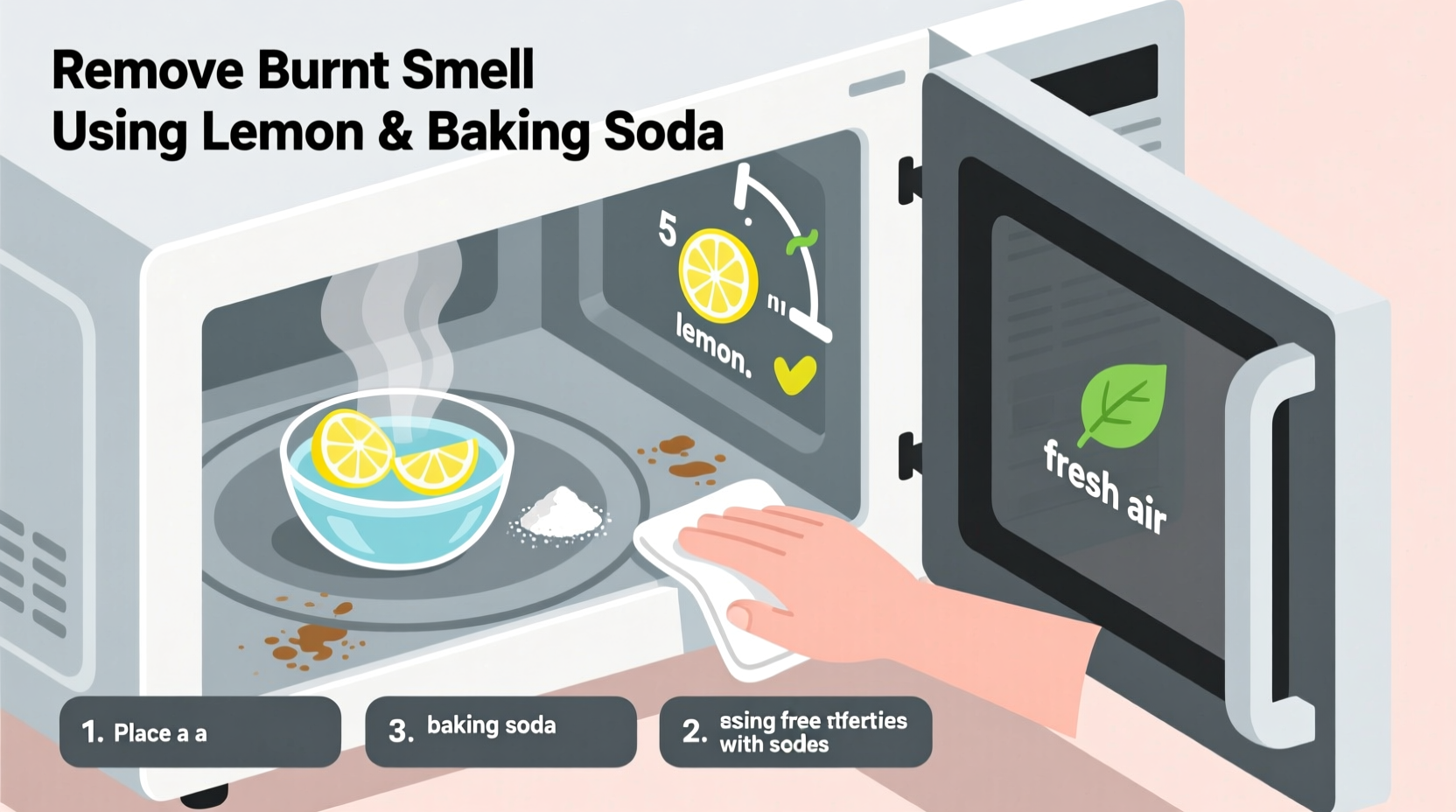
- Prepare the cleaning solution: Squeeze the juice of one medium lemon into a microwave-safe bowl. Add 1 cup of water and 1 tablespoon of baking soda. Stir gently until the baking soda dissolves.
- Heat the mixture: Place the bowl in the center of the microwave. Heat on high for 3–5 minutes, or until the solution boils and produces steady steam. Watch closely—once boiling begins, let it run for 2 minutes to maximize vapor buildup.
- Let it sit: After heating, leave the door closed for 10–15 minutes. This allows steam to soften dried-on food and carry lemon scent throughout the cavity, breaking down odor-causing compounds.
- Wipe down the interior: Carefully remove the bowl (it will be hot). Dip a soft sponge or microfiber cloth in warm water, wring it out, and wipe all interior surfaces—including the ceiling, walls, turntable, and door seal. For stubborn spots, sprinkle a pinch of dry baking soda directly on the cloth for mild abrasion.
- Rinse and repeat if necessary: If the smell persists, repeat the process once more. For severe cases, perform a second round after letting the first treatment sit overnight.
- Clean removable parts: Wash the turntable and roller ring in warm, soapy water. Dry thoroughly before replacing.
- Final air-out: Leave the microwave door open for 15–20 minutes to allow any remaining moisture to evaporate and ensure complete freshness.
Do’s and Don’ts When Cleaning Your Microwave
To maintain appliance longevity and safety, follow best practices. The table below outlines key dos and don’ts when using lemon and baking soda to remove burnt odors.
| Do’s | Don’ts |
|---|---|
| Use microwave-safe containers for heating the solution | Use metal scrubbers or steel wool—they can damage the interior coating |
| Allow steam to sit for at least 10 minutes after boiling | Operate the microwave empty—even briefly—to avoid damaging the magnetron |
| Test cleaning solution on a small area if surface appears delicate | Mix baking soda with vinegar inside the microwave—this creates excessive foam and pressure |
| Replace the charcoal filter (if applicable) every 6–12 months | Ignore the door seal—burnt particles often accumulate there and perpetuate odors |
| Wipe regularly to prevent buildup | Use bleach-based cleaners—they can degrade plastic components over time |
Real Example: How Sarah Fixed Her Overheated Microwave
Sarah, a busy teacher and mother of two, once forgot about a container of lasagna leftovers in her microwave. Distracted by helping her kids with homework, she returned to find smoke pouring out and a sharp, acrid smell filling the kitchen. No amount of airing out helped—the next morning, her oatmeal tasted faintly smoky.
She tried wiping the interior with a damp cloth, but the odor remained. Remembering a tip from her grandmother, she combined lemon juice, water, and baking soda in a bowl and heated it for 4 minutes. She let the steam sit for 15 minutes, then wiped every surface. The difference was immediate. “It didn’t just cover up the smell,” she said. “It actually made the whole kitchen smell like a spa.” Two weeks later, she reported no recurrence—even after reheating fish and garlic-heavy dishes.
Sarah now keeps a small bottle of lemon-scented baking soda spray under her sink for quick touch-ups, proving that simple solutions often work best.
Preventing Future Burnt Smells
Once your microwave is clean, take proactive steps to avoid repeating the issue. Prevention is far easier than remediation.
- Cover food properly: Use microwave-safe lids or paper towels to trap splatters and reduce cleanup needs.
- Set timers: Even if you’re experienced, distractions happen. Use a separate kitchen timer or phone alarm when heating longer dishes.
- Check expiration dates: Old or dried-out foods heat unevenly and are more likely to burn.
- Reheat in intervals: Instead of setting 5 minutes at once, heat in 1-minute bursts, stirring in between.
- Clean weekly: A quick wipe-down prevents residue buildup that intensifies odors when heated.
Frequently Asked Questions
Can I use bottled lemon juice instead of fresh?
Yes, but fresh lemon juice is more effective due to higher citric acid content and lack of preservatives. Bottled juice may contain additives that reduce cleaning power and leave a faint aftertaste.
How often should I clean my microwave with this method?
If used daily, perform a full lemon and baking soda treatment every 4–6 weeks. For lighter use, every 2–3 months is sufficient. Spot-clean spills immediately to prevent hardening.
Will this method work on older microwaves with discolored interiors?
Yes. While discoloration from years of use may not fully disappear, the odor-removing properties remain effective. The steam penetrates porous areas where smells linger, even in aged units.
Maximizing Long-Term Freshness
For sustained results, integrate natural odor control into your routine. In addition to periodic deep cleans, consider placing a cotton ball soaked in lemon essential oil inside the microwave (away from heating elements) when not in use. Replace it monthly. Alternatively, leave a small open box of baking soda on the shelf above the microwave—its passive absorption helps reduce ambient kitchen odors that might seep in during ventilation cycles.
Some modern microwaves come with built-in deodorizing functions or activated carbon filters. If yours has one, consult the manual to learn how to maintain it. These filters typically need replacement every 6 to 12 months and play a critical role in managing persistent smells, especially in high-use environments.
“Odor prevention starts before the problem occurs. Regular maintenance is cheaper and more effective than emergency fixes.” — James Lin, Appliance Maintenance Technician
Conclusion: A Simple Solution for a Common Problem
Removing a burnt smell from your microwave doesn’t require expensive products or technical expertise. With just lemon and baking soda—two items already in most kitchens—you can restore freshness safely and efficiently. The method leverages natural chemistry to break down odors, sanitize surfaces, and leave behind a light, pleasant aroma. More importantly, it empowers you to maintain a cleaner, healthier kitchen environment without relying on synthetic fragrances or harsh detergents.
Now that you know how simple and effective this process is, don’t wait for the next accident to act. Try this method today, even as a preventive measure. Share your experience with friends or family who’ve complained about their own smelly microwaves. Small habits lead to big improvements—one steamy bowl at a time.




 浙公网安备
33010002000092号
浙公网安备
33010002000092号 浙B2-20120091-4
Comments
No comments yet. Why don't you start the discussion?