
Accidentally stepping on chewing gum and tracking it into your home is more common than you might think. Once it sticks to the carpet fibers, removing it can seem daunting—especially if you're worried about damaging or discoloring the fabric. But before reaching for chemical cleaners or calling a professional, consider that many solutions are already in your kitchen or pantry. With careful technique and common household items, you can lift gum from carpet safely, effectively, and without leaving stains.
The key lies in understanding carpet composition, gum behavior under different conditions, and which materials interact safely with synthetic or natural fibers. This guide walks through proven, low-risk techniques using ice, peanut butter, vinegar, dish soap, and other everyday items—all while preserving your carpet’s appearance and integrity.
Why Gum Is Tricky to Remove from Carpet
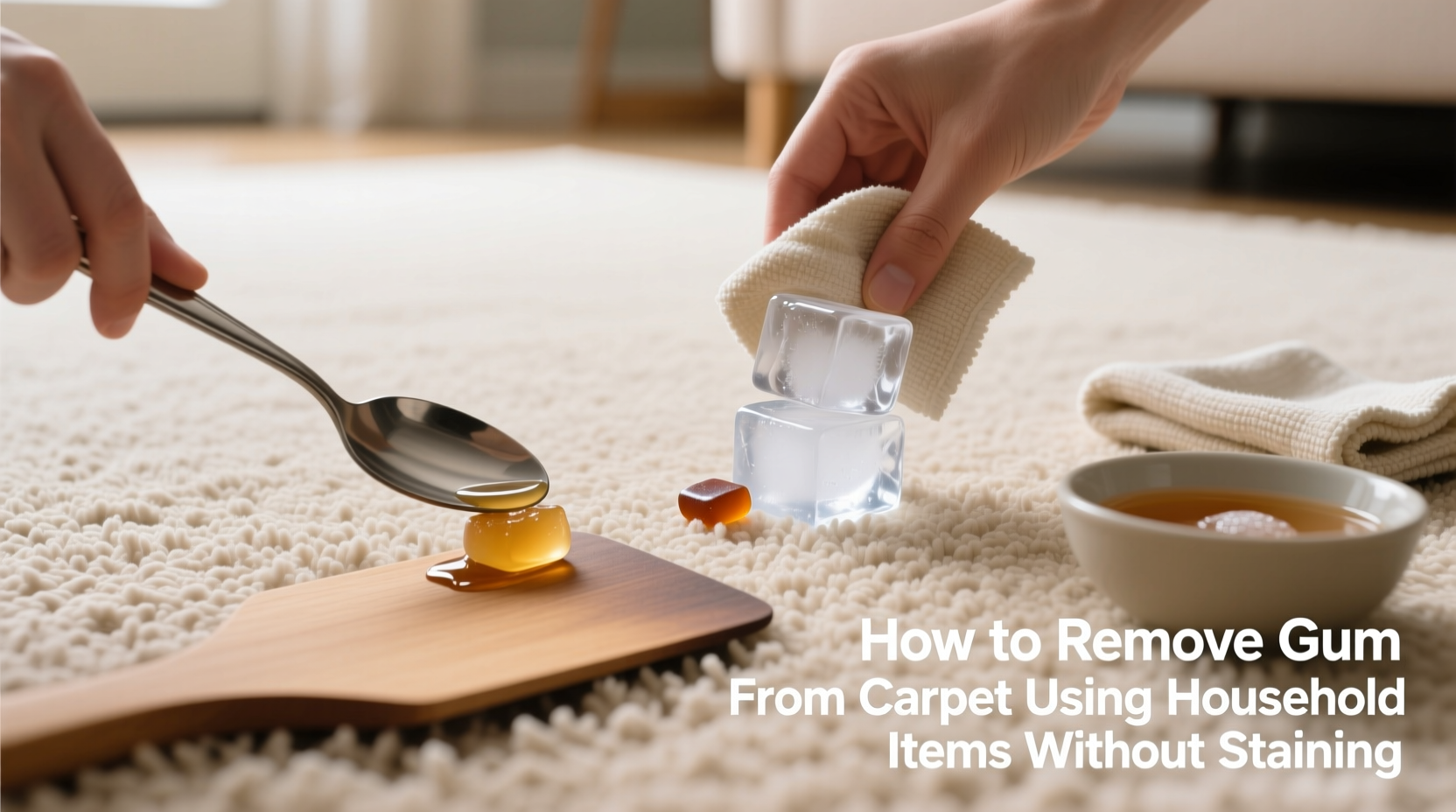
Gum is engineered to be sticky and elastic, qualities that make it ideal for chewing but problematic when embedded in carpet fibers. Most commercial gums contain polymers, resins, and softening agents designed to resist breakdown by saliva or water. When pressed into carpet pile, these substances cling tightly to individual strands, making simple scraping ineffective—and potentially harmful.
Attempting to pull gum out by hand or with a blunt tool often stretches the fibers, worsening the mess or even tearing the backing. Heat can soften gum further, increasing its adhesion. Meanwhile, aggressive solvents like acetone may dissolve the gum but also strip dyes from colored carpets, leading to permanent discoloration.
The safest removal strategies focus on controlled hardening or lubricated lifting—methods that minimize physical stress and avoid harsh chemicals.
“Gum removal isn’t about force—it’s about manipulation. Change the gum’s physical state, and extraction becomes effortless.” — Dr. Linda Reeves, Textile Restoration Specialist
Step-by-Step Guide: Removing Gum Using Ice (Best for Fresh Stains)
Freezing gum makes it brittle and easier to break away cleanly. This method works best when the gum is relatively fresh and hasn’t bonded deeply into the carpet base.
- Prepare an ice pack: Wrap two or three ice cubes in a small plastic bag or use a reusable cold pack. Avoid placing ice directly on the carpet to prevent moisture absorption.
- Apply the ice: Place the wrapped ice over the gum spot. Let it sit for 10–15 minutes. Larger clumps may require up to 20 minutes.
- Test brittleness: Gently poke the gum with a spoon handle or dull butter knife. If it cracks instead of stretching, it’s ready.
- Chip away carefully: Use the edge of a credit card or spoon to lift and flake off the frozen gum. Work slowly from the edges inward to avoid snagging fibers.
- Vacuum residue: After removal, lightly vacuum the area to collect any tiny fragments.
- Blot if needed: If condensation forms, dab the spot with a clean, dry cloth to absorb moisture.
Alternative Methods Using Common Household Items
If freezing doesn’t fully work—especially with older, sun-warmed, or oil-based gum—several pantry staples can help loosen adhesion without risking color damage.
Using Peanut Butter (Oil-Based Lubrication)
Natural peanut butter contains oils that break down the adhesive compounds in gum. Opt for brands with high oil content and minimal additives.
- Scoop a teaspoon of peanut butter onto the gum.
- Let it sit for 5–10 minutes, allowing oils to penetrate.
- Gently rub with a soft toothbrush or cloth in circular motions.
- Wipe away loosened gum and excess butter with a paper towel.
- Clean the area with a mixture of warm water and mild dish soap to remove oily residue.
Vinegar and Dish Soap Solution (For Delicate or Light-Colored Carpets)
This gentle acid-oil combo helps dissolve gum while being safe for most dyes. White vinegar mildly breaks down polymers, while dish soap lifts grease.
- Mix one part white vinegar with two parts warm water.
- Add a few drops of liquid dish soap.
- Dampen a clean cloth with the solution—do not soak the carpet.
- Press the cloth over the gum for 5 minutes to allow penetration.
- Use a spoon or credit card to gently lift the gum upward.
- Rinse the spot with a water-dampened cloth and blot dry.
Hairspray Method (Only for Synthetic Fibers)
Some aerosol hairsprays contain alcohol that can harden gum temporarily. However, this method carries higher risk due to potential staining or fiber degradation.
- Spray a small amount directly onto the gum—not the carpet around it.
- Wait 2–3 minutes for the gum to stiffen.
- Peel or chip it off gently.
- Immediately wipe the area with a damp cloth to remove chemical residue.
Do’s and Don’ts: A Quick Reference Table
| Action | Recommended? | Reason |
|---|---|---|
| Use ice to freeze gum | ✅ Yes | Safe, non-toxic, effective on fresh gum |
| Scrape with a butter knife | ✅ Yes (if gum is frozen) | Sharp tools are safe only after hardening |
| Apply peanut butter | ✅ Yes (with cleanup) | Oils loosen gum but must be washed afterward |
| Use rubbing alcohol | ⚠️ Caution | May bleach dyes; test first |
| Pour boiling water | ❌ No | Can warp backing and set stains |
| Use acetone or nail polish remover | ❌ No | High risk of permanent discoloration |
| Rub aggressively | ❌ No | Damages fibers and spreads gum deeper |
Mini Case Study: Removing Summer Park Gum from Living Room Carpet
When 8-year-old Maya came home from the park, she tracked in several pieces of melted gum stuck to her sandals. By evening, five dark spots were embedded in the family’s light beige nylon carpet. Her parents, wary of store-bought removers, opted for the ice method.
They applied ice packs for 15 minutes per spot. Using old credit cards, they chipped off 80% of the gum. The remaining bits—still slightly tacky—were treated with a vinegar-dish soap mix. After gentle scrubbing and blotting, all traces disappeared without fading or texture change. The entire process took 40 minutes and cost nothing.
This real-life example shows that patience and proper technique trump expensive products. The family avoided hiring a cleaner and preserved their carpet’s warranty by not using unapproved chemicals.
Checklist: How to Safely Remove Gum from Carpet
Follow this actionable checklist to ensure success and prevent damage:
- 🔲 Identify the type of carpet (synthetic, wool, blend) and check manufacturer guidelines if available.
- 🔲 Blot any surface dirt or debris around the gum with a dry paper towel.
- 🔲 Test your chosen method on an inconspicuous area first.
- 🔲 Freeze the gum with ice for 10–20 minutes.
- 🔲 Gently lift the hardened gum with a spoon or credit card.
- 🔲 For stubborn residue, apply peanut butter or vinegar-soap solution.
- 🔲 Clean the area with mild detergent and water after treatment.
- <()> Blot dry thoroughly with a clean towel.
- 🔲 Vacuum once completely dry to restore pile texture.
Frequently Asked Questions
Will peanut butter stain my carpet?
Not if used correctly. Natural peanut butter lacks artificial colors, but it leaves an oily film. Always follow up with a cleaning solution of warm water and dish soap, then blot dry. Avoid chunky varieties—they can leave particulate matter behind.
Can I use WD-40 to remove gum?
Technically yes, but not recommended. WD-40 can leave a greasy stain and strong odor, and it may degrade synthetic fibers over time. It also increases flammability. Safer alternatives exist, so reserve WD-40 for mechanical uses only.
What if the gum has been there for weeks?
Old gum absorbs dirt and oxidizes, becoming harder to remove. Begin with the ice method to see if it fractures. If not, try a longer application (10–15 minutes) of peanut butter or vinegar solution. You may need to repeat the process twice. Persistence pays off—most aged gum can still be removed without replacement.
Expert Insight: Preserving Carpet Longevity
Carpet manufacturers emphasize that improper stain removal causes more damage than the stains themselves. According to industry standards, over 60% of carpet replacements are due to mishandled spills and DIY cleanings gone wrong.
“The average homeowner uses twice as much pressure as necessary when treating stains. Gentle, repeated applications beat brute force every time.” — Marcus Tran, Senior Technician at National Floor Care Institute
Experts recommend keeping a carpet care kit stocked with microfiber cloths, a soft-bristle brush, mild detergent, and a handheld scraper. Regular maintenance reduces the need for emergency fixes—and boosts carpet lifespan by 3–5 years.
Conclusion: Take Action Before the Mess Sets In
Removing gum from carpet doesn’t require specialty products or professional help in most cases. With ice, vinegar, peanut butter, or dish soap, you can resolve the issue quickly and safely. The real secret isn’t the product—it’s the approach: slow, deliberate, and respectful of the carpet’s structure.
Acting promptly improves results dramatically. The longer gum sits, the more it bonds and collects dust, turning a minor nuisance into a permanent mark. By mastering these household techniques, you protect your floors, save money, and gain confidence in handling everyday accidents.




 浙公网安备
33010002000092号
浙公网安备
33010002000092号 浙B2-20120091-4
Comments
No comments yet. Why don't you start the discussion?