
Accidentally stepping on chewing gum and tracking it into your home is more common than you might think. Whether it's a child’s snack gone wrong or a forgotten wad stuck to a shoe, gum can quickly become embedded in carpet fibers, leaving behind a sticky, unsightly mess. While commercial solvents and cleaning products are often recommended, they aren’t always necessary—and sometimes, they can damage delicate carpet materials or leave behind strong odors.
There is a simpler, safer, and surprisingly effective method: using just ice and a spoon. This approach leverages basic physics—freezing the gum to make it brittle—so it can be cleanly removed without pulling out carpet fibers or spreading the stain. It requires no harsh chemicals, minimal tools, and can be completed in under 20 minutes. For homeowners, parents, or renters looking for a quick fix without risking damage to their flooring, this technique is both practical and reliable.
The Science Behind Freezing Gum
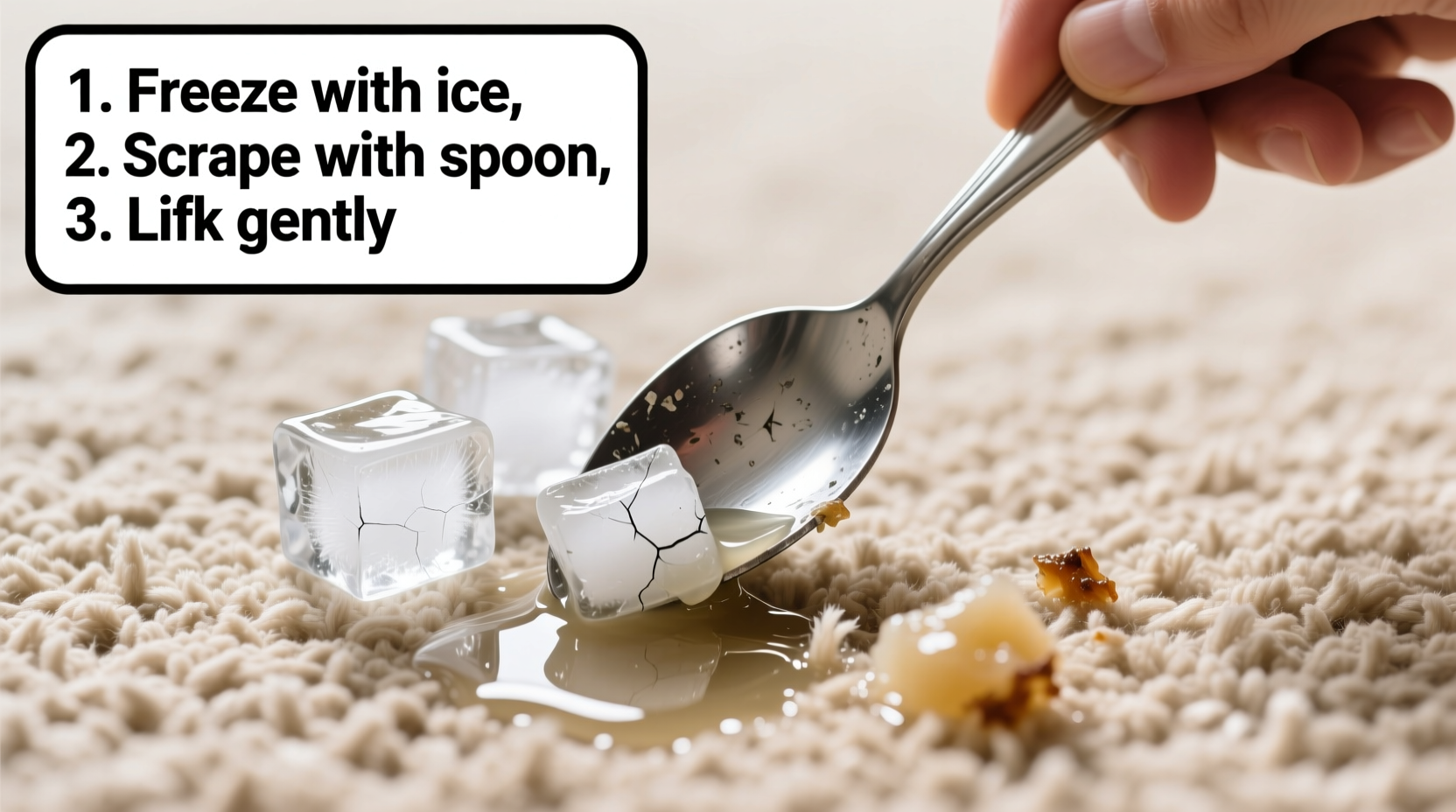
Gum is designed to be chewy and adhesive, which makes it stubborn when stuck to surfaces. Its elasticity allows it to stretch and bind tightly to carpet threads, making scraping or pulling risky. However, gum has a critical weakness: temperature sensitivity. When exposed to cold, the polymers and resins that give gum its chewiness harden and become brittle.
By applying ice directly to the gum, you lower its temperature rapidly, causing it to contract and lose its tackiness. Once frozen, the gum transforms from a malleable blob into a solid chunk that can be lifted or broken away with minimal effort. This phase change is the key to successful removal without damaging the carpet.
This principle isn't theoretical—it's backed by material science. According to Dr. Lena Pruitt, a household materials researcher at the Institute of Surface Dynamics, “Adhesives like those in chewing gum undergo glass transition at low temperatures. What was once pliable becomes rigid, allowing mechanical removal without residue spread.” In other words, freezing turns a messy problem into a manageable one.
“Freezing adhesives before removal is a standard practice in forensic and restoration work. It prevents further embedding and reduces fiber damage.” — Dr. Lena Pruitt, Material Scientist
Step-by-Step Guide: Removing Gum with Ice and a Spoon
This method works best on most carpet types, including nylon, polyester, olefin, and wool blends. Follow these steps carefully to avoid damaging fibers or pushing the gum deeper into the pile.
- Assess the Situation
Examine the size and depth of the gum deposit. If multiple pieces are scattered, treat them individually. Avoid touching or rubbing the gum, as this will only press it deeper into the carpet. - Gather Your Tools
You’ll need only two items:- Ice cubes (preferably wrapped in a small plastic bag or sealed in a ziplock to prevent water leakage)
- A dull-edged spoon (a butter knife or dinner spoon works well; avoid sharp utensils)
- Apply the Ice
Place the ice directly onto the gum. Use a sealed bag to prevent melting water from soaking into the carpet. Hold it in place for 15–20 minutes. Larger globs may require up to 30 minutes. Do not rush this step—full hardening is essential. - Test for Brittleness
After cooling, gently tap the gum with the back of the spoon. If it cracks or feels solid, it’s ready. If it still feels soft or gummy, reapply the ice for another 10 minutes. - Scrape Gently from the Edge
Starting at the outer edge of the gum, use the spoon to lift and chip away the frozen mass. Work slowly and avoid digging into the carpet. Let the spoon glide underneath the gum rather than forcing it. - Remove Residual Fragments
Small shards may remain. Use the tip of the spoon to flick them off. If any tiny bits are still sticky, reapply ice briefly to freeze them again. - Vacuum Lightly
Once all visible gum is removed, use a vacuum cleaner on low suction to pick up any remaining debris. This also helps lift flattened carpet fibers.
Common Mistakes to Avoid
Even simple methods can go wrong if executed carelessly. Below are frequent errors people make when trying to remove gum with ice and a spoon—and how to avoid them.
| Mistake | Why It’s Problematic | Better Approach |
|---|---|---|
| Rubbing or smearing the gum | Spreads the adhesive over a larger area and forces it deeper into fibers | Do not touch until frozen; let the ice do the work |
| Using a sharp knife | Can cut carpet strands, leading to permanent snags or holes | Use only a dull spoon or plastic scraper |
| Removing ice too soon | Partially frozen gum stretches instead of breaking, worsening the mess | Wait at least 15–20 minutes; test firmness before scraping |
| Pouring water to melt ice residue | Wets the carpet backing, risking mold or mildew | Blot excess moisture with a dry cloth; allow natural air drying |
| Skipping the vacuum step | Leaves micro-particles that attract dirt over time | Always vacuum after removal to restore texture and cleanliness |
Real-Life Example: A Parent’s Quick Fix
Sarah Thompson, a mother of two in Portland, Oregon, faced a classic household crisis when her 6-year-old son brought home a piece of gum stuck to his sneaker. Without realizing it, he walked across the living room carpet, leaving behind three separate gum deposits—one near the couch, one by the TV stand, and a larger clump near the doorway.
“I didn’t want to use chemicals because we have a baby who crawls everywhere,” Sarah recalls. “I remembered seeing something about using ice, so I grabbed a few cubes from the freezer and a spoon from the drawer.”
She wrapped the ice in a sandwich bag and applied it to the largest gum spot. After 20 minutes, she tested it and found it rock-hard. Using a soup spoon, she gently pried the gum upward from the edge. To her surprise, it came off in one clean piece. She repeated the process for the other spots, taking less than 30 minutes total. “The carpet looked almost untouched afterward. No stains, no fuzziness. I was amazed at how well it worked with just two kitchen items.”
Sarah now keeps a note on her fridge: “Gum on carpet? Ice + spoon. Wait. Scrape. Done.”
Tips for Success and Prevention
To maximize your chances of complete gum removal and minimize future incidents, consider the following advice.
- Act quickly. The sooner you address the gum, the less likely it is to absorb dirt or bond deeply with fibers.
- Use cubed ice, not crushed. Cubes stay colder longer and deliver consistent cooling without excessive moisture.
- Work in sections for large deposits. Big wads may need segment-by-segment freezing and removal.
- Keep spare spoons handy. Designate an old spoon for cleaning tasks to avoid cross-contamination.
- Educate household members. Teach children and guests to dispose of gum properly and report accidents immediately.
Frequently Asked Questions
Will this method work on all carpet types?
Yes, the ice-and-spoon technique is safe for most residential carpets, including loop pile, cut pile, and blends. It avoids chemical exposure and physical abrasion, making it ideal for delicate or colored rugs. However, for antique or heirloom textiles, consult a professional cleaner first.
What if the gum leaves a stain after removal?
If a faint residue or mark remains, blot it with a cloth dampened with cool water and a drop of dish soap. Rinse with a clean, wet cloth and blot dry. Avoid scrubbing. For persistent discoloration, a carpet-safe enzymatic cleaner may help break down organic traces.
Can I use frozen gel packs instead of ice?
Yes, reusable gel ice packs work well and reduce water leakage risk. Just ensure the surface is flat and covers the gum completely. Wrap in a thin cloth to prevent over-freezing surrounding carpet.
Checklist: Remove Gum from Carpet Using Ice and a Spoon
Follow this concise checklist to ensure success:
- ✅ Locate all gum deposits
- ✅ Gather ice (in a sealed bag) and a dull spoon
- ✅ Apply ice directly to the gum for 15–30 minutes
- ✅ Test for hardness before scraping
- ✅ Scrape from the edge inward using gentle pressure
- ✅ Remove all fragments and inspect the area
- ✅ Vacuum lightly to restore carpet texture
- ✅ Blot any moisture and allow to air dry
Conclusion: A Simple Solution That Really Works
Dealing with gum on carpet doesn’t require expensive cleaners or complicated procedures. With just two everyday items—ice and a spoon—you can effectively eliminate one of the most frustrating household spills. This method is non-toxic, cost-free, and gentle on your flooring, making it ideal for homes with children, pets, or sensitivities to chemicals.
The key lies in patience and precision: allow enough time for the gum to freeze completely, and scrape with care. By understanding the science behind the fix and avoiding common pitfalls, you can restore your carpet to pristine condition in under half an hour.




 浙公网安备
33010002000092号
浙公网安备
33010002000092号 浙B2-20120091-4
Comments
No comments yet. Why don't you start the discussion?