
Accidentally marking your fabric couch with a leaking pen or marker can be distressing—especially when the stain spreads quickly into the fibers. Ink is notoriously stubborn, and improper cleaning methods can set the stain permanently or degrade the fabric. However, with the right approach, most ink stains can be removed safely, preserving both the appearance and integrity of your upholstery. This guide provides tested techniques, material-specific advice, and practical steps to restore your couch without risking damage.
Understanding Fabric Types and Ink Behavior
Fabric couches come in a variety of weaves and materials, each reacting differently to moisture, solvents, and friction. Common upholstery fabrics include cotton blends, polyester, microfiber, linen, and velvet. Some are treated with stain-resistant coatings, while others are more porous and delicate. Before attempting any cleaning, it’s essential to identify the fabric type and check for manufacturer care instructions, typically found on a tag underneath the cushions or along the frame.
Ink behaves differently depending on its composition. Ballpoint pen ink is oil-based and tends to bind tightly to fibers, while gel and marker inks may be water-soluble or alcohol-based. The longer an ink stain sits, the deeper it penetrates, making early intervention critical. Immediate blotting can prevent spreading and reduce the severity of the stain.
Step-by-Step Guide to Removing Ink Stains Safely
Removing ink from a fabric couch requires patience and precision. Rushing the process or using harsh chemicals can lead to permanent damage. Follow this structured method to maximize success while minimizing risk.
- Act quickly. The sooner you address the stain, the better your chances of complete removal.
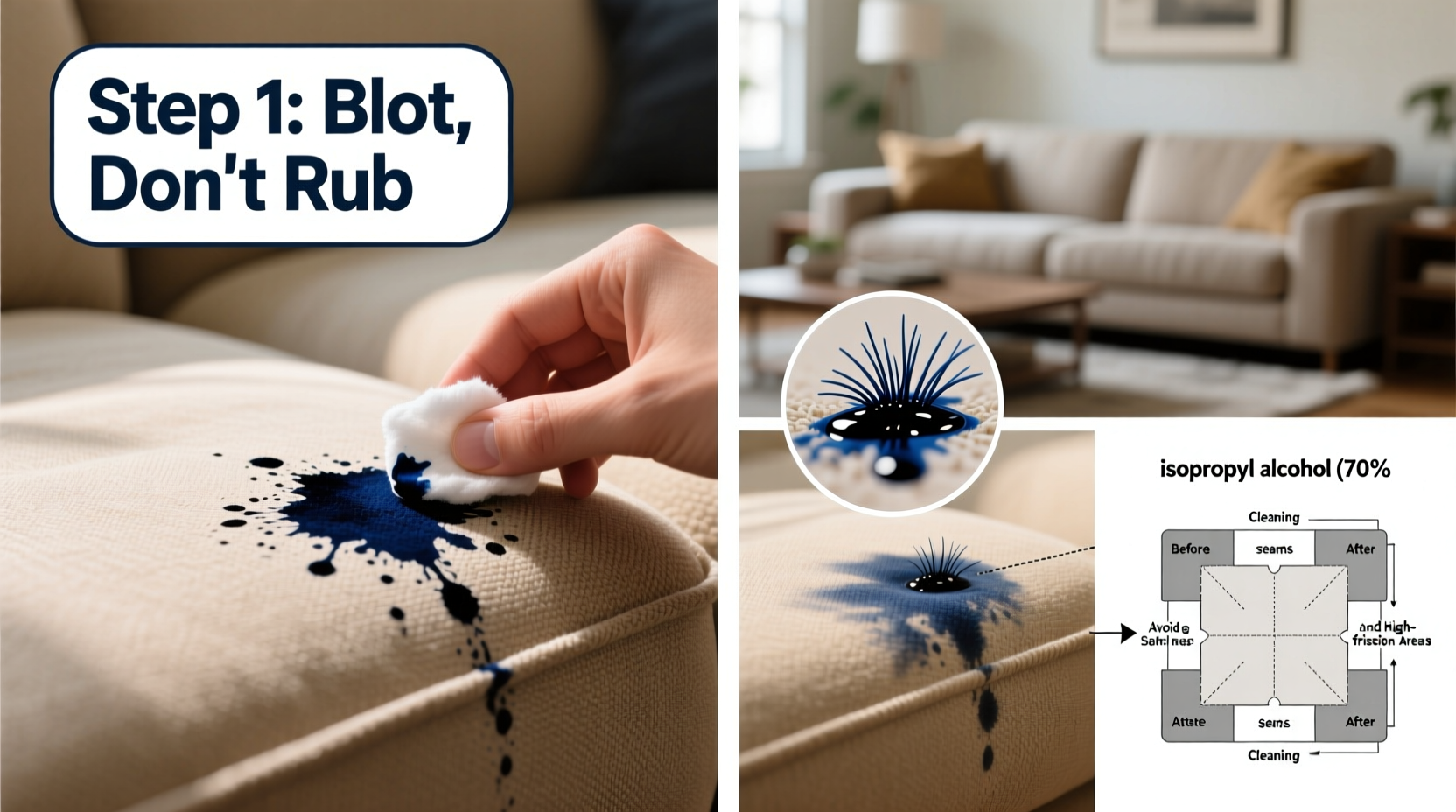
- Blot, don’t rub. Use a clean, dry cloth or paper towel to gently absorb excess ink. Rubbing spreads the stain and pushes ink deeper into the fibers.
- Identify the fabric type. Check the care label for cleaning codes: “W” means water-based cleaners are safe, “S” indicates solvent-only cleaners, “WS” allows both, and “X” means vacuum or dry cleaning only.
- Select an appropriate cleaning agent. Based on the fabric code, choose a compatible solution (detailed below).
- Apply the solution sparingly. Dampen a white cloth—not the fabric directly—with your chosen cleaner. Work from the outside of the stain inward to prevent spreading.
- Blot repeatedly. Allow the solution to break down the ink, then blot with a clean section of cloth. Replace cloths frequently to avoid reapplying ink.
- Rinse if necessary. For water-safe fabrics, lightly dab the area with distilled water to remove residue.
- Air-dry completely. Avoid heat sources like hairdryers, which can set remaining stains. Ensure full drying before use.
Cleaning Solutions by Fabric Type
| Fabric Type | Suitable Cleaning Agent | Application Method | Caution |
|---|---|---|---|
| Microfiber / Polyester | Isopropyl alcohol (70%) | Dampen cloth, blot gently | Do not oversaturate; ventilate area |
| Cotton Blends (W-rated) | Dish soap + water | Mild lather, dab gently | Avoid scrubbing; rinse after |
| Linen / Velvet | Specialized upholstery foam cleaner | Follow product instructions | Highly sensitive to moisture; professional help recommended |
| Unknown or S-rated | Dry cleaning solvent (e.g., perchloroethylene substitute) | Spot test first; minimal application | Use gloves and ventilate room |
Common Mistakes That Damage Upholstery
Even well-intentioned efforts can ruin fabric if based on myths or outdated advice. These frequent errors compromise both the stain removal process and the longevity of your couch.
- Using bleach or ammonia – These strong chemicals can discolor dyes and weaken fibers, especially in synthetic blends.
- Over-wetting the fabric – Excess moisture can seep into padding and frame, promoting mold and mildew growth.
- Scrubbing aggressively – Friction damages the weave, causes pilling, and embeds ink deeper.
- Skipping the spot test – A solution that works on one fabric may ruin another. Always test first.
- Using colored cloths – Dyes from towels or rags can transfer during blotting, adding new stains.
“Many homeowners make the mistake of treating all fabrics the same. But upholstery is engineered differently than clothing—what works on a shirt may destroy a couch.” — Lena Torres, Certified Textile Restoration Specialist
Real Example: Removing a Pen Stain from a Microfiber Sofa
Sarah, a mother of two in Portland, Oregon, discovered a blue ballpoint ink stain on her beige microfiber sofa after her son left a pen in the cushions. She acted within 30 minutes, following these steps:
- She blotted the wet ink with a paper towel, lifting about 60% of the visible mark.
- Checking the care tag, she confirmed the fabric was “W-rated,” meaning water-based cleaners were acceptable.
- Instead of using alcohol immediately, she first tried a mix of one teaspoon dish soap and one cup lukewarm water.
- Using a white microfiber cloth, she dabbed the solution onto the stain for 90 seconds, then blotted with a dry section.
- The stain lightened but didn’t disappear. After letting the area dry for 15 minutes, she repeated the process with diluted isopropyl alcohol (one part alcohol to two parts water).
- After three rounds of gentle blotting, the stain vanished. She finished by wiping with a damp water-only cloth and air-dried the spot overnight.
Sarah avoided damage by not over-saturating the fabric and choosing solutions aligned with the manufacturer’s guidelines. Her prompt response made all the difference.
Alternative Methods and When to Avoid Them
While some household remedies circulate online, not all are safe or effective. Below is a comparison of popular alternatives and their risks.
- Hand sanitizer – Contains alcohol and gel thickeners. May work on microfiber but can leave a film. Use only if no residue remains after drying.
- Nail polish remover – Acetone is too aggressive for most fabrics and will likely dissolve dyes or melt synthetic fibers. Not recommended.
- Vinegar and baking soda – While excellent for odors and some stains, they lack the solvent strength needed for ink. Can alter pH balance of fabric over time.
- Commercial stain removers – Products like OxiClean or Shout should only be used if labeled safe for upholstery. Always dilute and follow instructions precisely.
Checklist: Safe Ink Stain Removal Process
Use this checklist before and during your cleaning attempt to ensure optimal results and fabric safety.
- ☑ Identify the fabric type and care code
- ☑ Act within the first few hours of staining
- ☑ Gather clean white cloths, cotton swabs, and a spray bottle (optional)
- ☑ Choose a cleaning solution based on fabric compatibility
- ☑ Perform a spot test in an inconspicuous area
- ☑ Blot excess ink gently—do not rub
- ☑ Apply solution with a dampened cloth, working outward
- ☑ Blot frequently with clean sections of cloth
- ☑ Rinse with distilled water if fabric allows
- ☑ Allow full air-drying away from direct sunlight
- ☑ Assess results after 24 hours; repeat if necessary
Frequently Asked Questions
Can I use rubbing alcohol on any fabric couch?
No. Isopropyl alcohol is effective on many synthetic fabrics like microfiber and polyester, but it can damage natural fibers such as wool or silk and may discolor treated fabrics. Always verify the cleaning code and perform a spot test first. Never use undiluted alcohol on delicate materials.
What if the ink stain has already dried?
Dried ink is harder to remove but not impossible. Rehydrate the area slightly with a drop of water (for W-rated fabrics), then apply a suitable solvent like diluted alcohol. Let it sit for 1–2 minutes to penetrate, then blot. Multiple applications may be needed. Avoid scraping, which can fray fibers.
Should I call a professional cleaner?
If the stain is large, located in a high-friction area, or on a delicate fabric like velvet or silk, professional upholstery cleaning is advisable. Technicians use controlled extraction methods and pH-balanced solvents that minimize risk. It’s also wise to seek professional help if home attempts have worsened the stain.
Final Recommendations and Preventive Care
Successfully removing an ink stain hinges on timely action, correct material identification, and disciplined technique. Prevention is equally important. Keep pens capped and stored away from seating areas. Consider using fabric protectors that repel liquids and stains—many are invisible and don’t alter texture. Regular vacuuming and light surface cleaning help maintain fabric resilience, making future accidents easier to manage.
When in doubt, err on the side of caution. A faint stain is preferable to a damaged or discolored patch. Upholstery replacement or re-covering is costly and disruptive. By following these evidence-based methods, you protect your investment and extend the life of your furniture.




 浙公网安备
33010002000092号
浙公网安备
33010002000092号 浙B2-20120091-4
Comments
No comments yet. Why don't you start the discussion?