
Ink stains on a leather wallet can be distressing. Whether it's a leaky pen or accidental smudge, the dark blotch stands out against smooth leather, threatening both appearance and value. Many people instinctively reach for alcohol or harsh cleaners—mistakes that often lead to discoloration, cracking, or permanent texture changes. Leather is porous and sensitive; improper cleaning can do more harm than the stain itself. The key lies in understanding your leather type and applying targeted, gentle solutions. This guide outlines safe, effective methods to remove ink from leather wallets while preserving their integrity, backed by material science and professional care standards.
Understanding Leather Types and Ink Behavior
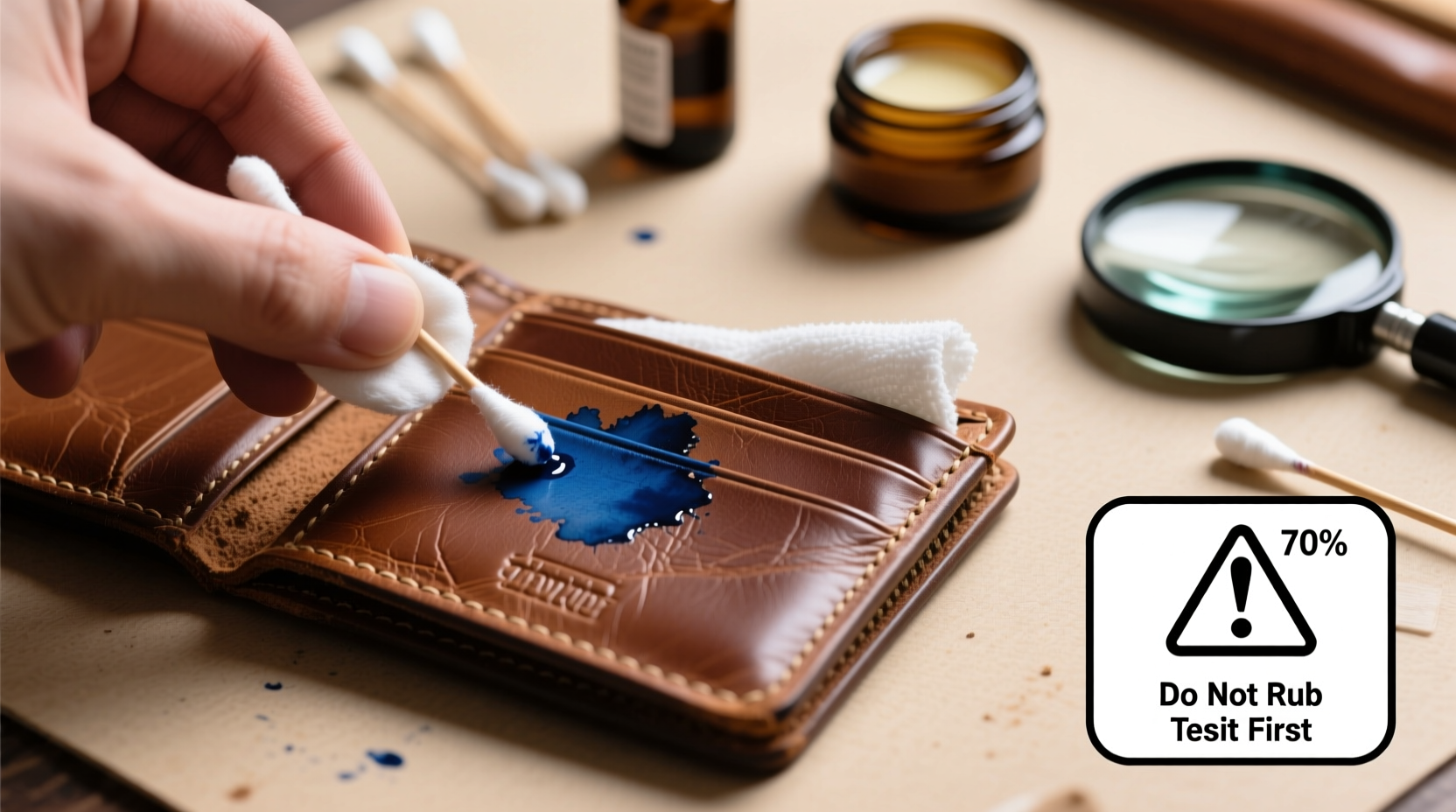
Not all leather reacts the same way to stains or cleaning agents. Recognizing your wallet’s leather type is the first step toward safe stain removal. Common types include:
- Aniline leather: Full-grain leather dyed with transparent dyes. Highly breathable but vulnerable to stains and fading.
- Semi-aniline leather: Similar to aniline but with a light protective coating. Offers moderate resistance to spills.
- Protected (pigmented) leather: Coated with a polymer layer, making it durable and stain-resistant. Most modern wallets use this type.
- Suede and nubuck: Velvety finishes made from split or top-grain leather. Extremely delicate and prone to water rings.
Ink penetrates differently based on porosity. Ballpoint pen ink, typically oil-based, may sit on coated leather but seep into untreated surfaces. Gel and fountain pen inks are often water-based and can spread quickly, especially on absorbent leathers. Immediate action helps, but patience and precision matter more than speed.
Step-by-Step Guide to Removing Ink Safely
Effective ink removal follows a structured process. Rushing or skipping steps risks damaging the leather. Follow this timeline carefully:
- Assess the stain: Identify the ink type and leather finish. Fresh stains are easier to treat than set-in ones.
- Blot gently: Use a clean, dry cotton cloth to absorb excess ink. Do not rub—it spreads the stain.
- Prepare the workspace: Work in a well-lit, dry area with good ventilation. Lay the wallet flat on a soft surface.
- Choose the appropriate solution: Based on leather type (see table below).
- Apply sparingly: Use a cotton swab or microfiber cloth dampened—not soaked—with the solution.
- Work from the edge inward: Gently dab the stain’s perimeter to prevent spreading.
- Rinse lightly: Wipe with a cloth dampened with distilled water to remove residue.
- Dry naturally: Let the wallet air-dry away from heat or sunlight. Avoid hairdryers.
- Condition afterward: Replenish natural oils with a leather conditioner to prevent drying.
Recommended Cleaning Solutions by Leather Type
| Leather Type | Safe Solution | Avoid |
|---|---|---|
| Aniline | Distilled water + mild pH-neutral soap | Alcohol, acetone, ammonia |
| Semi-aniline | Diluted vinegar (1:1 with water) | Bleach, undiluted acids |
| Protected (pigmented) | Isopropyl alcohol (70% or less), applied minimally | Scrubbing, soaking |
| Suede/Nubuck | Suede eraser or specialized foam cleaner | Liquids, alcohol, standard cloths |
For pigmented leather, isopropyl alcohol is sometimes effective because the protective coating resists absorption. However, even here, overuse strips the finish. Limit application to one or two gentle swipes with a fine-tipped swab.
Alternative Methods and Their Risks
Many home remedies circulate online, but few are suitable for delicate leather. Consider these alternatives with caution:
- Milk: Some claim milk proteins bind with ink. While non-abrasive, it leaves a sticky residue and risks bacterial growth if not fully removed.
- Hairspray: Contains alcohol and polymers. May lift ink but also degrades dye and stiffens leather.
- Toothpaste: Abrasive and alkaline. Can scratch surfaces and cause clouding, especially on glossy finishes.
- Baking soda paste: Too abrasive for thin wallet leather. Best reserved for thick belts or shoes.
Stick to vetted methods. When in doubt, less intervention is better than aggressive treatment.
Expert Insight: What Professionals Recommend
Leather conservation requires balance between cleaning efficacy and material preservation. Industry experts emphasize gentleness and specificity.
“Using alcohol on leather is like using bleach on silk—sometimes necessary, but always risky. Always match the solvent strength to the leather’s tolerance.” — Marcus Rennolds, Master Leather Conservator, Guild of Fine Leatherworkers
Rennolds notes that many consumers worsen stains by repeating applications. “One careful attempt is better than five frantic ones,” he says. He advises using cotton swabs with rounded tips to control pressure and avoid fiber shedding.
Professional leather cleaners often use specialized products like Absorene® Leather Cleaner or Tecnu® Stain Lift, which lift contaminants without solvents. These are safer than DIY options but require precise application.
Real Example: Recovering a Vintage Wallet
James, a collector in Portland, accidentally left a fountain pen in his 1950s calf leather wallet. Blue ink bled across the bill compartment. Instead of reaching for rubbing alcohol, he consulted a cobbler who followed a cautious protocol.
The cobbler first vacuumed loose particles, then applied a drop of pH-balanced leather cleanser with a micro-swab. After 30 seconds, he blotted with an absorbent pad. Two rounds reduced the stain by 80%. A final pass with a diluted vinegar solution neutralized any residue. The wallet was conditioned with beeswax-free cream and stored flat for 24 hours. No cracking, fading, or texture change occurred. James reported the wallet looked “almost untouched” a year later.
This case underscores the value of patience and correct technique—even on valuable vintage items.
Do’s and Don’ts Checklist
Keep this checklist handy when treating ink stains:
- ✅ Do identify the leather type before cleaning.
- ✅ Do test solutions on an inconspicuous area.
- ✅ Do use distilled water to avoid mineral deposits.
- ✅ Do condition after cleaning to restore moisture.
- ✅ Do store the wallet flat during drying.
- ❌ Don’t rub or scrub the stain aggressively.
- ❌ Don’t use household cleaners like Windex or dish soap.
- ❌ Don’t expose treated leather to direct heat or sun.
- ❌ Don’t apply multiple solutions at once.
- ❌ Don’t ignore manufacturer care labels if present.
Frequently Asked Questions
Can I use hand sanitizer to remove ink from leather?
No. Hand sanitizer contains high concentrations of alcohol (often 60–70%) and added fragrances or gels that can strip color and leave a sticky film. Even if it lifts ink, the long-term damage outweighs the benefit.
What if the ink stain doesn’t come out completely?
If the stain persists after one careful attempt, stop further treatment. Repeated exposure increases damage risk. For remaining marks, consider professional restoration. Some artisans use laser cleaning or solvent diffusion techniques that minimize contact.
How can I prevent ink stains in the future?
Use pens with secure caps or retractable mechanisms. Store pens separately from wallets, especially in tight pockets. Consider a slim pen case or pocket sleeve. Inspect new pens for leaks before carrying them daily.
Final Steps: Conditioning and Long-Term Care
Cleaning disrupts the lipid layer in leather, leading to dryness and brittleness. After stain removal, conditioning is non-negotiable. Choose a product designed for smooth leather, free from silicones or waxes that clog pores.
Apply a pea-sized amount of conditioner to a lint-free cloth and buff in circular motions. Focus on the cleaned area but extend slightly beyond to blend. Allow absorption for 15 minutes, then wipe off excess. Repeat every 3–6 months depending on usage.
For ongoing protection, consider a leather protector spray that repels liquids without altering texture. These create an invisible barrier that reduces future staining risk.
Conclusion: Preserve Value Through Smart Care
A leather wallet is more than a functional item—it often carries personal significance, financial security, and craftsmanship worth protecting. Ink stains don’t have to mean the end of its life. With the right knowledge, most blemishes can be addressed safely, maintaining both aesthetics and durability. The principles here go beyond ink: they reflect a mindset of thoughtful maintenance over reactive fixes. By choosing gentle methods, respecting material limits, and acting with patience, you extend the lifespan of your wallet far beyond its expected use.




 浙公网安备
33010002000092号
浙公网安备
33010002000092号 浙B2-20120091-4
Comments
No comments yet. Why don't you start the discussion?