
Leather is a luxurious, durable material prized for its elegance and resilience. From sofas and car seats to jackets and handbags, it adds sophistication to everyday items. However, its porous nature makes it vulnerable to stains — especially from permanent markers. A single accidental swipe can seem like a disaster, but panic isn’t necessary. With the right approach, you can safely remove permanent marker from leather without damaging or discoloring the surface.
The key lies in understanding your leather type, acting quickly, and using gentle yet effective cleaning agents. Many household products can lift ink without harming the finish, but improper techniques may set the stain or cause irreversible damage. This guide walks through scientifically backed methods, expert insights, and real-world-tested strategies to restore your leather goods to their original condition — no staining, no residue, no guesswork.
Understanding Leather Types and Their Sensitivity
Not all leather reacts the same way to cleaning solutions. The method you choose depends heavily on whether the leather is finished (protected) or unfinished (aniline), as well as whether it's treated with a protective coating.
- Finished leather: Most common in furniture, car interiors, and accessories. It has a protective topcoat that resists moisture and stains. This type tolerates mild solvents better than raw leather.
- Aniline or semi-aniline leather: More natural-looking and breathable but highly absorbent. These require extra caution — harsh chemicals can strip color or leave blotches.
- Suede and nubuck: Textured finishes that are particularly sensitive. Standard ink removers often ruin the nap; specialized brushes and erasers are preferred.
Permanent markers contain alcohol-based dyes designed to bond with surfaces. On leather, these pigments can penetrate beyond the top layer if not addressed promptly. Immediate action increases the chances of complete removal without affecting the dye or finish beneath.
Step-by-Step Guide: Removing Permanent Marker Safely
Follow this systematic process to maximize success while minimizing risk:
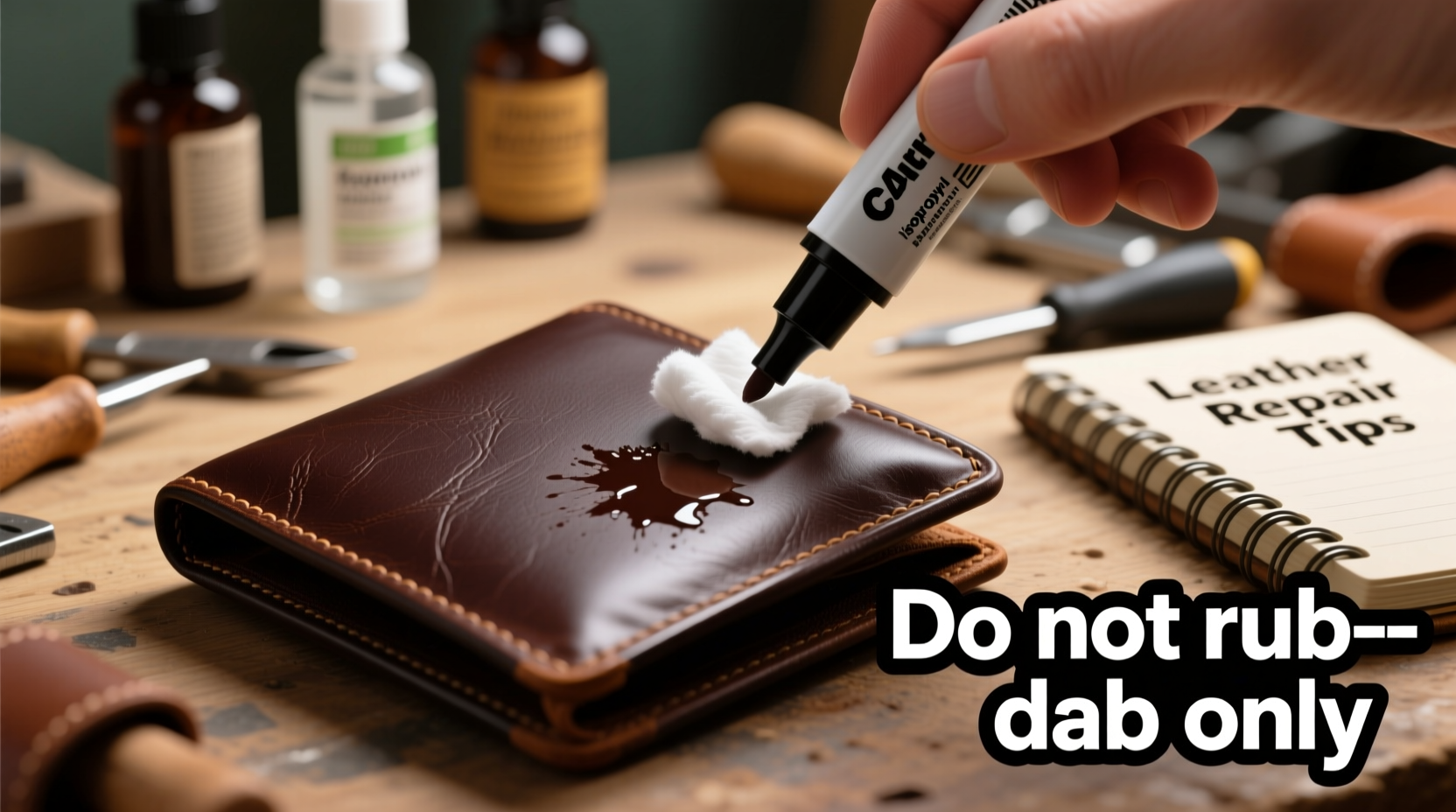
- Blot, don't rub: If the mark is fresh, gently dab it with a dry microfiber cloth to absorb excess ink. Rubbing spreads the pigment deeper into the fibers.
- Identify the leather type: Check manufacturer labels or perform a water drop test (place a small drop of water; if it beads up, it’s protected; if absorbed, it’s more porous).
- Gather supplies: Use only non-abrasive tools: cotton swabs, soft cloths, distilled water, and pH-balanced cleaners.
- Start with the mildest option: Begin with soapy water before progressing to stronger solvents.
- Apply solution sparingly: Dampen a corner of a clean cloth — never soak the leather.
- Work in circular motions: Gently massage the stain outward to avoid spreading.
- Rinse and dry: Wipe with a damp cloth to remove residue, then air-dry away from heat or sunlight.
- Condition afterward: Replenish natural oils with a leather conditioner to prevent drying or cracking.
Effective Cleaning Solutions by Strength Level
Different stains require different responses. Below is a comparison of common remedies ranked by effectiveness and safety.
| Solution | Safety (Leather Type) | Effectiveness | Notes |
|---|---|---|---|
| Mild soap + distilled water | All types (safest) | Low–moderate | Ideal for surface-level marks; minimal risk |
| Isopropyl alcohol (50% diluted) | Finished only | High | Patch test essential; can fade dye if overused |
| Hairspray (alcohol-based) | Use with caution | Moderate | Old-school trick; contains solvents that may degrade finish |
| Non-acetone nail polish remover | Finished leather | High | Better than acetone; still requires dilution and quick wipe-off |
| Commercial leather cleaner | All types (follow label) | Variable | Formulated for safety; best for delicate pieces |
| Acetone | Avoid unless emergency | Very high | Strips finish and color; use only as last resort on hidden areas |
Do’s and Don’ts When Treating Leather Stains
To protect both the appearance and structural integrity of your leather, follow these guidelines:
| Do | Don't |
|---|---|
| Test any product on a hidden spot | Use bleach or ammonia-based cleaners |
| Use distilled water to prevent mineral deposits | Soak the leather or use excessive liquid |
| Pat dry with a lint-free cloth | Expose treated leather to direct sunlight while wet |
| Apply leather conditioner after cleaning | Rub aggressively with rough materials |
| Treat stains immediately | Assume one method works for all leathers |
Real Example: Removing Marker from a Leather Sofa
Consider Sarah, who discovered her toddler had drawn a bold red line across the armrest of her cream-colored bonded leather sofa. Panicked but determined, she resisted the urge to scrub with rubbing alcohol — a common mistake.
Instead, she started with a mixture of two drops of mild dish soap in a cup of distilled water. Using a cotton swab, she gently dabbed the edge of the stain. After three minutes, there was slight fading. She then tried 50% isopropyl alcohol (mixed with water), applied with a folded tissue corner. Within five careful passes, the mark lifted completely. She wiped the area with a damp cloth, dried it with a towel, and applied a leather conditioner the next day.
The result? No visible stain, no color loss, and no texture change. Her restraint and methodical approach saved hundreds in potential reupholstery costs.
Expert Insight on Leather Care and Ink Removal
Professional conservators emphasize precision when dealing with ink on fine materials. According to Marcus Hale, a certified leather restoration specialist with over 15 years of experience:
“Many people reach for strong solvents out of frustration, but that’s where damage begins. Alcohol-based markers bind quickly, yes — but gentle agitation with the right pH-balanced solution almost always wins. Patience beats power every time.” — Marcus Hale, Master Leather Conservator
He also notes that modern protective coatings have made many consumer-grade leathers more resistant than ever — but only if maintained properly. “Once you remove the ink, seal the surface again. Otherwise, the same spot becomes a magnet for future stains.”
Checklist: How to Remove Permanent Marker from Leather Without Staining
Keep this checklist handy when treating stained leather items:
- ✅ Identify the leather type (finished, aniline, suede)
- ✅ Locate a hidden test area
- ✅ Blot fresh ink gently with a dry cloth
- ✅ Start with the mildest solution (soapy water)
- ✅ Dilute alcohol-based solutions (50/50 with water)
- ✅ Use cotton swabs or soft cloths — no abrasive pads
- ✅ Work in small, circular motions from outside inward
- ✅ Rinse with distilled water and pat dry
- ✅ Condition the leather within 24 hours
- ✅ Store or use normally once fully dry
Frequently Asked Questions
Can I use hand sanitizer to remove permanent marker from leather?
Hand sanitizer contains alcohol and glycerin, which can break down ink. While it may work on finished leather, the added fragrances and thickeners might leave a residue or affect the finish. If used, apply a tiny amount with a cotton swab, wipe off immediately, and condition afterward. A safer alternative is diluted isopropyl alcohol.
Will vinegar remove permanent marker from leather?
Plain white vinegar is mildly acidic and not recommended for most leathers. It can disrupt the pH balance of the hide, leading to dullness or etching, especially on aniline finishes. While some DIY blogs suggest vinegar, professional restorers advise against it due to the risk of long-term damage.
What should I do if the color comes off with the ink?
If the leather appears faded after cleaning, it likely means the topcoat was compromised. In such cases, consider using a leather recoloring balm or touch-up kit matched to your item’s shade. For valuable furniture or garments, consult a professional restorer to avoid further mismatch.
Final Thoughts and Prevention Tips
Removing permanent marker from leather doesn’t require magic — just knowledge, care, and the right tools. By starting gently and escalating only when necessary, you preserve both the beauty and lifespan of your leather possessions. Remember that conditioning after cleaning is not optional; it helps maintain flexibility and protects against future spills.
Prevention is equally important. Keep markers away from leather furniture, use protective covers on car seats, and store bags in dust bags when not in use. For households with children or frequent guests, consider applying a leather protector spray annually — it creates a barrier that repels liquids and makes cleanup easier.




 浙公网安备
33010002000092号
浙公网安备
33010002000092号 浙B2-20120091-4
Comments
No comments yet. Why don't you start the discussion?