
Linen tablecloths bring elegance and texture to any dining experience, but they come with a well-known vulnerability: staining. Among the most feared spills is red wine—a deep-colored liquid that can seep into fibers in seconds, leaving behind a stubborn purple or rust-colored mark. The good news is that even the most dramatic wine spill doesn’t have to spell disaster. With prompt action and the right approach, red wine stains on linen can be removed quickly and effectively. This guide walks you through science-backed techniques, real-world tested strategies, and practical steps to restore your linen tablecloth to its original condition—without damaging the delicate fabric.
Why Red Wine Stains Are So Tricky on Linen
Linen is made from flax fibers, which are naturally absorbent and breathable—qualities that make it ideal for table linens in warm weather. However, this same absorbency means that liquids like red wine penetrate quickly. Red wine contains tannins, pigments (anthocyanins), and acidity, all of which contribute to staining. Tannins bind tightly to natural fibers, while pigments embed themselves in the weave. If not addressed immediately, the stain oxidizes and sets deeper into the fabric, making removal far more difficult.
Additionally, linen is sensitive to harsh chemicals and high heat. Using bleach or washing in hot water can weaken fibers, cause yellowing, or distort the weave. Therefore, effective stain removal must balance aggressiveness with gentleness—targeting the stain without compromising the fabric’s integrity.
Immediate Response: The First 5 Minutes Matter Most
The speed of your response determines whether a red wine stain becomes a minor incident or a permanent blemish. The first few minutes after a spill are critical for minimizing damage.
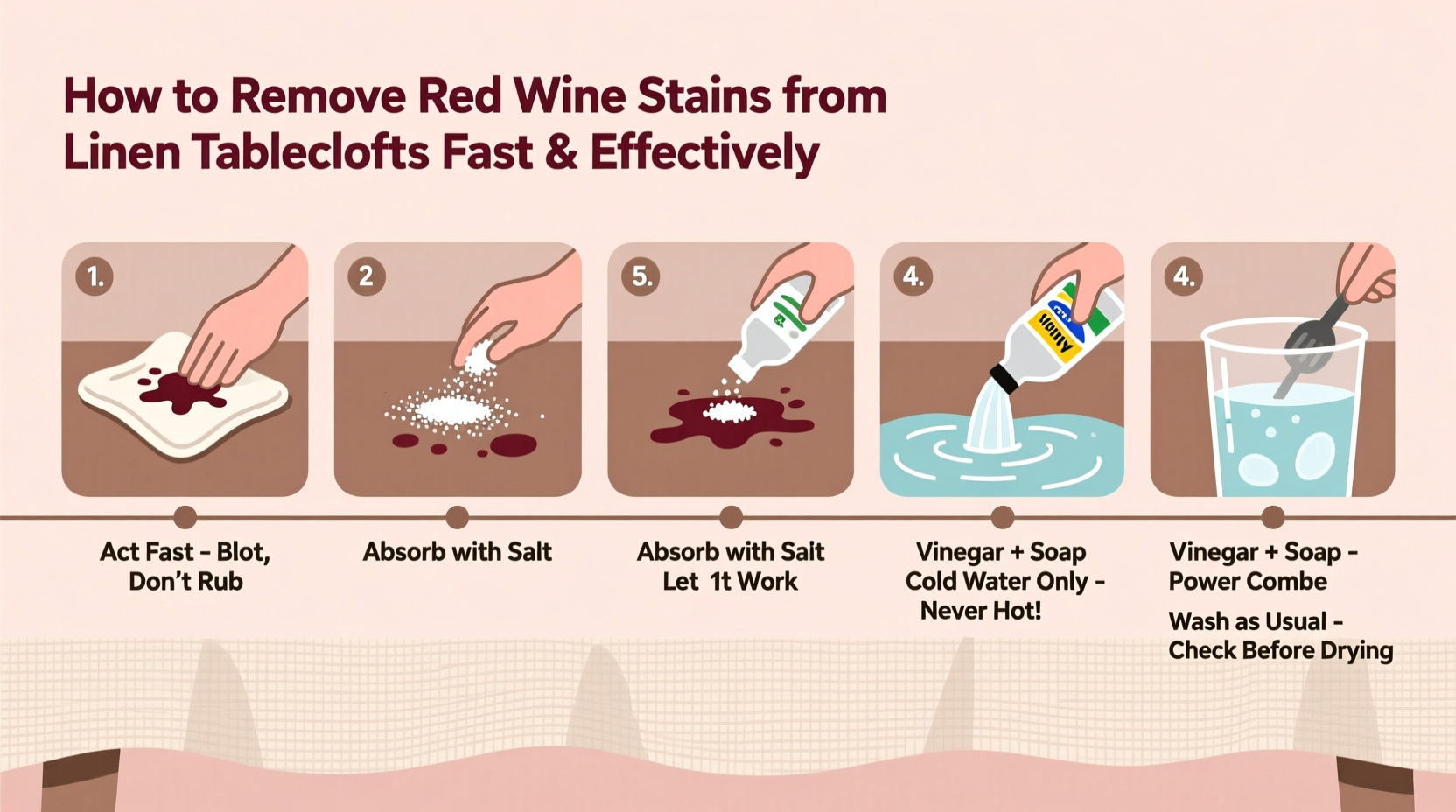
- Act Immediately: As soon as the spill occurs, grab a clean, absorbent cloth or paper towel. Do not delay to finish a conversation or clear plates.
- Blot, Don’t Wipe: Press the cloth firmly over the spill to soak up as much liquid as possible. Replace the cloth as it becomes saturated. Avoid circular motions or scrubbing.
- Salt Application (Optional): If available, sprinkle a generous amount of table salt or kosher salt over the wet stain. Salt draws moisture out through osmosis and helps lift pigment from the fibers. Let it sit for 1–2 minutes before brushing off gently.
- Cold Water Rinse: Flip the tablecloth and rinse the backside of the stain under cold running water. This pushes the wine outward rather than deeper in. Never use hot water—it sets the stain instantly.
- Prepare for Treatment: Once excess wine is removed, proceed to a targeted cleaning method based on available supplies and fabric care instructions.
Mini Case Study: A Dinner Party Rescue
During a holiday dinner, Sarah knocked over a glass of Cabernet Sauvignon onto her heirloom Belgian linen tablecloth. She froze for a moment—but remembered advice from a textile conservator she’d once met. Within seconds, she blotted the spill with napkins, applied sea salt, then rinsed the underside under cold water at the kitchen sink. She then treated the area with a mixture of hydrogen peroxide and dish soap (detailed below). After laundering according to care instructions, the stain vanished completely. “I was ready to retire that tablecloth,” she said later. “But acting fast saved a family treasure.”
Proven Methods for Removing Set and Fresh Stains
Different stages of staining require different approaches. Below are three reliable methods—each suited to specific situations.
Method 1: Cold Water + Dish Soap (Best for Fresh Spills)
This gentle technique works best when applied within minutes of the spill.
- Lay the tablecloth flat, stain-side up.
- Apply a few drops of clear, fragrance-free liquid dish soap directly to the stain.
- Using your fingertips or a soft-bristled brush, gently agitate the area in a circular motion.
- Rinse thoroughly under cold running water from the back of the stain.
- Repeat if necessary, then launder as usual in cold water.
Method 2: Hydrogen Peroxide + Dish Soap (For Stubborn or Slightly Set Stains)
This combination leverages mild oxidation to break down pigments without harming linen.
“Hydrogen peroxide is one of the safest oxidizing agents for natural fibers when used correctly. It lifts color without degrading cellulose-based fabrics like linen.” — Dr. Lena Patel, Textile Chemist, Royal School of Conservation
Mix equal parts 3% hydrogen peroxide and liquid dish soap. Apply to the stain and let sit for 15–30 minutes. Check periodically—do not leave longer than 1 hour, as prolonged exposure may weaken fibers. Rinse thoroughly with cold water. Launder as normal.
Method 3: Baking Soda Paste + Vinegar (For Older, Dried-In Stains)
When a stain has dried and resisted initial treatments, this mildly abrasive method can help lift residue.
- Make a paste with baking soda and a small amount of water.
- Apply the paste to the stained area and let it sit for 30 minutes.
- Lightly spray or dab white vinegar over the paste—this creates a fizzing reaction that helps loosen particles.
- Gently brush with a soft toothbrush.
- Rinse thoroughly with cold water.
- Wash in the machine using a gentle cycle and cold water.
Note: This method should not be used on dyed linen unless tested first, as vinegar can affect some dyes.
Do’s and Don’ts When Treating Linen Tablecloths
| Do’s | Don’ts |
|---|---|
| Blot spills immediately with a clean cloth | Rub or scrub the stain aggressively |
| Use cold water only for rinsing | Use hot water at any stage |
| Test cleaning solutions on a hidden seam | Apply bleach or ammonia-based cleaners |
| Wash on gentle cycle with mild detergent | Overload the washing machine |
| Air-dry flat or hang in indirect sunlight | Tumble dry on high heat |
| Iron on medium-high heat while slightly damp | Iron over a still-wet stain |
Step-by-Step Guide: From Spill to Spotless
Follow this comprehensive timeline to maximize your chances of complete stain removal:
- 0–1 Minute: Blot excess wine with a dry, absorbent cloth. Replace cloth as needed.
- 1–2 Minutes: Sprinkle salt over the stain to draw out moisture (optional).
- 2–5 Minutes: Rinse the back of the stain under cold running water until water runs clear.
- 5–10 Minutes: Apply chosen treatment (dish soap, peroxide mix, or paste) and begin gentle agitation.
- 10–40 Minutes: Allow treatment to dwell. Monitor for fading. Reapply if necessary.
- 40–60 Minutes: Rinse thoroughly under cold water.
- Next Step: Machine wash using a mild detergent on cold, gentle cycle. Avoid fabric softeners—they coat fibers and reduce absorbency.
- After Washing: Air-dry completely. Check the stain before drying. Heat sets stains, so do not tumble dry until you’re certain the stain is gone.
- Final Step: Iron while slightly damp to restore smoothness and luster. Store properly.
FAQ: Common Questions About Red Wine Stain Removal
Can I use club soda to remove red wine stains?
Club soda has long been touted as a quick fix, but evidence is mixed. While the carbonation and slight alkalinity may help lift fresh spills temporarily, it does not neutralize tannins or pigments. It’s better than nothing in an emergency, but follow up with a more effective method as soon as possible.
What if the stain remains after washing?
If the stain persists, do not dry the tablecloth. Repeat the treatment process, possibly trying a different method. For old or severe stains, consider professional textile cleaning. Some heritage linen pieces benefit from conservation-level care.
Is it safe to use hydrogen peroxide on colored linen?
Hydrogen peroxide can lighten dyed fabrics. Always perform a spot test in an inconspicuous area. For white or natural-toned linen, 3% hydrogen peroxide is generally safe when used briefly and rinsed well.
Prevention and Care Tips for Long-Term Linen Preservation
While accidents happen, proactive habits can minimize risks and extend the life of your table linens.
- Keep a dedicated stain removal kit in your kitchen: dish soap, hydrogen peroxide, salt, baking soda, white vinegar, and clean cloths.
- Use table runners or placemats during wine-heavy gatherings to shield the main surface.
- Rotate your tablecloths to avoid repeated stress on the same areas.
- Store clean linens in breathable cotton bags, away from direct sunlight and moisture.
- Never fold stained linens—residual wine can transfer and deepen over time.
Checklist: Quick Action Plan for Red Wine Spills
- ☑ Blot immediately with a clean, dry cloth
- ☑ Apply salt to absorb excess liquid (if available)
- ☑ Rinse the reverse side under cold running water
- ☑ Choose appropriate treatment method based on stain age
- ☑ Test cleaning solution on a hidden area
- ☑ Treat and allow dwell time without overexposure
- ☑ Rinse thoroughly before laundering
- ☑ Wash in cold water on gentle cycle
- ☑ Air-dry and inspect before ironing
- ☑ Repeat treatment if needed—never apply heat to a remaining stain
Conclusion: Confidence in Every Celebration
Red wine stains on linen tablecloths don’t have to ruin a beautiful moment or a cherished piece of home decor. With swift action, informed techniques, and respect for the fabric’s nature, even the worst-looking spill can be reversed. The key lies in immediate blotting, avoiding heat, and using gentle yet effective cleaning agents tailored to the situation. Whether you're hosting a dinner party or enjoying a quiet evening, knowing how to handle accidents empowers you to relax and savor the experience—without fear of permanent damage.




 浙公网安备
33010002000092号
浙公网安备
33010002000092号 浙B2-20120091-4
Comments
No comments yet. Why don't you start the discussion?