
Spilling red wine on a white carpet is one of those heart-stopping moments that can ruin an otherwise perfect evening. The deep crimson liquid spreads quickly, threatening to leave a permanent mark on your flooring. But before you reach for the phone to call a cleaning service—or worse, resign yourself to living with the stain—know this: most red wine spills can be fully removed at home with simple ingredients and prompt action.
The key isn’t just *what* you use, but *how fast* you act. Red wine contains tannins and natural dyes that bond with carpet fibers within minutes. The longer it sits, the more difficult it becomes to extract. Fortunately, with the right techniques, even set-in stains can often be reversed using common household supplies like baking soda, hydrogen peroxide, dish soap, and vinegar.
This guide walks you through scientifically backed methods, real-world tested strategies, and expert-approved precautions to restore your white carpet safely and affordably—without stepping foot in a specialty store or writing a check to a professional cleaner.
Why Red Wine Stains Are Tricky (But Not Impossible)
Red wine isn’t just water with color; it’s a complex mixture of acids, sugars, alcohol, and phenolic compounds like anthocyanins—the pigments responsible for its rich hue. These pigments are particularly aggressive when it comes to staining porous materials like carpet fibers. Unlike surface-level dirt, they penetrate deep into the fiber core, especially under pressure (like someone stepping on the spill).
White carpets pose a unique challenge because any discoloration is immediately visible. Even a faint pinkish tint after cleaning can look unclean. Additionally, many commercial cleaners contain bleach or strong solvents that may degrade synthetic fibers or cause yellowing over time.
“Immediate blotting is more important than the cleaning solution you choose. The first 60 seconds determine whether the stain becomes superficial or structural.” — Dr. Laura Bennett, Textile Chemist, Institute for Home Surface Research
The good news? Most red wine stains respond well to oxygen-based reactions and pH-balanced solutions. With patience and the correct sequence, you can break down the pigment molecules and lift them out of the carpet without damaging the material.
Step-by-Step Guide: Removing Fresh Red Wine Spills
A fresh spill—within the first 5 to 10 minutes—offers the best chance for complete removal. Follow these steps carefully and in order:
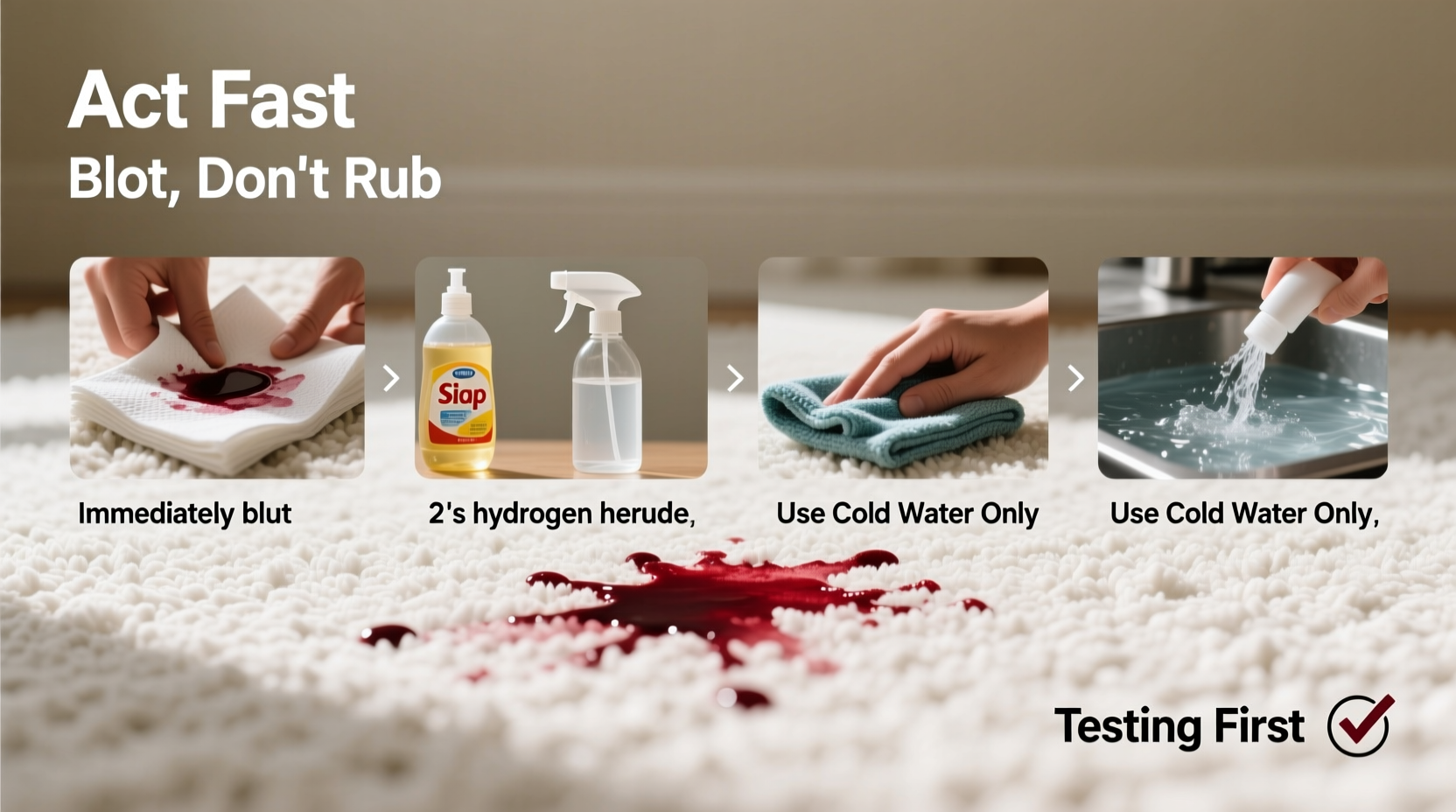
- Blot, don’t rub. Use a clean, absorbent white cloth or paper towel to gently press down on the spill. Apply firm pressure in a downward motion to soak up as much liquid as possible. Never wipe or scrub—it pushes the wine deeper into the fibers.
- Sprinkle salt or baking soda. Cover the entire wet area with a thick layer of table salt or baking soda. This draws moisture to the surface through osmosis. Let sit for 5–10 minutes.
- Vacuum the residue. Once the powder has absorbed the wine (it will darken), vacuum thoroughly to remove all granules.
- Apply a cleaning solution. Mix 1 teaspoon of liquid dish soap (like Dawn) with 1 cup warm water. Dip a clean cloth into the solution and gently dab the stain. Avoid soaking the carpet padding underneath.
- Rinse with cold water. Dampen another cloth with plain cold water and blot the area to remove soapy residue.
- Dry completely. Press dry towels over the spot and allow to air-dry. Use a fan if available to speed drying and prevent mildew.
Removing Set-In Red Wine Stains: Advanced Methods
If the spill happened hours ago—or worse, overnight—a different approach is needed. The pigment has already bonded with the fibers, and surface absorption won’t suffice. You’ll need a solution that breaks molecular bonds without harming the carpet.
Option 1: Hydrogen Peroxide + Dish Soap (Best for Synthetic Fibers)
- Mix ½ cup 3% hydrogen peroxide with 1 teaspoon dish soap.
- Apply directly to the stained area using a spray bottle or sponge.
- Let sit for 15–20 minutes. You may see bubbling—this is oxygen breaking down the stain.
- Blot with a clean, damp cloth until no more color transfers.
- Rinse with cold water and blot dry.
Note: Do not use on wool or silk-blend carpets—hydrogen peroxide can weaken protein fibers and cause bleaching.
Option 2: White Vinegar + Baking Soda Paste (Safe for Natural & Synthetic Fibers)
- Create a paste using 2 tablespoons baking soda and enough white vinegar to form a thick consistency.
- Apply the paste directly to the stain and gently work it in with a soft-bristle brush.
- Let sit for 30 minutes (do not let dry completely).
- Blot with a damp cloth, then rinse with cold water.
- Dry thoroughly with towels and airflow.
Option 3: Commercial Enzyme Cleaner (For Stubborn or Repeated Stains)
Enzyme-based cleaners (like those designed for pet stains) contain protease and amylase enzymes that digest organic matter—including wine residues. While not strictly “household,” they’re widely available and safe for most carpets.
- Follow product instructions for application.
- Allow 30+ minutes of dwell time.
- Blot and rinse.
“Enzymatic treatments are underrated for wine spills. They don’t just mask the stain—they consume the compounds causing it.” — Miguel Torres, Professional Carpet Technician, 15+ years experience
Do’s and Don’ts: What to Avoid When Treating Red Wine Stains
Many people unknowingly make the problem worse by using incorrect methods. Below is a clear breakdown of recommended actions versus common mistakes.
| Do | Don’t |
|---|---|
| Blot the spill immediately with a clean, white cloth | Rub or scrub the stain aggressively |
| Use cold water for rinsing (hot water sets stains) | Use hot water or steam initially |
| Test solutions on a hidden area first | Apply undiluted bleach or ammonia |
| Work from the outside inward to prevent spreading | Over-saturate the carpet—wet padding causes mold |
| Allow proper drying time before walking on the area | Use colored cloths that might bleed dye |
Real Example: A Dinner Party Saved
Sarah, a host in Portland, Oregon, spilled an entire glass of Cabernet Sauvignon on her off-white living room carpet during a dinner party. Guests froze—but she remembered a method she’d read about using salt and club soda.
She immediately blotted with napkins, sprinkled kosher salt generously, waited eight minutes, then vacuumed. Next, she mixed two parts club soda with one part hydrogen peroxide and applied it with a clean sponge. After 15 minutes, she rinsed with cold water and pressed dry towels over the spot.
Within 45 minutes, the stain was gone. No one would have guessed anything had happened. Sarah later said, “I didn’t think it would work—but now I keep a box of baking soda under my side table just in case.”
Checklist: How to Remove Red Wine Stains from White Carpet
Keep this checklist handy for quick reference during future accidents:
- ✅ Act within the first few minutes (blot immediately)
- ✅ Use only white, absorbent cloths or paper towels
- ✅ Apply salt or baking soda to draw out moisture
- ✅ Vacuum residue before applying liquids
- ✅ Choose the right cleaning solution based on carpet type
- ✅ Rinse thoroughly with cold water
- ✅ Dry completely—use fans or open windows
- ✅ Repeat treatment if necessary, waiting 24 hours between attempts
Frequently Asked Questions
Can I use club soda to remove red wine stains?
Yes, club soda can be effective on fresh spills. Its carbonation helps lift liquid from fibers, and the slight acidity neutralizes some wine components. However, it’s less effective on older stains. Best used in combination with blotting and follow-up cleaning.
Will hydrogen peroxide bleach my white carpet?
Pure 3% hydrogen peroxide is generally safe on white synthetic carpets (nylon, polyester) and can actually enhance brightness. However, it may weaken wool or silk fibers and should never be mixed with vinegar (creates corrosive peracetic acid). Always spot-test first.
What if the stain turns pink after cleaning?
A pink tint usually means residual dye remains in the fibers. Try a second round with the vinegar-baking soda paste or an enzyme cleaner. Avoid UV exposure (sunlight) during treatment, as it can oxidize leftover pigments and intensify the color.
Conclusion: Confidence Comes From Preparation
Dealing with a red wine spill on white carpet doesn’t require a chemistry degree or a six-figure cleaning budget. It requires speed, the right technique, and confidence in simple solutions. Whether you’re hosting a formal dinner or enjoying a quiet night in, knowing how to handle accidents empowers you to relax—because even the worst spills aren’t irreversible.
By understanding the science behind stains and leveraging accessible household items, you protect both your home and your peace of mind. The next time a glass tips over, don’t panic. Blot, treat, rinse, and restore. Your carpet—and your composure—will thank you.




 浙公网安备
33010002000092号
浙公网安备
33010002000092号 浙B2-20120091-4
Comments
No comments yet. Why don't you start the discussion?