
Stripped screws are the silent saboteurs of DIY projects. One moment you're tightening a shelf bracket or assembling furniture, and the next, your screwdriver slips uselessly in a mangled head. The frustration is real—especially when you're left with a broken fastener embedded in wood, metal, or plastic. But before you abandon the project or call a professional, know this: most stripped screws can be removed with patience, creativity, and the right technique. This guide walks through reliable, field-tested methods to rescue your project from what feels like a hardware dead end.
Why Screws Strip—and How to Prevent It
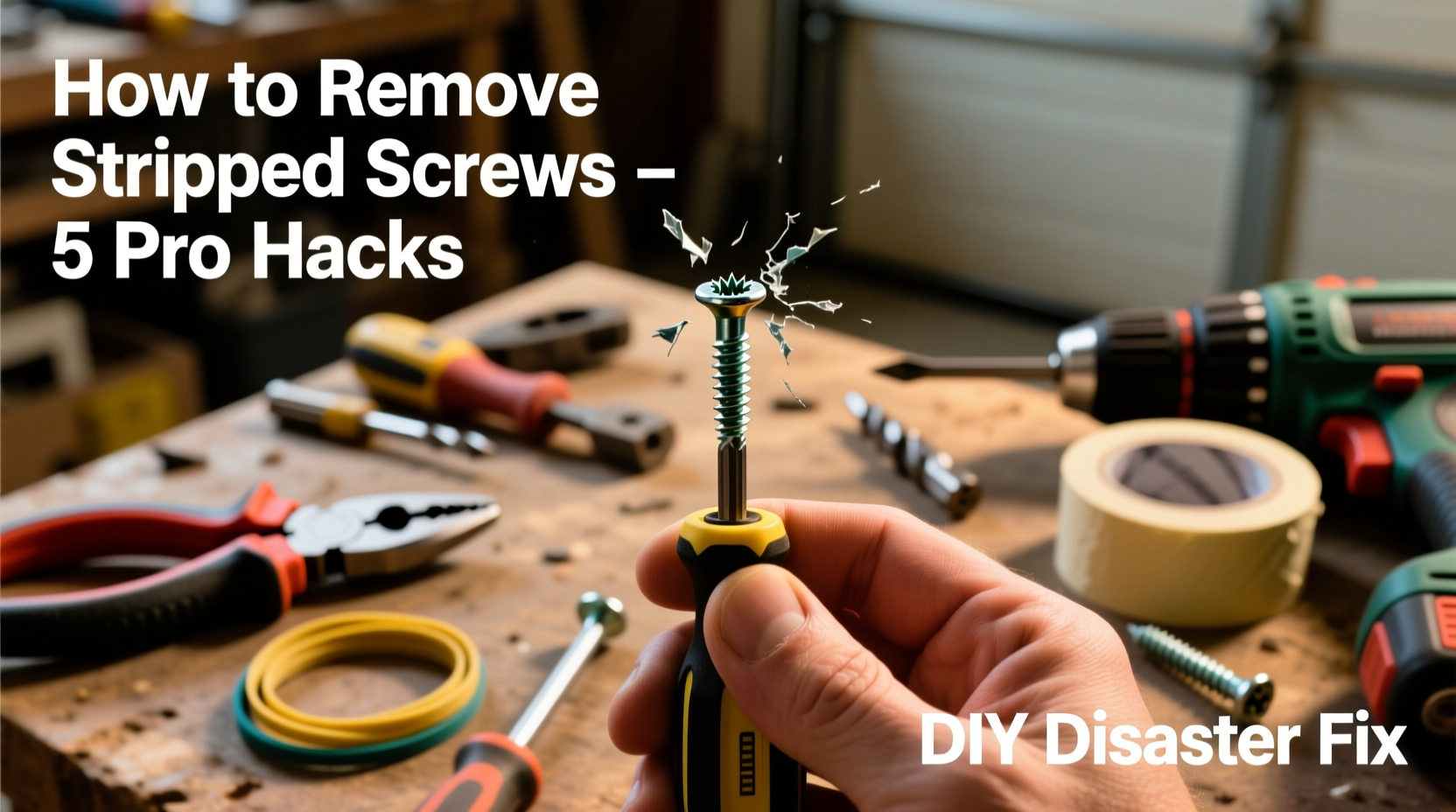
Screws strip when the driving tool fails to maintain grip inside the screw head. This usually happens due to mismatched screwdrivers, excessive force, worn bits, or low-quality screws. Over-tightening is the most common culprit. When torque exceeds the material’s resistance, the soft metal of the screw head deforms, creating a smooth, unusable recess.
Prevention starts before the first turn:
- Use the correct bit or driver (Phillips, flathead, Torx) that fits snugly.
- Apply steady pressure while turning—don’t force it.
- Pre-drill pilot holes in hardwoods or brittle materials.
- Choose high-quality screws with clean, deep drive slots.
Step-by-Step Guide to Extracting Stripped Screws
When prevention fails, extraction becomes the priority. Below is a logical sequence of increasingly aggressive methods, starting with the least invasive. Always assess the material around the screw—wood allows more aggressive tactics than delicate plastic or thin metal.
- Assess the Damage: Determine how much of the screw head remains exposed. Is it flush, sunken, or slightly protruding? This dictates your options.
- Clean the Area: Remove debris, dust, or old adhesive from the screw head so your tools can grip properly.
- Try a Different Bit: Sometimes a fresh, sharp bit with better fit (e.g., a precision Phillips #2 instead of a worn #1) can regain purchase.
- Apply Downward Pressure: Push firmly while turning counterclockwise. Gravity and grip often make the difference.
- Move to Advanced Methods: If basic attempts fail, proceed to one of the following solutions.
Method 1: Rubber Band Grip Trick
A classic household hack, this method uses friction to restore grip between the driver and the damaged screw head.
Place a wide rubber band flat over the stripped screw. Press your screwdriver through the band into the screw head. The rubber fills gaps and provides traction, allowing you to back the screw out slowly.
This works best on shallowly stripped Phillips or flathead screws in wood or plastic. Avoid excessive force—too much pressure can damage surrounding material.
Method 2: Use a Screw Extractor (Left-Handed Drill Bit)
Screw extractors are specialized reverse-threaded bits designed to bite into damaged screws and back them out.
Secure the extractor in a hand drill or impact driver. Set the tool to reverse (counterclockwise). Start drilling slowly into the center of the screw head. As the extractor engages, its left-hand threads pull the screw out rather than drive it in.
For best results:
- Premark the screw center with a punch or nail to prevent bit wandering.
- Begin with light pressure and increase gradually.
- Use cutting fluid or lubricant if working with metal.
These tools are inexpensive and available at most hardware stores. They’re particularly effective on fully recessed or broken screws.
Method 3: Drill Out and Re-Tap
When the screw head is gone or too damaged, drilling it out may be the only option. This method sacrifices the original screw but saves the workpiece.
Select a drill bit slightly smaller than the screw shaft. Carefully drill down the center of the screw to weaken its structure. Once drilled through, use a screw extractor or pliers to twist out the remnants.
If the hole becomes enlarged, re-tap it with a larger thread size or use a threaded insert (helicoil) for a permanent fix.
“Drilling out a screw isn’t failure—it’s problem-solving. The goal isn’t to save the screw; it’s to save the project.” — Carlos Mendez, Master Carpenter & Workshop Instructor
Method 4: Cut a New Slot with a Dremel
If part of the screw head is exposed, use a rotary tool with a cutting disc to carve a new flathead slot across the top.
Wear eye protection and secure the workpiece. Cut slowly and steadily to avoid slipping. Once the slot is deep enough, use a flathead screwdriver to back the screw out.
This method gives excellent control and is ideal for screws stuck in tight spaces where extractors won’t fit.
Method 5: Pliers or Vise Grips for Protruding Heads
If the screw sticks up even slightly, lock-jaw pliers or vise grips can grip the edges and twist it free.
Ensure the jaws are clean and sharp. Clamp tightly, then turn counterclockwise with steady, even pressure. This method risks damaging the surrounding surface, so protect it with a cloth or cardboard shield.
Alternative Hacks When Tools Are Limited
Not everyone has a Dremel or screw extractor at home. In a pinch, these improvised techniques can get the job done.
The Steel Wool and Driver Method
Stuff fine steel wool into the stripped screw head before inserting the driver. The fibers compress and create friction, improving grip. Works best on slightly rounded Phillips heads.
Super Glue and Bolt Trick
Apply cyanoacrylate glue (super glue) into the screw head and press a small bolt or nut into it. Wait 10–15 minutes for the bond to set. Then, use a wrench on the bolt to back the screw out.
Note: This is a last-resort method. It can permanently glue the screw in place if done incorrectly. Only use on non-critical joints.
Hacksaw Notch Technique
If the screw is in wood and partially exposed, carefully saw a straight groove across the head with a fine-toothed hacksaw. Turn it into a makeshift flathead. Use slow, controlled strokes to avoid damaging adjacent surfaces.
Do’s and Don’ts: What to Avoid During Extraction
Mistakes during removal can worsen the situation. Follow this guide to stay out of deeper trouble.
| Action | Recommended? | Reason |
|---|---|---|
| Using excessive force with a stripped driver | No | Destroys the head further and damages surrounding material |
| Applying penetrating oil (like WD-40) on rusted screws | Yes | Loosens corrosion and eases rotation |
| Heating the area with a soldering iron | Yes (on plastic) | Softens plastic around the screw, reducing resistance |
| Hammering a larger bit into the screw | No | Risks cracking the workpiece or breaking the bit |
| Using needle-nose pliers on flush screws | No | Slips easily and can cause injury |
| Starting with the gentlest method | Yes | Preserves options and minimizes damage |
Mini Case Study: The Deck Chair That Wouldn’t Budge
Last summer, homeowner Lisa R. attempted to disassemble her weathered cedar deck chairs for refinishing. Two of the six chairs had stainless steel screws with completely stripped Phillips heads. She tried multiple bits, applied downward pressure, and even used pliers—but nothing worked.
She opted for the rubber band method first. No success. Next, she used a Dremel to cut a new slot. The first chair came apart cleanly. On the second, the screw snapped mid-cut. Undeterred, she drilled a small pilot hole and inserted a screw extractor. After a few tense moments, the broken screw backed out.
Lisa replaced all original screws with Torx-head versions for better grip and future maintenance. “I learned that spending five extra cents per screw could’ve saved me two hours of stress,” she said. “Now I swear by star-drive fasteners for outdoor furniture.”
Checklist: How to Remove a Stripped Screw – Quick Reference
Follow this actionable checklist to systematically tackle any stripped screw:
- Inspect the screw: Is it flush, raised, or broken?
- Clean the head of debris or old lubricant.
- Try a fresh, correctly sized bit with firm downward pressure.
- Attempt the rubber band trick for shallow stripping.
- Use locking pliers if the head protrudes.
- Cut a new slot with a rotary tool or hacksaw.
- Apply penetrating oil if rust is suspected.
- Use a left-handed screw extractor with a drill.
- Drill out the screw as a last resort.
- Repair the hole with a larger screw, insert, or filler if needed.
Frequently Asked Questions
Can I remove a stripped screw without power tools?
Yes. Methods like the rubber band trick, cutting a new slot with a manual hacksaw, or using super glue with a bolt require only hand tools. Patience and precision are key.
What’s the best type of screwdriver bit to prevent stripping?
Torx (star-shaped) bits offer superior grip and are less likely to cam out compared to Phillips or flathead. Invest in a quality magnetic bit set with Torx, square (Robertson), and precision Phillips options.
How do I fix a hole that’s been enlarged during removal?
For wood: Fill with wooden toothpicks and wood glue, let dry, then trim flush. For metal: Use a helicoil insert. For plastic: Epoxy putty can rebuild the thread base.
Final Thoughts: Turning DIY Disasters Into Learning Opportunities
Every DIYer will face a stripped screw eventually. The difference between frustration and success lies not in avoiding mistakes, but in knowing how to recover from them. With the right mindset and toolkit, what seems like a ruined project can become a story of resourcefulness.
Keep these methods in mind—not just as emergency fixes, but as reminders that persistence and practical knowledge overcome most obstacles. Whether you’re repairing a loose cabinet hinge or restoring vintage furniture, the ability to remove a stubborn screw quietly expands your capabilities.




 浙公网安备
33010002000092号
浙公网安备
33010002000092号 浙B2-20120091-4
Comments
No comments yet. Why don't you start the discussion?