
Water stains on leather shoes are a common yet frustrating problem. Whether it's a sudden downpour, a spilled drink, or damp storage, moisture can leave behind unsightly white rings, discoloration, or hardened patches. The key is not just removing the stain but doing so in a way that preserves the integrity of the leather. Many people reach for harsh cleaners or excessive heat, only to find their shoes cracked, faded, or permanently damaged. This guide walks you through scientifically sound, gentle, and effective methods to restore your leather footwear—without risking its longevity.
Understanding Why Water Damages Leather
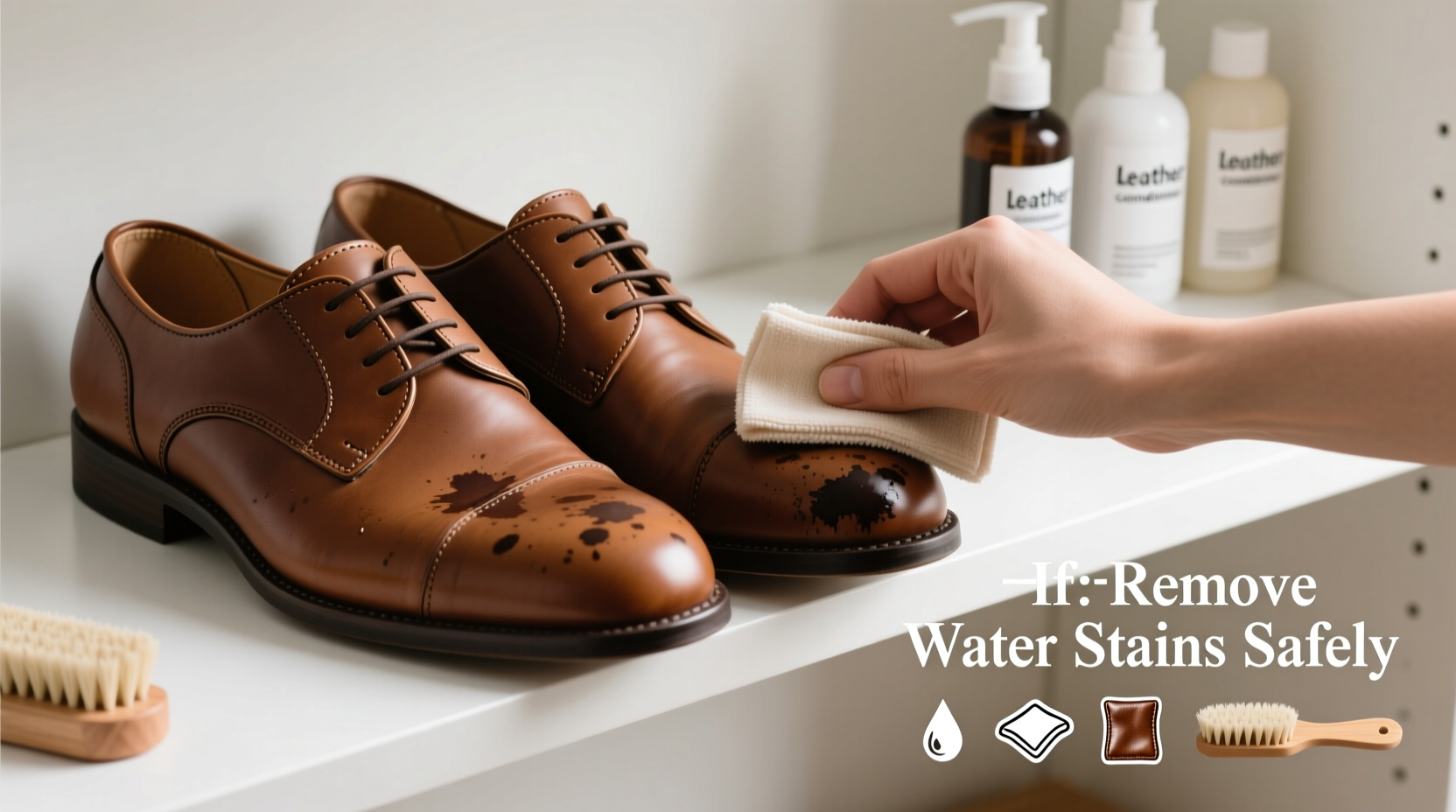
Leather is a natural, porous material derived from animal hides. While it’s durable, it absorbs liquids easily. When water penetrates the surface, it doesn’t just sit on top—it migrates into the fibers. As the water evaporates, it leaves behind mineral deposits (especially from tap water), which appear as cloudy white stains. Additionally, uneven drying causes the leather fibers to contract at different rates, leading to stiffness and visible blotchiness.
The damage isn’t always cosmetic. Repeated exposure weakens the tanning agents and oils that keep leather supple. Over time, this leads to cracking, loss of luster, and premature aging. That’s why immediate and correct intervention is critical—not just for appearance, but for preserving the functional life of your shoes.
“Water stains aren’t just surface-level; they disrupt the internal structure of leather. Gentle rehydration and conditioning are essential to reverse the damage.” — Dr. Marcus Langley, Footwear Conservation Specialist
Immediate Steps After Water Exposure
The first 30 minutes after your shoes get wet determine how well they recover. Acting quickly minimizes long-term staining and structural harm.
- Blot, don’t wipe: Use a clean, absorbent microfiber cloth or paper towel to gently press against wet areas. Avoid rubbing, which spreads moisture and grinds particles into the pores.
- Remove insoles and laces: This allows air to circulate inside the shoe and prevents trapped moisture from causing odor or mildew.
- Stuff with unprinted paper or shoe trees: Crumpled newspaper or plain tissue helps draw out moisture while maintaining shape. Replace every few hours as paper becomes damp.
- Air-dry naturally: Place shoes in a well-ventilated room away from direct sunlight, radiators, or hairdryers. Heat accelerates uneven drying and promotes cracking.
Safe Methods to Remove Set-In Water Stains
If the shoes have already dried and show visible stains, don’t panic. Several non-abrasive techniques can lift the residue without harming the finish.
Method 1: Distilled Water Dampening & Even Drying
This method works by rehydrating the leather uniformly, allowing mineral deposits to dissolve and redistribute evenly during controlled drying.
- Mist the entire shoe surface lightly with distilled water using a fine spray bottle.
- Use a soft cloth to gently spread moisture across stained and unstained areas to avoid new contrast lines.
- Allow to dry slowly at room temperature, reshaping as needed.
- Repeat once if faint staining remains after 24 hours.
This approach is ideal for smooth, finished leathers like calfskin dress shoes. It avoids chemicals and relies on physics—uniform hydration eliminates differential drying marks.
Method 2: Mild Soap Solution (For Tougher Stains)
When simple dampening fails, a gentle cleaning solution can help lift residues without stripping natural oils.
- Mix one drop of pH-neutral liquid soap (like Castile soap) with two tablespoons of distilled water.
- Dip a cotton ball or soft cloth into the solution—wring thoroughly so it’s barely damp.
- Wipe the stained area in small circular motions, extending slightly beyond the edge to blend.
- Immediately follow with a clean, water-dampened cloth to rinse off soap residue.
- Dry naturally, stuffed with paper.
After drying, condition the leather to restore lost moisture (see conditioning section below).
Method 3: Vinegar-Water Solution (For Persistent White Rings)
Vinegar’s mild acidity helps dissolve alkaline mineral deposits left by hard water. Use cautiously and only when other methods fail.
| Ingredient | Ratio | Application Notes |
|---|---|---|
| White vinegar | 1 part | Must be distilled white vinegar—no apple cider or wine vinegar |
| Distilled water | 2 parts | Prevents over-acidification of leather |
- Apply the solution sparingly with a cotton swab directly to the stain.
- Wait 30 seconds, then wipe with a damp cloth.
- Rinse thoroughly with a distilled water-dampened cloth.
- Dry slowly and condition afterward.
Conditioning: The Essential Final Step
Cleaning removes stains but also strips natural oils. Skipping conditioning invites long-term damage. A good conditioner replenishes lipids, restores flexibility, and protects against future moisture intrusion.
Choosing the Right Conditioner
Not all conditioners are equal. For post-stain treatment, opt for water-based or lanolin-rich formulas rather than heavy waxes, which can trap residual moisture.
- Saphir Médaille d'Or Renovateur: Balances cleaning and conditioning; excellent for reviving discolored leather.
- Lexol Leather Conditioner: Lightweight, non-greasy, widely available.
- Bickmore Bick 4: Safe for all leathers, won’t darken the finish.
Application Process
- Ensure shoes are completely dry—this may take 24–48 hours after cleaning.
- Apply a pea-sized amount of conditioner to a soft cloth.
- Work in circular motions, covering the entire upper, not just stained areas.
- Let absorb for 15–30 minutes, then buff gently with a dry cloth.
- Wait another 12 hours before wearing or polishing.
“Conditioning isn’t optional—it’s preventive maintenance. One session after water exposure can prevent years of accelerated wear.” — Lena Patel, Master Cobbler & Restorer
Do’s and Don’ts: What to Avoid When Treating Water Stains
Misguided attempts often cause more harm than the original stain. Follow this checklist to protect your investment.
| Do’s | Don’ts |
|---|---|
| Use distilled water to prevent mineral deposits | Use tap water for cleaning or rinsing |
| Dry shoes at room temperature, away from heat sources | Place near radiators, vents, or direct sunlight |
| Test cleaning solutions on hidden areas first | Apply vinegar or soap aggressively without testing |
| Condition leather after every deep cleaning | Use silicone-based polishes or waterproofing immediately after staining |
| Store shoes with cedar shoe trees to regulate humidity | Keep in plastic bags or humid basements |
Real Example: Reviving a Pair of Oxfords After a Rainstorm
James, a financial analyst, wore his favorite brown oxford shoes to work during an unexpected storm. By the time he reached the office, his feet were soaked. He removed the insoles, stuffed the shoes with paper, and let them dry overnight near a window (but not in direct sun). Two days later, he noticed white ring stains around the toe caps.
He tried wiping with a damp cloth, but the stains remained. Following the distilled water misting method, he lightly sprayed the entire front panel and allowed it to dry slowly. After 24 hours, the stains had faded significantly. He repeated the process once more, then applied Lexol conditioner. Within three days, the shoes looked nearly new—no cracks, no color loss, and full flexibility restored.
The total cost? Less than $10 in supplies and two days of patience. James now keeps a travel-sized microfiber cloth and mini bottle of distilled water in his briefcase during rainy seasons.
Frequently Asked Questions
Can I use a hairdryer to speed up drying?
No. Hairdryers produce concentrated heat that dehydrates leather too quickly, causing shrinkage, warping, and micro-cracking. Air-drying at room temperature is the only safe method.
Will water stains go away on their own?
Sometimes minor spots fade as the leather re-equilibrates, but most set-in stains become permanent without intervention. Early action improves outcomes dramatically.
Is it safe to use toothpaste or baking soda on leather?
No. These are abrasive and alkaline, which can scratch the surface and degrade dyes. They’re not formulated for organic materials like leather and should be avoided.
Prevention Tips for the Future
Once you’ve rescued your shoes, take steps to prevent recurrence. Prevention is far easier—and cheaper—than restoration.
- Apply a leather protector spray: Products like Collonil Nanopro or Saphir Super Invulner create an invisible barrier that repels water and stains. Reapply every 4–6 weeks with regular wear.
- Rotate your shoes: Wearing the same pair daily doesn’t allow enough time for moisture to escape. Rotate between at least two pairs to extend lifespan.
- Invest in quality shoe trees: Cedar wood absorbs moisture, maintains shape, and discourages odors. Insert them immediately after removing shoes.
- Store properly: Keep shoes in a cool, dry closet with good airflow. Avoid plastic boxes or under-bed storage where humidity builds.
Conclusion: Care Today Prevents Damage Tomorrow
Removing water stains from leather shoes doesn’t require magic—just knowledge, patience, and the right tools. By understanding how water interacts with leather and following proven, gentle methods, you can restore even heavily stained footwear to excellent condition. The real secret lies not in emergency fixes but in consistent care: prompt drying, proper cleaning, and routine conditioning.
Your leather shoes represent both function and craftsmanship. Treating them with respect ensures they’ll serve you well for years, whether you're walking through city streets or stepping into a boardroom. Start applying these practices today—your shoes will thank you.




 浙公网安备
33010002000092号
浙公网安备
33010002000092号 浙B2-20120091-4
Comments
No comments yet. Why don't you start the discussion?