
“Natural cleaning methods not only protect your surfaces but also preserve indoor air quality and reduce chemical exposure in the home.” — Dr. Lena Patel, Environmental Health Specialist
Turmeric is a powerful spice known for its vibrant golden-yellow hue and health benefits. However, that same intensity makes it a notorious culprit behind stubborn countertop stains. Whether you're cooking with curry or experimenting with golden milk lattes, one spill can leave a lasting mark—especially on lighter stone, laminate, or quartz surfaces. The good news: you don’t need bleach or abrasive cleaners to restore your countertop’s original finish. With common household items and a few strategic steps, you can lift turmeric stains safely and effectively.
Understanding Why Turmeric Stains Are So Persistent
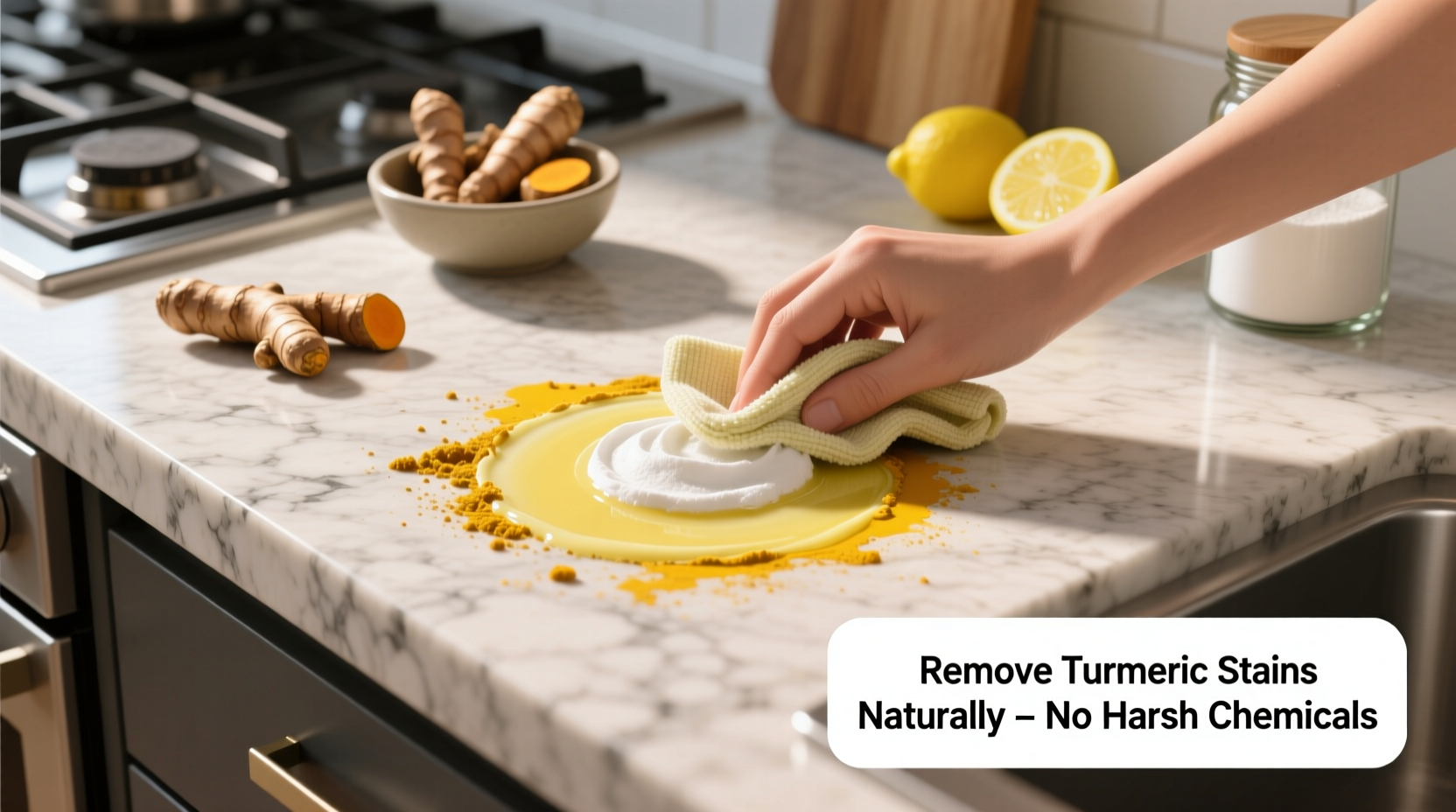
The active compound in turmeric, curcumin, is both fat-soluble and slightly acidic, which allows it to bind quickly to porous materials. Once absorbed into surfaces like granite, marble, concrete, or even some laminates, the stain sets deeply and resists simple wiping. Unlike water-based spills that evaporate, turmeric residue oxidizes over time, darkening rather than fading. This explains why a spill left overnight often appears more pronounced the next day.
Countertops made of natural stone are especially vulnerable due to microscopic pores. Even sealed countertops aren't immune—sealers wear down, particularly near sinks and stovetops where moisture and heat accelerate degradation. Laminate and solid surface countertops (like Corian) resist absorption better but can still suffer surface-level discoloration if not cleaned promptly.
Natural Ingredients That Neutralize Turmeric Stains
Before reaching for commercial cleaners, consider what’s already in your pantry. Many natural substances have mild bleaching, lifting, or pH-balancing properties that break down curcumin without damaging surfaces. Here's a breakdown of the most effective options:
- Baking soda (sodium bicarbonate): A gentle abrasive that lifts surface stains while neutralizing acidity.
- Hydrogen peroxide (3% solution): A mild oxidizing agent that helps fade organic pigments like turmeric when used carefully.
- Lemon juice: Contains citric acid, which breaks down curcumin molecules. Caution: avoid on calcium-rich stones like marble or travertine.
- Dish soap (plant-based, degreasing formula): Helps dissolve oily residues that carry turmeric deep into pores.
- Cornstarch or flour: Acts as an absorbent poultice base to draw out trapped pigments from porous surfaces.
These ingredients work best in combination. For example, baking soda provides scrubbing power while hydrogen peroxide lightens the stain chemically. Together, they form a paste that clings to vertical edges and works over time.
Step-by-Step Guide to Remove Turmeric Stains by Countertop Type
Not all countertops react the same way to cleaning agents. Using lemon juice on marble could etch the surface, while vinegar might dull the sealant on granite. Tailor your approach based on material. Below is a detailed timeline for treating turmeric stains across common countertop types.
For Granite and Engineered Quartz
- Blot excess turmeric with a damp microfiber cloth. Do not wipe vigorously.
- Mix 2 tablespoons baking soda with 1 tablespoon hydrogen peroxide (3%) to form a thick paste.
- Apply the paste directly to the stained area, extending slightly beyond the visible edge.
- Cover with plastic wrap to reduce evaporation and let sit for 2–4 hours.
- Rinse thoroughly with water and dry with a soft towel.
- If the stain persists, repeat once more before considering professional refinishing.
For Marble, Limestone, and Other Calcium-Based Stones
- Immediately rinse the area with cool water to dilute any remaining turmeric.
- Use only baking soda and water—never acids like lemon or vinegar.
- Create a paste with 3 parts baking soda to 1 part water.
- Apply and cover with plastic wrap. Let sit for no longer than 2 hours.
- Gently rinse and buff dry. Inspect for changes; repeat only if necessary.
For Laminate and Solid Surface Countertops (e.g., Formica, Corian)
- Wipe the area with warm, soapy water using a non-abrasive sponge.
- If discoloration remains, mix baking soda with a few drops of dish soap to create a polishing paste.
- Scrub gently in circular motions for 30–60 seconds.
- Rinse and dry completely.
- For older stains, use a melamine foam sponge (commonly sold as “magic eraser”) lightly moistened—do not press hard.
Do’s and Don’ts: Best Practices for Safe Stain Removal
| Action | Recommended? | Reason |
|---|---|---|
| Use hydrogen peroxide on granite | ✅ Yes | Safe at 3%, effective on organic stains |
| Apply lemon juice to marble | ❌ No | Causes etching and permanent dull spots |
| Leave baking soda paste overnight | ⚠️ Limited | Prolonged exposure may dry out sealant |
| Use hot water for initial rinse | ❌ Avoid | Heat can set protein and pigment stains |
| Combine vinegar and hydrogen peroxide | ❌ Never | Creates peracetic acid, which is corrosive |
| Use cornstarch as a drying agent | ✅ Yes | Safe absorbent for fresh spills |
Real Example: How One Home Cook Fixed a Week-Old Turmeric Stain
Sophie, a meal-prep enthusiast in Portland, spilled a turmeric-heavy dal sauce on her white quartz countertop during a busy Sunday cook session. Distracted, she didn’t clean it until the next morning—by then, the yellow had dried into a noticeable patch. After reading online about harsh chemical risks, she decided to try a DIY method.
She mixed baking soda and hydrogen peroxide into a paste, applied it with a silicone spatula, and covered it with cling film. She left it for three hours before rinsing. To her surprise, the stain was nearly gone. A second application the following day erased the remainder. “I was ready to call a stone specialist,” she said later, “but this saved me time, money, and a lot of stress.”
Her success underscores two key points: patience matters, and repeated gentle treatments often outperform aggressive single attempts.
Prevention Tips to Minimize Future Staining
While removing stains is important, preventing them reduces long-term maintenance and preserves your countertop’s appearance. Simple habits make a big difference:
- Place a cutting board or silicone mat in high-risk zones like beside the stove or near the prep area.
- Keep a small bowl of baking soda nearby for quick spot treatment.
- Re-seal natural stone countertops every 6–12 months, depending on usage.
- Use glass or stainless steel prep bowls when handling highly pigmented spices.
- Wash utensils and cloths that contact turmeric immediately to avoid cross-contamination.
Frequently Asked Questions
Can I use vinegar to remove turmeric stains?
Vinegar is not recommended for most countertops. While it can help on non-porous surfaces like glazed ceramic tile, it poses risks to natural stone and grout. On marble or limestone, vinegar causes etching—a chemical reaction that dulls the shine. On sealed granite, it may degrade the protective layer over time. Stick to hydrogen peroxide and baking soda for safer results.
How long should I leave a baking soda paste on my countertop?
Limit contact time to 2–4 hours. Extended exposure, especially overnight, can dry out the sealant on stone surfaces or leave a chalky residue. Covering the paste with plastic wrap helps maintain moisture without needing prolonged dwell time.
Will turmeric stains fade on their own?
No. Unlike some food spills, turmeric does not evaporate or biodegrade quickly on countertops. In fact, exposure to sunlight can darken the stain due to oxidation. Without intervention, the discoloration may become permanent, especially on porous materials. Early action yields the best outcome.
Checklist: Natural Turmeric Stain Removal Routine
Follow this step-by-step checklist for consistent, safe stain removal:
- ▢ Blot fresh spills immediately with a clean, dry cloth
- ▢ Identify your countertop material (granite, quartz, marble, etc.)
- ▢ Prepare appropriate cleaning paste (baking soda + hydrogen peroxide or water)
- ▢ Test on a discreet area first
- ▢ Apply paste and cover with plastic wrap
- ▢ Wait 2–4 hours (no longer on sensitive stones)
- ▢ Rinse thoroughly with cool water
- ▢ Dry completely with a lint-free towel
- ▢ Repeat if needed after 24 hours
- ▢ Re-seal natural stone if required
Final Thoughts: Clean Smarter, Not Harder
Removing turmeric stains doesn’t require toxic chemicals or expensive products. With an understanding of your countertop’s material and the science behind staining, you can rely on simple, accessible solutions that are kinder to your home and health. Baking soda, hydrogen peroxide, and careful technique do more than erase discoloration—they extend the life of your surfaces and maintain their beauty naturally.
Consistency beats intensity. A quick response to spills, regular resealing, and mindful prep habits will keep your kitchen looking pristine, even when working with the most colorful ingredients. The goal isn’t perfection—it’s sustainable care that fits seamlessly into daily life.




 浙公网安备
33010002000092号
浙公网安备
33010002000092号 浙B2-20120091-4
Comments
No comments yet. Why don't you start the discussion?