
Every January, millions of households face the same quiet ritual: untangling strands of Christmas lights, testing each one, sighing at the flicker—or lack thereof—and ultimately tossing them into the bin. But here’s what most people don’t realize: even non-functional holiday lights contain valuable materials—copper wire, durable plastic housings, colored lenses, and flexible insulation—that are perfectly suited for inventive reuse. Repurposing isn’t just about sustainability; it’s an opportunity to reclaim creative agency, teach resourcefulness to children, and transform seasonal clutter into functional art. With over 150 million pounds of holiday lighting discarded annually in the U.S. alone (U.S. EPA, 2023), shifting from disposal to reimagination carries tangible environmental and personal rewards.
Why Repurposing Beats Recycling—or Trashing
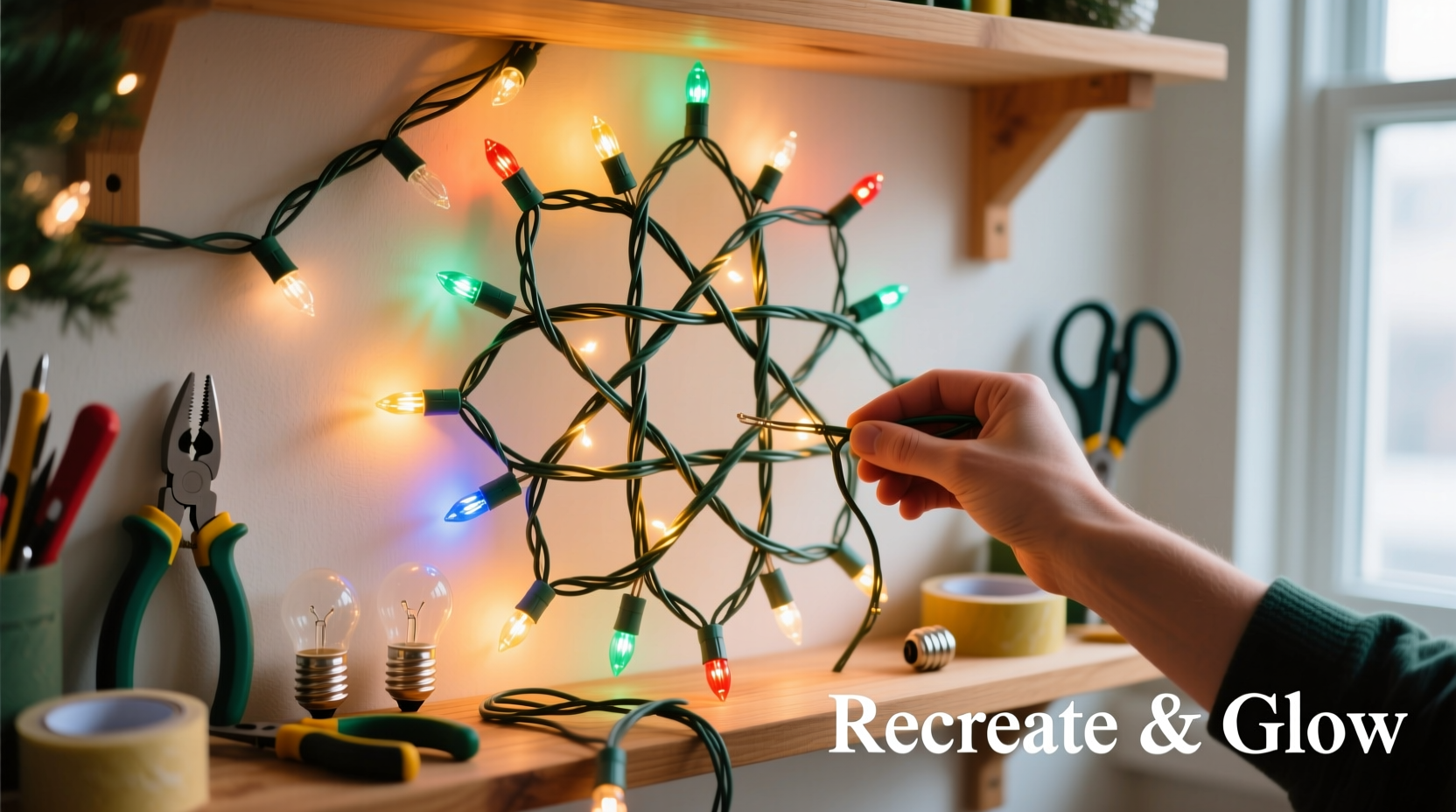
Recycling holiday lights is notoriously difficult. Most municipal programs reject them due to mixed-material construction: copper wiring wrapped in PVC or polyethylene, embedded LED chips, soldered connections, and often non-recyclable plastic diffusers. Specialized e-waste recyclers exist—but they’re scarce, require shipping, and rarely accept single-strand donations. Meanwhile, landfilling lights means copper leaching into soil and microplastics entering waterways over decades. Repurposing bypasses these systemic hurdles entirely. It keeps materials in active use, avoids energy-intensive reprocessing, and fosters tactile problem-solving. As Dr. Lena Torres, materials scientist and circular economy researcher at MIT, explains:
“Repurposing is the highest form of material stewardship—it preserves embodied energy, honors design intent, and builds cultural resilience. A strand of lights isn’t ‘waste’ until we stop seeing its potential.” — Dr. Lena Torres, MIT Materials Systems Lab
This mindset shift—from “broken” to “awaiting reinterpretation”—is where meaningful craft begins.
7 Proven Craft Projects (Functional & Decorative)
These projects span skill levels, time commitments, and utility. All assume basic tools: wire cutters, needle-nose pliers, a utility knife, and optionally, a soldering iron (for advanced upgrades). No project requires working lights—though functional strands open additional possibilities.
1. Copper Wire Sculpture Frames
Strip the outer insulation from non-LED strands (especially older incandescent types) to reveal pure, annealed copper wire. Cut lengths between 12–36 inches, then bend into organic shapes: abstract wall hangings, plant supports, jewelry stands, or minimalist picture frames. The wire’s natural springiness holds form without soldering. For durability, seal with clear matte lacquer.
2. Light-Diffusing Lanterns & Vases
Cut plastic bulb housings from LED strands—especially warm-white or amber-colored ones. Glue clusters together using E6000 adhesive to form geometric orbs, pendant shades, or vase sleeves. Insert battery-operated tea lights or fairy lights inside for soft, ambient glow. One artist in Portland, OR, created a suspended chandelier using 217 salvaged red and green bulb casings—mounted on brass rings and lit by a single USB-powered string.
3. Holiday-Themed Mosaic Backsplashes
Remove tiny colored lenses (common in mini-lights) and sort by hue and transparency. Embed them into grout lines of kitchen backsplashes, bathroom tiles, or tabletops using thinset mortar. Their refractive quality catches light differently than glass tile—adding subtle shimmer without glare. A DIYer in Asheville used blue and white lens fragments to create a winter-sky mosaic behind her kitchen sink, sealed with epoxy grout for moisture resistance.
4. Customizable Cord Organizers
Use intact light cords—especially those with textured or braided jackets—as desk or entertainment-center cable wraps. Braid three strands together, secure ends with heat-shrink tubing, and attach magnetic clasps or leather toggles. The built-in flexibility and slight weight prevent tangles better than generic fabric sleeves.
5. Textile Embellishment Elements
Cut small sections of multi-color light strands (with bulbs intact) and sew them onto denim jackets, tote bags, or pillow covers using heavy-duty thread. Reinforce stitching points with fabric glue. For washable items, only use strands labeled “indoor/outdoor” and avoid soldered connections near seams. A textile teacher in Detroit uses this technique with students to explore light-as-material in wearable art.
6. Educational Circuit Kits for Kids
Even non-working strands hold pedagogical value. Use them to demonstrate series vs. parallel circuits: cut wires at known break points, strip ends, and reconnect with alligator clips. Label resistors, diodes, and power sources. Add cardboard bases and laminated diagrams. Schools in Vermont report 40% higher engagement in introductory electronics units when using familiar, deconstructed holiday items.
7. Garden Markers & Pest Deterrents
Bury stripped copper wire ends (3–4 inches deep) around herb or vegetable beds. Copper reacts with soil moisture to create a mild ion barrier that deters slugs and snails—no chemicals needed. Alternatively, mount intact mini-lights on stakes with solar chargers to create low-level path lighting or deer-deterrent motion-triggered flashes (using simple PIR sensors).
Safety & Preparation Checklist
Before any project, follow this essential safety protocol:
- Unplug and disconnect: Never handle lights connected to AC power—even if “off.”
- Test functionality first: Use a multimeter to identify working segments (save these for illumination-based projects).
- Sort by type: Separate incandescent (thicker wire, glass/plastic bulbs) from LED (thinner wire, plastic lenses, often with controllers).
- Wear PPE: Safety glasses when cutting; nitrile gloves when handling aged PVC (which may contain trace phthalates).
- Dispose responsibly: Recycle controller boxes and batteries separately via Call2Recycle.org drop-offs.
Do’s and Don’ts of Light Repurposing
| Action | Do | Don’t |
|---|---|---|
| Stripping wire | Use a wire stripper with adjustable gauge settings; test on scrap first. | Use knives or teeth—risk of cuts and nicked copper. |
| Gluing plastic parts | Use cyanoacrylate (super glue) or E6000 for flexible bonds. | Use hot glue on thin plastic housings—it warps and loses adhesion. |
| Working with controllers | Label input/output wires before disassembly; photograph connections. | Assume all controllers are identical—even same-brand models vary internally. |
| Outdoor use | Seal exposed wire ends with marine-grade silicone and UV-resistant tape. | Leave bare copper outdoors without protection—it oxidizes rapidly and weakens. |
| Storage | Coil strands loosely around cardboard tubes; label with voltage/type. | Wrap tightly with rubber bands—they degrade insulation over time. |
Step-by-Step: Building a Copper-Wire Wall Sconce (Beginner-Friendly)
This 90-minute project yields a sculptural, functional light fixture using only salvaged materials:
- Gather: One 25-light incandescent strand (non-LED), wire cutters, needle-nose pliers, 3-inch brass cup hook, matte black spray paint, and a 4-watt Edison-style bulb with E12 base.
- Strip: Cut off plug and end connector. Strip 2 inches of insulation from both wire ends. Gently pull insulation off entire strand using pliers—don’t yank, as copper can snap.
- Shape: Bend the bare copper into a loose spiral (6–8 inches diameter), leaving two 8-inch tails extending from center. Twist tails tightly around each other to form a stable anchor point.
- Mount: Screw brass cup hook into wall stud. Hang sconce by twisting tails around hook shank. Adjust spiral for balance.
- Wire: Connect one tail to hot (black) wire of lamp cord, other to neutral (white), using wire nuts. Tuck connections into a UL-listed junction box mounted behind sconce.
- Finish: Spray-paint copper with matte black—preserves conductivity while adding modern contrast. Let cure 24 hours before installing bulb.
Result: A zero-cost, gallery-worthy fixture that highlights material honesty and adaptive reuse.
Mini Case Study: The “Lumina Library” Project
In 2022, the public library in Lancaster, PA launched “Lumina Library”—a community craft initiative collecting post-holiday lights from residents. Volunteers sorted 327 strands over six weeks. Working with local high school art students, they transformed materials into three permanent installations: a 12-foot “lightwave” ceiling sculpture in the teen zone (using 180+ blue LED housings strung on aircraft cable), 42 copper-wire bookends for the reference desk, and a tactile “circuit wall” for early learners featuring labeled, touch-safe light components. The project diverted 86 lbs of e-waste, involved 63 volunteers, and increased youth program attendance by 27% year-over-year. Crucially, no new materials were purchased—the budget covered only safety gear and mounting hardware.
FAQ
Can I safely solder salvaged LED lights?
Yes—but only if you understand their circuit architecture. Most LED strings use constant-current drivers and serial configurations. Soldering across a dead LED without bypassing its internal shunt can disable the entire strand. Use a continuity tester first. For beginners, focus on mechanical assembly (gluing, weaving, framing) rather than electrical modification.
Are old incandescent lights worth keeping over LEDs?
Incandescent strands offer thicker, more malleable copper wire and heat-resistant glass bulbs—ideal for sculptural work. LEDs provide vibrant, lightweight plastic lenses and flexible wiring—better for textiles and mosaics. Keep both: incandescents for structure, LEDs for color and texture.
How do I store salvaged parts long-term?
Sort by category (lenses, wire, housings, controllers) in labeled, airtight containers. Include silica gel packs to prevent oxidation. Store in climate-controlled spaces—avoid garages or sheds where temperature swings accelerate plastic embrittlement.
Conclusion
Repurposing old Christmas lights isn’t nostalgia—it’s quiet resistance against disposability culture. Each strand you rescue carries stories: family gatherings, childhood wonder, quiet December evenings. When you bend that copper into a frame, embed those lenses into a wall, or wind that cord into a tool organizer, you’re not just making something new—you’re honoring intentionality, slowing consumption, and proving that value persists beyond planned obsolescence. These projects demand little investment but yield outsized returns: pride in craftsmanship, conversations sparked by handmade objects, and the deep satisfaction of knowing your holiday joy continues to illuminate, in literal and metaphorical ways. Start small—pull apart one strand this weekend. Notice the weight of the wire, the clarity of the lens, the resilience of the plastic. Then ask: What wants to be made next?




 浙公网安备
33010002000092号
浙公网安备
33010002000092号 浙B2-20120091-4
Comments
No comments yet. Why don't you start the discussion?