
Every January, countless strands of Christmas lights are discarded, despite many still functioning perfectly. Instead of letting them gather dust or end up in landfills, consider a creative second life: transforming them into captivating wall art. This isn’t just about recycling—it’s about reimagining light as a design element in your home year-round. The best part? You don’t need to know how to solder, wire circuits, or even own a toolbox beyond basic household items. With simple materials and thoughtful planning, you can craft luminous installations that reflect your style, mood, or seasonal themes.
Repurposed light art adds warmth, dimension, and personality to any space. Whether it’s a glowing constellation above a bed, a whimsical word spelled out in bulbs, or an abstract pattern on a gallery wall, the effect is both modern and nostalgic. And because these projects use existing components, they’re sustainable, affordable, and surprisingly easy to assemble.
Why this approach works for non-experts
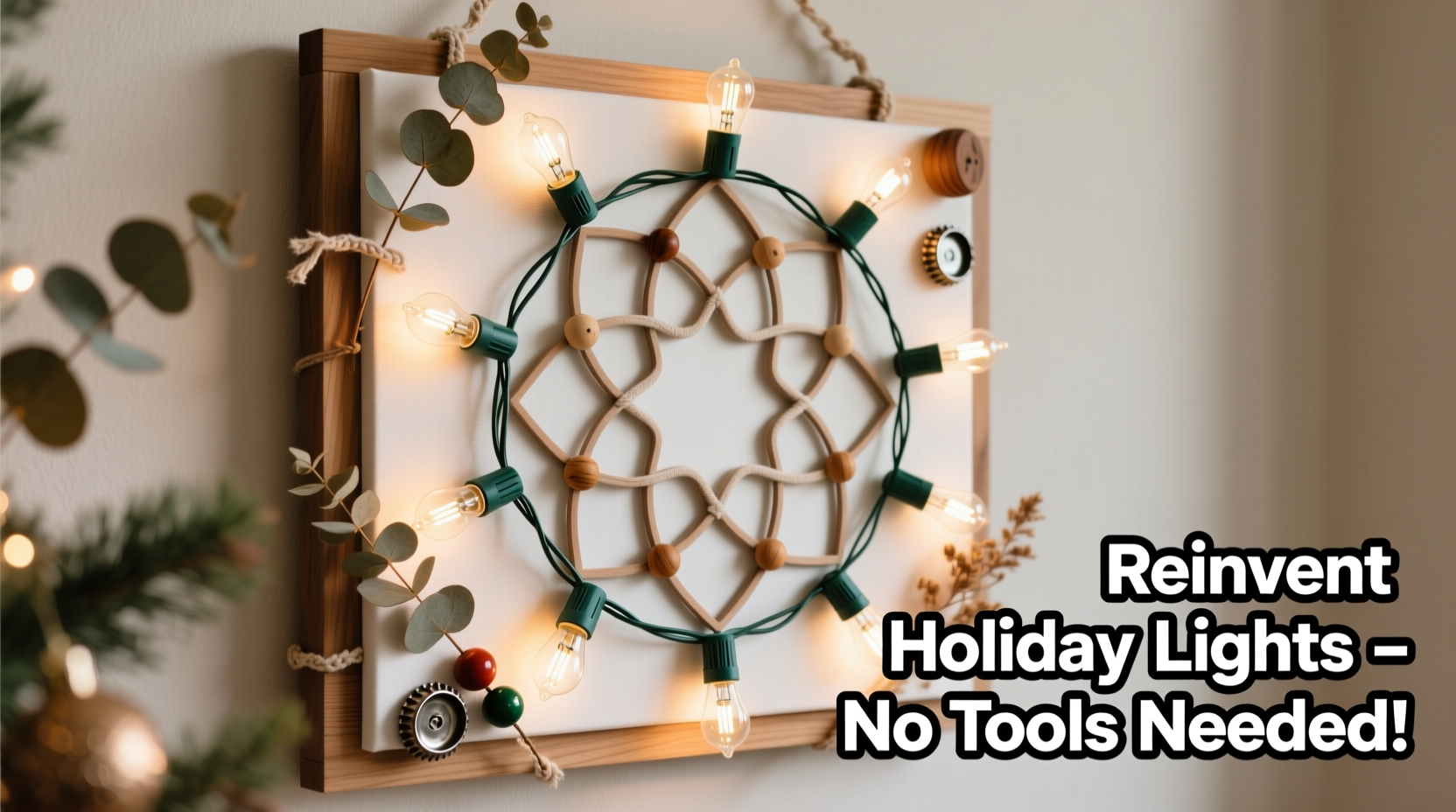
The key to making this accessible lies in working with what’s already functional. Most “broken” Christmas lights only have one faulty bulb or a frayed section—often leaving 80% of the strand intact. Rather than repairing the entire circuit, focus on isolating working segments. Modern mini-lights are wired in parallel or series-parallel configurations, meaning individual sections often operate independently. By testing and cutting only the good parts, you bypass complex electrical knowledge entirely.
Additionally, today’s plug-in LED strings are low-voltage and designed for indoor use, which reduces fire risk and eliminates the need for hardwiring. You simply reuse the factory-sealed plug and cord, attaching only the safe, tested portion of lights to your chosen backing. No exposed wires, no open circuits—just clean, plug-and-play illumination.
Materials and tools you’ll actually need
This project thrives on simplicity. Forget specialty hardware—most supplies can be found at dollar stores, craft shops, or in your junk drawer.
| Item | Purpose | Common Substitutes |
|---|---|---|
| Old Christmas lights (tested) | Light source | Fairy lights, battery-operated string lights |
| Foam board, wood panel, or canvas | Backing surface | Old picture frame, corkboard, cardboard |
| Hot glue gun or clear tape | Adhesive | Double-sided tape, museum putty |
| Scissors or wire cutters | Cutting lights | Household shears |
| Masking tape or pencil | Layout marking | Chalk, washi tape |
| Optional: paint, fabric, markers | Decorative enhancement | Photos, magazine cutouts, stencils |
The goal is modularity: build something that can be unplugged, stored, and reused. Avoid permanent modifications to walls or electrical systems. If using battery-powered lights, opt for replaceable coin-cell packs rather than sealed units for longer usability.
Step-by-step guide: From tangled strand to illuminated art
- Test and isolate working sections. Plug in your old lights. Identify which portions glow consistently. Use a marker to note the first and last working bulb in each segment. Discard or set aside completely dead strands.
- Cut the strand carefully. Using scissors or wire cutters, snip the wire just beyond the last working bulb. Keep the plug end intact. Never cut between bulbs unless removing a single defective one—this can break the circuit.
- Choose your backing material. A lightweight foam board (available at craft stores) is ideal for beginners. It’s easy to cut, paint, and glue to. For durability, use a wooden panel or stretched canvas.
- Plan your design. Sketch your layout lightly with pencil or use masking tape to outline shapes. Popular options include geometric patterns, initials, constellations, or organic swirls. Leave space near the edge for the plug to exit cleanly.
- Attach the lights. Starting from the plug end, apply small dabs of hot glue under each bulb or every few inches along the wire. Press the strand firmly into place, following your design. Avoid stretching or kinking the wire.
- Secure loose ends. Tuck the unused cut end behind the backing or cover with tape. Ensure no bare wires are exposed. If desired, attach a small loop of wire or ribbon to the back for hanging.
- Test before finalizing. Plug in the lights once mounted. Check for flickering or dark spots. Adjust glue points if needed.
- Add decorative layers (optional). Paint the background, adhere fabric, or layer paper cutouts beneath the lights for depth. Use translucent materials to diffuse the glow.
Design inspiration and real-world applications
Wall art doesn’t have to be literal. Light excels at evoking mood and movement. Consider these proven concepts:
- Night Sky Map: Recreate the Big Dipper or your zodiac constellation using spaced-out white LEDs. Add faint blue cellophane behind for a celestial backdrop.
- Mood Wall: Use warm white or soft pink lights in a cloud-like scatter pattern above a reading nook. Turns a corner into a calming retreat.
- Word Art: Spell out “Breathe,” “Joy,” or a loved one’s name in cursive or block letters. Ideal for nurseries or meditation spaces.
- Seasonal Rotator: Build multiple lightweight panels (e.g., snowflakes for winter, hearts for spring) and swap them monthly using adhesive hooks.
“Light is the most underrated design tool in home decor. A few well-placed bulbs can redefine a room’s energy without moving furniture.” — Lena Tran, Interior Lighting Consultant
Mini Case Study: A bedroom transformation in three hours
Sophie, a teacher in Portland, had two sets of old multicolored lights from her college years. One strand had half the bulbs out; the other worked intermittently. She didn’t want to buy new ones but missed the cozy ambiance they created.
She cut the better-performing section—about 24 bulbs—and glued them in a gentle arc across a 20x30 inch foam board painted midnight blue. Before attaching, she layered silver star stickers beneath where each bulb would sit, creating a double-glow effect. After mounting with picture hooks, she plugged it in beside her bed. The result mimicked a night sky during a meteor shower.
“It took less time than organizing my closet,” she said. “Now I leave it on dim mode at night. It’s like having a piece of childhood magic that actually fits my adult apartment.”
Safety and longevity: Keeping your art bright and safe
While this project avoids high-risk modifications, basic precautions ensure long-term safety:
- Never cover lights with flammable materials like paper or fabric unless separated by a heat-resistant barrier.
- Use LED lights only—incandescent bulbs generate heat that can warp backing or pose fire hazards.
- Limit continuous use to 8–10 hours. Turn off when leaving the house or sleeping, unless using smart plugs with timers.
- Inspect cords monthly for brittleness or fraying. Replace the entire strand if damage is found.
“All DIY lighting should pass the ‘touch test’—if it’s warm to the touch after an hour, it’s too hot to leave unattended.” — Rafael Mendez, Electrical Safety Inspector
For extended lifespan, store your art flat in a dry place when not in use. Wrap the cord loosely around a piece of cardboard and secure with a twist tie. Avoid folding wires sharply, which can break internal connections.
Checklist: Pre-installation safety review
- ✅ Lights are LED, not incandescent
- ✅ Cord and plug show no cracks or exposed wires
- ✅ Backing material is non-flammable (wood, metal, fiberglass)
- ✅ Installation allows airflow around bulbs
- ✅ Plug reaches outlet without stretching or pinching
- ✅ Mounted securely and won’t fall if bumped
FAQ: Common concerns answered
Can I use battery-powered lights instead?
Yes, and they offer more flexibility. Battery-operated strings eliminate cord clutter and allow placement anywhere. Just ensure the battery case is accessible for replacements. Opt for models with on/off switches for convenience.
What if my lights flicker after cutting?
Flickering usually means the circuit was broken during cutting. Reconnect only factory-intact segments. If the issue persists, the problem may be in the plug or transformer—replace the entire strand. Never attempt to splice wires without proper insulation and knowledge.
Can this work outdoors or in humid areas like bathrooms?
Only if the original lights are rated for outdoor or damp locations. Most indoor Christmas lights are not moisture-resistant. For bathrooms, use GFCI-protected outlets and keep the plug away from sinks or showers. Better yet, stick to interior walls with stable temperatures.
Final thoughts: Light as personal expression
Repurposing old Christmas lights isn’t just a craft—it’s a statement about value, creativity, and intentionality. In a world of mass-produced decor, handmade light art carries emotional weight. Each bulb once marked a holiday, a celebration, a memory. Now, those same lights can illuminate your daily life in a new way.
You don’t need artistic training or technical mastery. You only need curiosity, a willingness to experiment, and respect for basic safety. Start small: one shape, one color, one wall. See how light changes the feel of a room. Then expand—build a series, involve kids, gift a piece to a friend.




 浙公网安备
33010002000092号
浙公网安备
33010002000092号 浙B2-20120091-4
Comments
No comments yet. Why don't you start the discussion?