
Your body runs on a natural 24-hour cycle known as the circadian rhythm, which regulates when you feel awake, alert, tired, or ready to sleep. When this internal clock becomes disrupted—due to late-night screen use, irregular work hours, jet lag, or poor habits—it can lead to insomnia, daytime fatigue, mood swings, and long-term health issues like metabolic disorders and weakened immunity. The good news: your circadian rhythm is not fixed. With intentional, consistent changes, you can reset it naturally and reclaim restful, high-quality sleep.
Unlike quick fixes such as sleeping pills or caffeine dependence, aligning your biological clock addresses the root cause of sleep disruption. This guide provides practical, evidence-based steps to recalibrate your rhythm using light, timing, nutrition, and lifestyle adjustments—all without medication.
Understanding Your Circadian Rhythm
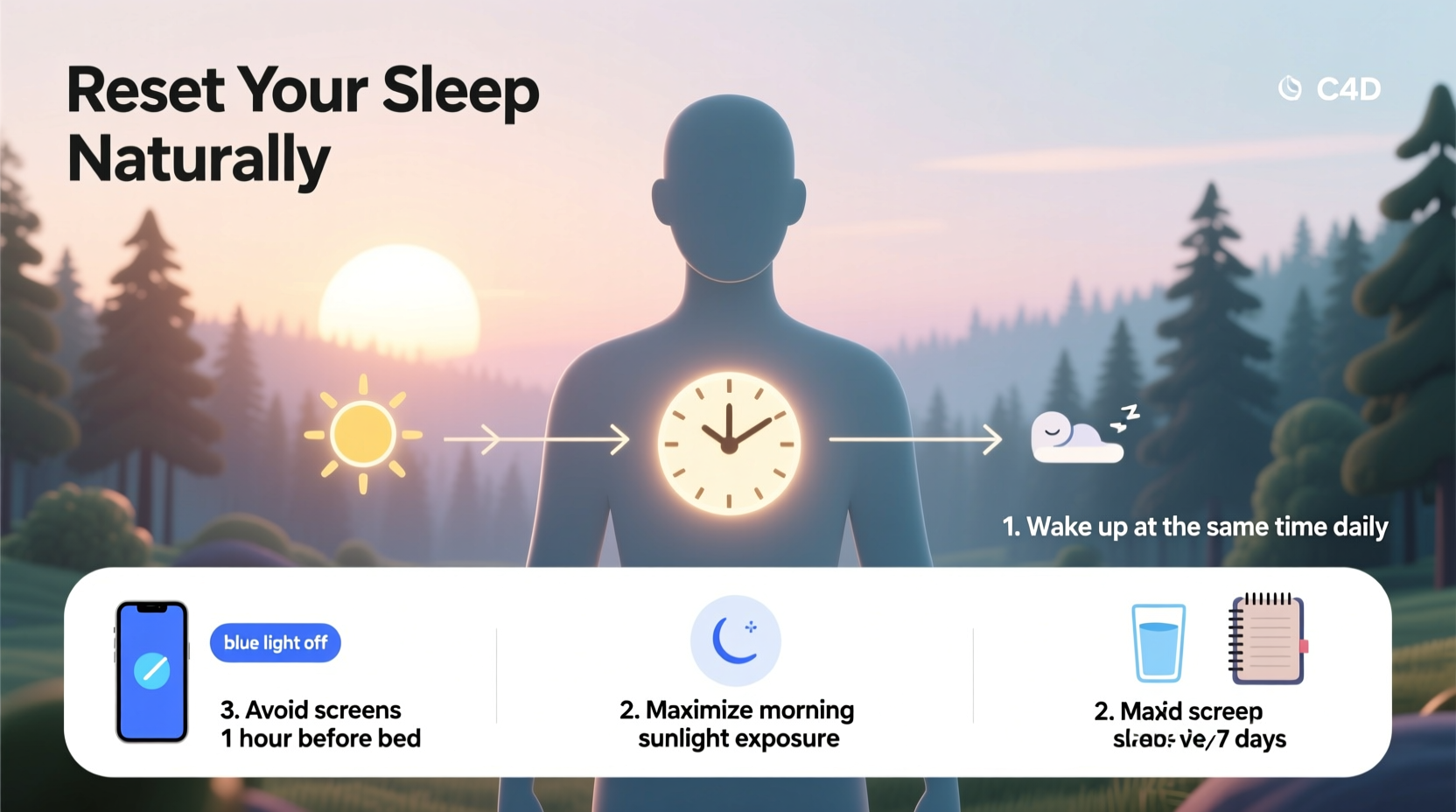
The circadian rhythm is governed by a region in the brain called the suprachiasmatic nucleus (SCN), which responds primarily to light and darkness. When light enters your eyes, especially blue-spectrum light from the sun or screens, it signals your SCN to suppress melatonin—the sleep hormone—and increase alertness. As evening approaches and light diminishes, melatonin rises, preparing your body for sleep.
Modern life often interferes with this process. Artificial lighting, nighttime screen exposure, inconsistent bedtimes, and shift work all confuse the SCN, leading to misaligned rhythms. A disrupted circadian cycle doesn’t just affect sleep; it impacts hormone regulation, digestion, immune function, and cognitive performance.
“Your circadian rhythm is the master regulator of nearly every physiological process. When it’s out of sync, everything downstream suffers.” — Dr. Satchin Panda, Circadian Biology Researcher, Salk Institute
Resetting your rhythm isn’t about forcing yourself to sleep earlier. It’s about retraining your body’s internal clock through environmental cues, primarily light and timing.
Step-by-Step Guide to Resetting Your Circadian Rhythm
Resetting your sleep schedule takes consistency and patience. Most people see noticeable improvements within 5–10 days, but full realignment may take up to two weeks. Follow this structured approach:
- Set a Fixed Wake-Up Time: Choose a wake-up time that matches your ideal schedule—even on weekends—and stick to it religiously. This anchors your circadian rhythm more effectively than bedtime.
- Get Morning Sunlight Within 30 Minutes of Waking: Spend at least 15–30 minutes outside in natural daylight. No sunglasses if possible. This strongly signals your brain that the day has begun.
- Avoid Blue Light After Sunset: Stop using phones, tablets, and computers at least 60–90 minutes before bed. Use blue light filters or wear amber-tinted glasses if screen use is unavoidable.
- Dim Indoor Lights in the Evening: Switch to warm, low-intensity lighting. Bright lights after dusk delay melatonin release.
- Establish a Consistent Bedtime Routine: Go to bed around the same time each night. Start winding down with calming activities like reading, stretching, or journaling.
- Limit Naps to 20 Minutes Before 3 PM: Long or late naps interfere with nighttime sleep drive.
- Reinforce the Sleep-Wake Cycle with Meal Timing: Eat meals at consistent times daily. Avoid heavy meals within three hours of bedtime.
Light Exposure: The Most Powerful Reset Tool
Light is the strongest external cue (called a zeitgeber) for your circadian system. Strategic light exposure can advance or delay your sleep phase depending on timing.
For people who fall asleep too late and wake up groggy (\"night owls\"), morning light helps shift the rhythm earlier. Conversely, evening light delays the cycle—useful for those who get sleepy too early in the evening.
| Goal | Light Strategy | Timing |
|---|---|---|
| Shift sleep earlier (phase advance) | Bright light exposure | Morning, within 1 hour of waking |
| Shift sleep later (phase delay) | Bright light exposure | Evening, 2–3 hours before bedtime |
| Maintain stable rhythm | Daily sunlight + dim evening light | Consistent daily pattern |
| Improve alertness during night shifts | Bright artificial light during work | Night hours, then wear sunglasses on commute home |
One study published in *Sleep Medicine* found that participants who received 30 minutes of morning bright light therapy advanced their sleep onset by an average of 2.5 hours within one week. The effect was even stronger when combined with evening light avoidance.
Nutrition, Exercise, and Daily Habits That Support Circadian Health
While light is the primary driver, other lifestyle factors reinforce or disrupt your rhythm.
Nutrition and Meal Timing
Your digestive system also follows a circadian pattern. Eating late at night sends conflicting signals to your liver and gut clocks, weakening overall synchronization.
- Eat breakfast within 1–2 hours of waking to signal the start of the day.
- Align meal times consistently across days—even on weekends.
- Avoid caffeine after 2 PM; its half-life can extend up to 10 hours.
- Limited alcohol intake, especially in the evening. While it may make you drowsy, it fragments sleep and suppresses REM.
- Include tryptophan-rich foods (turkey, eggs, nuts) and magnesium sources (leafy greens, pumpkin seeds) in evening meals to support melatonin production.
Physical Activity
Exercise enhances sleep quality and strengthens circadian amplitude, but timing matters. Morning or afternoon workouts promote alertness and help consolidate nighttime sleep. Intense exercise within 90 minutes of bedtime may delay sleep onset in sensitive individuals.
Real-Life Example: Recovering from Social Jet Lag
Meet Alex, a 28-year-old graphic designer who routinely stayed up until 2 AM during the week due to work and streaming habits, then slept until 10 AM on weekends. By Monday mornings, he felt exhausted, unfocused, and irritable—a classic case of social jet lag.
Over two weeks, Alex implemented the following:
- Set a non-negotiable wake-up time of 7:00 AM every day.
- Drank coffee only after going outside for 20 minutes of morning sunlight.
- Installed f.lux on his devices and stopped screen use by 9:30 PM.
- Started a nightly routine: herbal tea, light stretching, reading fiction under a warm lamp.
- Ate dinner by 7:30 PM and avoided snacks after 9 PM.
By day six, Alex noticed he was yawning by 10 PM. By day ten, he fell asleep by 10:30 PM and woke up without an alarm. His energy, concentration, and mood improved significantly. After one month, he no longer needed caffeine to stay alert during work hours.
This transformation wasn’t due to willpower alone—it resulted from aligning his environment with his biology.
Do’s and Don’ts of Circadian Reset
| Do | Don’t |
|---|---|
| Wake up at the same time every day | Sleep in excessively on weekends |
| Get bright light in the morning | Stay indoors or wear sunglasses immediately after waking |
| Keep evenings dim and screen-free | Watch TV or scroll in bed |
| Use your bed only for sleep and intimacy | Work, eat, or watch videos in bed |
| Be patient—changes take time | Expect instant results and give up after a few days |
“People underestimate how much control they have over their sleep simply by managing light and routine. You don’t need a sleep clinic to fix your rhythm—just consistency.” — Dr. Rebecca Robbins, Sleep Scientist, Harvard Medical School
Frequently Asked Questions
How long does it take to reset your circadian rhythm?
Most people begin to notice changes within 3–5 days. Full alignment typically takes 1–2 weeks of consistent effort. Shift workers or those with delayed sleep phase disorder may require longer, structured protocols.
Can I reset my circadian rhythm without changing my job schedule?
Yes, even with shift work, you can optimize your rhythm. Use bright light during night shifts, wear sunglasses on your morning commute to block sunlight, and create a dark, quiet sleep environment during the day. Maintain consistent off-days as much as possible.
Is melatonin supplementation necessary?
Not always. Low-dose melatonin (0.3–1 mg) taken 2–3 hours before desired bedtime can help accelerate the shift, especially for jet lag or delayed sleep phase. However, it should complement—not replace—behavioral changes like light management and routine.
Checklist: Your 7-Day Circadian Reset Plan
- ✅ Set a fixed wake-up time (same every day)
- ✅ Get 15–30 minutes of morning sunlight
- ✅ Dim lights and avoid screens 90 minutes before bed
- ✅ Establish a relaxing bedtime routine
- ✅ Avoid caffeine after 2 PM
- ✅ Eat dinner at least 3 hours before bedtime
- ✅ Keep your bedroom cool, dark, and quiet
- ✅ Limit naps to 20 minutes and before 3 PM
- ✅ Exercise daily, preferably in the morning or afternoon
- ✅ Track your sleep and energy levels daily
Repeat this routine for at least seven consecutive days. Adjust bedtime gradually—15–30 minutes earlier each night—until you reach your target.
Conclusion: Reclaim Your Natural Rhythm
Resetting your circadian rhythm isn’t about rigid discipline or extreme measures. It’s about creating a lifestyle that works with your biology, not against it. By harnessing the power of light, timing, and consistent habits, you can restore natural sleep patterns, boost mental clarity, and improve long-term well-being.
The most effective changes are simple but require regularity. Start with one habit—like morning sunlight—and build from there. Over time, your body will begin to anticipate sleep and wakefulness effortlessly, reducing reliance on alarms and stimulants.




 浙公网安备
33010002000092号
浙公网安备
33010002000092号 浙B2-20120091-4
Comments
No comments yet. Why don't you start the discussion?