
A well-fitted watch is not only more comfortable—it enhances your style and ensures you wear it consistently. But off-the-shelf metal bands often come with extra links, requiring resizing for a perfect fit. While many opt for professional help, it’s entirely possible to resize a metal watch band at home—without damaging or scratching the surface—if you approach it correctly. With the right tools, patience, and technique, you can achieve a clean, precise adjustment that looks factory-done.
This guide walks through proven, scratch-free methods used by experienced watch owners and horology enthusiasts. Whether you’re adjusting a stainless steel bracelet for a new purchase or tailoring a vintage piece, these steps will preserve the integrity of your timepiece while giving you a custom fit.
Why Avoid Scratches During Resizing?
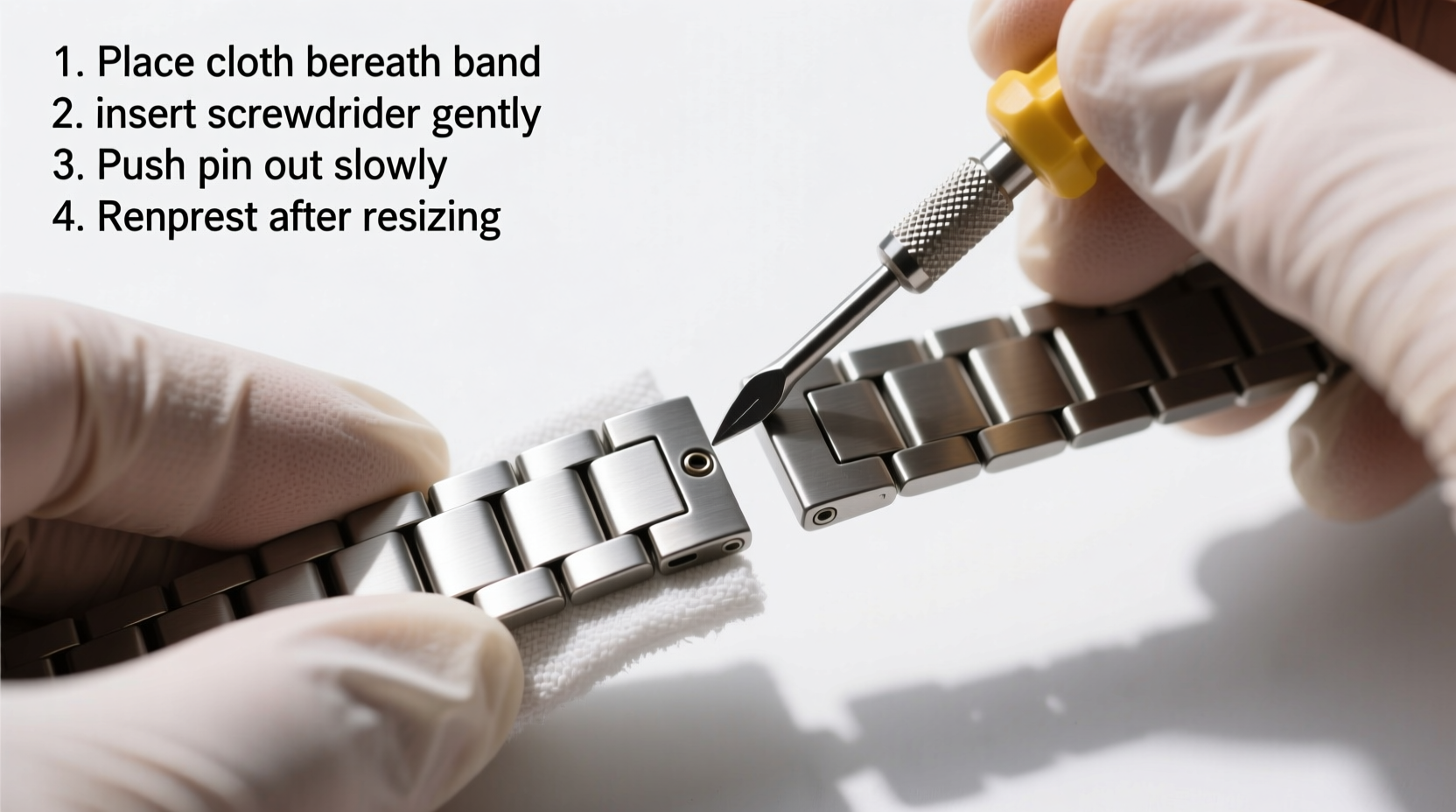
Metal watch bands, especially those made from polished stainless steel, brushed titanium, or precious metals, are prone to visible scratches. Even minor scuffs can degrade the aesthetic value and make the watch appear worn prematurely. Once a scratch occurs on a high-gloss finish, it often requires professional polishing to correct—costing time and money.
Scratches during resizing typically happen due to improper tool use, lack of stabilization, or incorrect pin removal technique. The good news? Most of these issues are preventable with preparation and care.
“Preserving the finish during resizing isn’t just about appearance—it maintains resale value and reflects respect for craftsmanship.” — Daniel Reyes, Watchmaker & Restoration Specialist
Essential Tools and Materials
Using the correct tools is the first step toward avoiding damage. Many DIY attempts fail because people improvise with pliers or screwdrivers, which easily slip and gouge the metal. Instead, invest in or source the following:
- Spring bar removal tool (or precision pin pusher): Specifically designed to apply even pressure when pushing out pins without marring the surface.
- Soft-jaw pliers or non-metallic clamps: For holding the band securely without leaving marks.
- Felt-lined vise or padded clamp stand: Keeps the watch stable during work. Never use bare metal jaws.
- Magnifying glass or head-mounted loupe: Helps identify pin direction and alignment.
- Microfiber cloth or soft mat: Place the watch on this to prevent incidental scratches from the work surface.
- Small container: To store removed pins and screws safely.
Step-by-Step Guide: Resizing Without Scratches
Follow this sequence carefully. Rushing increases the risk of error and damage.
- Inspect the Band Links
Lay the watch on a microfiber cloth under bright light. Examine the underside of the band to locate the removable links. Look for small arrows stamped near the pins—they indicate the direction the pins should be pushed. Not all bands have arrows, so check both ends. - Determine How Many Links to Remove
Try the watch on your wrist. Mark where the excess length lies. Each link typically adjusts the size by ~5mm. Remember: it’s better to remove one link at a time than over-shorten. - Secure the Watch Properly
Use a soft-jaw vise or wrap the case in a cloth before clamping gently. The goal is stability—not pressure. The band should remain accessible and free of tension. - Align the Pin Pusher Correctly
Insert the tip of the pin pusher into the hole on the side where the arrow points outward. Ensure the tool is perfectly aligned with the pin’s axis. Angled force causes slippage and surface dents. - Apply Slow, Steady Pressure
Gently press until the pin begins to emerge from the opposite side. Stop once about 1–2mm is exposed. Use tweezers to grasp and fully extract the pin. Repeat for the second pin if removing a full link. - Remove the Link(s)
Carefully separate the link. Do not force it—wiggle slightly if needed. Keep the removed pins in a labeled container in case you need to reassemble later. - Reconnect the Remaining Links
Align the two ends precisely. Reinsert the pin from the correct side (following the arrow direction). Use the pin pusher to seat it fully until flush with the end link. Never leave a protruding pin—it can catch on fabric or skin. - Final Inspection
Check that the band moves smoothly, the clasp functions properly, and no tools marks are visible. Wipe down with a dry microfiber cloth.
Do’s and Don’ts When Handling Metal Bands
| Do’s | Don’ts |
|---|---|
| Use a soft work surface (microfiber, felt, rubber mat) | Work on bare wood, metal, or glass surfaces |
| Double-check pin direction before pushing | Assume all pins are removable or identical |
| Label and store removed pins securely | Leave pins loose on a table where they can roll away |
| Apply even, gradual pressure with proper tools | Hammer, pry, or use pliers directly on the band |
| Test fit frequently during the process | Remove multiple links before trying on |
Real Example: Resizing a Stainless Steel Citizen Eco-Drive
Sarah, a nurse working 12-hour shifts, bought a new Citizen Eco-Drive but found the bracelet too loose. It slid around during patient rounds, risking impact damage. She decided to resize it herself after reading mixed reviews about jewelry store service quality.
She followed the steps above: used a padded vise, verified pin direction via YouTube tutorial, and applied steady pressure with a $15 pin pusher. She removed two links—one from each side for symmetry—and reassembled the band carefully. The result? A snug, secure fit that survived months of daily wear without a single scratch. More importantly, she saved $25 and gained confidence in maintaining her accessories.
Her key takeaway: “Taking five extra minutes to line up the tool correctly saved me from ruining a $300 watch.”
Alternative Methods for Non-Removable Link Bands
Some metal bands, particularly on luxury or integrated-design watches, aren’t meant to be resized by removing links. Instead, they feature micro-adjustment clasps or folding mechanisms. Before attempting any disassembly:
- Check the user manual or manufacturer website.
- Look for hidden adjustment screws on the clasp interior.
- Consider using a professional if the design appears complex.
For example, many Seiko and Casio models have adjustable end links that slide and lock via tiny set screws. These allow half-link adjustments without removing hardware—ideal for fine-tuning fit without tools.
FAQ: Common Questions About Watch Band Resizing
Can I resize any metal watch band at home?
Most standard link bracelets can be resized at home if you have the right tools. However, bands with hidden clasps, deployant mechanisms, or proprietary systems (like some Rolex Oyster bracelets) require specialized knowledge and tools. When in doubt, consult the brand’s guidelines or seek professional help.
What if I accidentally bend or scratch a link?
If the scratch is superficial, a jeweler’s cloth may buff it out. For deeper marks or bent links, professional refinishing is recommended. In the future, always double-check tool alignment and use protective padding to avoid repeat incidents.
Are all pins the same size and shape?
No. Pin diameter and length vary between brands and models. Some are straight, others tapered. Forcing the wrong tool can damage the pin channel. Always match your pusher tip to the pin size, and never assume compatibility across different watches.
Checklist: Scratch-Free Resizing at a Glance
- ✅ Clean your workspace and lay down a soft mat
- ✅ Identify removable links and pin direction (look for arrows)
- ✅ Gather proper tools: pin pusher, tweezers, magnifier, storage dish
- ✅ Secure the watch without applying pressure to the case
- ✅ Align tool perfectly with the pin axis
- ✅ Push slowly and extract pin with tweezers
- ✅ Reconnect links and seat pins flush
- ✅ Test fit and inspect for smooth movement and finish integrity
Conclusion: Confidence Through Care
Resizing a metal watch band doesn’t require a trip to the jeweler or expensive equipment. With attention to detail and the right approach, you can achieve a professional-quality fit at home—without compromising the watch’s appearance. The key lies in preparation, precision, and patience. Every careful motion protects the craftsmanship of your timepiece and extends its life.
Whether you’re customizing a gift, adjusting a new purchase, or reviving an old favorite, taking control of your watch’s fit empowers you as an owner. Apply these techniques mindfully, and you’ll enjoy both comfort and confidence on your wrist.




 浙公网安备
33010002000092号
浙公网安备
33010002000092号 浙B2-20120091-4
Comments
No comments yet. Why don't you start the discussion?