
Last-minute cancellations are a common part of modern social life. Whether it’s a friend backing out of dinner, a colleague calling in sick before a meeting, or a date ghosting hours before a movie, these moments can trigger frustration, confusion, or even resentment. But how you respond matters—not just for the immediate interaction, but for the long-term health of your relationships.
Reacting with anger or passive-aggressive comments might feel satisfying in the moment, but it often escalates tension and damages trust. On the other hand, responding with empathy, clarity, and self-respect allows you to maintain boundaries while preserving connection. The goal isn’t to suppress your feelings—it’s to express them constructively, without turning a minor inconvenience into a major conflict.
Understand Why People Cancel Last Minute
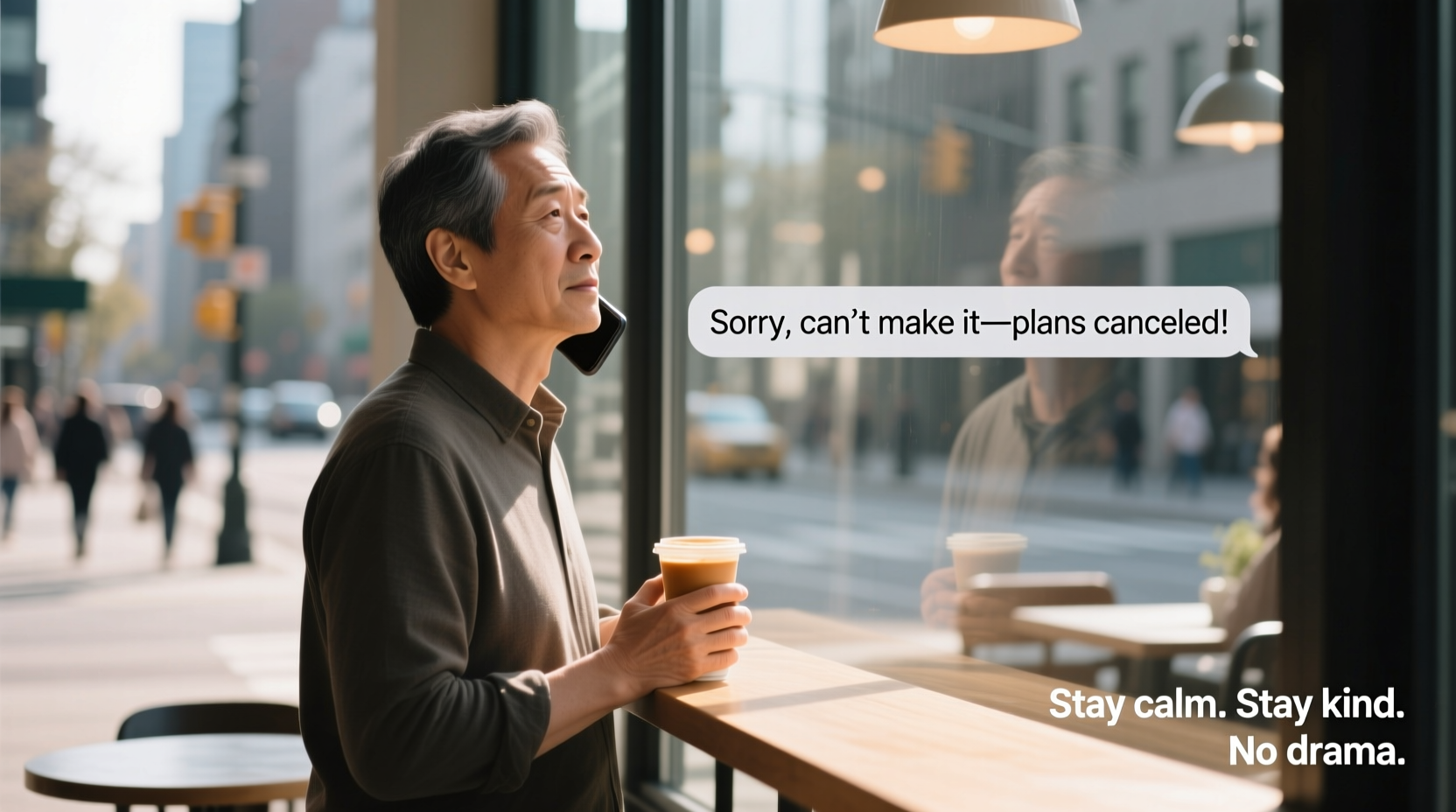
Before crafting your response, consider the possible reasons behind the cancellation. While some people may be habitually flaky, many last-minute changes stem from genuine circumstances:
- Overcommitment: They said yes too quickly without checking their schedule.
- Anxiety or social fatigue: Especially common after periods of isolation or high stress.
- Unexpected emergencies: Family issues, sudden illness, work crises.
- Poor time management: Underestimating travel time, overestimating energy levels.
- Avoidance: Fear of confrontation or discomfort they didn’t want to address upfront.
Understanding context doesn’t excuse repeated disrespect, but it helps prevent knee-jerk reactions. Jumping to conclusions like “They don’t value me” or “I’m not a priority” can amplify hurt unnecessarily. Instead, approach the situation with curiosity rather than accusation.
Respond with Emotional Intelligence: A Step-by-Step Guide
How you reply sets the tone for the rest of the interaction. Follow this sequence to respond thoughtfully and effectively:
- Pause and Acknowledge Your Reaction
Notice what you’re feeling—disappointment, annoyance, rejection—and validate it internally. Naming the emotion reduces its power to dictate your behavior. - Assess the Pattern
Is this a one-off? Or does this person frequently cancel? A single incident calls for grace; a pattern may require a deeper conversation. - Respond Promptly but Calmly
Delay is okay, but silence can breed misunderstanding. A simple acknowledgment keeps communication open. - Express Yourself Without Blame
Use “I” statements to own your feelings without attacking their character. - Decide on Next Steps
Will you reschedule? Let it go? Set a boundary? Make a conscious choice, not an impulsive one.
For example, instead of texting, “Again? You always do this,” try: “Hey, I was looking forward to tonight. I’m a bit disappointed, but I hope everything’s okay. Let me know if you want to reschedule.”
Do’s and Don’ts When Responding
| Do | Don’t |
|---|---|
| Respond with kindness—even if you're hurt | Reply immediately in anger or sarcasm |
| Use “I” statements (“I felt let down”) instead of “You” accusations (“You’re so unreliable”) | Publicly shame them on social media |
| Ask clarifying questions if the reason is vague | Assume bad intent without evidence |
| Reschedule only if you genuinely want to | Agree to future plans out of guilt or obligation |
| Set boundaries if this happens repeatedly | Internalize the cancellation as a reflection of your worth |
Real Example: Navigating a Friend’s Sudden Cancellation
Sophia had planned a weekend hike with her friend Jamie for weeks. Two hours before departure, Jamie texted: “So sorry—I’m not feeling well and think I should stay home.” Sophia was disappointed. She’d taken time off work, packed snacks, and told her partner she’d be away.
Instead of reacting with frustration, she paused. She replied: “Oh no, I hope you feel better soon. That’s totally understandable—rest up. Maybe we can plan something low-key next week?”
Jamie responded with relief: “Thank you for being cool about it. I’ve been stressed all week and panicked at the last minute. I really appreciate your understanding.”
Their friendship strengthened because Sophia chose compassion over criticism. Later, they had an honest chat about social anxiety, which improved their communication moving forward.
This example shows that a calm response doesn’t mean ignoring your needs—it means meeting them alongside empathy for others.
When to Set Boundaries (And How to Do It)
Grace has limits. If someone consistently cancels plans—especially without explanation or follow-up—it’s time to protect your time and energy.
Setting a boundary isn’t punitive; it’s protective. It communicates self-respect and encourages mutual accountability.
Here’s how to set a respectful but firm boundary:
- Pick the Right Time: Have the conversation when neither of you is stressed or distracted.
- Be Specific: Reference recent incidents without listing every past mistake.
- Use Clear Language: Avoid softening so much that your message gets lost.
- State Your Need: What kind of reliability do you expect?
- Invite Dialogue: Allow space for their perspective.
Example script: “I’ve noticed the last few plans we’ve made got canceled last minute. I enjoy spending time with you, but I also need to be able to count on plans once they’re set. Can we talk about how we can both make this work?”
This approach avoids blame while making your expectations clear.
“Healthy relationships aren’t built on perfection—they’re built on repair. How we handle disappointments matters more than the disappointments themselves.” — Dr. Lena Torres, Clinical Psychologist
Checklist: Responding Gracefully to Last-Minute Cancellations
- Pause before replying—don’t react in real time.
- Recognize your emotions without letting them drive your response.
- Respond with a brief, neutral acknowledgment (e.g., “Got it, thanks for letting me know”).
- Express disappointment using “I” statements if appropriate.
- Ask if they’re okay—this builds empathy and opens dialogue.
- Determine whether to reschedule (only if you truly want to).
- Reflect on patterns—if this happens often, consider a boundary conversation.
- Protect your self-worth—don’t equate being canceled with being unimportant.
FAQ: Common Questions About Last-Minute Cancellations
What if they cancel without giving a reason?
It’s okay to feel unsettled, but avoid demanding explanations unless there’s a pattern. A gentle check-in works best: “No worries, just wanted to make sure everything’s okay on your end.” This shows care without pressure. If it becomes routine, revisit the boundary conversation.
Should I always be forgiving when someone cancels?
Forgiveness is healthy, but it shouldn’t come at the cost of your time or dignity. One-off cancellations deserve grace. Repeated ones may signal disregard. Forgiveness doesn’t mean unlimited tolerance—it means releasing resentment while still holding people accountable.
How do I stop taking cancellations personally?
Remind yourself: most cancellations are about the other person’s capacity, not your worth. Think of it like a flight delay—you weren’t rejected; the system failed. Journaling or talking to a trusted person can help reframe the experience objectively.
When the Cancellation Reveals a Deeper Issue
Sometimes, frequent last-minute cancellations are symptoms of larger problems—avoidant attachment, social anxiety, or disinterest. Pay attention to accompanying behaviors:
- They rarely initiate plans.
- Communication becomes sparse after canceling.
- Excuses are vague or inconsistent.
- You’re always the one rescheduling.
If this sounds familiar, the issue may not be the cancellation itself, but the imbalance in effort. In such cases, focus shifts from managing individual incidents to evaluating the relationship dynamic.
You’re allowed to step back from relationships that consistently drain you. Protecting your peace isn’t selfish—it’s sustainable.
Final Thoughts: Respond in a Way That Honors You
How you handle a last-minute cancellation says less about the other person and more about you. Will you react from fear or insecurity? Or will you respond from a place of confidence, empathy, and self-awareness?
Every interaction is an opportunity to practice emotional maturity. You don’t have to tolerate disrespect, but you also don’t have to escalate conflict. You can be kind without being permissive. You can be direct without being harsh.
The most powerful response isn’t dramatic—it’s grounded. It’s the quiet strength of saying, “I see this. I feel this. And I choose how I move forward.”




 浙公网安备
33010002000092号
浙公网安备
33010002000092号 浙B2-20120091-4
Comments
No comments yet. Why don't you start the discussion?