
Highlighters are essential tools for students, professionals, and creatives alike. Their bright colors make key information stand out, while shimmer variants add a touch of flair to notes and planners. But over time, even the most beloved highlighters can dry out—especially those with metallic or glittery finishes. The challenge lies in reviving them effectively without compromising their signature shimmer. Unlike standard markers, shimmer highlighters contain fine particles suspended in ink, which can settle, clump, or degrade if improperly treated. Reviving these tools requires precision and care to maintain both function and visual appeal.
The good news is that many dried-out highlighters can be restored to full working condition with simple household items and careful technique. This guide walks through scientifically sound and field-tested methods that rehydrate your highlighter while preserving its luminous finish. Whether you're dealing with a favorite pastel pen or a bold gold-ink marker, these strategies will help you extend its life without dulling its sparkle.
Understanding Why Highlighters Dry Out
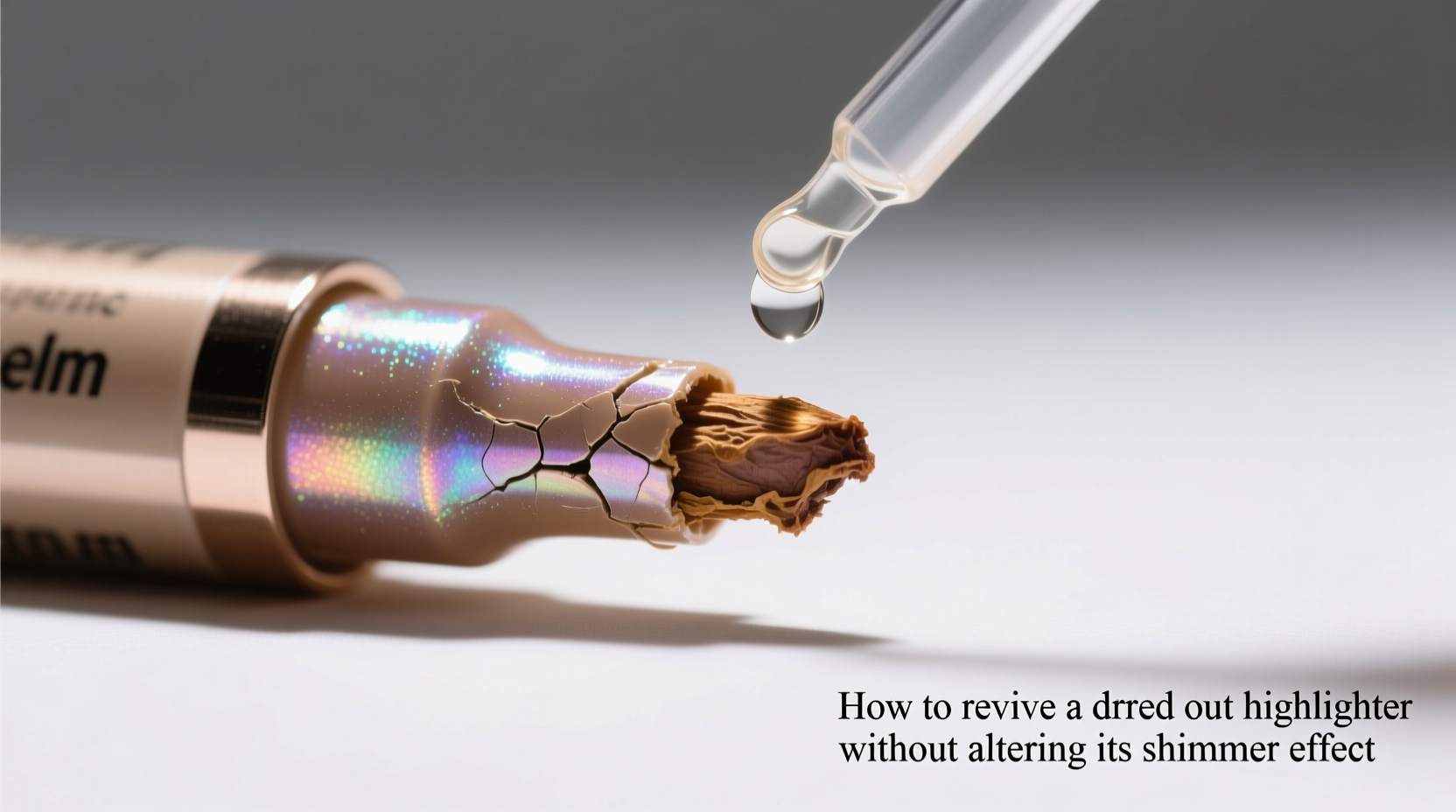
All highlighters rely on liquid ink that evaporates when exposed to air. The primary causes of drying include leaving caps off, storing in hot environments, infrequent use, or poor seal integrity. Shimmer highlighters face an additional challenge: their ink contains reflective particles like mica, aluminum flakes, or synthetic glitter. These particles don’t dissolve in the solvent—they’re suspended. When the liquid carrier evaporates, the particles can clump together, clogging the nib and disrupting ink flow.
Revival attempts often fail because people use liquids that disrupt this suspension. Water, for example, may dilute the ink but won’t restore solvents lost during evaporation. Worse, it can cause shimmer particles to separate or sink, leading to streaky, uneven application. To preserve shimmer, you must reintroduce a compatible solvent—not just any liquid—that matches the original ink base (typically alcohol-based or water-based) and maintains particle dispersion.
“Using the wrong rehydration fluid is the fastest way to ruin a shimmer highlighter. Match the solvent type, or you risk permanent separation.” — Dr. Lena Patel, Ink Formulation Specialist at ChromaLine Labs
Step-by-Step Guide to Safely Revive a Dried Highlighter
Follow this detailed process to restore your highlighter’s functionality without dulling its shine. The method varies slightly depending on whether your highlighter uses water-based or alcohol-based ink, so identification is crucial.
- Diagnose the Type of Highlighter
Check the label or manufacturer’s website. Most shimmer highlighters from brands like Stabilo, Tombow, or Zebra are alcohol-based due to better pigment suspension. If unsure, assume alcohol-based unless the packaging specifies “water-based” or “non-toxic dye.” - Gather Supplies
You’ll need:- Isopropyl alcohol (90% or higher) for alcohol-based highlighters
- Distilled water for water-based highlighters
- A small container or bottle cap
- Cotton swabs or a dropper
- Paper towel
- Rubber gloves (optional, to protect hands)
- Remove the Nib (If Possible)
Some highlighters allow gentle nib removal using tweezers or pliers. If yours does, carefully pull the tip straight out. This gives direct access to the ink reservoir. If not removable, proceed to step four. - Reintroduce Solvent Gradually
For alcohol-based highlighters:- Dip the nib into isopropyl alcohol for 10–15 seconds.
- Place the pen tip-down on a paper towel and let it wick the alcohol upward naturally.
- Wait 30 minutes, then test on scrap paper.
- Use distilled water instead of tap water to avoid mineral deposits.
- Apply one drop inside the cap and place the highlighter tip-down in it for 10 minutes.
- Agitate Gently
After soaking, gently roll the highlighter between your palms to redistribute settled particles. Do not shake vigorously—this introduces air bubbles and may break the fiber core. - Test and Repeat if Needed
Write on scrap paper. If ink flows faintly, repeat the soak with 5–10 more seconds of exposure. Full recovery may take up to three cycles.
Do’s and Don’ts: Preserving Shimmer Integrity
Mistakes during revival can permanently alter a highlighter’s appearance. Use the table below as a quick-reference guide to avoid common pitfalls.
| Do’s | Don’ts |
|---|---|
| Use isopropyl alcohol (90%+) for alcohol-based pens | Use tap water—it contains minerals that cloud ink |
| Soak nib only; keep body dry | Submerge the whole pen—risk of leakage |
| Roll gently to mix settled particles | Shake aggressively—creates bubbles and damages core |
| Store vertically with cap sealed tightly | Leave caps off for more than 30 seconds |
| Test on scrap paper before full use | Assume one soak is enough—some need multiple treatments |
One frequent error is assuming all highlighters respond to water. While water-based markers exist, they are less common in shimmer varieties. Alcohol-based systems dominate the market because alcohol evaporates cleanly and keeps metallic pigments evenly dispersed. Introducing water into such a system causes phase separation—the shimmer particles fall out of suspension, resulting in patchy, dull lines.
Real Example: Reviving a Gold-Tipped Tombow Dual Brush Marker
Sophie, a bullet journal enthusiast from Portland, noticed her favorite Tombow AB-T47 gold shimmer highlighter had stopped writing after two months of storage. The brush tip felt stiff, and no ink appeared when swiped across paper. Rather than discarding it, she followed a controlled revival method.
She first confirmed the marker was alcohol-based via Tombow’s product page. Using a cotton swab dampened with 91% isopropyl alcohol, she moistened the brush tip and laid the marker flat for 20 minutes. After rolling it gently between her fingers, she tested it on a notebook. Initial strokes were faint, but by the third pass, the golden shimmer returned smoothly. Over the next week, she used it intermittently and reported consistent performance, with no loss of luster. She now stores it horizontally in a climate-controlled drawer and rehydrates it every few months as preventive maintenance.
This case illustrates that even high-end shimmer tools can be revived with patience and correct materials. No special equipment was needed—just precise application of the right solvent.
Alternative Methods and Their Risks
Various DIY hacks circulate online, including placing highlighters in boiling water, microwaving them, or injecting hand sanitizer. While some appear to work temporarily, they pose significant risks to shimmer integrity.
- Boiling Water Soak: Can melt plastic components and warp the nib, leading to inconsistent ink flow.
- Microwaving: Extremely dangerous—metallic particles in shimmer ink can spark or ignite.
- Hand Sanitizer: Contains glycerin and fragrances that gum up the fiber core and attract dust.
A safer alternative is using specialized marker revival fluids, such as Chartpak Marking Pen Refiller or Winsor & Newton Blending Fluid. These are formulated to match commercial ink compositions and are especially effective for artists who rely on consistent shimmer output. Though more expensive than isopropyl alcohol, they offer predictable results with minimal trial and error.
Prevention: How to Keep Highlighters from Drying Out
Once revived, protect your investment with proper care. Shimmer highlighters are more sensitive than standard ones due to their complex ink chemistry. Follow this checklist to maximize lifespan.
Shimmer Highlighter Care Checklist
- ✅ Cap tightly after each use—even 60 seconds uncapped accelerates drying
- ✅ Store horizontally to keep ink evenly distributed around the nib
- ✅ Keep away from heat sources (radiators, car dashboards, direct sunlight)
- ✅ Rotate usage among multiple highlighters to prevent stagnation
- ✅ Wipe nibs gently after use to remove paper fibers and buildup
- ✅ Rehydrate proactively every 4–6 weeks if used infrequently
For long-term storage, consider placing highlighters in a sealed plastic container with a damp sponge (not touching the pens). The humidity slows evaporation without introducing moisture directly. Avoid airtight bags with desiccants—these accelerate drying.
“The key to longevity isn’t just revival—it’s consistency. A highlighter used and capped properly can last years, even with shimmer.” — Marcus Tran, Stationery Restoration Technician
Frequently Asked Questions
Can I use vodka or rubbing alcohol from the medicine cabinet?
Rubbing alcohol (isopropyl) is acceptable if it’s 90% or higher concentration. Vodka is not recommended—it typically contains only 40% alcohol and a high water content, which disrupts ink balance and causes shimmer separation.
Why does my highlighter write but lack shimmer after revival?
This usually means the particles have settled and haven’t been properly redistributed. Gently roll the pen between your hands for 30 seconds, then write several zigzag lines on scrap paper to flush the nib. If shimmer doesn’t return, the ink may be too diluted—try a shorter soak next time.
How long does a revived highlighter last?
If properly maintained, a successfully revived highlighter can perform like new for several months. Lifespan depends on frequency of use, storage conditions, and how much solvent was lost initially. Pens revived early in the drying process tend to last longer than those completely dried out.
Conclusion
Reviving a dried-out shimmer highlighter doesn’t require magic—just knowledge of ink chemistry and disciplined technique. By identifying the ink type, applying the correct solvent, and avoiding common mistakes, you can restore vibrant, sparkling performance without altering its unique aesthetic. The methods outlined here are proven, safe, and accessible to anyone with basic supplies.
Instead of replacing a favorite pen, give it a second life. Not only does this save money and reduce waste, but it also preserves the exact shade and shimmer you love—something hard to replicate with a new purchase. With proper care, a single highlighter can serve you for years, staying bright, functional, and dazzlingly reflective.




 浙公网安备
33010002000092号
浙公网安备
33010002000092号 浙B2-20120091-4
Comments
No comments yet. Why don't you start the discussion?