
Play dough is a staple in creative play for children, offering endless opportunities for sensory development and imaginative expression. However, over time, even the best-stored batches can dry out, becoming crumbly and unworkable. Many parents rush to throw it away or add water haphazardly, only to end up with a soggy, sticky disaster. The good news is that reviving dry play dough doesn’t require special tools or expensive products—just the right technique and a bit of patience.
The key lies in understanding the science behind moisture absorption in dough and applying gentle, incremental hydration. With careful attention, you can restore your play dough to its original soft, pliable texture—without sacrificing consistency or creating a gooey mess.
Understanding Why Play Dough Dries Out
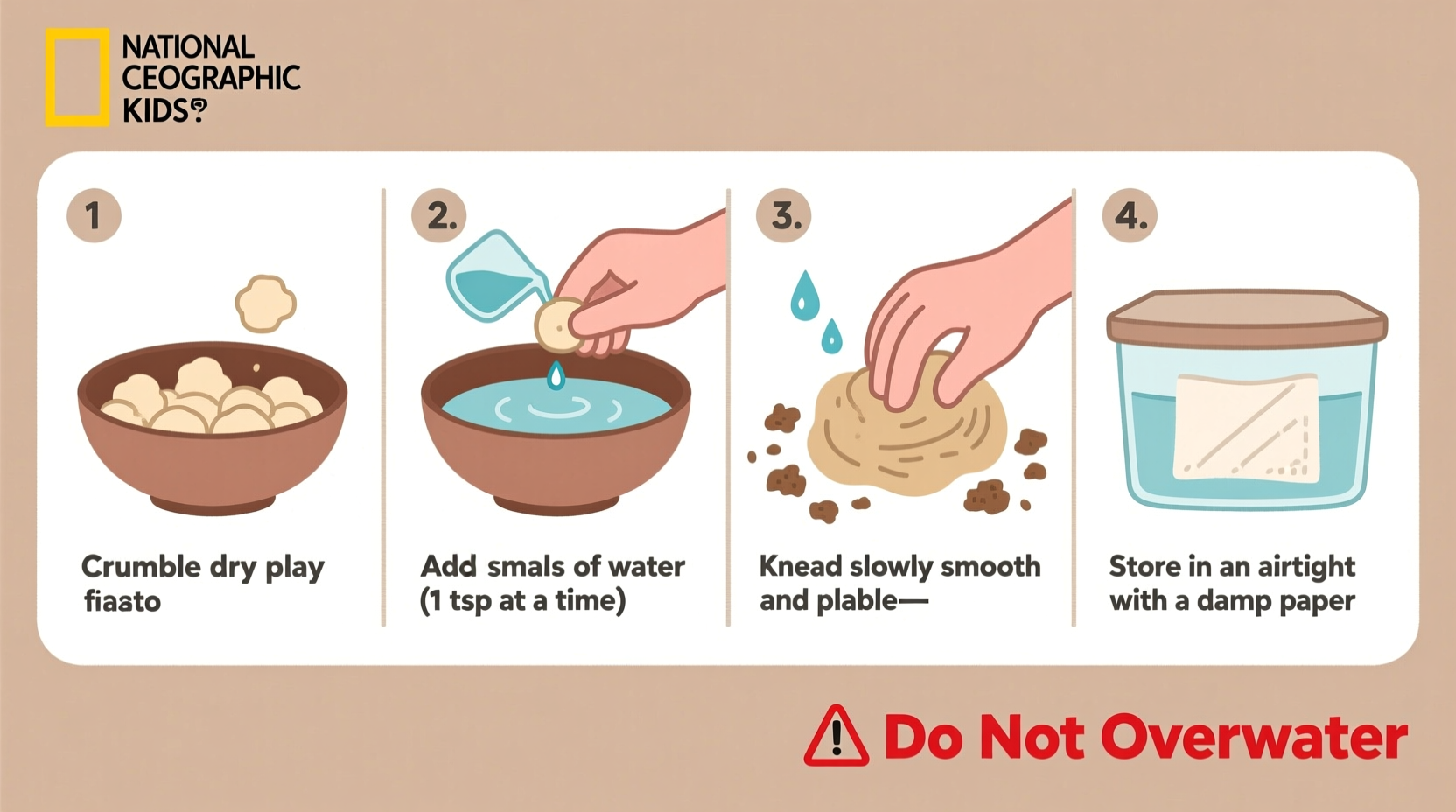
Play dough is primarily made from flour, salt, water, and oil. When exposed to air, the water evaporates, leaving behind a hardened structure. This process accelerates in dry environments, direct sunlight, or when stored improperly. Once dried, the gluten network in the flour tightens, making the dough brittle and difficult to reshape.
Adding too much water at once causes the outer layers to absorb excess moisture while the interior remains dry. This imbalance leads to stickiness on the outside and cracking within—a frustrating compromise between dryness and sogginess.
To avoid this, restoration must be gradual. The goal isn’t just to rehydrate but to reintegrate moisture evenly throughout the entire mass.
Step-by-Step Guide to Reviving Dry Play Dough Safely
Reviving dry play dough successfully requires precision and control. Follow this detailed sequence to bring old dough back to life without over-wetting.
- Assess the condition: Break off a small piece and try to knead it. If it crumbles instantly, it’s very dry. If it holds some shape, it may only need light rehydration.
- Gather supplies: You’ll need warm water (not hot), a spray bottle (optional), plastic wrap, and a mixing bowl.
- Break the dough into small pieces: Use your hands or a butter knife to crumble the dough into pea-sized fragments. Smaller pieces expose more surface area, allowing for even moisture absorption.
- Add moisture incrementally: Dip your fingers in warm water and rub them lightly over the crumbled dough. Alternatively, mist the pieces with one or two sprays of water from a spray bottle. Never pour water directly onto the dough.
- Seal and wait: Place the dampened pieces in a bowl, cover tightly with plastic wrap, and let sit for 15–30 minutes. This allows the water to wick into the core slowly.
- Knead gently: After resting, begin kneading the dough with clean, dry hands. If it still feels dry, repeat the process: mist lightly, rest again, then knead.
- Adjust with oil if needed: If the dough regains flexibility but feels rough, work in a few drops of vegetable or baby oil to restore smoothness.
This method prevents over-saturation by letting the dough absorb moisture at its own pace. Rushing the process is the most common cause of sticky results.
Alternative Methods Using Common Household Ingredients
Not all dry play dough responds the same way to plain water. Depending on the recipe used (homemade vs. commercial), additional binders or lubricants may improve recovery.
| Method | Best For | How to Apply | Risk Level |
|---|---|---|---|
| Warm Water + Resting | Mildly dry dough | Spritz and wait; repeat as needed | Low |
| Vegetable Oil | Dough that lacks elasticity | Add 1/4 tsp per 1/2 cup, knead in gradually | Medium (can become greasy) |
| White Glue (PVA) | Crumbling, beyond-repair dough | Mix 1 tsp glue into 1/4 cup crumbles before adding water | High (may alter texture) |
| Vinegar Solution (1:1 water:vinegar) | Commercial brands with preservatives | Spray lightly; rest 20 mins before kneading | Low |
| Conditioner or Lotion | For scent and softness restoration | Use sparingly—1 pump per handful | Medium (can attract dust) |
While white glue might seem extreme, it contains polyvinyl acetate, which acts as a binder and helps hold fragmented dough together. It’s especially useful for older batches that have lost structural integrity. However, use it cautiously—it can make the dough less edible-safe, even if non-toxic.
Real Example: A Parent’s Successful Revival Story
Sarah, a mother of two in Portland, Oregon, discovered a forgotten tub of homemade play dough at the back of her pantry. It had been there for nearly six months. The dough was rock-hard, flaking at the edges, and cracked down the middle. Her initial instinct was to toss it, but her 4-year-old insisted they “fix it.”
She followed the step-by-step method outlined above: crumbling the dough, misting it with warm water, covering it, and waiting. After two cycles of misting and resting, she began kneading. It took nearly 20 minutes of patient pressing and folding, but eventually, the dough came together. She added three drops of almond oil to restore silkiness, and the result was indistinguishable from fresh dough.
“I couldn’t believe it worked,” Sarah said. “We played with it for over an hour that day. Now I don’t panic when I find old dough—I know how to save it.”
Her experience highlights the importance of patience and controlled moisture application. Had she poured water in or tried to force-knead the hard lump, the outcome would likely have been failure.
Expert Insight: What Toy Safety Specialists Recommend
Dr. Lena Torres, a child development specialist and toy safety consultant, emphasizes that proper maintenance extends not only the life of play materials but also supports hygiene and learning continuity.
“Reviving dry play dough is not just about saving money—it’s about teaching kids resourcefulness and sustainability. But it must be done safely. Always check for mold or odd odors before attempting revival. If the dough smells sour or shows discoloration, discard it immediately.” — Dr. Lena Torres, Child Development & Toy Safety Consultant
She also cautions against using non-food-safe additives unless the dough is clearly labeled non-edible. For households with toddlers who mouth objects, stick to water, oil, and vinegar—ingredients that are safe in small amounts.
Do’s and Don’ts of Play Dough Revival
Avoid these common pitfalls by following this essential checklist:
- Do break the dough into small pieces before adding moisture.
- Do use warm (not hot) water to enhance absorption.
- Do allow resting time between moisture applications.
- Do knead with clean, dry hands to assess progress.
- Do store revived dough in an airtight container with a damp paper towel (if using soon) or alone for longer storage.
- Don’t pour water directly onto the dough.
- Don’t knead aggressively before the dough has absorbed moisture.
- Don’t use soap, detergent, or harsh chemicals.
- Don’t attempt to revive dough with visible mold or mildew.
- Don’t microwave or bake the dough to soften it.
Following these guidelines ensures both safety and success. The difference between revival and ruin often comes down to restraint.
Frequently Asked Questions
Can I revive play dough that has mold on it?
No. Any sign of fuzz, discoloration, or sour smell means the dough is contaminated. Mold spores can spread even if not visible across the entire batch. Discard it immediately, especially if used by young children.
How long does revived play dough last?
If properly stored in an airtight container at room temperature, revived play dough can last 1–2 weeks. In the refrigerator, it may last up to a month. Always inspect before reuse.
Why does my revived dough feel sticky even after drying?
Sticky residue usually means too much water was added too quickly. Let the dough sit uncovered for 10–15 minutes to allow surface moisture to evaporate, then knead with a small amount of flour (1/4 tsp at a time) until balanced.
Prevention: How to Keep Play Dough From Drying Out
The best way to avoid dealing with dry play dough is to prevent it from drying in the first place. Prevention starts with storage.
Always return play dough to a sealed container immediately after use. Plastic tubs with locking lids or zip-top bags work well. For extra protection in arid climates, place a damp (not wet) paper towel in the container with the dough—but remove it before long-term storage to prevent bacterial growth.
If you make homemade play dough, consider increasing the oil content slightly (up to 1 extra teaspoon per cup of flour) to improve moisture retention. Some recipes also include glycerin (½ tsp per batch), which acts as a humectant, helping the dough retain water longer.
Label containers with dates so you know how long the dough has been stored. Most homemade versions last 2–4 weeks; commercial brands often last longer due to preservatives.
Conclusion: Waste Less, Play More
Reviving dry play dough isn’t magic—it’s method. With careful moisture management and a little time, most dried-out batches can be restored to their original glory. The techniques shared here empower caregivers to extend the life of a beloved toy, reduce waste, and maintain a ready supply of creative fun.
Next time you find a forgotten lump of hardened dough, don’t throw it out. Break it down, hydrate it mindfully, and bring it back to life. Your kids—and your wallet—will thank you.




 浙公网安备
33010002000092号
浙公网安备
33010002000092号 浙B2-20120091-4
Comments
No comments yet. Why don't you start the discussion?