
Houseplants bring life, color, and calm to our homes. But when leaves yellow, stems droop, or growth stalls, it’s easy to assume the plant is beyond saving. In reality, most “dying” houseplants are simply suffering from incorrect lighting or watering—two of the most common—and most fixable—mistakes in indoor gardening. With a few targeted adjustments, even the most pitiful-looking specimen can bounce back. The key lies in diagnosing the root cause accurately and applying precise, consistent care.
Understanding the Signs: Is Your Plant Dying or Just Stressed?
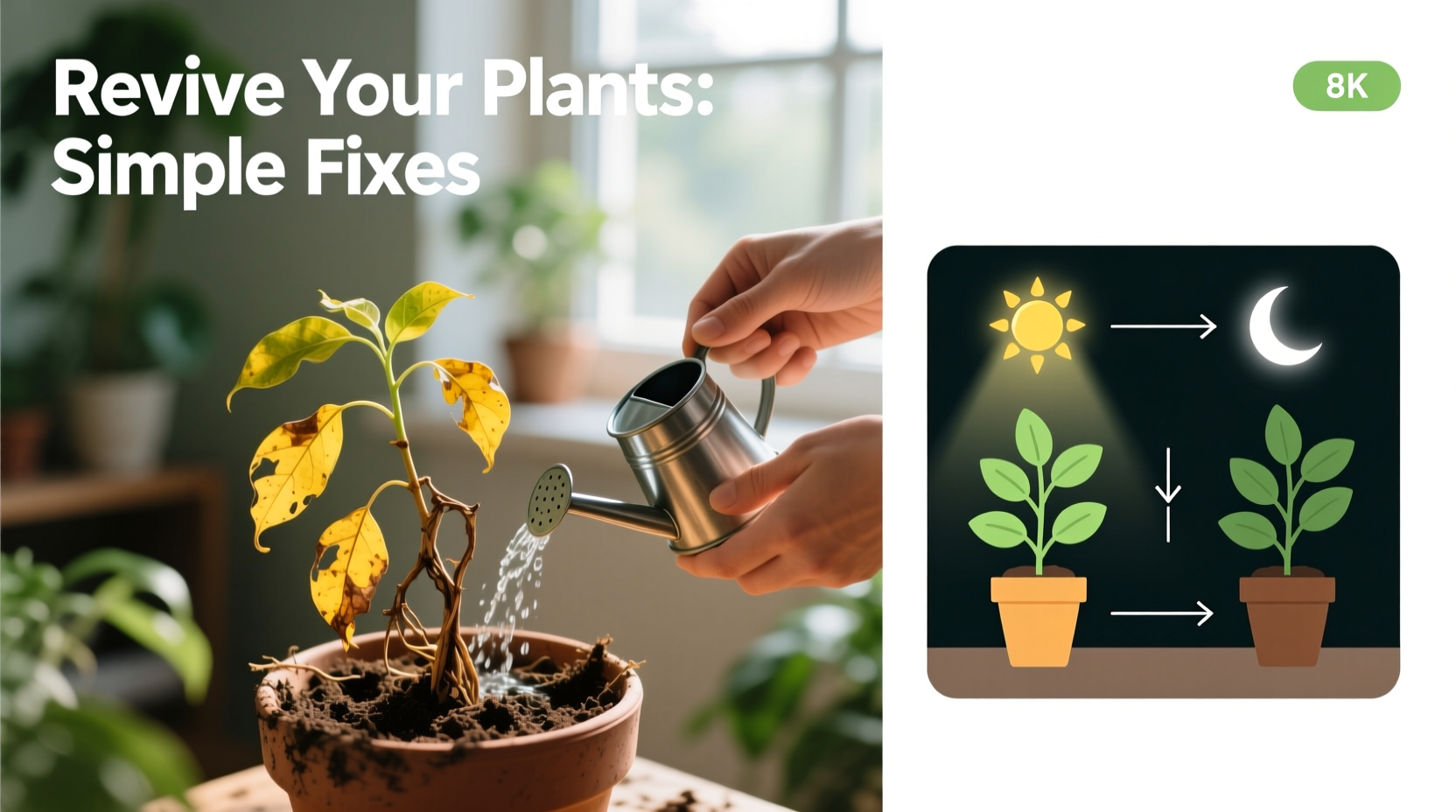
Before attempting a revival, determine whether your plant is truly on its last legs or merely under stress. Plants often display distress signals long before irreversible damage occurs. Recognizing these early warnings can make all the difference.
Common signs of stress include:
- Yellowing lower leaves (often overwatering)
- Crispy, brown leaf edges (usually underwatering or low humidity)
- Drooping or wilting despite moist soil (possible root rot)
- Leggy growth with sparse foliage (insufficient light)
- Pale new leaves (nutrient deficiency or weak light)
A plant that still has green stems, firm roots, and some healthy tissue is likely salvageable. Even if it looks nearly dead, don’t give up too soon. Many resilient species like pothos, snake plants, and ZZ plants can regenerate from just a small piece of stem or root given the right conditions.
The Lighting Fix: Matching Plants to Their Light Needs
Light is the engine of photosynthesis. Without adequate light, no amount of watering or fertilizing will save a plant. Yet, many people place their houseplants in dim corners or behind sheer curtains, assuming “some light is better than none.” This misconception leads to slow decline.
Houseplants fall into three primary light categories:
| Light Level | Description | Suitable Plants |
|---|---|---|
| Bright Direct | 3+ hours of direct sun (e.g., south-facing window) | Cacti, succulents, fiddle-leaf figs, citrus |
| Bright Indirect | Near an east or west window; strong ambient light without harsh rays | Monstera, philodendron, peace lily, rubber plant |
| Low Light | North-facing room or far from windows; minimal natural brightness | Snake plant, ZZ plant, cast iron plant, Chinese evergreen |
If your plant shows leggy stems, small new leaves, or stretches toward the light, it’s not getting enough. Move it closer to a window—but avoid sudden shifts. A plant accustomed to shade can suffer sunburn if placed directly in bright sunlight.
“Plants don’t die from lack of fertilizer—they die from lack of light. If your plant isn’t thriving, check the light first.” — Dr. Linda Chalker-Scott, Horticulture Professor, Washington State University
To gradually acclimate a plant to brighter conditions, increase exposure by 30 minutes per day over two weeks. Rotate the pot weekly to promote even growth. For rooms with limited natural light, consider full-spectrum LED grow lights. These mimic daylight and can be used for 12–14 hours daily to supplement weak indoor conditions.
The Watering Fix: Finding the Sweet Spot Between Too Much and Too Little
Overwatering is the leading cause of houseplant death. It’s also the easiest to prevent. When soil stays constantly wet, roots suffocate and decay, making it impossible for the plant to absorb water—even when surrounded by it. Underwatering, while less common, causes dehydration and cell collapse.
The ideal watering strategy depends on the plant species, pot size, soil type, and environment. However, a universal rule applies: water only when the top 1–2 inches of soil feel dry. Use your finger or a wooden skewer to test moisture depth.
When watering, do so thoroughly until water drains from the bottom. This ensures the entire root ball is moistened. Then, empty the saucer after 15–20 minutes to prevent reabsorption and root rot.
Signs of overwatering include:
- Yellow, mushy leaves
- Foul-smelling soil
- Soft, blackened stems
Signs of underwatering include:
- Dry, crispy leaf tips
- Soil pulling away from pot edges
- Brittle stems and rapid leaf drop
If root rot is suspected, remove the plant from its pot and inspect the roots. Healthy roots are firm and white or tan; rotted ones are slimy and black or brown. Trim damaged roots with sterilized scissors, repot in fresh, well-draining soil, and reduce watering frequency.
Step-by-Step Revival Plan for a Struggling Houseplant
Reviving a dying houseplant requires methodical action. Follow this six-step process to diagnose and correct lighting and watering issues:
- Assess the current condition: Check for live stems, root health, and visible pests. Discard any completely rotten parts.
- Evaluate light exposure: Identify the plant’s ideal light level and compare it to its current location. Use a light meter app or observe shadow clarity (sharp shadows = bright light).
- Adjust placement: Move the plant to a more suitable spot. East-facing windows offer gentle morning light ideal for most tropicals.
- Check soil moisture: Insert your finger 2 inches deep. If damp, wait. If dry, proceed to water.
- Repot if necessary: Use a pot with drainage holes and a mix designed for your plant type (e.g., cactus mix for succulents, peat-based for ferns).
- Establish a care rhythm: Mark your calendar for weekly checks. Observe changes in leaf color, texture, and growth direction.
Recovery takes time. Most plants show improvement within 2–6 weeks. New growth is the best sign of progress. Resist the urge to over-fertilize during revival—this stresses weakened roots. Wait until the plant stabilizes before introducing nutrients.
Real Example: Bringing Back a Fiddle-Leaf Fig from the Brink
Maria, a plant enthusiast in Chicago, noticed her fiddle-leaf fig losing leaves rapidly. The lower foliage turned yellow and dropped, while new leaves emerged small and curled. She had been watering it every five days, assuming consistency was key.
After researching, she realized two problems: the plant sat in a corner far from the window, receiving only indirect ambient light, and the soil stayed damp between waterings due to a decorative outer pot with no drainage.
Maria moved the plant to a south-facing window, removed the outer pot, and let the soil dry completely before watering again. She rotated the plant weekly and wiped dust from the leaves to maximize light absorption. Within four weeks, new buds appeared. By week eight, the fig had produced two large, healthy leaves and stopped dropping old ones.
Her experience underscores a crucial point: symptoms often point to multiple interconnected issues. Fixing one problem—like lighting—can amplify the effectiveness of correcting another, such as watering.
Do’s and Don’ts of Houseplant Care
| Action | Do | Don't |
|---|---|---|
| Watering | Water deeply and infrequently; let soil dry between sessions | Water on a strict schedule regardless of soil moisture |
| Light Adjustment | Move plants gradually to avoid shock | Place low-light plants in direct afternoon sun overnight |
| Repotting | Use pots with drainage and appropriate soil mixes | Keep plants in nursery pots inside non-draining containers |
| Monitoring | Inspect weekly for pests, discoloration, and growth | Ignore early warning signs hoping they’ll resolve themselves |
Essential Checklist for Reviving Dying Houseplants
Use this checklist to systematically address the most common causes of decline:
- ✅ Confirm the plant species and its specific light/water needs
- ✅ Check for green tissue in stems (viability test)
- ✅ Evaluate current light: is it sufficient and appropriate?
- ✅ Test soil moisture before watering—never assume
- ✅ Inspect roots for rot; trim and repot if needed
- ✅ Ensure the pot has drainage holes
- ✅ Remove dead or diseased leaves to redirect energy
- ✅ Avoid fertilizing until new growth appears
- ✅ Monitor progress weekly and adjust care as needed
Frequently Asked Questions
Can a plant with no leaves be revived?
Yes, if the stem or rhizome is still firm and green. Some plants, like peace lilies and certain vines, can regrow leaves once environmental conditions improve. Cut back dead stalks and maintain proper light and moisture to encourage new shoots.
How long does it take to revive a dying houseplant?
Visible improvement typically takes 2–8 weeks, depending on the severity of stress and the plant’s natural growth rate. Slow-growing plants like snake plants may take longer, while fast growers like pothos can rebound in as little as three weeks.
Should I mist my houseplants to help them recover?
Misting offers temporary humidity but doesn’t replace proper watering or solve root issues. It can even promote fungal growth on wet foliage. For humidity-sensitive plants, use a pebble tray or humidifier instead.
Conclusion: Small Changes, Big Results
Reviving a dying houseplant doesn’t require expensive products or advanced skills. It starts with understanding two fundamental needs: light and water. By observing your plant closely, matching it to the right environment, and watering with intention, you create the conditions for recovery and long-term health. Most failures stem not from neglect, but from well-meaning care applied incorrectly. Adjusting one or two key factors can transform a struggling plant into a thriving one.




 浙公网安备
33010002000092号
浙公网安备
33010002000092号 浙B2-20120091-4
Comments
No comments yet. Why don't you start the discussion?