
A mattress is one of the most important investments you make for your health and comfort. Over time, consistent pressure from your body weight causes uneven wear, leading to sagging, reduced support, and disrupted sleep. While many people assume rotating a mattress requires two people, it’s entirely possible—and practical—to do it alone with the right technique. Regular rotation extends your mattress's lifespan, maintains comfort, and prevents premature replacement costs. This guide provides a complete, actionable approach to rotating your mattress manually, safely, and effectively—without needing assistance.
Why Rotating Your Mattress Matters
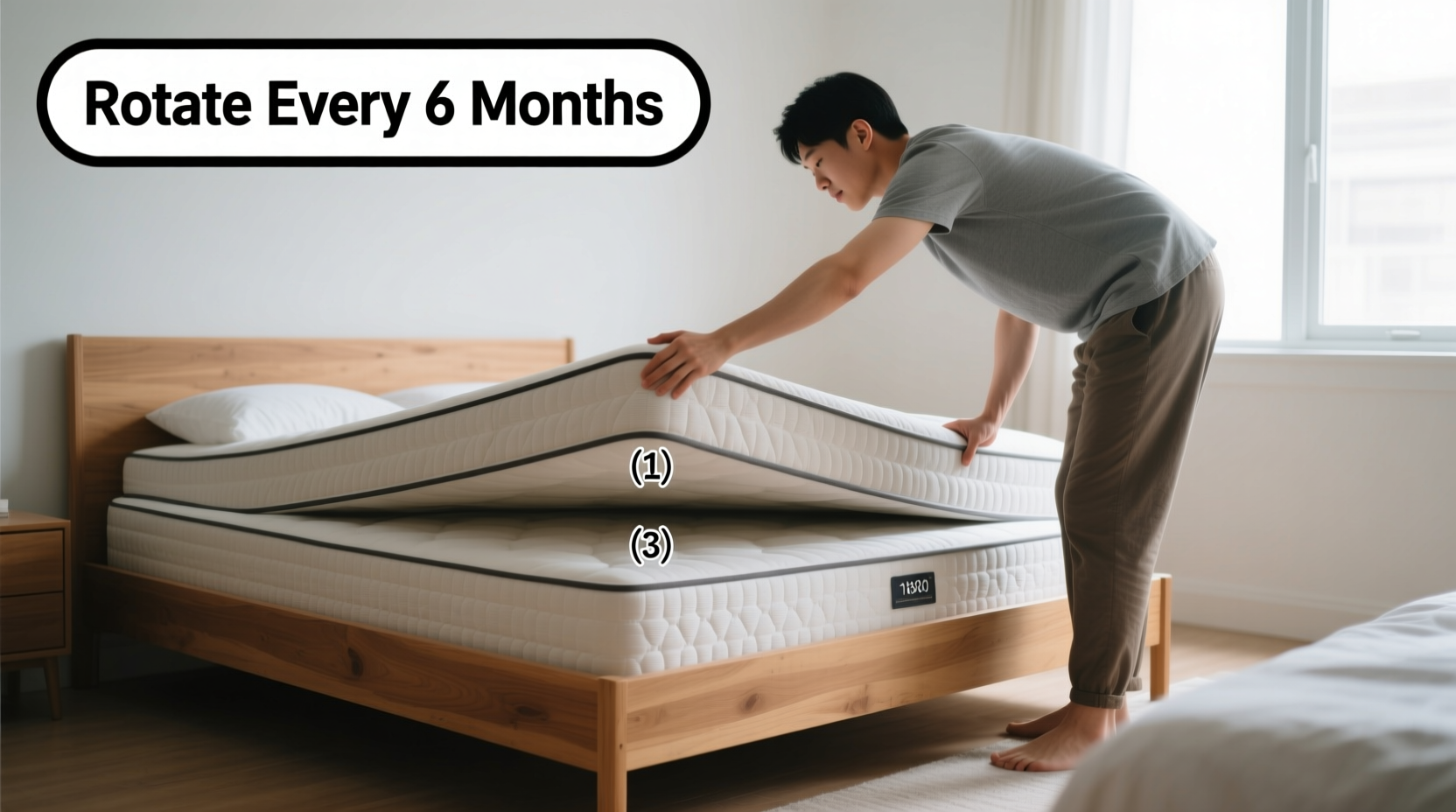
Mattresses are engineered to distribute weight evenly, but in reality, your sleeping position concentrates pressure on specific zones—typically the midsection and shoulders. Over months, this leads to compaction of foam or springs, creating soft spots and altering spinal alignment. Rotation helps redistribute wear across the entire surface, delaying deterioration and preserving structural integrity.
Manufacturers typically recommend rotating your mattress every 3 to 6 months. However, many people skip this simple maintenance task due to perceived difficulty or lack of help. The truth is that with proper preparation and method, one person can easily manage the job.
“Regular mattress rotation can extend its usable life by up to 50%, especially in hybrid and innerspring models.” — Dr. Lena Peterson, Sleep Health Researcher, National Sleep Foundation
Step-by-Step Guide: How to Rotate a Mattress Alone
Rotating a mattress solo requires planning, leverage, and smart movement—not brute strength. Follow this sequence to minimize strain and maximize efficiency.
- Clear the Area: Remove all bedding, pillows, and furniture around the bed. Create at least 2–3 feet of clearance on both sides to allow full maneuverability.
- Choose the Right Time: Pick a moment when you’re well-rested and not rushed. Early morning often works best, as muscles are fresh and distractions are minimal.
- Determine Rotation Direction: Most mattresses should be rotated head-to-foot (180 degrees), not flipped. Check manufacturer guidelines—many modern mattresses are “no-flip” designs with reinforced top layers.
- Start at the Foot of the Bed: Stand at the foot end. Grip the side edges near the corners with both hands, keeping your back straight and knees slightly bent.
- Lift One Corner Slightly: Use controlled force to lift one corner just enough to slide a smooth object underneath—like a plastic lid, furniture slider, or folded towel. This reduces friction.
- Rock and Pivot: Gently rock the mattress toward you to create momentum. Then, pivot it 90 degrees so one long side now faces the headboard. Repeat until fully rotated 180 degrees.
- Use Leverage, Not Strength: Instead of lifting, use rocking motions and body weight to shift the mattress incrementally. Pause between movements to reposition your grip.
- Realign on the Frame: Once rotated, center the mattress precisely on the foundation or box spring. Misalignment can cause edge wear and instability.
- Replace Bedding: Refit sheets, pads, and blankets. Consider washing them during rotation for added hygiene.
Best Techniques for Different Mattress Types
Not all mattresses respond the same way to rotation. Knowing your type ensures you apply the correct method and frequency.
| Mattress Type | Rotation Frequency | Rotation Method | Special Notes |
|---|---|---|---|
| Innerspring | Every 3–6 months | Head-to-foot only | Prone to sagging; regular rotation is critical |
| Memory Foam | Every 6 months | Rotate only (do not flip) | Denser material—use sliders to reduce effort |
| Hybrid | Every 3–6 months | Head-to-foot rotation | Combines coil and foam wear patterns |
| Latex | Every 6 months | Rotate and optionally flip if double-sided | Natural resilience; flipping allowed if symmetric |
| Foam-in-Box (e.g., Casper, Purple) | Every 6 months | Rotate only | Check warranty—many prohibit flipping |
Note: Always consult your mattress manual. Some brands void warranties if rotation isn’t performed as specified.
Common Mistakes to Avoid
- Trying to flip a no-flip mattress: Many modern mattresses have non-reversible designs. Flipping can damage internal layers and void the warranty.
- Skipping preparation: Failing to clear space or using improper footwear (e.g., socks on hardwood) increases slip risk.
- Using your back instead of legs: Bending at the waist while lifting strains lumbar discs. Always squat and push with your legs.
- Rotating too frequently: More than every 3 months isn’t necessary and may accelerate fabric wear at stress points.
- Ignoring warning signs: If your mattress sags more than 1.5 inches, makes noise, or causes back pain, rotation won’t fix structural failure—replacement may be needed.
Real-Life Example: Sarah’s Solo Mattress Rotation
Sarah, a freelance writer living in a studio apartment, had been waking up with lower back stiffness for weeks. Her memory foam mattress, now 18 months old, showed visible compression along the center. She didn’t have roommates or nearby friends to help flip it. After reading online forums, she decided to try rotating it herself.
She cleared her nightstand and bench, placed four plastic furniture sliders under the corners, and used slow rocking motions to pivot the mattress 180 degrees over 10 minutes. Though initially nervous about injury, she found the process manageable by breaking it into small steps. Two nights later, she reported improved spinal support and deeper sleep. She now rotates her mattress every six months like clockwork—using the same solo method.
Sarah’s experience shows that with patience and the right tools, one person can maintain their mattress effectively.
Essential Tools and Accessories for Easier Rotation
You don’t need expensive gear, but a few low-cost items can make the job significantly smoother:
- Furniture Sliders: Plastic or felt discs that reduce friction on hard floors or carpet.
- Yoga Mat or Towel: Can act as a temporary glide surface when sliders aren’t available.
- Grip Gloves: Work gloves with rubber palms improve traction on slippery mattress covers.
- Bed Lifts or Risers: Elevating the bed frame slightly gives better hand clearance for gripping.
- Knee Pad: Useful if you need to kneel during adjustments.
“Mattress maintenance doesn’t require a gym-level workout. It’s about smart mechanics, not muscle.” — Carlos Mendez, Ergonomics Consultant
Checklist: Rotate Your Mattress Solo – Quick Reference
- Remove all bedding and pillows
- Clear space around the bed (minimum 2 feet on each side)
- Confirm rotation direction (usually head-to-foot)
- Gather sliders, gloves, or towels
- Wear grippy shoes or go barefoot on carpet
- Warm up shoulders and back with light stretches
- Keep back straight, bend knees
- Use rocking motion, not sudden pulls
- Pause and reposition as needed
- Ensure mattress remains flat—no tilting
- Center mattress on frame
- Check for alignment and stability
- Refit clean sheets and protectors
- Note the date for next rotation
FAQ: Common Questions About Manual Mattress Rotation
Can I rotate a king-size mattress by myself?
Yes, but it requires more space and patience. A king mattress is wider, so ensure full clearance on both sides. Use multiple sliders and focus on incremental pivoting rather than full lifts. It may take 15–20 minutes, but it’s feasible solo.
What if my mattress is too heavy to move?
If lifting causes pain or feels unsafe, reassess your method. Use more sliders, break the movement into smaller steps, or consider investing in a rotating bed base. If physical limitations persist, hire a handyman service for annual maintenance—it’s a small cost compared to replacing a worn mattress early.
Does rotating really make a difference?
Absolutely. Studies show that regularly rotated mattresses retain support 30–50% longer than neglected ones. Users report fewer pressure points, less motion transfer, and extended comfort cycles. It’s one of the simplest yet most effective forms of preventive care.
Conclusion: Take Control of Your Sleep Surface
Your mattress supports you every night—rotating it is the least you can do in return. You don’t need a partner, special skills, or expensive tools to keep your bed in peak condition. With careful planning, proper body mechanics, and consistent timing, one person can maintain even wear and prolong comfort for years. Think of mattress rotation as routine maintenance, like changing your car’s oil or servicing your HVAC system. It’s not glamorous, but it pays off in longevity and performance.
Set a calendar reminder, gather a few household items, and perform your first solo rotation today. Your spine—and wallet—will thank you down the road.




 浙公网安备
33010002000092号
浙公网安备
33010002000092号 浙B2-20120091-4
Comments
No comments yet. Why don't you start the discussion?