
Decorative ornaments are more than just seasonal accents—they’re often cherished keepsakes, heirlooms, or artistic expressions of personal style. Whether displayed year-round in a sunlit living room or rotated through holidays and seasons, these delicate items face a silent threat: ultraviolet (UV) light. Prolonged exposure to natural window light causes colors to fade, materials to degrade, and finishes to dull—unevenly, if some pieces remain in direct sunlight while others stay tucked away. The solution isn’t to hide your ornaments but to manage their exposure intelligently. By implementing a seasonal rotation system, you can preserve the vibrancy of every piece while still enjoying them regularly.
Understanding Light Damage on Decorative Ornaments
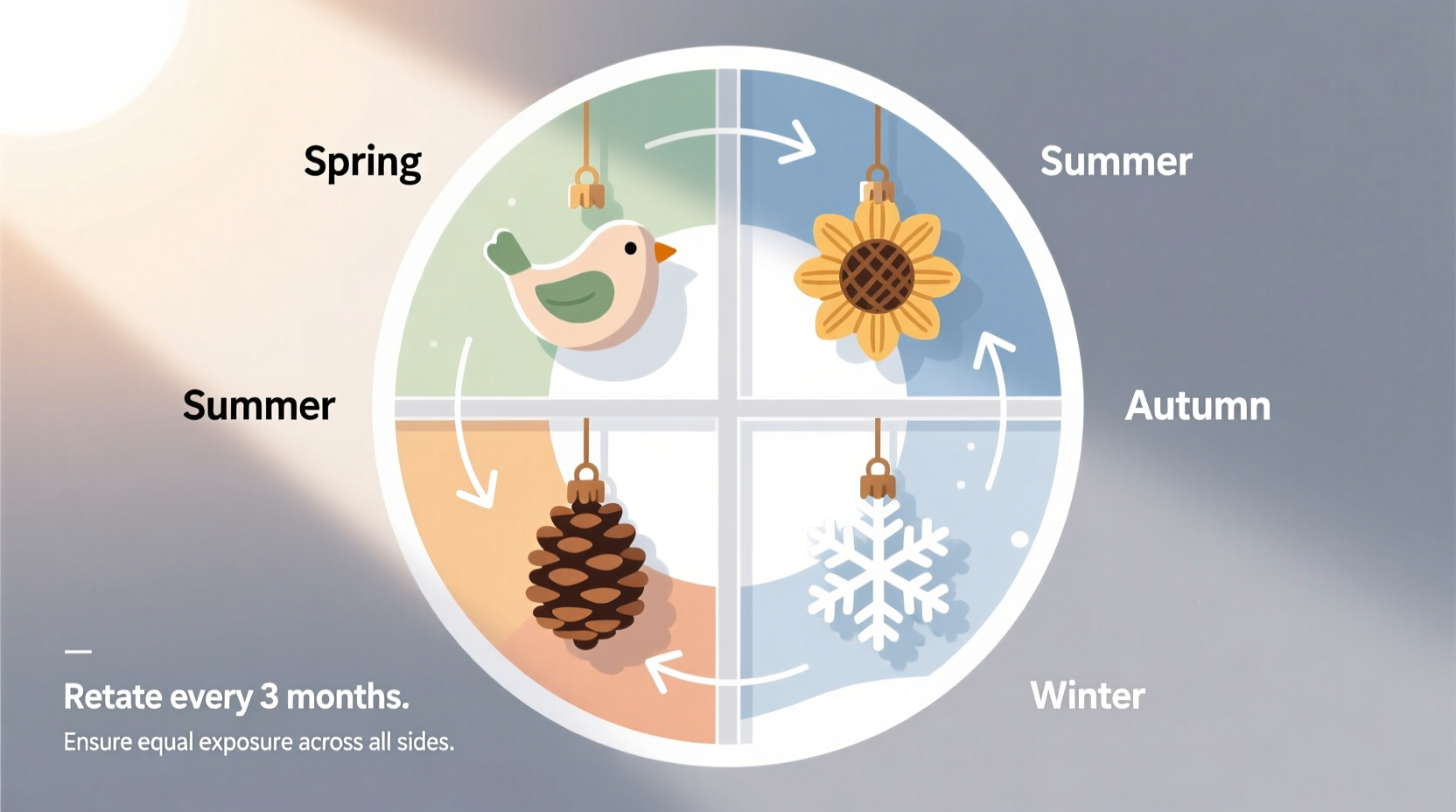
Sunlight contains UV radiation that breaks down chemical bonds in dyes, pigments, and organic materials. This process, known as photodegradation, affects everything from silk ribbons and painted ceramics to fabric-wrapped baubles and vintage glass. The damage is cumulative and irreversible. A single ornament placed directly in a south-facing window for six months may show visible fading compared to an identical piece stored in a shadowed cabinet.
Different materials react uniquely to light:
- Textile-based ornaments (e.g., felt, tinsel, embroidered balls) lose color rapidly due to dye instability.
- Glass and crystal resist fading but may develop surface haze or “sun crazing” over decades.
- Paper and cardstock yellow quickly and become brittle.
- Wood and gilded surfaces may crack or flake under thermal expansion caused by heat buildup from sunlight.
The risk increases with proximity to windows, duration of exposure, and intensity of daylight. East- and west-facing rooms receive softer morning or evening light, while south-facing areas (in the Northern Hemisphere) get the strongest, most direct exposure all day.
“Light damage is the leading cause of premature deterioration in decorative collectibles. Rotation isn’t just aesthetic—it’s conservation.” — Dr. Lila Chen, Museum Conservator at the National Design Archive
A Strategic Approach to Ornament Rotation
Rotating ornaments seasonally isn't merely swapping out decorations—it's about equitable exposure distribution. The goal is to ensure no single item bears the brunt of sunlight over time. A well-planned rotation extends the lifespan of your collection and maintains visual consistency across years of display.
Create a Display Calendar
Begin by mapping your annual display schedule. Identify which ornaments appear during each season or holiday:
- Winter: Christmas, Hanukkah, New Year’s
- Spring: Easter, Passover, garden-themed decor
- Summer: Fourth of July, coastal themes, outdoor entertaining
- Fall: Halloween, Thanksgiving, harvest motifs
Assign each ornament to a primary season but designate alternatives for overlap periods (e.g., late November to early January). This prevents certain pieces from being used excessively during high-traffic times.
Track Exposure Time
Just like museum curators track artifact display durations, you should log how long each ornament spends in direct light. Keep a simple spreadsheet or notebook noting:
- Date placed on display
- Display location (window proximity)
- Date removed
- Total days exposed
Set a seasonal cap—say, 90 days per year—for any single ornament in direct sunlight. Once reached, retire it for the remainder of the cycle.
Step-by-Step Guide to Implementing Seasonal Rotation
Follow this practical timeline to establish a sustainable rotation system:
- Inventory & Categorize (January–February): Gather all ornaments. Group by material type, size, theme, and current condition. Note any already showing signs of fading.
- Map Display Zones (March): Identify where ornaments will be displayed. Rank zones by light exposure: Zone A (direct sunlight), Zone B (indirect/dappled light), Zone C (low light).
- Assign Rotations (April): Distribute ornaments so that high-exposure zones feature different pieces each season. Prioritize UV-resistant materials (e.g., metal, glazed ceramic) for Zone A.
- Label & Store (May): Label each storage container with season and contents. Store off-season ornaments in acid-free tissue, inside opaque containers, away from heat sources.
- Rotate & Monitor (Each Season Change): Swap out ornaments according to plan. Inspect each piece for wear, dust, or early fading before re-displaying.
- Annual Review (December): Assess overall condition. Adjust next year’s plan based on observed fading patterns or changes in display space.
Optimizing Display Conditions to Reduce Fading Risk
Rotation alone isn’t enough. You must also control the environment where ornaments are shown.
Use UV-Protective Measures
Apply UV-filtering film to windows, especially those near display areas. These clear adhesive films block up to 99% of harmful rays without darkening the room. Alternatively, install sheer curtains or blinds that can be closed during peak sunlight hours (10 a.m. to 4 p.m.).
Vary Display Heights and Angles
Not all positions near a window receive equal light. Higher shelves may catch more direct rays, while lower tables sit in shadow. Rotate not only between seasons but within displays—swap top and bottom placements monthly if possible.
| Display Strategy | Benefit | Best For |
|---|---|---|
| Seasonal swap with full rotation | Equalizes total exposure time | All ornament types |
| Mid-season position shift | Reduces localized fading | Larger trees or mantel displays |
| UV window film + rotation | Combines prevention and equity | Southern exposures |
| Alternating centerpiece use | Protects focal-point items | Artisan or heirloom pieces |
Choose Materials Wisely
When adding new ornaments, favor those with higher UV resistance. Metal, enamel-coated glass, and high-quality plastics retain color longer. Avoid items with unsealed paper inserts, dyed feathers, or untreated wood if placing in bright areas.
Mini Case Study: The Henderson Family Tree Tradition
The Hendersons in Portland, Oregon, have collected Christmas ornaments for over 40 years. Their 7-foot tree features nearly 200 pieces, many handmade or gifted. By the mid-2010s, they noticed that ornaments on the outer branches—especially the southeast side—were noticeably paler than inner ones.
In 2017, they implemented a rotation system. They divided the collection into four color-coded groups (A–D), rotating each group to a different quadrant of the tree annually. They also installed UV-filtering film on nearby windows and began storing ornaments in lined boxes with silica gel packs.
After five years, a family comparison showed minimal new fading. More importantly, beloved pieces—like a hand-painted angel from 1983—retained their original luster. “We didn’t want to stop displaying our memories,” says Margaret Henderson. “We just needed a smarter way to share the spotlight.”
Essential Checklist for Sustainable Ornament Care
Use this checklist each season to maintain balance and protection:
- ✅ Audit your ornament collection for signs of fading or damage
- ✅ Assign each ornament to a seasonal display group
- ✅ Label storage containers clearly by season and group
- ✅ Install UV-blocking window treatments where displays are located
- ✅ Rotate ornaments both seasonally and spatially (top to bottom, front to back)
- ✅ Limit continuous sunlight exposure to no more than 90 days per year per piece
- ✅ Clean gently before storing—use microfiber cloths and avoid moisture
- ✅ Store in cool, dry, dark conditions with archival-safe materials
- ✅ Document display dates and locations for high-value items
- ✅ Reassess the rotation plan annually
Frequently Asked Questions
Can I rotate ornaments mid-season to reduce fading?
Yes. If an ornament is in a high-light zone, consider shifting its position every 4–6 weeks—even within the same season. Move it to a shadier part of the tree or shelf, and replace it with another piece from the same thematic group. This “micro-rotation” further evens out exposure.
What if I only have one prized ornament I want to display all year?
For irreplaceable or highly sentimental pieces, limit display time to 60–90 days annually. When not on view, photograph it beautifully and display the image instead. This preserves the original while keeping its presence felt. Alternatively, create a replica for extended display.
Do LED lights contribute to fading?
Standard LED bulbs emit negligible UV radiation and produce little heat, making them safe for prolonged use around ornaments. However, avoid placing any light source—LED or otherwise—within inches of delicate surfaces, as even low heat can accelerate degradation over time.
Conclusion: Preserve Beauty Through Intentional Rotation
Ornaments carry stories, traditions, and emotional weight. Letting them fade prematurely due to uneven light exposure diminishes not just their appearance but their legacy. With a thoughtful seasonal rotation strategy, you honor each piece by giving it its moment in the sun—literally—without sacrificing its longevity. It’s not about hiding your treasures, but about sharing the light fairly among them.
Start today: pull out your storage boxes, assess your display areas, and draft a simple rotation plan. Small, consistent actions now will protect decades of memories. Your future self—and perhaps future generations—will thank you when those ornaments still sparkle as brightly as the day they were first hung.




 浙公网安备
33010002000092号
浙公网安备
33010002000092号 浙B2-20120091-4
Comments
No comments yet. Why don't you start the discussion?