
Shoes are one of the most frequently used—and often overlooked—items in our daily wardrobe. Whether you're walking to work, hitting the gym, or running errands, your footwear absorbs impact, moisture, and bacteria with every step. Most people own multiple pairs but wear just one or two on rotation, leading to premature wear and persistent odors. The solution? A deliberate shoe rotation system. By rotating your shoes strategically, you not only prolong their structural integrity but also reduce bacterial growth and unpleasant smells. This guide breaks down exactly how to implement an effective rotation routine, backed by material science, podiatry insights, and real-world habits.
Why Shoe Rotation Matters
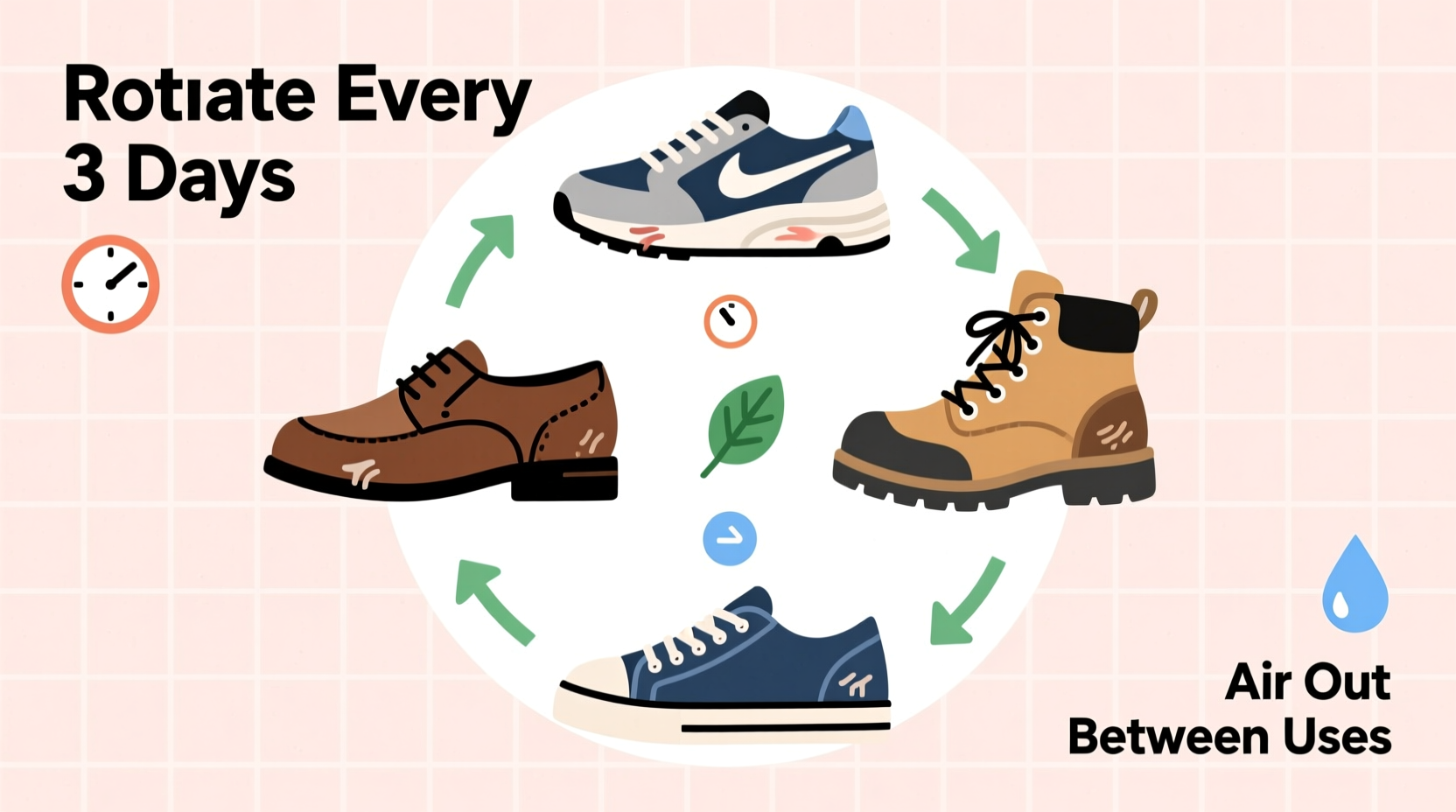
Every time you wear a pair of shoes, they absorb sweat—up to half a cup per foot each day, according to the American Podiatric Medical Association. This moisture softens materials like leather, degrades adhesives in soles, and creates a breeding ground for odor-causing bacteria such as Micrococcus and Brevibacterium. When shoes aren’t given time to dry out between uses, these issues compound rapidly.
Additionally, constant use prevents the midsole foam (especially in athletic shoes) from fully rebounding. Over time, this leads to permanent compression, reducing cushioning and support. Rotating shoes allows each pair 24–48 hours to recover, both physically and chemically.
“Giving shoes at least one full day off between wears can double their functional lifespan and significantly reduce odor development.” — Dr. Lena Torres, Footwear Biomechanics Researcher, University of Oregon
The Science Behind Odor Buildup and Material Fatigue
Odor in shoes isn’t just about sweat—it’s about microbial metabolism. Bacteria thrive in warm, damp environments and feed on dead skin cells and sweat components like urea and fatty acids. As they break these down, they release volatile sulfur compounds and organic acids that produce strong, cheesy, or vinegary smells.
Materials also degrade under repeated stress:
- EVA foam (common in sneakers): Loses resilience after 300–500 miles of use if not allowed to decompress.
- Leather: Becomes stiff and cracked when worn wet or without drying intervals.
- Glues and stitching: Weaken faster under continuous strain and moisture exposure.
Rotating shoes interrupts this cycle. It gives materials time to re-aerate, fibers to relax, and moisture to evaporate—slowing degradation and minimizing bacterial colonies.
How to Build an Effective Shoe Rotation System
A successful rotation isn’t random—it’s intentional. Start by categorizing your shoes based on function, frequency of use, and material type. Then assign them to a weekly schedule that balances usage and recovery time.
Step 1: Audit Your Current Footwear
List all your regularly worn shoes. Include:
- Work/school shoes
- Gym/running shoes
- Casual sneakers
- Dress shoes
- Outdoor/seasonal footwear
For each, note the primary material and average weekly wear frequency.
Step 2: Define Usage Categories
| Category | Examples | Recommended Rotation Frequency |
|---|---|---|
| High-Impact Athletic | Running, CrossFit, Basketball | Wear every other day max; rotate 3+ pairs |
| Daily Casual | Sneakers, Loafers | Rotate among 2–3 pairs weekly |
| Dress/Formal | Oxfords, Heels, Pumps | Limit to 1–2 days/week; alternate weekly |
| Seasonal/Weather-Specific | Boots, Sandals, Rain Shoes | Use only as needed; store properly when idle |
Step 3: Create a Weekly Rotation Schedule
Example for an office worker who walks 30 minutes daily and hits the gym three times a week:
- Monday: Running shoes (gym + commute)
- Tuesday: Casual sneakers (commute only)
- Wednesday: Alternate running shoes or rest day
- Thursday: Dress loafers (office wear)
- Friday: Casual sneakers (switch from Tuesday pair)
- Saturday: Hiking boots or off-duty
- Sunday: Rest all shoes
This ensures no single pair is worn more than two non-consecutive days per week and always has at least 48 hours to air out.
Step 4: Optimize Drying Conditions
After each wear, remove insoles and laces to increase airflow. Place shoes in a well-ventilated area away from direct heat or sunlight, which can warp materials. Use cedar shoe trees in leather shoes to absorb moisture and maintain shape.
Maintenance Habits That Complement Rotation
Rotation alone isn’t enough. Pair it with consistent care to maximize results.
Deep Clean Every 4–6 Weeks
Even with rotation, dirt and oils accumulate. Follow this cleaning protocol by material:
- Mesh/Synthetic Sneakers: Hand wash with mild detergent and cold water. Air dry completely before reuse.
- Leather: Wipe with a damp cloth, apply conditioner monthly, and polish as needed.
- Cloth/Fabric: Use a soft brush and spot cleaner. Avoid machine washing unless specified.
Deodorize Regularly
Prevent odor buildup with routine treatments:
- Sprinkle baking soda inside and leave overnight once a month.
- Use UV-C sanitizing devices designed for shoes (shown to reduce bacterial load by up to 90%).
- Replace insoles every 6–12 months or use antimicrobial inserts.
Store Correctly Between Uses
Never toss shoes into a dark closet or pile them under others. Instead:
- Keep them on open shelves or in breathable fabric boxes.
- Avoid plastic bins that trap moisture.
- Store in a cool, dry place with low humidity.
“Proper storage is as important as rotation. Shoes need to breathe even when they’re not being worn.” — Marcus Lin, Footwear Preservation Specialist, National Shoe Care Institute
Real-World Example: Sarah’s Sneaker Longevity Journey
Sarah, a 32-year-old teacher and amateur runner, used to replace her running shoes every four months. She wore the same pair for teaching, commuting, and weekend runs, often putting them back on while still slightly damp. After developing persistent foot odor and noticing her soles collapsing unevenly, she consulted a sports podiatrist.
Following a structured rotation plan, she invested in three pairs: one for running, one for work, and one casual backup. She began alternating them strictly, using cedar inserts, and deep-cleaning every five weeks. Within six months, her shoes lasted over nine months—nearly 2.5 times longer than before. More importantly, her foot odor disappeared, and she reported feeling less foot fatigue.
Sarah’s case illustrates how small behavioral changes, anchored in rotation, lead to dramatic improvements in both hygiene and product longevity.
Do’s and Don’ts of Shoe Rotation
| Do’s | Don’ts |
|---|---|
| Allow 24–48 hours between wears for recovery | Wear the same pair two days in a row |
| Remove insoles and laces after use | Stash damp shoes in closed cabinets |
| Use odor-absorbing inserts or powders | Apply heat sources like hairdryers to speed drying |
| Rotate at least 2–3 pairs for daily wear | Assume “water-resistant” means “wearable in rain every day” |
| Inspect shoes weekly for wear patterns | Ignore early signs of sole separation or creasing |
Frequently Asked Questions
How many pairs of shoes do I need for effective rotation?
At minimum, two pairs for daily use. For optimal results—especially if you're active—three is ideal. One wears, one dries, and one rests or serves as backup. More variety is better if you have different activity types (e.g., gym, work, formal).
Can I speed up the drying process safely?
Yes, but avoid direct heat. Use moisture-wicking shoe bags, silica gel packs, or specialized shoe dryers with ambient temperature settings. Never place shoes near radiators or in ovens, as this damages glues and warps soles.
What if I notice odor despite rotating?
Rotation reduces but doesn’t eliminate odor if hygiene habits are lacking. Wash socks regularly, go barefoot at home when possible, and consider antifungal foot powders. Also, check if your insoles are saturated—replace them if they feel dense or smell musty.
Action Checklist: Implement Your Rotation Plan
- Inventory all your regularly worn shoes.
- Group them by use: athletic, casual, dress, seasonal.
- Select at least two pairs for daily rotation (three preferred).
- Create a weekly wearing schedule avoiding back-to-back use.
- After each wear, remove insoles and let shoes air out for 24+ hours.
- Add odor absorbers like cedar inserts or baking soda.
- Schedule a deep clean every 4–6 weeks.
- Store shoes in ventilated areas, never sealed containers.
- Monitor wear patterns and replace shoes before structural failure.
Conclusion: Make Rotation a Lifestyle Habit
Rotating your shoes isn’t just a maintenance tactic—it’s a long-term investment in comfort, health, and sustainability. Every extra month your shoes last saves money, reduces waste, and keeps your feet happier. The system works because it aligns with the natural behavior of materials and microbes: rest enables recovery, and airflow defeats decay.
Start today. Pull out your most worn pair, assess your current rotation (or lack thereof), and build a simple schedule. With consistent practice, rotating shoes will become second nature—like brushing your teeth or charging your phone. Your feet, your wallet, and your closet will thank you.




 浙公网安备
33010002000092号
浙公网安备
33010002000092号 浙B2-20120091-4
Comments
No comments yet. Why don't you start the discussion?