
A mattress is one of the most important investments in your home—both for your health and your wallet. On average, people spend a third of their lives sleeping, and the quality of that rest depends heavily on the condition of their mattress. Over time, consistent pressure from body weight leads to sagging, indentations, and uneven wear, especially in areas like the shoulder and hip zones. The good news? Regular rotation can significantly delay these issues, preserving both support and comfort. Yet, many homeowners overlook this simple maintenance task, unknowingly shortening their mattress’s usable life by years.
Rotating your mattress isn’t complicated, but doing it correctly—and at the right intervals—makes all the difference. Whether you own an innerspring, memory foam, hybrid, or latex model, understanding the mechanics of rotation and adapting your routine accordingly ensures long-term performance. This guide breaks down everything you need to know: why rotation matters, how often to do it, step-by-step instructions, and what to avoid.
Why Mattress Rotation Matters
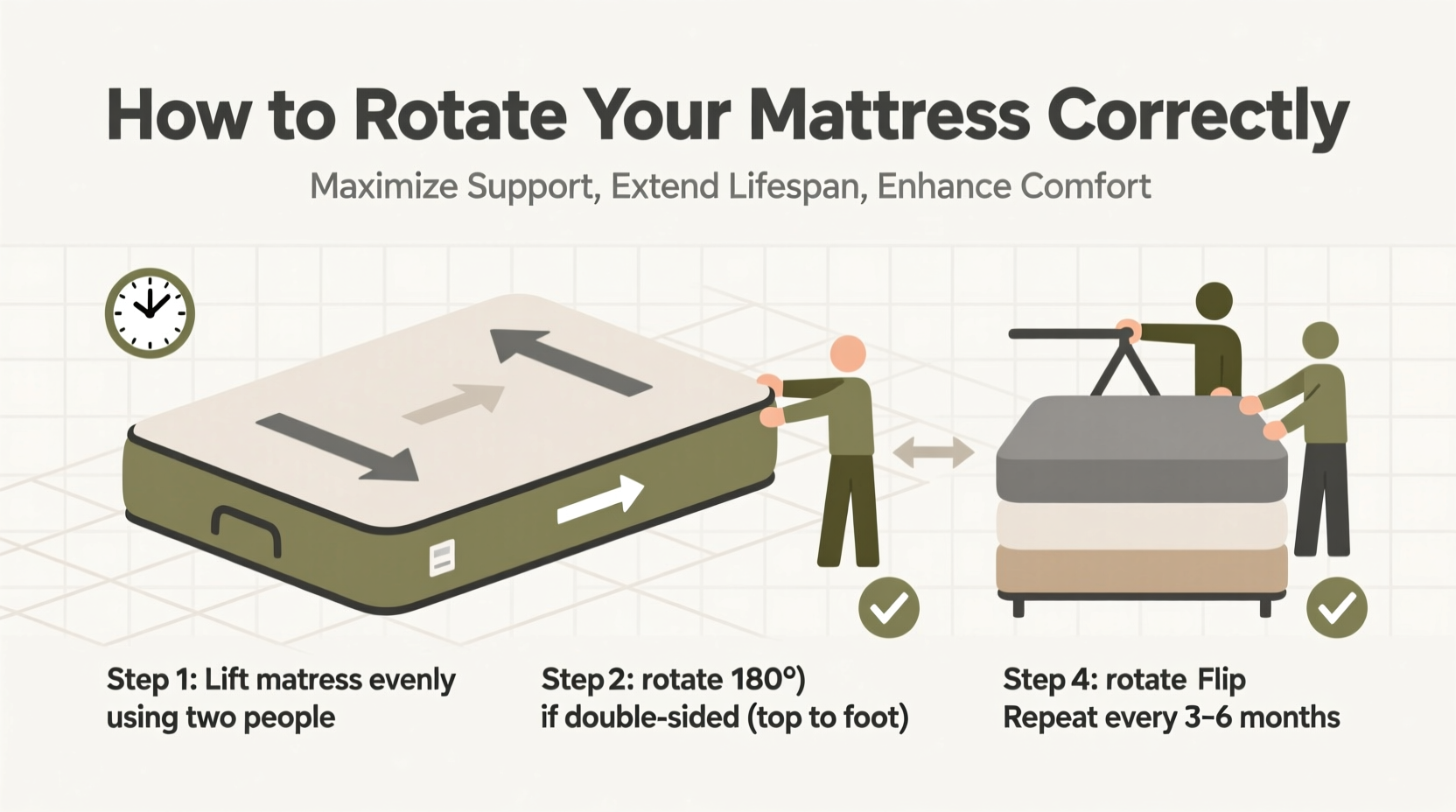
Mattresses are engineered to provide even support across their surface, but daily use creates localized stress points. When you sleep in the same position night after night, certain areas compress more than others. Over months, this leads to permanent body impressions, reduced spinal alignment, and discomfort. Rotation redistributes this wear, allowing compressed materials time to recover while fresh sections take over support duties.
Think of it like rotating tires on a car. Just as uneven tire wear affects handling and fuel efficiency, an unrotated mattress develops soft spots that compromise posture and sleep quality. According to the International Sleep Products Association (ISPA), regular rotation can extend a mattress’s effective lifespan by up to 50%, delaying the need for replacement and maintaining warranty eligibility.
“Proper rotation is one of the simplest yet most overlooked ways to preserve a mattress. It balances material fatigue and prevents premature breakdown.” — Dr. Lena Torres, Sleep Ergonomics Researcher, National Sleep Foundation
How Often Should You Rotate Your Mattress?
The ideal rotation frequency depends on the type of mattress and manufacturer recommendations. However, a general rule applies: rotate every 3 to 6 months. For new mattresses, experts suggest rotating monthly during the first year to prevent early indentation.
Here’s a breakdown by mattress type:
| Mattress Type | Rotation Frequency | Notes |
|---|---|---|
| Innerspring | Every 3–6 months | Coils wear unevenly; frequent rotation prevents sagging. |
| Memory Foam | Every 4–6 months | Denser materials recover slowly; avoid over-rotation. |
| Hybrid | Every 3–4 months | Combines coil and foam layers; needs balanced care. |
| Latex | Every 6 months | Naturally resilient; less prone to sagging. |
| Firmness Level (All Types) | Softer models: 3 months Firmer models: 6 months |
Softer surfaces compress faster and need more attention. |
Step-by-Step Guide to Rotating Your Mattress
Rotating a mattress properly involves more than just flipping it. Most modern mattresses are designed with specific top and bottom layers, meaning they should be rotated—not flipped. Follow this sequence to ensure correct orientation and minimize strain.
- Clear the Bed Area: Remove all bedding, pillows, and mattress protectors. Slide nightstands or furniture away if needed for access.
- Lift One End: With a partner, grip the top edge of the mattress (the head end) and lift it slightly off the box spring or foundation.
- Rotate 180 Degrees: Turn the mattress so the head becomes the foot and vice versa. This evens out wear caused by your usual sleeping position.
- Check Orientation: Ensure the designated “top” side remains facing up. Most mattresses have labels indicating the top; if not, refer to firmness or quilting patterns.
- Realign and Inspect: Center the mattress on the base, then check for new or deepening indentations. Note any significant sagging (>1.5 inches) as a sign of structural wear.
- Replace Bedding: Put back sheets, protectors, and blankets. Consider washing them during rotation for added hygiene.
This process takes under 10 minutes with two people. Never attempt to rotate a heavy mattress alone—it risks injury and damage to flooring or walls.
Do’s and Don’ts of Mattress Care
Rotation is just one part of comprehensive mattress maintenance. Combine it with best practices to get the most out of your investment.
| Do’s | Don’ts |
|---|---|
| Use a supportive foundation or slatted base | Place mattress directly on carpet or bare floor |
| Use a waterproof mattress protector | Allow spills, sweat, or moisture to soak in |
| Vacuum the surface every few months | Use harsh cleaners or steam on foam cores |
| Rotate regularly based on type | Flip non-flippable mattresses |
| Keep pets off the bed if claws are sharp | Jump or stand on the mattress |
| Aerate the mattress after unboxing or deep cleaning | Expose to direct sunlight or damp environments |
Avoid using old box springs with modern mattresses—they lack proper support and can void warranties. Instead, opt for platform beds or foundations approved by the manufacturer.
Real-Life Example: Sarah’s Extended Mattress Life
Sarah, a 38-year-old teacher from Portland, bought a high-end memory foam mattress five years ago. At the time, she paid $1,200 and was determined to make it last. After reading the care manual, she began rotating it every three months without fail. She also used a breathable cotton protector and vacuumed the surface twice a year.
Four years later, her sister purchased the same model. Within two years, her sister noticed visible sagging and discomfort. When Sarah compared the two, hers showed only minor impressions—well within warranty limits. A technician confirmed that Sarah’s mattress still provided optimal support and had at least two more years of quality use ahead.
“I didn’t think such a small habit would make such a big difference,” Sarah said. “Now I tell everyone: ten minutes every few months saved me over a thousand dollars.”
Can You Flip a Mattress?
Most modern mattresses are not designed to be flipped. They feature specialized comfort layers on top and firmer support cores below. Flipping disrupts this design, leading to poor ergonomics and accelerated wear. However, some double-sided models—often labeled “flippable” or “two-sided”—are built for flipping and typically offer dual firmness options (e.g., soft on one side, firm on the other).
If you’re unsure, check the product manual or look for asymmetrical stitching, logos, or handles (which usually indicate the top side). Flippable models are heavier and reinforced throughout, whereas one-sided designs rely on a single functional surface.
“Flipping a non-flippable mattress doesn’t just reduce comfort—it can permanently damage the internal structure.” — Marcus Lin, Product Engineer at RestWell Mattress Co.
Frequently Asked Questions
What if my mattress already has a dip or sag?
Minor impressions (under 1 inch) are normal and often improve with rotation. If the sag exceeds 1.5 inches, rotation alone won’t fix it. Try placing a plywood board between the mattress and foundation to add support. If the issue persists, contact the manufacturer—many warranties cover excessive sagging after proper care.
Should I rotate a new mattress more often?
Yes. During the first 3–6 months, monthly rotation helps the materials settle evenly and prevents early body molding. After that, shift to a 3–6 month schedule based on your mattress type.
Does a mattress topper change rotation needs?
No. While a topper adds cushioning, it doesn’t eliminate underlying wear. Rotate the entire assembly as one unit. Replace the topper every 2–3 years to maintain hygiene and comfort.
Essential Mattress Rotation Checklist
- ☐ Check manufacturer guidelines for rotation and flipping
- ☐ Schedule rotations every 3–6 months (monthly for first year)
- ☐ Use two people to safely rotate heavy mattresses
- ☐ Rotate 180 degrees (head to foot), not flip, unless flippable
- ☐ Keep the correct side facing up
- ☐ Clean and vacuum the mattress during rotation
- ☐ Inspect for wear, stains, or structural issues
- ☐ Confirm proper foundation support
- ☐ Update your calendar for next rotation date
- ☐ Wash bedding and protector simultaneously
Conclusion: Make Rotation a Habit, Not a Chore
Rotating your mattress is a small act with long-term rewards. It costs nothing, takes little time, and can add years of comfort to your sleep system. More importantly, it protects your health by ensuring consistent spinal support and pressure relief. In a world where we prioritize quick fixes and replacements, choosing to maintain what we already own is both economical and sustainable.
Start today. Clear the bed, grab a partner, and give your mattress the attention it deserves. Set a reminder, follow the checklist, and make rotation part of your seasonal routine. Your future self—well-rested and sitting on savings—will thank you.




 浙公网安备
33010002000092号
浙公网安备
33010002000092号 浙B2-20120091-4
Comments
No comments yet. Why don't you start the discussion?