
A mattress is one of the most important investments you make for your health and daily comfort. Yet, like any investment, it requires regular maintenance to perform at its best. One of the simplest and most effective ways to extend the lifespan of your mattress and maintain consistent support is through proper rotation. Over time, body weight and sleeping positions create uneven pressure points, leading to sagging, lumps, and reduced comfort. Rotating your mattress redistributes this wear, helping it stay supportive and comfortable longer.
Despite its importance, many people either skip rotation entirely or do it incorrectly. Some assume modern mattresses don’t need it; others believe flipping is always required. The truth is, not all mattresses can be flipped, but nearly all benefit from regular rotation. Understanding your mattress type, the correct frequency, and the right method ensures you get the most out of your sleep surface.
Why Mattress Rotation Matters
Mattresses endure constant pressure in the same areas night after night. Your hips and shoulders sink deepest when lying on your side, while your lower back bears the load when sleeping on your back. This repeated stress causes materials like memory foam, latex, and innerspring coils to compress unevenly. Without intervention, these compression zones become permanent, resulting in visible dips and compromised spinal alignment.
Rotation helps counteract this natural wear pattern. By shifting the top to the bottom and vice versa, you allow compressed areas to decompress while fresh sections take on the load. This balancing act delays premature aging and maintains a more uniform feel across the entire surface.
According to the International Sleep Products Association (ISPA), “Regular rotation can extend a mattress’s usable life by up to 50%, especially during the first few years.” This isn’t just about longevity—it directly impacts sleep quality. A well-maintained mattress provides consistent support, reduces motion transfer, and minimizes discomfort that can lead to tossing and turning.
“Even wear starts with smart care. Rotating your mattress every 3 to 6 months is one of the easiest things you can do to protect your sleep investment.” — Dr. Lena Torres, Sleep Health Specialist
Step-by-Step Guide to Rotating Your Mattress
Rotating your mattress doesn’t require special tools, but it does require planning and safety awareness. Follow this detailed process to ensure it's done correctly and safely.
- Check Manufacturer Guidelines: Before rotating, consult your mattress warranty or user manual. Some brands specify rotation intervals or warn against flipping certain models. Violating these instructions could void your warranty.
- Choose the Right Time: Pick a day when you don’t need the bed immediately. Allow at least 30–45 minutes for the process. Early morning or late afternoon works best—avoid doing it when you’re tired.
- Clear the Area: Remove all bedding—sheets, mattress protectors, pillows, and toppers. Move nightstands or furniture blocking access to both sides of the bed if needed.
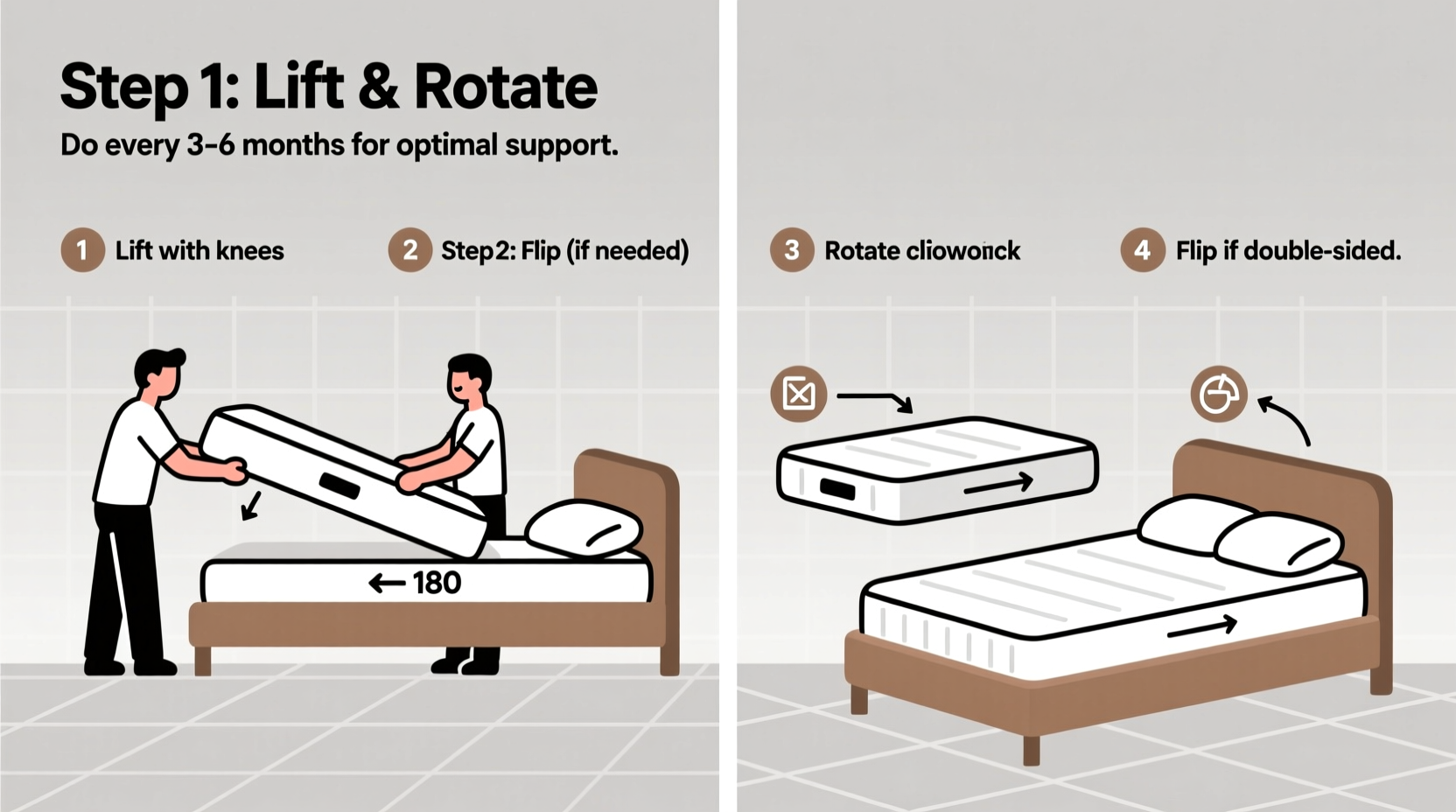
- Determine Rotation Type: Most modern mattresses are designed with a specific top and bottom. If your mattress is two-sided (flippable), you can rotate and flip. If it’s one-sided (common with memory foam or pillow-top models), only rotate it 180 degrees—do not flip.
- Lift and Turn Safely: Position yourself at the foot of the bed. With a partner, grip the edges firmly and lift the mattress slowly. Rotate it so the head end becomes the foot end. Ensure no twisting or bending occurs during the move.
- Reposition on the Frame: Carefully place the mattress back onto the foundation or box spring. Align it properly with the bed frame to avoid overhang or misalignment.
- Inspect and Clean: Take the opportunity to vacuum the surface, clean any stains with a mild solution, and check the foundation for damage or wear.
- Reset Bedding: Remake the bed with fresh linens. Consider rotating your fitted sheet as well—some have tags indicating which end should face the foot of the bed.
Rotation Frequency by Mattress Type
Not all mattresses require the same care. The material composition and design dictate how often—and whether—you should rotate them. Below is a breakdown of common mattress types and recommended rotation practices.
| Mattress Type | Can It Be Flipped? | Rotation Frequency | Special Notes |
|---|---|---|---|
| Innerspring (Two-Sided) | Yes | Every 3–6 months | Flip and rotate for maximum lifespan. Ideal for traditional coil systems. |
| Innerspring (One-Sided) | No | Every 6 months | Rotate only. Often has reinforced top layers that shouldn't face down. |
| Memory Foam | No | Every 6 months | Heat retention may cause uneven softening; rotation evens this out. |
| Latex | Sometimes | Every 6 months | Natural latex resists sagging but still benefits from rotation. |
| Hybrid | No (typically) | Every 6 months | Combines foam and coils; follow manufacturer’s one-sided guidance. |
| Futon or Roll-Away | Yes | Every 3 months | Frequent use demands more frequent rotation and flipping. |
Note: Always confirm with your product manual. Many newer models, especially those sold online, are designed as \"no-flip\" due to layered construction.
Common Mistakes to Avoid
Even with good intentions, mistakes during rotation can reduce effectiveness or damage the mattress. Here are key errors to watch for:
- Flipping a one-sided mattress: Doing so can ruin comfort layers and void warranties. Look for labels indicating “Do Not Flip” or asymmetric padding.
- Rotating too infrequently: Waiting over a year means significant wear has already occurred. Stick to a schedule—set reminders if needed.
- Ignoring the foundation: A warped box spring or broken slats will undermine any rotation effort. Inspect and replace supports as necessary.
- Using improper lifting technique: Twisting your back while moving the mattress can cause injury. Bend your knees, keep your back straight, and use a partner.
- Skipping cleaning: Rotation is the perfect time to remove dust mites, sweat residue, and allergens. Don’t miss this chance to refresh your sleep environment.
Real-Life Example: How Rotation Saved a Family’s Sleep Quality
The Reynolds family purchased a premium hybrid mattress five years ago. At first, sleep improved dramatically—until 18 months in, they began noticing a dip forming under the husband’s side. He developed lower back pain, and their toddler started rolling toward the center during naps.
After consulting a sleep therapist, they learned they had never rotated the mattress. Following a simple 6-month rotation schedule, they noticed improvements within weeks. The center sag stabilized, and comfort returned. Now, three years later, the mattress still performs well, and the warranty remains intact thanks to documented care.
This case highlights how neglecting a basic maintenance task can compromise both comfort and health—while correcting it brings fast, measurable results.
Checklist: Mattress Rotation Routine
Use this checklist each time you rotate your mattress to ensure nothing is overlooked:
- ☐ Review manufacturer instructions
- ☐ Schedule rotation date (every 3–6 months)
- ☐ Remove all bedding and launder sheets
- ☐ Vacuum mattress surface and seams
- ☐ Spot-clean stains with mild detergent and water
- ☐ Confirm rotation type (rotate only vs. flip + rotate)
- ☐ Lift with a partner using proper form
- ☐ Rotate 180 degrees (head to foot)
- ☐ Realign mattress on foundation
- ☐ Inspect box spring or platform for damage
- ☐ Remake bed with clean linens
- ☐ Log the date for next rotation
Frequently Asked Questions
Can I rotate my mattress by myself?
While possible for smaller or lightweight models (like twin sizes), it’s strongly recommended to have help. Most adult mattresses weigh between 60–120 pounds and require coordinated lifting to avoid strain or dropping. Attempting it alone increases injury risk and may damage floors or walls.
What if my mattress has a noticeable sag? Will rotation fix it?
Rotation won’t reverse existing sagging, but it can prevent it from worsening. If a dip is deeper than an inch or causing pain, rotation alone may not be enough. Consider replacing the foundation or evaluating whether the mattress has reached end-of-life. Persistent sagging may also indicate a warranty claim is valid.
Do new mattresses need immediate rotation?
Wait at least 30 days before rotating a new mattress. This allows off-gassing (for foam models) and initial settling. After the break-in period, begin your regular rotation schedule. Some experts suggest rotating twice in the first year to establish even wear patterns early.
Maximize Comfort and Investment Longevity
Your mattress works hard every night to support your body and restore your energy. In return, it deserves consistent care. Rotating your mattress is a small effort with outsized benefits—extending its functional life, preserving comfort, and supporting healthy spinal alignment. Unlike costly replacements or medical treatments for back pain, rotation is free, quick, and completely within your control.
By understanding your mattress type, following a clear schedule, and avoiding common pitfalls, you ensure years of restful, supported sleep. Make rotation part of your home maintenance routine, just like changing HVAC filters or servicing appliances. Your future self—and your back—will thank you.




 浙公网安备
33010002000092号
浙公网安备
33010002000092号 浙B2-20120091-4
Comments
No comments yet. Why don't you start the discussion?