
A good night’s sleep starts with a supportive, well-maintained mattress. Yet many people overlook one of the simplest and most effective maintenance habits: regular rotation. Over time, body weight and sleeping patterns create uneven wear—especially in memory foam, hybrid, and innerspring models. This leads to sagging, lumps, and reduced comfort. By rotating your mattress consistently, you distribute wear evenly, maintain support, and significantly prolong its usable lifespan. Most manufacturers recommend this practice, yet fewer than 30% of households actually do it. With proper technique and timing, you can add two, three, or even more years to your mattress’s performance.
Why Mattress Rotation Matters
Mattresses are not designed to endure constant pressure on the same zones. Every time you lie down, your hips, shoulders, and spine compress specific areas. Over months, these compression points begin to degrade faster than others, especially if you sleep in the same position or on the same side of the bed. This results in visible dips, loss of edge support, and inconsistent firmness. Rotating redistributes that stress across the entire surface, allowing compressed materials to recover and underused areas to share the load.
Consider this: A high-quality memory foam mattress may last 7–10 years under ideal conditions. But without rotation, that lifespan can shrink to just 4–5 years due to premature sagging. The same applies to hybrids and innersprings, where coil systems weaken when subjected to repetitive strain in isolated zones.
“Regular rotation is the single most impactful habit for extending a mattress’s functional life. It costs nothing and takes minutes, yet prevents thousands in early replacement costs.” — Dr. Lena Peterson, Sleep Ergonomics Researcher, National Sleep Foundation
Step-by-Step Guide to Proper Mattress Rotation
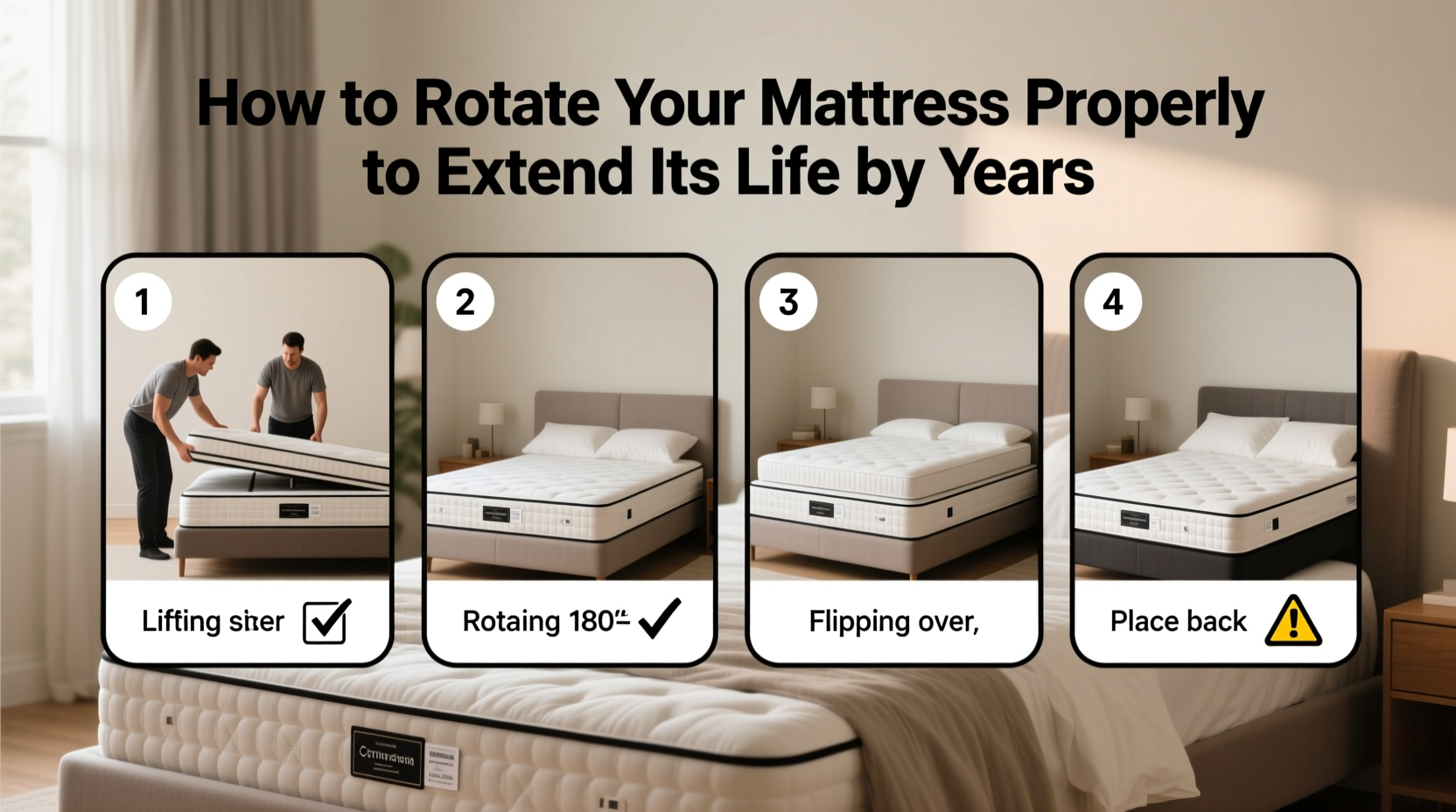
Rotating your mattress isn’t complicated, but doing it correctly ensures both safety and effectiveness. Follow this timeline-based routine for optimal results:
- Choose the Right Time: Schedule rotations every 3 to 6 months. Many find it helpful to align with daylight saving time changes—spring forward, fall back—as natural reminders.
- Clear the Area: Remove all bedding, including sheets, protectors, and toppers. Move nightstands or furniture if needed to access both sides of the bed frame.
- Inspect the Mattress: Before lifting, examine the surface for stains, tears, or signs of wear. Note any persistent sagging (more than 1.5 inches deep), which may indicate it's nearing end-of-life regardless of rotation.
- Lift and Flip (If Applicable): For double-sided mattresses, flip the mattress over so the bottom becomes the top. Then rotate it 180 degrees so the head end is now at the foot. This ensures full redistribution of wear.
- Rotate Only (For One-Sided Models): Most modern mattresses are designed with pillow tops or non-flippable layers. In these cases, do not attempt to flip. Instead, rotate 180 degrees only—keeping the same side up but reversing ends.
- Reassemble the Bed: Replace your mattress protector and sheets. Consider washing bedding during this process to maintain hygiene.
- Mark Your Calendar: Log the date of rotation and set a reminder for 3–6 months ahead.
Do’s and Don’ts of Mattress Care
Rotation is essential, but it works best alongside other smart care practices. The table below outlines key dos and don’ts to maximize longevity.
| Do | Don’t |
|---|---|
| Rotate every 3–6 months | Flip one-sided mattresses |
| Use a breathable, waterproof protector | Jump or stand on the mattress |
| Support with a proper foundation or box spring | Place directly on slatted frames with gaps over 3 inches |
| Vacuum surface occasionally to remove dust and allergens | Use harsh cleaners or steam excessively |
| Air out the mattress if it gets damp | Expose to direct sunlight for extended periods |
Real Example: How Rotation Saved a Family’s Hybrid Mattress
The Rivera family purchased a premium hybrid mattress in 2019, investing $1,400 for long-term comfort. After two years, they noticed a soft spot forming near the center—exactly where both partners typically slept. Concerned about warranty claims, they contacted the manufacturer, who recommended immediate rotation and inspection. They followed the 180-degree rotation protocol every six months thereafter and began using a high-density foam protector to reduce point pressure.
By 2023, four years later, an independent technician assessed the mattress and found minimal additional sag—only 0.8 inches in depth, well below the 1.5-inch threshold for failure. The coils remained intact, and the foam layers showed even compaction. Without rotation, experts estimated the mattress would have required replacement by 2021. Thanks to consistent maintenance, the Riveras extended its life by at least three years, avoiding a costly early upgrade.
Checklist: Your Mattress Maintenance Routine
Keep this checklist handy for each rotation cycle:
- ☐ Remove all bedding and launder sheets/protector
- ☐ Inspect for stains, tears, or permanent indentations
- ☐ Confirm whether the mattress is flippable (check label or manual)
- ☐ Enlist help for safe lifting and turning
- ☐ Rotate 180 degrees (or flip + rotate if double-sided)
- ☐ Re-center on foundation to ensure even support
- ☐ Vacuum surface lightly with upholstery attachment
- ☐ Re-dress the bed with clean linens
- ☐ Record rotation date and schedule next one
- ☐ Check warranty terms—some require proof of rotation
Frequently Asked Questions
Can I rotate my mattress too often?
While rare, excessive rotation (e.g., monthly) offers no added benefit and may accelerate fabric wear at the edges. Stick to every 3–6 months unless your manufacturer specifies otherwise. High-use environments like guest rooms or Airbnb rentals may justify more frequent rotation due to varied body weights and usage patterns.
What if my mattress feels worse after rotation?
This is common when switching from a worn zone to a firmer, less-compressed area. Your body needs 3–7 nights to adjust. If discomfort persists beyond a week, assess whether the core structure is failing. Persistent pain or visible sagging suggests the mattress may be nearing the end of its service life, regardless of rotation.
Do all mattresses need rotation?
No. Some modern all-foam or hybrid designs are explicitly labeled “no-flip” or “single-sided.” These often have specialized zoning or cooling layers that must remain upright. However, even non-flippable models should be rotated 180 degrees regularly unless the manufacturer states otherwise. Always consult your product manual or warranty guide for model-specific instructions.
Expert Insight: What Manufacturers Want You to Know
Many mattress warranties span 10 years but include clauses requiring “reasonable care,” including rotation. Failing to rotate can void coverage if sagging exceeds allowable limits.
“If a customer files a warranty claim and we find no evidence of rotation, we cannot honor it. It’s like skipping oil changes and expecting a car engine to last 200,000 miles.” — Marcus Tran, Customer Support Director, Restwell Mattress Co.
Manufacturers design mattresses with symmetrical support cores, anticipating that users will shift orientation over time. Ignoring this undermines the engineering intent and accelerates breakdown. Even small adjustments make a measurable difference in material fatigue resistance.
Conclusion: Small Effort, Long-Term Reward
Rotating your mattress is a simple act with outsized benefits. It demands just 10–15 minutes twice a year but can delay replacement by years, saving hundreds or even thousands of dollars. Beyond cost savings, it enhances sleep quality by preserving support and alignment. Whether you own a memory foam, hybrid, or traditional innerspring, consistent rotation is a cornerstone of responsible ownership.
Start today. Clear the bed, grab a partner, and turn that mattress. Set a calendar alert. Build the habit. Your future self—resting comfortably on a resilient, well-cared-for surface—will thank you.




 浙公网安备
33010002000092号
浙公网安备
33010002000092号 浙B2-20120091-4
Comments
No comments yet. Why don't you start the discussion?