
Mechanical watches are marvels of engineering—delicate, intricate, and built to last generations when cared for properly. Yet many owners hesitate to clean them, fearing damage from water, improper handling, or disassembling parts. The good news is that you don’t need professional tools or expertise to maintain a clean, polished appearance. With the right knowledge and gentle techniques, you can safely refresh your timepiece at home using only household items.
This guide walks through proven, non-invasive cleaning practices that preserve your watch’s integrity while removing everyday grime, sweat residue, and dust buildup. Whether you wear your watch daily or keep it as a cherished heirloom, these steps will help extend its life and keep it looking refined—without ever touching a screwdriver.
Understanding Your Watch’s Vulnerabilities
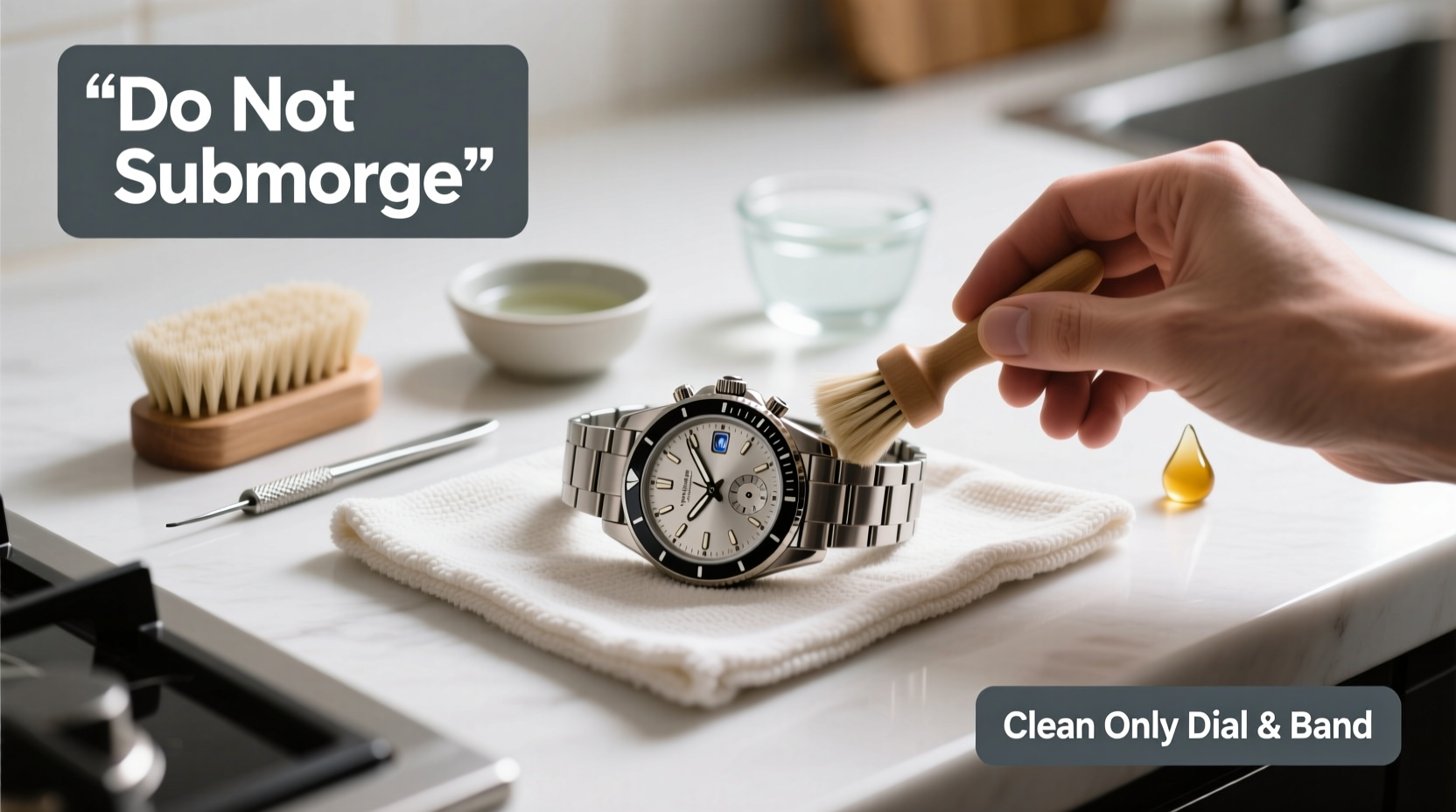
Before cleaning, it's essential to understand what makes a mechanical watch sensitive. Unlike quartz models with simpler circuitry, mechanical watches contain hundreds of tiny moving components—gears, springs, levers—all working in precise harmony. Exposure to moisture, chemicals, or physical shock can disrupt this balance.
Most importantly, never assume your watch is waterproof just because it has a water resistance rating. That rating often refers to factory conditions and diminishes over time due to gasket wear. Even watches rated for 50 meters (5 ATM) aren't designed for submersion unless regularly serviced.
“Cleaning a mechanical watch isn’t about deep servicing—it’s about surface care. The goal is to remove contaminants without compromising internal mechanisms.” — Daniel Reeves, Master Watchmaker & Horology Instructor
Cleaning should focus on external surfaces: case, crystal, crown, and bracelet or strap. Internal maintenance requires trained professionals. But by keeping the exterior clean, you reduce the risk of debris entering through small gaps during normal use.
Step-by-Step Guide: Cleaning Without Tools
You don’t need brushes, compressed air, or ultrasonic cleaners. Here’s how to achieve a thorough clean using only soft cloths, mild solutions, and careful handling.
- Prepare Your Workspace
Choose a flat, well-lit surface away from sinks, windowsills, or drafts. Lay down a soft microfiber towel to prevent scratches if the watch slips. Keep it face-up and avoid placing near magnets, speakers, or electronic devices that could affect the movement. - Remove Dust and Loose Debris
Gently blow across the surface of the watch to dislodge lint or dust. Do not use your mouth directly; instead, hold the watch slightly below your lips and exhale softly. Alternatively, use a soft makeup brush or clean toothbrush (unused) with light strokes along the case and between links. - Clean the Crystal
The crystal (glass) collects fingerprints and smudges most frequently. Dampen a corner of a lint-free cloth—like an eyeglass cleaning cloth—with distilled water. Wipe gently in circular motions, starting from the center outward. Avoid saturating the edges where the crystal meets the case. Dry immediately with a dry section of the cloth. - Wipe the Case and Bezel
Fold another clean microfiber cloth into a small pad. Moisten it lightly with distilled water. Gently wipe the case sides, lugs, and bezel. For metal cases, follow up with a dry pass to prevent water spots. If there’s stubborn residue near the crown, do not scrub aggressively—just dampen and wait 10 seconds before wiping again. - Clean the Bracelet or Strap
For metal bracelets: Slide the damp cloth between each link, moving back and forth gently. Pay attention to areas near the clasp and where skin contacts the metal. Afterward, dry thoroughly.
For leather straps: Never soak or wet the strap. Instead, use a barely dampened cloth to spot-clean soiled areas, then wipe immediately with a dry cloth. Let air-dry naturally for 30 minutes away from heat sources. - Final Polish and Inspection
Use a completely dry microfiber cloth to buff the entire watch. This restores shine and removes any remaining streaks. Inspect under natural light to ensure no moisture remains around seams or the crown.
Do’s and Don’ts: A Quick Reference Table
| Do’s | Don’ts |
|---|---|
| Use distilled water to minimize mineral deposits | Never submerge your watch unless it's recently pressure-tested |
| Clean every 2–4 weeks for regular wearers | Avoid alcohol, ammonia, or window cleaners—they degrade seals and finishes |
| Dry all surfaces completely before storing | Don’t press or rotate the crown while the watch is wet |
| Store in a cool, dry place after cleaning | Never use paper towels or rough fabrics—they scratch easily |
| Inspect gaskets periodically for cracks or stiffness | Don’t attempt to open the case back yourself |
A Real-Life Example: Mark’s Everyday Maintenance Routine
Mark, a financial analyst in Chicago, wears his vintage Omega Seamaster daily. He lives in a high-rise with central heating, which dries the air and accelerates dust accumulation. Initially, he avoided cleaning it, worried about damaging the 1960s movement.
After learning basic non-tool techniques, he began a bi-weekly ritual: On Sunday evenings, he spends ten minutes wiping the case and bracelet with a microfiber cloth slightly dampened with distilled water. He keeps a second cloth nearby to dry everything immediately. Over six months, he noticed less tarnish on the stainless steel, clearer crystal visibility, and smoother clasp operation—likely because salt and oil buildup were no longer corroding joints.
When he took it to a specialist for routine servicing, the technician remarked, “This looks like it’s been maintained by someone who understands preservation.” Mark hadn’t done anything complex—just consistent, thoughtful cleaning.
Essential Checklist: What You’ll Need
- Two clean microfiber cloths (one for damp use, one for drying)
- Distilled water (not tap water—to avoid lime spots)
- Soft-bristled toothbrush (optional, unused)
- Well-lit, stable workspace
- Patience and gentle hands
This minimalist kit costs nothing extra if you already own glasses or camera lenses. No solvents, no tools, no risk of stripping screws or misaligning components.
How Often Should You Clean?
Frequency depends on usage and environment:
- Daily wear: Clean every 2–3 weeks
- Occasional wear: Clean before and after each wearing session
- Humid or salty environments: Wipe weekly, even if worn briefly
- Leather straps: Spot-clean monthly; full conditioning every 6 months (with proper leather balm)
Regular cleaning prevents long-term staining and corrosion. Sweat contains urea and salts that eat away at metal over time, especially around lugs and clasps. Removing these residues early preserves both aesthetics and structural integrity.
FAQ: Common Questions About Home Cleaning
Can I use soap to clean my watch?
Only if absolutely necessary—and only a single drop of mild, fragrance-free dish soap diluted in a bowl of distilled water. Dip the cloth edge only, never immerse the watch. Rinse the cloth with clean distilled water afterward and wipe again to remove any soap residue. Soap films can attract dirt and degrade gaskets over time, so use sparingly and infrequently.
Is it safe to clean a watch with a display back?
Yes, but extra caution is needed. While the sapphire or mineral glass protects the movement, moisture seeping through the case side can still reach internal parts. Focus cleaning on the front and outer edges. Avoid directing any dampness toward the case back. If condensation appears inside the display window, stop immediately and consult a professional—the seal may be compromised.
What if my watch fogs up after cleaning?
Fogging indicates moisture intrusion. Turn the watch face-down on a soft cloth in a warm (not hot), dry room for 24 hours. Do not use hairdryers or direct sunlight—they can warp components. If fog persists, take it to a watchmaker promptly. Prolonged moisture leads to rust, lubricant breakdown, and timing inaccuracies.
When to Seek Professional Help
Home cleaning is limited to surface maintenance. There are clear signs it’s time for expert intervention:
- Visible condensation under the crystal
- Persistent ticking irregularities after cleaning
- Stiff or loose crown operation
- Unusual noises like grinding or skipping
- Strong odor from leather straps despite cleaning
Professionals have pressure testers, demagnetizers, and ultrasonic baths calibrated for delicate instruments. They can also replace worn gaskets, which lose elasticity after 2–3 years, even without visible damage.
“A clean exterior buys time between services. But remember: no amount of polishing replaces proper lubrication and calibration.” — Elena Torres, Certified Watch Conservator at Swiss Time Institute
Conclusion: Care Is Confidence
Cleaning your mechanical watch at home doesn’t require tools, training, or risk. It requires mindfulness—knowing what to touch, what to avoid, and how to do it gently. By integrating simple routines into your schedule, you protect not just the mechanism, but the legacy of craftsmanship within.
Your watch measures more than time; it reflects your attention to detail, respect for quality, and appreciation for enduring design. A few minutes every few weeks ensures it continues running smoothly, looking sharp, and functioning reliably for decades.




 浙公网安备
33010002000092号
浙公网安备
33010002000092号 浙B2-20120091-4
Comments
No comments yet. Why don't you start the discussion?