
For many women, the intrauterine device (IUD) is a reliable, long-term contraceptive that fits seamlessly into their lifestyle. When the time comes to start or expand a family, removing the IUD is often the first step toward conception. While fertility typically returns quickly after removal, there are important considerations to ensure a safe and healthy pregnancy. Understanding your body’s response, timing ovulation, and preparing physically and emotionally can make a significant difference in your journey to conception.
Understanding Fertility After IUD Removal
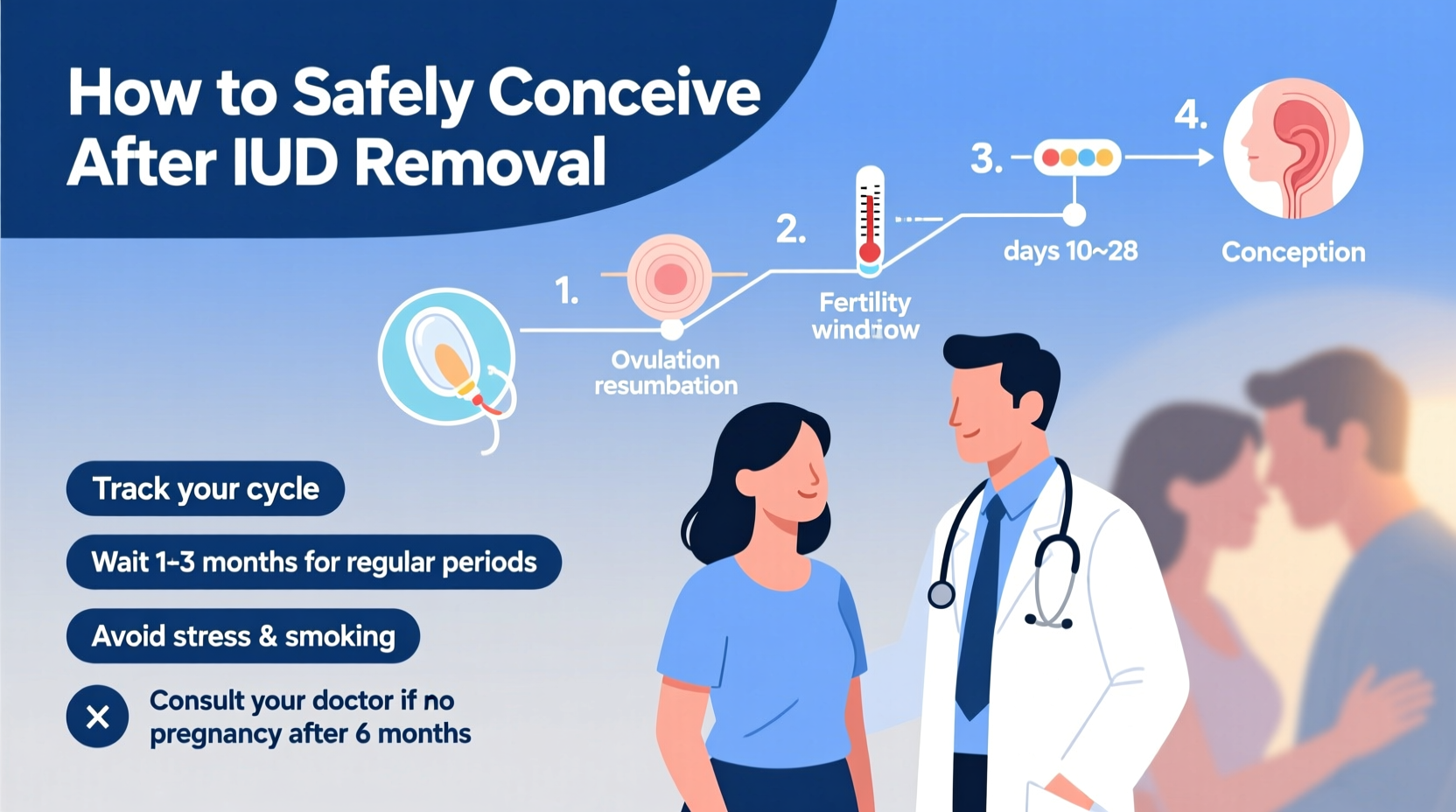
IUDs are highly effective at preventing pregnancy, but they do not cause permanent changes to fertility. Once removed, most women return to their natural fertility cycle within weeks. Both hormonal (like Mirena or Kyleena) and copper (non-hormonal) IUDs allow for rapid return of fertility, though individual experiences vary.
The American College of Obstetricians and Gynecologists (ACOG) states that women can become pregnant as soon as ovulation resumes post-removal—sometimes even in the first cycle. However, it's important to recognize that while fertility may return quickly, conception isn’t always immediate. Factors such as age, overall health, and reproductive history play crucial roles.
Step-by-Step Guide to Conceiving Safely After IUD Removal
- Schedule IUD Removal with Your Provider: Have the IUD removed during or just after your period when the cervix is slightly more open, reducing discomfort and ensuring correct placement confirmation.
- Allow One Full Cycle (Optional but Recommended): Some healthcare providers suggest waiting one full menstrual cycle before trying to conceive. This helps establish a clear baseline for dating the pregnancy.
- Begin Tracking Ovulation: Use ovulation predictor kits (OPKs), basal body temperature (BBT) charting, or cervical mucus monitoring to identify your fertile window.
- Optimize Lifestyle Factors: Focus on nutrition, stress reduction, and avoiding alcohol, tobacco, and excessive caffeine.
- Start Prenatal Vitamins: Begin taking a folic acid supplement (at least 400 mcg daily) to reduce the risk of neural tube defects.
- Have Regular Intercourse During Fertile Window: Aim for every other day during the five days leading up to and including ovulation.
Timeline Expectations After IUD Removal
| Time Period | What to Expect | Action Steps |
|---|---|---|
| Day of Removal | Mild cramping or spotting possible | Rest if needed; avoid intercourse for 24–48 hours |
| First 1–2 Weeks | Hormonal adjustments begin; no ovulation yet | Start tracking cervical mucus and BBT |
| Weeks 3–6 | Ovulation likely resumes | Use OPKs; engage in regular intercourse |
| By 3 Months | About 75% of women conceive if no underlying issues | Continue tracking; consult doctor if no success |
Preparing Your Body for Pregnancy
After years of using an IUD, your body may need time to recalibrate its natural rhythm. Even though the device doesn’t harm fertility, re-establishing hormonal balance and uterine health supports a smoother transition to conception.
- Nutrition: Emphasize whole grains, leafy greens, lean proteins, and healthy fats. Foods rich in folate, iron, and omega-3 fatty acids support egg quality and hormone regulation.
- Hydration: Drink at least 8–10 glasses of water daily to maintain cervical fluid quality.
- Exercise: Moderate physical activity improves circulation to reproductive organs. Avoid over-exercising, which can disrupt ovulation.
- Stress Management: Chronic stress affects cortisol levels and can delay ovulation. Consider mindfulness, yoga, or therapy.
“The majority of patients resume normal ovulatory cycles within one to two months after IUD removal. The key is patience and consistency in tracking.” — Dr. Lena Patel, Reproductive Endocrinologist
Common Concerns and Misconceptions
Many women worry that long-term IUD use might damage the uterus or delay fertility. Current research shows no evidence that IUDs impair future fertility when used correctly. In fact, studies published in Obstetrics & Gynecology show comparable conception rates between former IUD users and those who used non-hormonal methods.
One common myth is that the copper IUD causes infertility due to inflammation. While it creates a spermicidal environment, this effect ceases immediately upon removal. Similarly, hormonal IUDs suppress local endometrial activity but do not affect ovarian function long-term.
Mini Case Study: Sarah’s Journey to Conception
Sarah, 32, used a hormonal IUD for five years. After deciding to start a family, she scheduled removal during her period. Her doctor advised waiting one cycle before trying to conceive to better estimate due dates. She began tracking her basal body temperature and using ovulation kits. By her second cycle post-removal, she detected a surge in luteinizing hormone and timed intercourse accordingly. Eight days later, implantation symptoms appeared, and a positive pregnancy test followed two weeks after that. Sarah credits her success to early preparation, consistent tracking, and prenatal vitamins started before conception.
Frequently Asked Questions
Can I get pregnant immediately after IUD removal?
Yes, it’s possible to conceive as early as the first ovulatory cycle after removal. Some women ovulate within two to three weeks, especially if switching from a non-hormonal IUD.
Does the type of IUD affect how fast I can get pregnant?
Not significantly. Women using hormonal IUDs may take slightly longer to resume regular cycles compared to copper IUD users, but most regain fertility within one to three months regardless of type.
What if I don’t get pregnant right away?
It’s normal for conception to take several months. Up to 30% of healthy couples conceive within the first cycle, but 85% do so within one year. If you’re under 35 and haven’t conceived after a year (or six months if over 35), consider a fertility evaluation.
Essential Pre-Conception Checklist
- ✔ Schedule IUD removal with your OB-GYN
- ✔ Confirm successful removal via follow-up exam if recommended
- ✔ Begin taking a prenatal vitamin with folic acid
- ✔ Start tracking menstrual cycles and ovulation signs
- ✔ Eliminate smoking, alcohol, and recreational drugs
- ✔ Achieve a healthy weight through balanced diet and exercise
- ✔ Discuss family medical history with your partner and doctor
- ✔ Get screened for STIs and any underlying conditions (e.g., thyroid disorders, PCOS)
Conclusion: Taking Confident Steps Toward Parenthood
Conceiving after IUD removal is a natural process for most women, supported by high return-to-fertility rates and minimal recovery time. By understanding your body’s signals, preparing proactively, and using evidence-based strategies, you can optimize your chances of a healthy pregnancy. Remember that every woman’s timeline is unique—patience and self-care are just as important as planning.




 浙公网安备
33010002000092号
浙公网安备
33010002000092号 浙B2-20120091-4
Comments
No comments yet. Why don't you start the discussion?