
In today’s hyper-connected world, smartphones are designed with safety in mind—none more so than through built-in emergency call functions. These features ensure help is always within reach, even when a device is locked or lacks service. However, some users find these features intrusive or prone to accidental activation, especially on devices kept in pockets or bags. The challenge lies in managing accessibility: you want to reduce false alarms but never compromise real emergency response. This guide walks through practical, safe methods to adjust emergency call settings across major platforms while preserving essential lifelines.
Understanding Emergency Call Functions
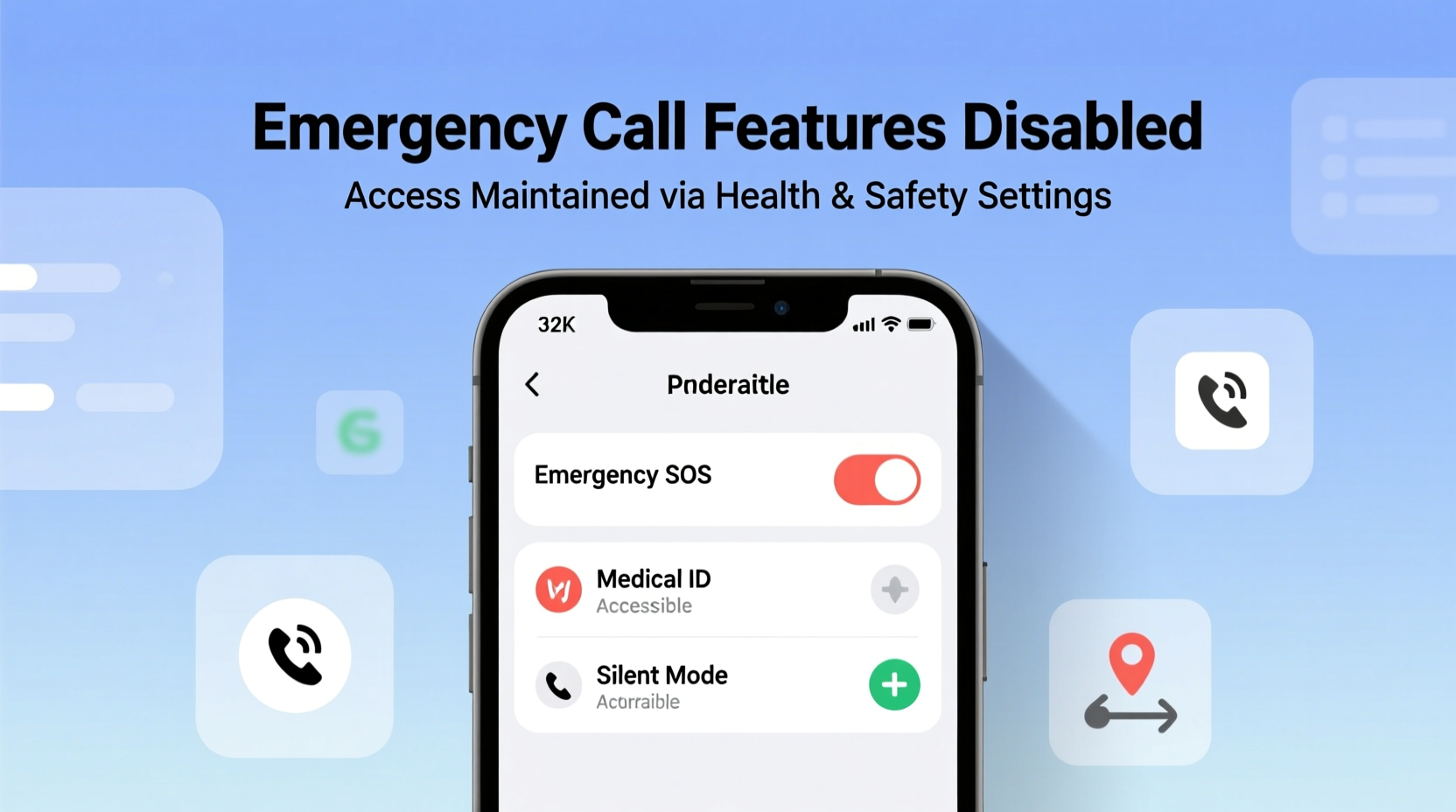
Emergency calling is a regulatory and safety requirement on all mobile phones sold in most countries. Even without a SIM card or carrier service, smartphones can dial emergency numbers such as 911 (U.S.), 112 (Europe), or 000 (Australia). On Android and iOS devices, this feature is accessible from the lock screen via an “Emergency” button. While invaluable in crises, it can be triggered accidentally—especially by children or due to pocket dials.
The key distinction to understand is that you cannot—and should not—fully eliminate emergency calling capability. Instead, the goal is to minimize unintended use while ensuring it remains functional when genuinely needed.
“Disabling emergency calling entirely is neither possible nor advisable. The focus should be on smart configuration, not removal.” — Dr. Lena Patel, Mobile Safety Researcher at the Institute for Digital Wellbeing
Step-by-Step Guide to Adjusting Emergency Access
Safely modifying emergency call access requires navigating system-level settings. Below is a platform-specific breakdown for the two dominant operating systems.
For Android Devices
- Navigate to Settings > Security & Location > Screen Lock.
- If using a PIN, pattern, or password, ensure it's set. Biometric locks (fingerprint or face) also apply restrictions.
- Go back to Settings > Advanced Features > Emergency Mode (path may vary by manufacturer).
- Disable options like “Emergency Call from Lock Screen” if available (common on Samsung, Xiaomi, and OnePlus).
- On some models, visit Phone app > More > Settings > Accessibility and toggle off quick emergency dialing.
For iPhones (iOS)
- Open Settings > Emergency SOS.
- Toggle off Call with Side Button to prevent rapid pressing of the power button from initiating a call.
- Disable Auto Call so that holding the side button and volume down only brings up the slider, requiring manual confirmation.
- To restrict lock screen access, go to Settings > Face ID & Passcode (or Touch ID), enter your passcode, and set Allow Access When Locked to minimal or none—this removes the emergency call button visibility.
Note: Completely hiding the emergency option isn’t supported by Apple for compliance reasons, but limiting its activation pathways reduces risk significantly.
Do’s and Don’ts: Managing Emergency Features Responsibly
| Action | Recommended? | Reason |
|---|---|---|
| Disable auto-dial via power button hold | ✅ Yes | Reduces accidental calls; user must still initiate manually |
| Remove emergency button from lock screen | ⚠️ Limited | Not fully removable, but access can be restricted via passcode settings |
| Use parental controls to limit access | ✅ Yes | Ideal for children’s devices; disables emergency dial unless authenticated |
| Root or jailbreak to remove emergency function | ❌ No | Illegal in many regions, voids warranty, and creates serious safety risks |
| Install third-party apps to block dialing | ❌ No | Unreliable and may interfere with legitimate emergency access |
Real Example: A Parent’s Solution to Accidental 911 Calls
Mark T., a father from Austin, Texas, faced recurring issues when his 4-year-old daughter unlocked his phone in her backpack and dialed 911 three times in one week. Each time, dispatchers had to respond, wasting public resources and causing stress. After consulting with local law enforcement, he adjusted his iPhone settings: disabling “Call with Side Button,” turning off lock screen widgets, and enabling Screen Time restrictions. He also placed the phone in a protective case with a flap cover to prevent touch input. Since then, no accidental calls have occurred, and he retains full emergency access when needed.
This case highlights that responsible configuration—not elimination—is the safest path forward.
Expert-Backed Tips for Safer Device Management
- Use physical barriers: Cases with screen covers or flip designs can prevent unintended touches.
- Leverage parental controls: Both Android and iOS offer Family Link and Screen Time tools to limit emergency access on shared devices.
- Train household members: Educate children and elderly relatives about the purpose of emergency buttons to prevent misuse.
- Monitor carrier policies: Some providers offer lock-screen customization through device management portals.
Frequently Asked Questions
Can I completely turn off emergency calling on my phone?
No. Emergency calling is mandated by law in most countries and embedded at the firmware level. It cannot be fully disabled, even by rooting or jailbreaking. Attempts to do so may violate telecommunications regulations and endanger personal safety.
Why does my phone let me dial 911 without unlocking?
This is a universal safety standard. Regulators require that emergency services remain accessible even if the user is unconscious, injured, or the device is locked. It ensures help is available in life-threatening situations regardless of authentication status.
Are accidental emergency calls a serious issue?
Yes. According to the U.S. Federal Communications Commission, over 12 million 911 calls are made annually, and up to 80% are non-emergencies or misdials. These waste first responder time and delay aid to people in genuine distress. Preventing them through smart settings is both responsible and encouraged.
Checklist: Safely Minimize Emergency Call Risks
- ✅ Disable auto-call features (e.g., iOS Emergency SOS auto-dial)
- ✅ Restrict lock screen access to emergency functions via passcode settings
- ✅ Enable parental or device management controls for shared phones
- ✅ Use protective cases to prevent pocket or bag dials
- ✅ Educate family members about proper phone handling
- ✅ Avoid third-party apps claiming to disable emergency calling
- ✅ Test changes to ensure real emergencies can still be reported quickly
Conclusion: Balance Safety and Practicality
Smartphones are powerful tools for staying connected and protected. Emergency call features exist for good reason—they save lives every day. But their sensitivity can lead to frustration and unintended consequences. By making informed adjustments to your device settings, you strike a balance: reducing false alarms without sacrificing security. Whether you're a parent, frequent traveler, or just tired of pocket dials, the steps outlined here empower you to take control—responsibly and safely.




 浙公网安备
33010002000092号
浙公网安备
33010002000092号 浙B2-20120091-4
Comments
No comments yet. Why don't you start the discussion?