
Draping Christmas lights along a staircase instantly elevates holiday decor, transforming an ordinary space into a warm, festive focal point. But when done incorrectly, it can introduce serious safety risks—electrical faults, tripping hazards, and fire dangers. Each year, the U.S. Fire Administration reports that holiday lighting contributes to hundreds of fires during the winter months. The good news: with proper planning, materials, and technique, you can achieve a stunning display while keeping your home and family safe.
This guide walks through every step of safely installing Christmas lights on stair railings and banisters, emphasizing best practices from fire safety experts, electricians, and professional decorators. Whether you're using LED string lights for the first time or upgrading an older setup, these strategies will help prevent accidents and ensure your decorations last the entire season.
Assess Your Space and Lighting Needs
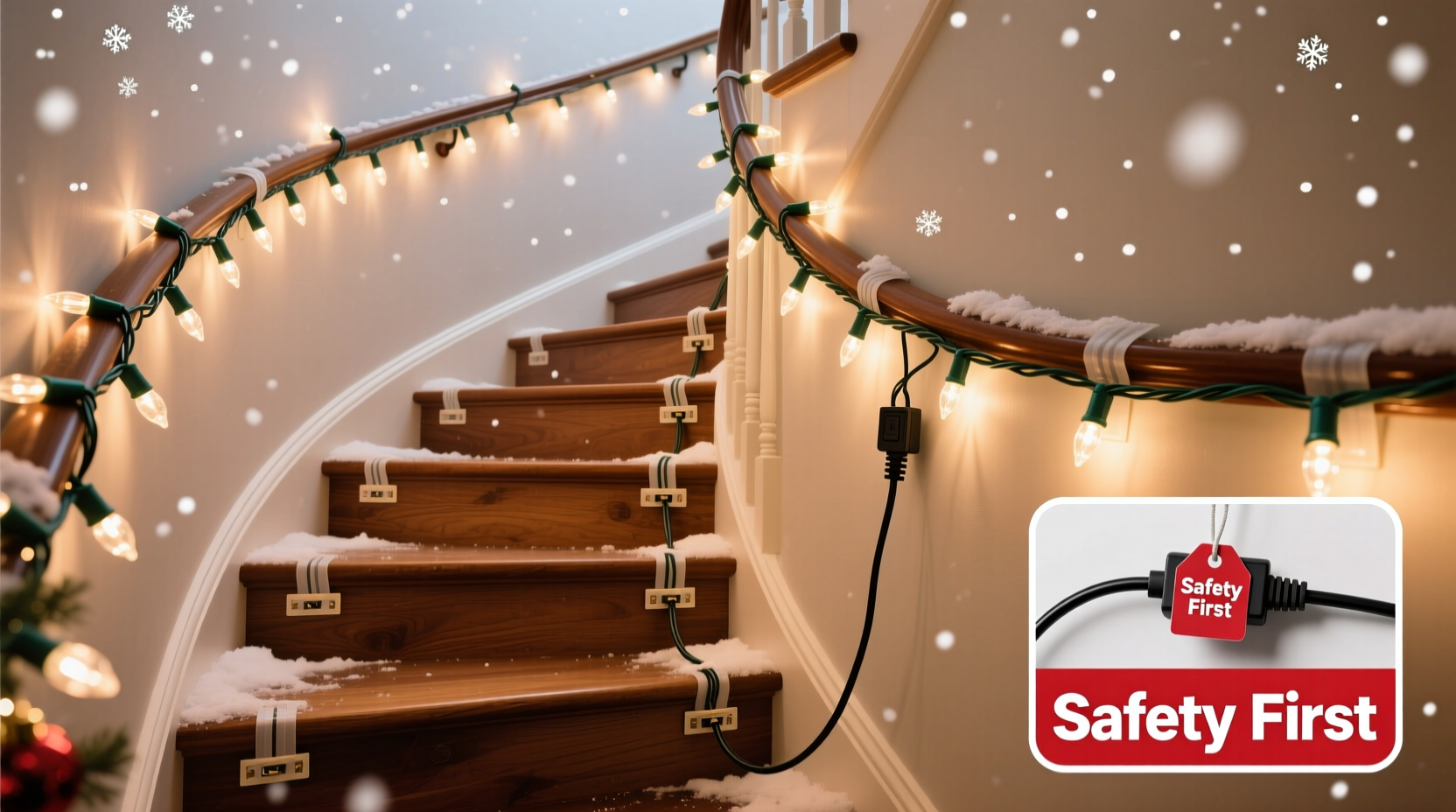
Before purchasing any lights, evaluate the layout of your staircase. Measure the total length of the railing or banister where lights will be draped. Most indoor staircases range from 10 to 20 feet in linear run, but multi-level homes may require significantly more coverage. Use a measuring tape and note both horizontal distance and vertical drops between steps.
Consider the type of staircase you have:
- Straight-run stairs: Easier to decorate due to consistent railing alignment.
- L-shaped or U-shaped stairs: Require careful routing around landings and corners.
- Curved or spiral staircases: Present unique challenges; flexible mini-lights or battery-operated sets may work better than rigid strings.
Also inspect the condition of the railing. Wooden, metal, or wrought iron railings offer stable anchor points. Glass or acrylic railings may not support clips or adhesives well and require non-damaging mounting solutions.
Choose the Right Lights and Accessories
Not all Christmas lights are created equal—especially when used near high-traffic areas like staircases. Prioritize safety, durability, and ease of installation.
Opt for LED Lights
LED (light-emitting diode) bulbs generate significantly less heat than traditional incandescent bulbs. This reduces the risk of overheating nearby materials such as wood, fabric, or carpet. LEDs also consume up to 80% less energy and last longer—often rated for 25,000 to 50,000 hours of use.
Additionally, many LED string lights are designed with shatter-resistant bulbs and low-voltage operation, making them safer for homes with children and pets.
Select Appropriate Power Sources
Plug-in lights are reliable but require accessible outlets. If your staircase lacks nearby power sources, consider:
- Using an extension cord rated for indoor use (avoid daisy-chaining multiple cords).
- Installing a temporary outlet strip at the base or top of the stairs (consult an electrician if permanent).
- Switching to battery-powered lights for sections far from outlets—ideal for accent zones.
Use Secure Mounting Solutions
Never staple, nail, or tape lights directly to railings or walls. These methods damage surfaces and create pinch points that degrade wires over time. Instead, use specialized clips designed for Christmas lights:
- Railing clips: Plastic or rubber mounts that snap onto railings and hold light strings in place.
- Adhesive hooks: Removable, weight-rated hooks that won’t leave residue.
- Cable ties (zip ties): Only use loosely and avoid overtightening, which can cut into insulation.
“Improperly secured holiday lights are one of the most common causes of household electrical incidents during December.” — National Fire Protection Association (NFPA)
Step-by-Step Installation Guide
Follow this methodical process to install your lights safely and efficiently.
- Unpack and test lights before installation. Plug each strand into a power source to check for dark bulbs, flickering, or broken sockets. Replace faulty strands immediately.
- Plan the starting point. Begin at the top or bottom of the stairs—whichever is closer to an outlet. Route the main power cord along baseboards or under rugs (using cord covers) to minimize tripping risk.
- Attach mounting clips every 6–8 inches. Position clips evenly along the railing so the lights hang uniformly. For curved railings, use flexible adhesive clips that conform to shape.
- Begin draping the lights. Weave the string through each clip, allowing a slight sag between supports to create a soft, cascading effect. Avoid pulling taut, which increases stress on connectors.
- Handle connections carefully. If connecting multiple strands, ensure the total wattage does not exceed the circuit’s capacity. Most residential circuits handle 1,500 watts (15 amps at 120 volts). Check manufacturer guidelines for maximum connectable lengths.
- Secure excess cord and connections. Coil spare wire neatly and fasten with Velcro straps. Keep junction boxes off steps and away from foot traffic.
- Install a timer or smart plug. Set lights to turn on at dusk and off by midnight. This prevents extended operation, reduces energy use, and minimizes fire risk.
- Conduct a final safety walk-through. Walk up and down the stairs slowly. Ensure no wires cross steps, no bulbs touch flammable materials, and all connections are secure.
Do’s and Don’ts of Staircase Light Safety
| Do | Don’t |
|---|---|
| Use UL-listed lights certified for indoor use | Use outdoor lights indoors unless they’re dual-rated |
| Secure wires with non-damaging clips or hooks | Staple, nail, or tape wires to surfaces |
| Keep connections elevated and dry | Place plugs or junctions on carpeted steps |
| Inspect cords for fraying or cracking | Use lights with damaged insulation or exposed wires |
| Turn off lights when leaving home or sleeping | Leave lights unattended for long periods |
Avoid Common Hazards
The staircase is a high-risk area due to constant foot traffic and limited visibility at night. Even minor oversights can lead to falls or electrical issues.
Tripping Hazards
Extension cords running across steps are dangerous. If unavoidable, use flat, low-profile cords and cover them with transparent cord protectors rated for foot traffic. Never place cords under loose rugs—this traps heat and increases fire risk.
Overloaded Circuits
Plugging too many light strands into one outlet can overload the circuit, causing breakers to trip or, worse, wiring to overheat. Spread the load across multiple outlets on different circuits if possible. Use a power strip with built-in surge protection and overload cutoff.
Pet and Child Interactions
Children and pets may tug on dangling wires or chew on cords. Mount lights out of reach, especially near lower railings. Consider using bitter-taste cord coatings or switching to battery-powered options in accessible areas.
Heat Buildup
Incandescent lights can reach temperatures over 150°F. If placed near curtains, paper garlands, or dry evergreen boughs, they pose a real fire threat. Maintain at least a 3-inch clearance between bulbs and combustible materials.
“We once responded to a call where a child pulled on a loose light strand, dislodging a connector that sparked against a wooden newel post. It could’ve been much worse.” — Captain Lisa Tran, City Fire Department
Real-World Example: A Holiday Near-Miss
In suburban Chicago, the Miller family decorated their two-story staircase with vintage incandescent lights passed down from grandparents. Excited to preserve tradition, they draped the strings tightly along the handrail and secured them with metal staples. On the third night, the mother noticed a burning smell near the base of the stairs.
She unplugged the lights and discovered one of the staple punctures had worn through the wire insulation, exposing copper. The constant flexing from foot vibrations had worsened the damage. The local fire inspector confirmed that continued use could have led to short-circuiting or fire.
The family switched to UL-certified LED lights with plastic clips and added a smart timer. They now inspect all holiday wiring annually and store lights in labeled, padded containers. Their display is brighter, safer, and easier to install—proving that modern methods don’t sacrifice charm.
Frequently Asked Questions
Can I leave Christmas lights on my staircase plugged in overnight?
It’s not recommended. While modern LED lights are safer, no electrical device should be left unattended for extended periods. Use a timer to limit operation to 6–8 hours per night, turning off when everyone is asleep.
How many strings of lights can I connect together?
This depends on the manufacturer. Most LED string lights allow 40–50 sets to be connected end-to-end, but always check the label. Exceeding the maximum load can overheat wires and void safety certifications.
Are battery-powered lights safe for staircases?
Yes, especially in hard-to-reach areas or where cords would cross steps. Just ensure batteries are replaced regularly and enclosures are sealed to prevent leakage. Lithium batteries offer longer life and better cold resistance than alkaline.
Essential Safety Checklist
- ☐ Measured railing length and added 20% extra
- ☐ Selected UL-listed LED lights for indoor use
- ☐ Tested all strands before installation
- ☐ Used non-damaging clips or hooks for mounting
- ☐ Avoided crossing cords over steps
- ☐ Secured all connections off walking surfaces
- ☐ Installed a timer or smart plug
- ☐ Conducted a nighttime walkthrough to check glare and shadows
- ☐ Reviewed circuit capacity and avoided overloading
- ☐ Scheduled weekly inspections during display period
Conclusion: Celebrate Safely, Decorate Confidently
A beautifully lit staircase enhances the warmth and joy of the holiday season, but only if installed with care. By choosing the right materials, following a structured installation process, and respecting electrical safety principles, you can create a dazzling display without compromising peace of mind.
Your family’s safety is more important than any decoration. Take the time to do it right—inspect every cord, secure every connection, and never assume “it’s just for a few weeks” justifies cutting corners. With these proven methods, your staircase can shine brightly throughout the season, free from risk.




 浙公网安备
33010002000092号
浙公网安备
33010002000092号 浙B2-20120091-4
Comments
No comments yet. Why don't you start the discussion?