
Artificial Christmas trees offer convenience, reusability, and consistent appearance year after year. However, one persistent challenge remains: how to decorate them with heavier ornaments—like glass baubles, vintage pieces, or handcrafted decor—without risking snapped or sagging branches. Unlike real trees with flexible, living limbs, artificial branches are made from rigid materials like PVC or metal wire frames, making them more prone to breakage under uneven weight. The key isn’t avoiding heavy ornaments altogether, but rather understanding the structure of your tree, distributing weight wisely, and using the right hanging techniques. With proper planning and execution, you can create a lush, balanced display that looks professionally styled and lasts throughout the season.
Understand Your Tree’s Structure and Weight Limits
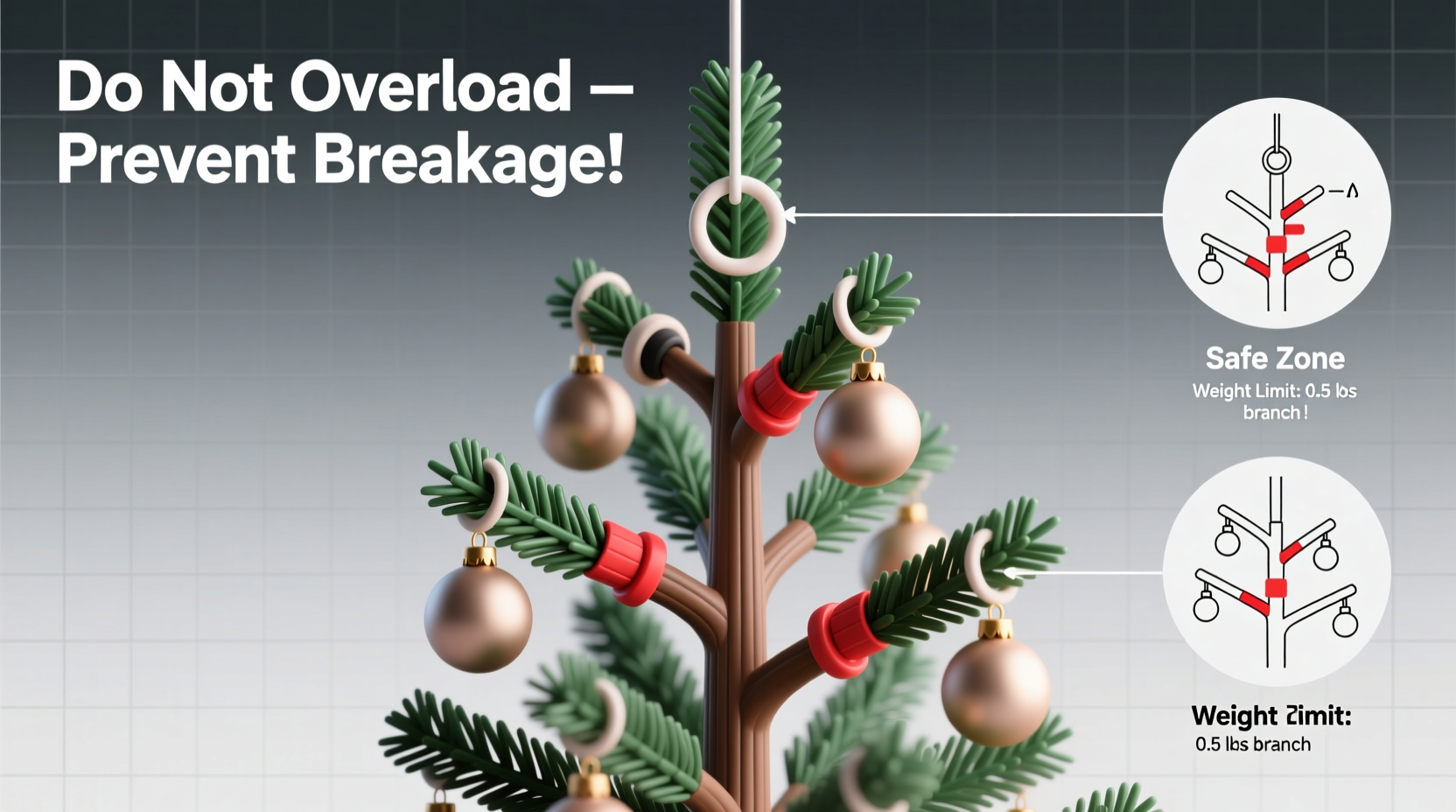
Before hanging a single ornament, it’s essential to assess your artificial tree’s build quality and branch durability. Not all trees are created equal. Higher-end models often feature hinged branch tips, sturdier metal cores, and better weight distribution, while budget-friendly versions may use thinner plastic stems with limited load capacity.
Most manufacturers provide guidelines on maximum ornament weight per branch or section, though this information is often overlooked. As a general rule:
- Premium trees (with metal branch cores) can support 3–5 ounces per tip.
- Mid-range trees (thicker PVC) handle up to 2–3 ounces.
- Economy models (thin plastic stems) should carry no more than 1 ounce per tip.
Exceeding these limits—even slightly—can lead to bent wires, cracked sockets, or entire sections drooping over time. To avoid damage, always start light and gradually add heavier items only where structural support allows.
Choose the Right Hanging Tools for Heavy Ornaments
Standard ornament hooks—especially the thin, curly metal kind—are designed for lightweight decorations. When used with heavier ornaments, they concentrate stress on a single point of the branch, increasing the risk of breakage. Instead, opt for specialized hanging solutions that distribute weight more evenly.
| Hanging Method | Best For | Weight Capacity | Risk Level |
|---|---|---|---|
| Traditional Metal Hook | Ornaments under 1 oz | Low | High (if misused) |
| Sturdy Plastic Ornament Clips | Medium-weight balls, 2–3 oz | Medium | Low |
| Fabric Loop Hangers (e.g., ribbon or grosgrain) | Heavy glass, ceramic, or custom pieces | High (when tied properly) | Very Low |
| Branch-Support Cradles (plastic or wire) | Extra-heavy items (5+ oz) | Very High | Negligible |
Fabric loop hangers, for example, allow you to wrap soft material around both the ornament neck and the branch, spreading pressure across multiple points. These are especially effective when tied in a secure knot around a thick central branch shaft rather than a fragile outer tip.
“Many people don’t realize that how you hang an ornament matters as much as its weight. Distributing force across a broader surface prevents micro-fractures in PVC stems.” — Dr. Alan Reeves, Materials Engineer specializing in consumer decor products
Step-by-Step Guide: Safely Installing Heavy Ornaments
Hanging heavier decorations requires more than just swapping out hooks. It involves strategic placement, secure fastening, and ongoing monitoring. Follow this five-step process to ensure long-term branch integrity.
- Assess Ornament Weight: Use a kitchen scale to weigh each ornament. Label them accordingly (light, medium, heavy) to guide placement decisions.
- Select Supportive Branch Zones: Focus on inner branches near the trunk or thicker mid-tier limbs. Avoid outer tips, which are most vulnerable to bending.
- Reinforce the Attachment Point: For ornaments over 3 ounces, double-wrap a satin ribbon or thin fabric strip around the main branch before tying the ornament’s loop. This creates a cushioned anchor.
- Hang at an Angle: Position heavier ornaments so their weight leans slightly toward the trunk. This uses gravity to stabilize rather than strain the branch.
- Check Stability Daily for First Week: Inspect attachment points every 24 hours initially. Look for signs of sagging, cracking, or loosening knots.
This method not only protects the tree but also enhances visual balance. Heavier items placed closer to the center create a grounded aesthetic, preventing the tree from appearing top-heavy or lopsided.
Distribute Weight Strategically Across the Tree
Even the strongest artificial tree can fail if weight is poorly distributed. Concentrating heavy ornaments in one quadrant—such as clustering several large glass globes on the lower front—creates torque that pulls branches downward and stresses internal supports.
Instead, adopt a radial distribution strategy:
- Place no more than one heavy ornament (over 3 oz) per primary branch arm.
- Alternate heavy and light items around the circumference of each tier.
- Use symmetry: if you place a 4-ounce starburst ornament on the left side, mirror it with a similar-weight piece on the right.
- Limit heavy ornaments to the middle third of the tree, where branches receive the most structural support.
Think of your tree like a suspension bridge: load must be balanced and dispersed to maintain integrity. A well-distributed layout not only prevents damage but also enhances visual harmony, allowing each piece to stand out without overwhelming the design.
Mini Case Study: Restoring a Damaged Pre-Lit Tree
Sarah M., a holiday decorator from Portland, Oregon, purchased a 7.5-foot pre-lit artificial tree in 2019. By 2022, she noticed several lower branches had permanently drooped, and two broke entirely when she tried to adjust a vintage mercury glass ball weighing nearly 6 ounces.
After consulting a seasonal decor specialist, she learned her mistake: she’d been using standard metal hooks and clustering her heaviest heirloom ornaments on the most visible front side of the tree. The constant downward pull, combined with concentrated weight, had fatigued the PVC stems beyond recovery.
Her solution?
- She replaced broken tips with repair sleeves (available online).
- She began labeling all ornaments by weight.
- She switched to fabric-loop hangers and started anchoring heavy pieces to central trunks using padded clips.
- She adopted a “rotate and balance” policy, ensuring no single area bore excessive load.
The result? Her tree now supports a mix of delicate snowflakes and 5-ounce artisan ornaments without issue. More importantly, she extended its usable life by at least three additional seasons.
Common Mistakes That Lead to Branch Breakage
Avoiding damage isn’t just about doing the right things—it’s also about stopping harmful habits. These common errors compromise even high-quality trees:
- Overloading branch tips: Outer tips are the weakest part of any artificial branch. Never hang anything over 1–2 ounces here.
- Using sharp or rigid hooks: Thin metal hooks can cut into PVC, creating weak spots that crack over time.
- Ignoring manufacturer instructions: Many warranties are voided by improper ornament use. Always check care guides.
- Hanging too early and leaving too long: Extended exposure to heat sources (like lamps or vents) makes PVC brittle. Decorate no more than 4 weeks before Christmas and take down promptly after New Year’s.
- Forgetting about cumulative weight: Even if individual ornaments are light, dozens of them on one branch can exceed safe limits.
“People treat artificial trees like indestructible props. But they’re engineered systems with load tolerances. Respect those limits, and your tree will last a decade or more.” — Lena Torres, Senior Designer at Evergreen Holiday Co.
Essential Checklist for Safe Heavy Ornament Display
Follow this checklist every season before and during decoration to protect your tree and ornaments:
- ✅ Weigh all ornaments and categorize by weight
- ✅ Inspect tree branches for cracks, bends, or loose sockets
- ✅ Replace flimsy metal hooks with fabric loops or sturdy clips
- ✅ Identify strong support zones (inner/mid-tier branches)
- ✅ Distribute heavy items evenly around the tree
- ✅ Hang heaviest ornaments first to establish balance
- ✅ Check stability daily during the first week
- ✅ Remove ornaments carefully during takedown to avoid snagging
Frequently Asked Questions
Can I use zip ties to hang heavy ornaments?
No. While zip ties are strong, they are rigid and non-cushioned, creating pressure points that can split PVC branches. They also leave permanent marks and are difficult to remove without damage. Use soft fabric ties instead.
What if my tree already has bent branches?
Mildly bent branches can sometimes be reshaped by gently warming them with a hairdryer (on low heat) and repositioning. For severely damaged sections, consider using branch repair kits or replacing the limb entirely if modular parts are available.
Are pre-lit trees less able to handle heavy ornaments?
Not necessarily. Many pre-lit trees have reinforced cores to accommodate wiring, which can actually improve structural strength. However, avoid piercing wires with hooks. Always follow the manufacturer’s ornament weight recommendations.
Conclusion: Decorate Boldly, But Smartly
You don’t need to sacrifice beauty for safety when decorating your artificial tree. Heavy ornaments bring texture, tradition, and visual depth to your holiday display—but only if they’re hung with care. By understanding your tree’s limitations, using the right tools, and distributing weight thoughtfully, you can enjoy a stunning, durable arrangement year after year. The goal isn’t minimalism out of fear, but intentionality rooted in respect for your decor investment. Take the time to plan your ornament layout, invest in quality hangers, and inspect your tree regularly. These small efforts pay off in preserved branches, unbroken heirlooms, and a tree that stands tall through the season.




 浙公网安备
33010002000092号
浙公网安备
33010002000092号 浙B2-20120091-4
Comments
No comments yet. Why don't you start the discussion?