
Mailing fragile items doesn’t have to mean spending a fortune on specialty boxes or bubble wrap. Whether you’re shipping glassware, ceramics, electronics, or handmade crafts, damage during transit is a real concern—but so is cost. The good news? With the right materials and techniques, you can protect delicate contents using everyday household supplies and proven packing strategies. This guide reveals practical, low-cost methods that prioritize safety without sacrificing your budget.
Understand What Makes an Item Fragile
Fragility isn’t just about breakability—it’s also about sensitivity to impact, vibration, compression, and temperature changes. Items like vintage lamps, antique figurines, or even fresh-baked goods require careful handling because their structure or composition can degrade under stress.
Before choosing a packing method, assess the item’s vulnerability:
- Brittle materials (glass, ceramic, porcelain) crack easily from shock.
- Irregular shapes shift in transit, increasing collision risk.
- Weight distribution affects how forces act during drops or stacking.
A lightweight glass ornament may need less structural support than a heavy vase, but both demand cushioning and immobilization. Recognizing these differences helps you choose appropriate protection—without defaulting to overpriced commercial solutions.
Use What You Already Have: Household Alternatives to Bubble Wrap
You don’t need to buy specialized packaging to create effective cushioning. Many common household items perform just as well—if not better—than store-bought options.
Consider these affordable, readily available substitutes:
- Newspaper or scrap paper: Crumpled tightly, it forms excellent shock-absorbing layers. Wrap individual items first, then fill voids in the box.
- Paper towels or toilet paper rolls: Ideal for wrapping stemware or protecting narrow necks of bottles.
- Clothing or socks: Soft textiles add padding and prevent movement. Use old t-shirts or dish towels around medium-weight objects.
- Cardboard dividers: Cut strips from shipping boxes to separate multiple fragile pieces inside one container.
- Popcorn or packing peanuts (homemade): Air-popped popcorn (unsalted) works as biodegradable loose-fill. So does cut-up foam from old seat cushions—just ensure no sharp edges.
The key is layering. Single wraps aren’t enough. Instead, build multiple protective barriers: inner wrap, mid-layer cushioning, and outer structural support.
“Most damage occurs not from major impacts, but from repeated small vibrations that fatigue materials over time.” — Dr. Alan Reyes, Packaging Engineer, U.S. Postal Service Research Division
Step-by-Step Guide: Packing Fragile Items on a Budget
Follow this sequence to maximize protection while minimizing costs:
- Wrap the item individually: Use two to three layers of crumpled newspaper or tissue paper. For extra-sensitive surfaces, place a thin cloth between the paper and object to prevent scratching.
- Create a cushioned nest: Line the bottom of a sturdy box with 2–3 inches of soft material (clothing, foam scraps, or more crumpled paper).
- Center the wrapped item: Place it in the middle of the box, ensuring it doesn’t touch any side.
- Fill all gaps: Surround the item completely with cushioning. Press gently to eliminate air pockets where movement can occur.
- Seal with tape: Use reinforced packing tape (not duct tape) to close flaps securely on all seams. Reinforce corners if needed.
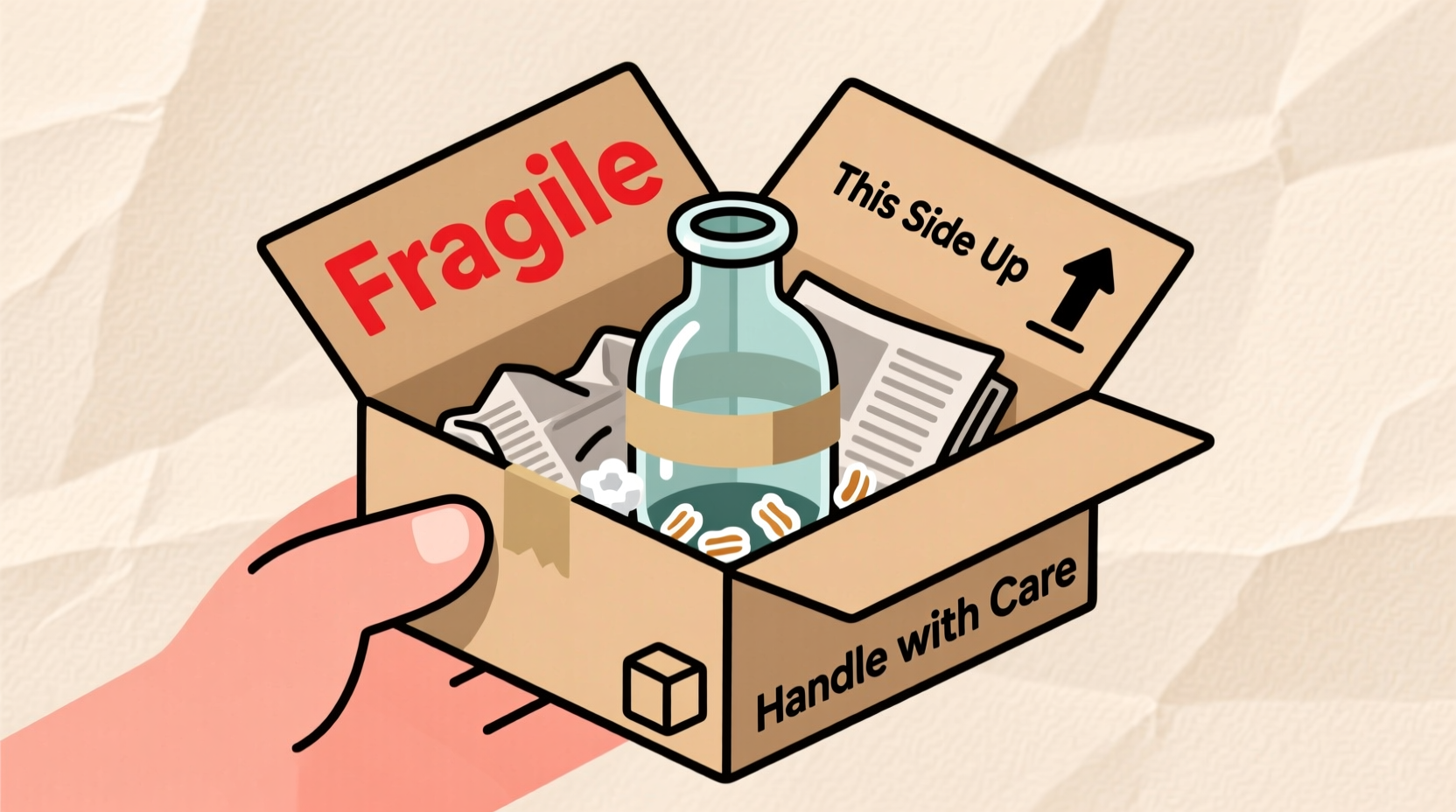
- Add external indicators: Mark “Fragile” and “This Side Up” clearly on at least two sides using bold markers.
- Double-box for high-risk shipments: Place the sealed inner box into a larger outer box with at least 2 inches of padding on all sides.
This seven-step process ensures comprehensive protection without requiring premium supplies. The double-box technique, in particular, dramatically reduces the chance of direct impact.
Choosing the Right Box: Strength Over Size
A weak box compromises even the best internal packing. Avoid flimsy grocery store boxes or ones with previous dents or moisture damage. Opt for corrugated cardboard boxes designed for shipping—they’re inexpensive and widely available at post offices, online retailers, or local stores returning inventory.
Size matters too. A box should allow 2–3 inches of cushioning space on every side of the item. Too large increases shifting risk; too small causes compression.
| Box Type | Best For | Avoid Using When |
|---|---|---|
| Single-wall corrugated | Lightweight items under 10 lbs | Heavy or irregularly shaped objects |
| Double-wall corrugated | Items up to 30 lbs, glassware, electronics | Very long-distance international shipping |
| Double-box system | High-value antiques, heirlooms | Items already in strong original packaging |
| Gift boxes with inserts | Decorative presentation only | Shipping without additional outer protection |
Never reuse a box that shows signs of wear. Compression weakens fiber integrity, reducing its ability to absorb shocks. If reusing is necessary, reinforce joints with extra tape and always use double-boxing.
Real-World Example: Shipping Handmade Ceramics Safely
Sophia runs a small pottery business from her garage studio in Asheville, North Carolina. She creates hand-thrown mugs and sells them online. Early on, she lost nearly 20% of shipped orders to breakage—mostly due to inadequate padding and undersized boxes.
Determined to fix the issue without raising prices, Sophia experimented with household materials. She began wrapping each mug in three layers of recycled kraft paper, then inserting them into repurposed wine shippers lined with shredded office paper. By adding cardboard spacers between mugs and sealing with reinforced tape, her damage rate dropped to less than 2%.
Her total packaging cost per shipment? Under $1.50—compared to $6+ for pre-made insulated mailers. Today, customers frequently comment on the thoughtful, eco-friendly presentation.
Sophia’s success came not from expensive gear, but from consistency, testing, and understanding motion dynamics during delivery.
Do’s and Don’ts of Low-Cost Fragile Shipping
To avoid common pitfalls, follow this simple checklist:
| Do | Don't |
|---|---|
| Use crumpled paper instead of bubble wrap | Use flat sheets of paper that offer no cushioning |
| Double-box valuable or delicate items | Ship fragile items in envelopes or padded mailers unless fully rigid |
| Label packages clearly with orientation arrows | Assume carriers will handle boxes gently regardless of markings |
| Reinforce all seams with quality packing tape | Seal boxes with masking tape or painter’s tape—they lack adhesion strength |
| Weigh your package accurately to avoid postage issues | Overstuff boxes beyond weight limits or crush cushioning layers |
One overlooked mistake is failing to account for climate. Moisture weakens cardboard, and extreme temperatures can affect adhesives. If shipping across regions with variable weather, consider placing a moisture-absorbing packet (like those found in shoeboxes) inside the sealed box—another free, reusable option.
Checklist: Pre-Shipment Verification
Before handing over your parcel, run through this final inspection:
- ✅ Item is wrapped in at least two layers of cushioning material
- ✅ Inner box has 2–3 inches of padding on all sides
- ✅ No movement when box is gently shaken
- ✅ Outer box is clean, dry, and structurally sound
- ✅ All flaps are sealed with reinforced packing tape
- ✅ “Fragile” and “This Side Up” labels are visible on multiple sides
- ✅ Correct postage applied based on weight and destination
- ✅ Tracking number recorded and shared with recipient
This routine takes less than five minutes but significantly reduces risk. Think of it as insurance you can control.
Frequently Asked Questions
Can I use plastic bags instead of bubble wrap?
Plastic bags provide minimal protection against impact. While they can help prevent dust or moisture exposure, they do not cushion shocks. If used, combine them with crumpled paper or fabric layers for actual shock absorption.
Is it safe to ship fragile items via standard mail?
Yes, as long as proper precautions are taken. First-Class Mail is suitable for lightweight, well-packed items under 13 ounces. For heavier or higher-value goods, opt for USPS Priority Mail or UPS Ground, which include tracking and faster handling.
How do I know if my packaging is strong enough?
Perform a simple drop test: seal the box and drop it from knee height (about 18 inches) onto a hard surface. If the box dents or the contents shift, improve cushioning or upgrade the container. Repeat until the box survives intact.
Final Thoughts: Protection Doesn’t Require Premium Prices
Safely mailing fragile items isn’t about buying the most expensive box—it’s about applying smart principles consistently. With attention to detail, layered cushioning, and structural integrity, you can achieve professional-grade results using materials already in your home. The goal isn’t perfection; it’s significant risk reduction at minimal cost.
Every shipped package represents trust—between seller and buyer, gift-giver and recipient, artist and collector. Honoring that trust starts with responsible packing. You don’t need a warehouse full of supplies to show care. Sometimes, the most powerful message is wrapped in nothing more than thoughtfulness and crumpled newsprint.




 浙公网安备
33010002000092号
浙公网安备
33010002000092号 浙B2-20120091-4
Comments
No comments yet. Why don't you start the discussion?