
In an age where smartphones are essential for communication, navigation, and productivity, protecting them without sacrificing personal style has become a priority. Handmade knit bags offer a unique blend of charm, customization, and eco-conscious appeal. More than just fashion accessories, they can serve as gentle, breathable enclosures that safeguard your device from minor impacts, scratches, and environmental exposure. However, not all knit bags are created equal—especially when it comes to functionality and long-term protection.
This guide explores how to use a handmade knit bag effectively and safely for your phone, offering practical strategies for construction, usage, maintenance, and adaptation to real-life conditions. Whether you're a crafter making your first phone pouch or a user looking to maximize the utility of a gifted knit case, these insights will help you balance aesthetics with everyday protection.
Choosing the Right Knit Fabric and Stitch Pattern
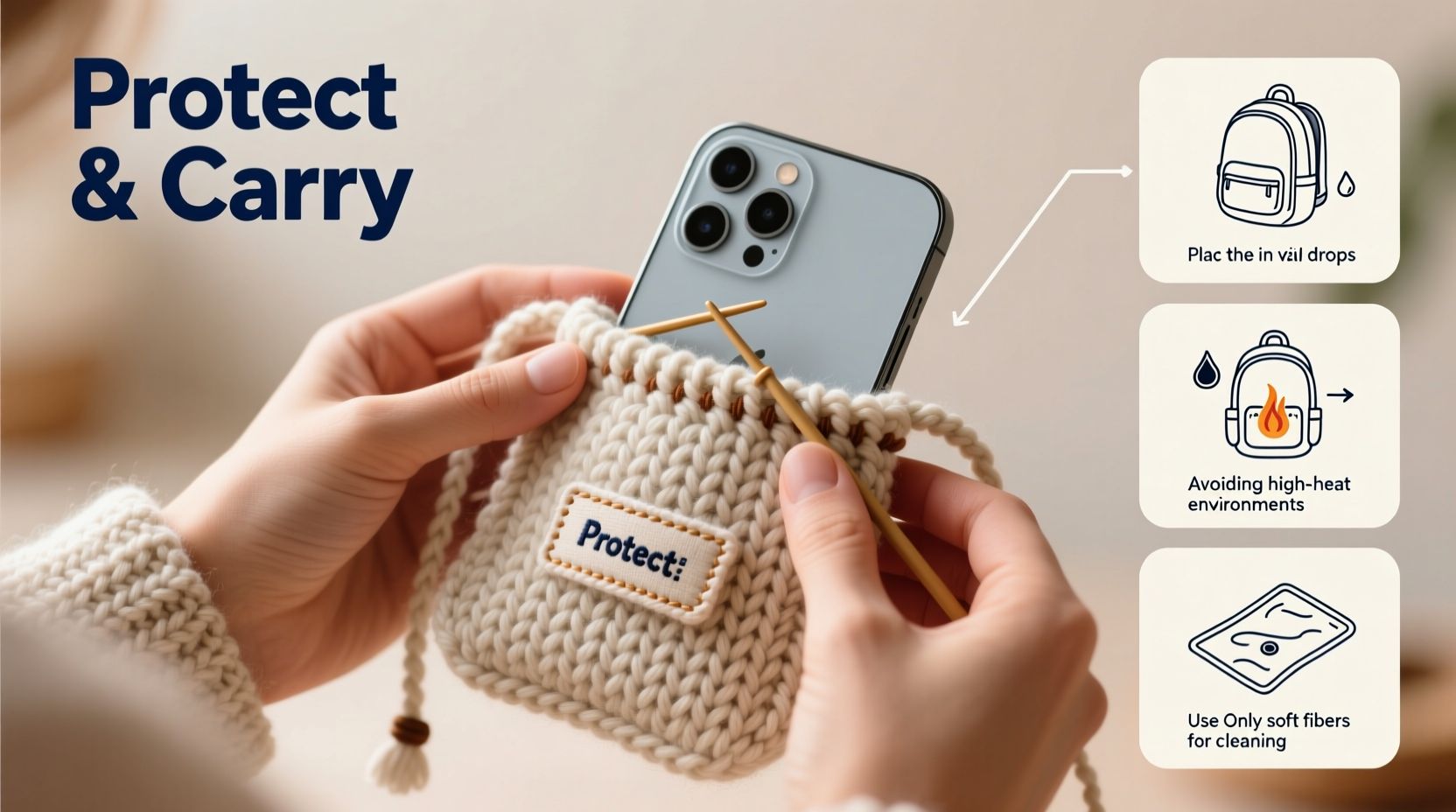
The foundation of any effective protective knit bag lies in its material and structure. Unlike rigid cases, knit fabric relies on density, elasticity, and fiber strength to absorb shock and prevent abrasion. When selecting or crafting a knit bag for phone protection, consider both the yarn type and stitch tightness.
| Fiber Type | Protection Level | Best For | Avoid If |
|---|---|---|---|
| Cotton (tightly spun) | Moderate | Daily carry, breathability | You need water resistance |
| Wool (felted or boiled) | High | Impact absorption, insulation | Allergic to lanolin |
| Acrylic (blended) | Low-Moderate | Budget-friendly, color variety | Seeking premium durability |
| Hemp or linen blends | Moderate-High | Eco-use, firm structure | You prefer soft drape |
Tighter stitches like seed stitch, double knitting, or ribbing provide better structural integrity than loose lace patterns. A well-knit bag should have minimal gaps—no larger than 2–3mm—to prevent the phone from slipping through or being exposed to dust and debris.
Design Features That Enhance Phone Safety
Aesthetic appeal is important, but functional design determines whether your knit bag truly protects your phone. Consider integrating these elements during creation or selection:
- Secure closure: Use buttons, snap fasteners, drawstrings, or magnetic clasps to prevent accidental drops.
- Lined interior: Add a soft cotton or felt lining to reduce friction and prevent screen scratches.
- Padded base: Incorporate extra rows or layers at the bottom to cushion falls from waist height.
- Proper sizing: The bag should fit snugly—loose fits increase movement and impact risk.
- Access openings: Limit space around charging ports and buttons to keep out lint and moisture.
For those crafting their own, measuring your phone precisely before beginning ensures a tailored fit. Include seam allowances and account for yarn stretch, especially with wool or acrylic blends.
“Handmade doesn’t mean fragile. A well-constructed knit case with lining and secure closure can rival commercial silicone sleeves in protection.” — Lena Ruiz, Sustainable Textile Designer
Step-by-Step: Creating a Protective Knit Phone Bag
If you’re making your own knit phone protector, follow this structured process to ensure safety and longevity:
- Measure your phone: Record length, width, and thickness. Add 0.5 inches (1.2 cm) for seams and ease.
- Select durable yarn: Choose medium-weight (worsted) cotton, wool, or hemp blend for structure.
- Knit a test swatch: Cast on 20 stitches, knit 20 rows in your chosen pattern, then measure gauge. Adjust needle size if needed.
- Cast on and knit body: Work back and forth in stockinette or seed stitch until the piece matches your phone’s height.
- Shape sides and base: Fold and seam two edges, then pick up stitches along the open sides to create depth.
- Add lining: Cut cotton fabric to match inner dimensions and hand-stitch it in place.
- Finish with closure: Attach a button-and-loop or sew in a thin drawstring channel.
- Test fit and function: Insert phone, close securely, and simulate light drops onto carpet to assess performance.
Real-World Usage: A Mini Case Study
Sophie, a freelance photographer in Portland, uses her handmade merino wool phone bag daily during outdoor shoots. She designed it with a double-layered base and a leather toggle closure after dropping her previous knit pouch into a stream. Over six months of regular use—including hikes, coffee shop visits, and transit commutes—her phone remained scratch-free and unbroken despite two minor tumbles.
She attributes the success to three factors: the dense stitch pattern, the internal cotton lining, and storing the bag in a larger tote rather than loose in a backpack. “It’s not indestructible,” she notes, “but it gives me peace of mind when I’m moving fast and need quick access.” Her experience shows that thoughtful design turns a decorative item into a reliable tool.
Best Practices for Maintaining Your Knit Phone Bag
To preserve both appearance and function, proper care is essential. Knit fabrics can stretch, pill, or absorb odors if neglected. Follow these best practices:
- Spot clean with mild detergent and a damp cloth—avoid full submersion unless necessary.
- Never machine dry; air dry flat to maintain shape.
- Store with silica gel packets if in humid environments to prevent mildew.
- Rotate between multiple bags to reduce wear on one piece.
- Keep away from pets—cats may be tempted to claw or chew knits.
“Natural fibers breathe, which reduces sweat and heat buildup around your phone—a hidden benefit over plastic cases.” — Dr. Arjun Mehta, Materials Scientist
Checklist: Is Your Knit Phone Bag Safe Enough?
Before relying on your handmade knit bag for daily protection, run through this checklist:
- ✅ Snug fit—phone doesn’t rattle inside
- ✅ Secure closure mechanism in place
- ✅ Lining prevents direct contact between yarn and screen
- ✅ No large gaps or runs in the knitting
- ✅ Base is reinforced or padded
- ✅ Easy to clean and maintain
- ✅ Used within reasonable conditions (not for heavy-duty drops or wet environments)
FAQ
Can a knit bag protect my phone from water?
No—not inherently. Most yarns absorb moisture, and knit structures allow seepage. For rainy climates, use a waterproof liner or carry the knit bag inside a sealed outer pouch.
Is it safe to charge my phone while it’s in the knit bag?
Only if the bag has precise cutouts for the charging port and allows full cable insertion without strain. Monitor temperature—knit fabric can trap heat. Remove the phone if it becomes hot during charging.
How often should I replace or repair my knit phone bag?
Inspect monthly for loose threads, stretching, or thinning areas. Repair small runs immediately with a yarn needle. Replace the bag if structural integrity is compromised or if the phone fits loosely.
Final Thoughts
A handmade knit bag is more than a craft project—it’s a statement of intentionality, sustainability, and personal expression. When built and used wisely, it offers gentle, breathable protection suitable for everyday urban life. While it won’t replace a ruggedized case for extreme conditions, it excels in preventing scratches, reducing pocket lint accumulation, and adding a touch of warmth to digital interactions.
The key is balancing creativity with practicality: choose resilient materials, incorporate smart design features, and maintain the piece regularly. Whether you knit it yourself or support an artisan, treating your phone to a handmade home reflects care—for your device, your environment, and craftsmanship itself.




 浙公网安备
33010002000092号
浙公网安备
33010002000092号 浙B2-20120091-4
Comments
No comments yet. Why don't you start the discussion?