
Neutering is a common surgical procedure that offers long-term health benefits for male dogs, including reduced risk of testicular cancer and behavioral improvements. However, the hours and days immediately following surgery are critical. Your dog will be groggy from anesthesia, disoriented, and most importantly, healing from an abdominal incision. How you handle and carry your dog during this time can significantly impact their comfort and recovery speed. Improper lifting or sudden movements may strain the surgical site, potentially leading to complications like internal bleeding or wound dehiscence—the reopening of the incision.
Understanding the correct way to support your dog post-neutering isn’t just about physical technique—it’s about creating a calm, stress-free environment that promotes healing. This guide provides actionable, veterinarian-approved strategies for safely transporting your dog after surgery, recognizing warning signs, and supporting a full recovery.
Why Proper Support Matters After Neutering
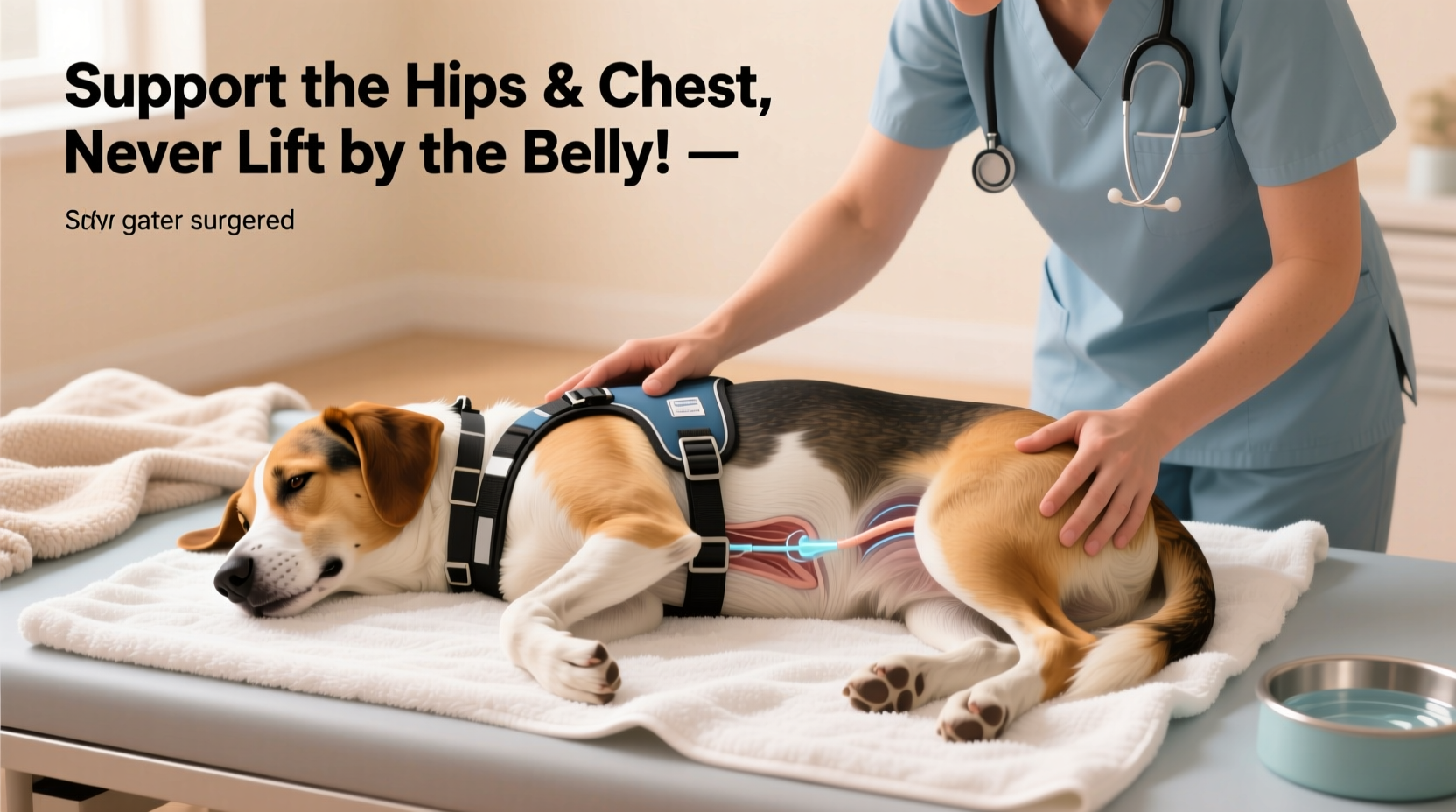
After neutering, the surgical area—typically located along the midline of the abdomen—is vulnerable. Even minor strain from jumping, twisting, or improper lifting can disrupt sutures or cause internal damage. Anesthesia also affects coordination and balance, making dogs wobbly and unsteady on their feet. During this period, they rely entirely on their owners for safe movement.
Veterinarians emphasize that the first 48 to 72 hours are the most delicate. During this window, inflammation peaks, pain levels may fluctuate, and the body begins the initial stages of tissue repair. Any undue pressure on the abdomen increases the risk of complications. A study published in the *Journal of the American Animal Hospital Association* found that postoperative handling errors were among the top preventable causes of recheck visits following routine soft tissue surgeries in dogs.
“Post-surgical care starts the moment your dog wakes up. How you lift and move them can either protect the surgical site or inadvertently compromise it.” — Dr. Lena Torres, DVM, Small Animal Surgeon
Step-by-Step Guide to Safely Carrying Your Dog Post-Surgery
Carrying your dog correctly ensures even weight distribution and minimizes strain on the abdomen. Follow this sequence to provide optimal support:
- Assess readiness: Wait until your dog is alert enough to hold their head up but still drowsy. Do not attempt to carry them while they’re fully unconscious or struggling to stand.
- Position yourself: Kneel beside your dog at floor level to avoid bending or reaching, which could lead to awkward lifting.
- Support the chest: Slide one arm under the dog’s chest, just behind the front legs. This supports the upper body without pressing on the abdomen.
- Support the hindquarters: Gently place your other arm under the rump and back legs, lifting from the rear. Never lift by the front legs or scruff.
- Lift smoothly: Bring your arms together, cradling the dog close to your chest. Keep their spine aligned—no twisting or arching.
- Move slowly: Take small steps and avoid stairs if possible. If stairs are unavoidable, carry the dog sideways so both arms remain underneath.
Do’s and Don’ts of Post-Neuter Handling
| Do’s | Don’ts |
|---|---|
| Use two hands to support chest and hind legs | Lift by the front legs or armpits |
| Keep movements slow and deliberate | Rush or make sudden motions |
| Cradle the dog close to your body | Allow the abdomen to hang unsupported |
| Use a carrier or ramp for vehicles | Let the dog jump into or out of the car |
| Limit handling to essential movements only | Pet or press near the incision site |
Creating a Recovery-Friendly Environment
Safety extends beyond carrying techniques. The home environment plays a crucial role in preventing accidental injury. Confine your dog to a quiet, enclosed space—such as a spare room or large crate—where they cannot roam freely. Use non-slip mats to prevent sliding on hardwood or tile floors, which can cause falls and abdominal strain.
Ensure food and water bowls are within easy reach, but elevated slightly to reduce neck strain without requiring stretching. Avoid placing them too close to walls, which may encourage leaning or twisting. Limit interaction with children and other pets for at least 7–10 days to minimize excitement and rough play.
Mini Case Study: Max, the Energetic Beagle
Max, a 2-year-old beagle, underwent routine neutering on a Tuesday morning. His owner, Sarah, brought him home and placed him on the couch, assuming he’d rest. That evening, Max tried to jump down to follow the family dog into the backyard. Sarah rushed to catch him mid-air, grabbing his front legs. The sudden pull caused Max to yelp and collapse. A vet visit revealed mild swelling at the incision site, though no rupture occurred.
With revised handling techniques—using a harness for support and blocking stair access—Max recovered fully within ten days. Sarah now uses a collapsible pet carrier for any necessary transport, eliminating risky lifts altogether.
Essential Post-Op Care Checklist
- ✔️ Pick up food and water bowls at night to prevent overdrinking or pacing
- ✔️ Check the incision site twice daily for redness, swelling, or discharge
- ✔️ Administer prescribed pain medication on schedule
- ✔️ Use an Elizabethan collar (cone) to prevent licking
- ✔️ Carry your dog using two-point support (chest and rear)
- ✔️ Avoid all off-leash activity for 10–14 days
- ✔️ Schedule and attend the post-op vet checkup
Frequently Asked Questions
How long should I carry my dog instead of letting them walk?
You don’t need to carry your dog constantly, but assist them during transitions—getting into the car, going up stairs, or moving between rooms—for the first 48 hours. After that, allow short, leashed walks to the bathroom only. Most dogs regain stability within 24–48 hours post-anesthesia, but caution remains key until the incision heals.
Can I use a harness to help my dog walk?
Yes, a well-fitted front-clip harness can provide gentle support without putting pressure on the abdomen. Avoid traditional collars, which may encourage pulling. Position the harness high on the chest and use it to guide, not drag, your dog.
What signs indicate a problem with the surgical site?
Contact your vet immediately if you notice any of the following: fresh bleeding, pus-like discharge, significant swelling, a foul odor, or if your dog is lethargic, vomiting, or refusing food. Also watch for panting, trembling, or reluctance to move—signs of pain or internal complications.
Final Thoughts and Action Steps
Supporting your dog after neutering is more than a temporary inconvenience—it’s a vital part of responsible pet ownership. By mastering proper lifting techniques, modifying your home environment, and monitoring recovery closely, you dramatically reduce the risk of setbacks. Remember, your dog cannot communicate discomfort in clear terms; it’s up to you to interpret subtle cues and act accordingly.
Start today by preparing a recovery zone with nonslip flooring, accessible essentials, and physical barriers to hazardous areas. Practice the two-arm carry method before surgery so you’re ready when the time comes. Your thoughtful actions in the first 72 hours lay the foundation for a swift, complication-free healing process.




 浙公网安备
33010002000092号
浙公网安备
33010002000092号 浙B2-20120091-4
Comments
No comments yet. Why don't you start the discussion?