
Saying “no” can feel like a small act of rebellion—especially when you’re used to saying “yes” to everything. Whether it’s a last-minute dinner invite, a weekend trip from a friend, or a family obligation that overlaps with your personal time, turning things down often comes with an emotional tax: guilt. But setting boundaries isn’t selfish—it’s essential. The ability to decline invitations and commitments without spiraling into self-doubt is a skill rooted in self-awareness, respect, and communication. And like any skill, it can be learned.
The truth is, every “yes” to someone else is often a “no” to yourself. Overcommitting leads to burnout, resentment, and strained relationships—not because you said no, but because you said yes when you meant no. This article provides real, usable scripts, psychological insights, and structured approaches to help you decline plans gracefully while maintaining confidence and connection.
Why Saying No Triggers Guilt
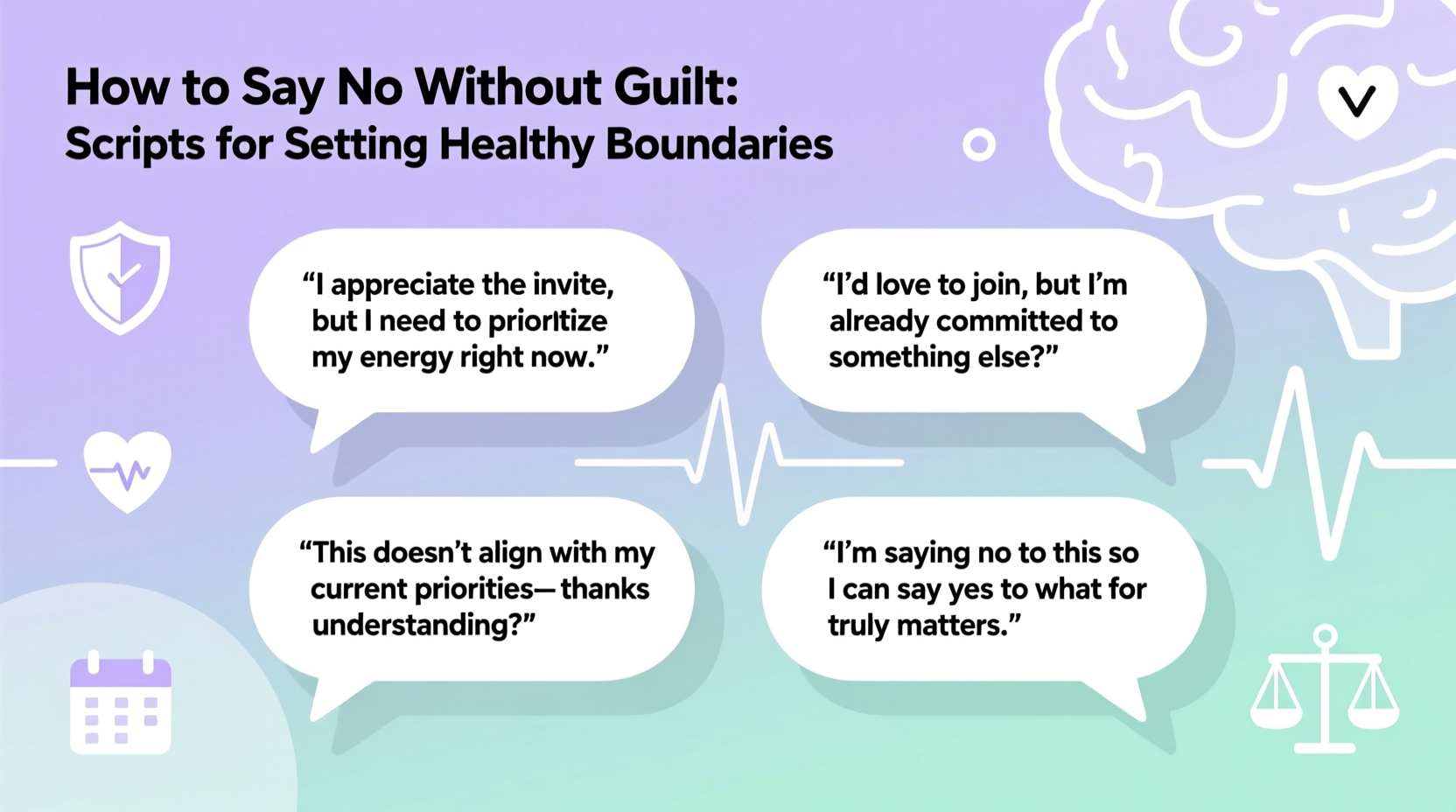
Guilt around saying no often stems from deeper social conditioning. From childhood, many people are taught to be agreeable, accommodating, and conflict-averse. We internalize messages like “be polite,” “don’t disappoint others,” or “a good person is always there when needed.” While these values promote kindness, they can become toxic when applied without balance.
Psychologists refer to this as **obligation guilt**—the belief that we owe others our time and energy simply because they asked. This mindset ignores the reality that healthy relationships require mutual respect, not one-sided sacrifice. Brené Brown, a research professor and author on vulnerability, puts it clearly:
“Daring to set boundaries is about having the courage to love ourselves, even when we risk disappointing others.” — Brené Brown
When you say no, you’re not rejecting the person—you’re honoring your limits. Recognizing this distinction is the first step toward reducing guilt. The second is replacing automatic guilt with intentional choice.
Principles of Boundary-Setting Without Apology
Effective boundary-setting doesn’t rely on elaborate excuses or over-explaining. It rests on three core principles:
- Clarity: Be direct about your decision without vagueness.
- Consistency: Apply your boundaries across similar situations.
- Compassion: Communicate with kindness, both to others and yourself.
When you approach a “no” with these values, you shift from defense to dignity. You’re not making excuses—you’re making choices. And choices deserve respect, not justification.
Scripts for Saying No to Common Social Scenarios
Words matter—especially when emotions run high. Having ready-to-use responses helps you respond confidently instead of reacting defensively. Below are proven scripts tailored to frequent situations.
1. Declining a Friend’s Invitation
Scenario: A close friend invites you to a concert two weeks away, but you’ve already committed to rest and recharging.
Script: “I really appreciate you inviting me—that sounds like so much fun. Right now, I’m focusing on protecting my downtime, so I won’t be able to join. Have an amazing time, and let me know how it goes!”
2. Turning Down Family Obligations
Scenario: Your extended family expects you at a holiday gathering, but you’ve planned a quiet weekend to recover from a stressful month.
Script: “I love being part of our traditions, and this year I need to take a different approach to the holidays. I won’t be attending, but I’d love to schedule a call or visit separately to catch up.”
3. Saying No to Work-Related Social Events
Scenario: Colleagues plan a happy hour after a long week, but you have prior commitments and low energy.
Script: “Thanks for including me—I know it’s been a big week. I’ve got something else on tonight, but I hope you all have a great time unwinding together.”
4. Handling Last-Minute Requests
Scenario: Someone asks you to cover their shift or attend an event with little notice.
Script: “I wish I could help, but with such short notice, I’m not available. I hope you find someone who can step in.”
5. Responding to Repeated Pressure
Scenario: After saying no once, the person responds with “Are you sure?” or “It won’t be the same without you.”
Script: “I hear that, and I still need to pass this time. I know it’ll be great regardless.”
Notice that none of these scripts include over-apologizing, false promises (“Maybe next time!” when you don’t mean it), or elaborate lies. They are brief, appreciative, and firm.
Step-by-Step Guide to Building a No-Response Routine
Confidently saying no isn’t a one-off action—it’s a repeatable process. Use this five-step method to build consistency:
- Pause Before Responding: Don’t answer immediately. Say, “Let me check my schedule and get back to you.” This gives you space to reflect, not react.
- Identify Your Reason (For Yourself): Ask: Is this request aligned with my priorities? Am I saying yes out of guilt or genuine desire?
- Select a Script: Choose one of the templates above or adapt it to your voice. Keep it simple.
- Deliver with Confidence: Send the message without adding qualifiers. Avoid “I’m such a bad friend, but…” or “This is so awkward, but…”
- Process the Aftermath: If guilt surfaces, acknowledge it without judgment. Remind yourself: “I made a respectful choice. My needs matter too.”
Repeat this process, and over time, your nervous system will recalibrate. What once felt jarring will begin to feel normal—and eventually, empowering.
Do’s and Don’ts of Saying No Gracefully
| Do | Don’t |
|---|---|
| Express appreciation for the invitation | Apologize excessively (“I’m so sorry, I’m the worst”) |
| Be brief and clear | Over-explain or invent elaborate excuses |
| Use neutral, kind language | Make it about the other person (“You always do this…”) |
| Stand by your decision | Backtrack due to guilt or pressure |
| Offer an alternative (if genuine) | Promise future availability you can’t guarantee |
This table isn’t about perfection—it’s about progress. Even if you slip into old habits occasionally, each attempt strengthens your boundary muscle.
Real Example: How Maya Learned to Say No
Maya, a 32-year-old graphic designer, was known among her friends as “the reliable one.” She rarely missed a birthday dinner, group trip, or volunteer event. But over two years, she began experiencing chronic fatigue, irritability, and anxiety. During therapy, she realized she hadn’t taken a full weekend off in 18 months.
When her best friend invited her to a three-day cabin trip, Maya felt the familiar tug: excitement for the activity, dread at the commitment. Instead of defaulting to “yes,” she paused. She wrote down her reasons for declining: lack of recovery time, upcoming deadlines, and a need for solitude.
She sent this message: “I love our trips and am so grateful you included me. This time, I need to stay home and recharge. I’ll miss you all, but I know you’ll have a blast!”
To her surprise, her friend replied: “Totally get it. Self-care first.” No guilt. No backlash. Just acceptance.
That moment became a turning point. Within six months, Maya had declined four more events—each time with less guilt. Her relationships didn’t suffer; in fact, some deepened as friends began opening up about their own struggles with overcommitment.
Maya’s story illustrates a universal truth: people often respect boundaries more than they admit—especially when modeled with confidence.
FAQ: Common Questions About Saying No
Won’t people think I’m rude or flaky if I say no?
Occasionally, someone might react negatively—but that reflects their expectations, not your worth. Most emotionally mature people understand that everyone has limits. If someone consistently pressures you after a polite no, that’s a sign to reevaluate the balance in that relationship.
What if I feel guilty even after saying no?
Guilt is a habit, not a verdict. Acknowledge the feeling without acting on it. Try journaling: “I feel guilty because I’m used to prioritizing others. But I also feel relief because I honored my needs.” Over time, relief will outweigh guilt.
Can I say no and still be a good friend, partner, or employee?
Absolutely. Healthy relationships allow space for individual needs. In fact, setting boundaries often improves relationships by fostering honesty and reducing passive resentment. Being present when you say yes—because you genuinely want to—matters more than constant availability.
Checklist: Building Your Boundary Practice
Use this checklist weekly to strengthen your ability to say no with confidence:
- ☑ Pause before responding to invitations
- ☑ Identify whether the request aligns with your current priorities
- ☑ Choose a clear, kind script
- ☑ Send the message without over-justifying
- ☑ Notice any guilt without judgment
- ☑ Reflect: How did it feel to honor my boundary?
- ☑ Celebrate small wins—even a single “no” is progress
Conclusion: Your Time Is Yours to Protect
Saying no isn’t the end of connection—it’s the foundation of authentic relationship. Every time you decline a plan to protect your energy, time, or peace, you affirm a simple truth: you matter. The people who truly care about you won’t vanish because you set a limit. They’ll adjust, just as you would for them.
Start small. Use one of the scripts. Notice what happens. Chances are, the world keeps turning, your relationships remain intact, and you feel a little lighter. That lightness is freedom—the kind that comes from living by your values, not others’ expectations.




 浙公网安备
33010002000092号
浙公网安备
33010002000092号 浙B2-20120091-4
Comments
No comments yet. Why don't you start the discussion?