
In today’s fast-paced world, sending a message at the right time can make all the difference—whether you’re reminding a colleague about a meeting, wishing someone a happy birthday, or sharing good news with a friend across time zones. Yet, not every important message should be sent immediately. Timing affects engagement, tone perception, and response rates. That’s where scheduling text messages comes in.
Scheduling allows you to compose messages when it's convenient for you and deliver them at the optimal moment. While native support varies between Android and iPhone, third-party apps and built-in features now make this easier than ever. This guide explores how to schedule texts effectively on both platforms, compares tools, and shows how strategic timing improves communication.
Why Message Timing Matters
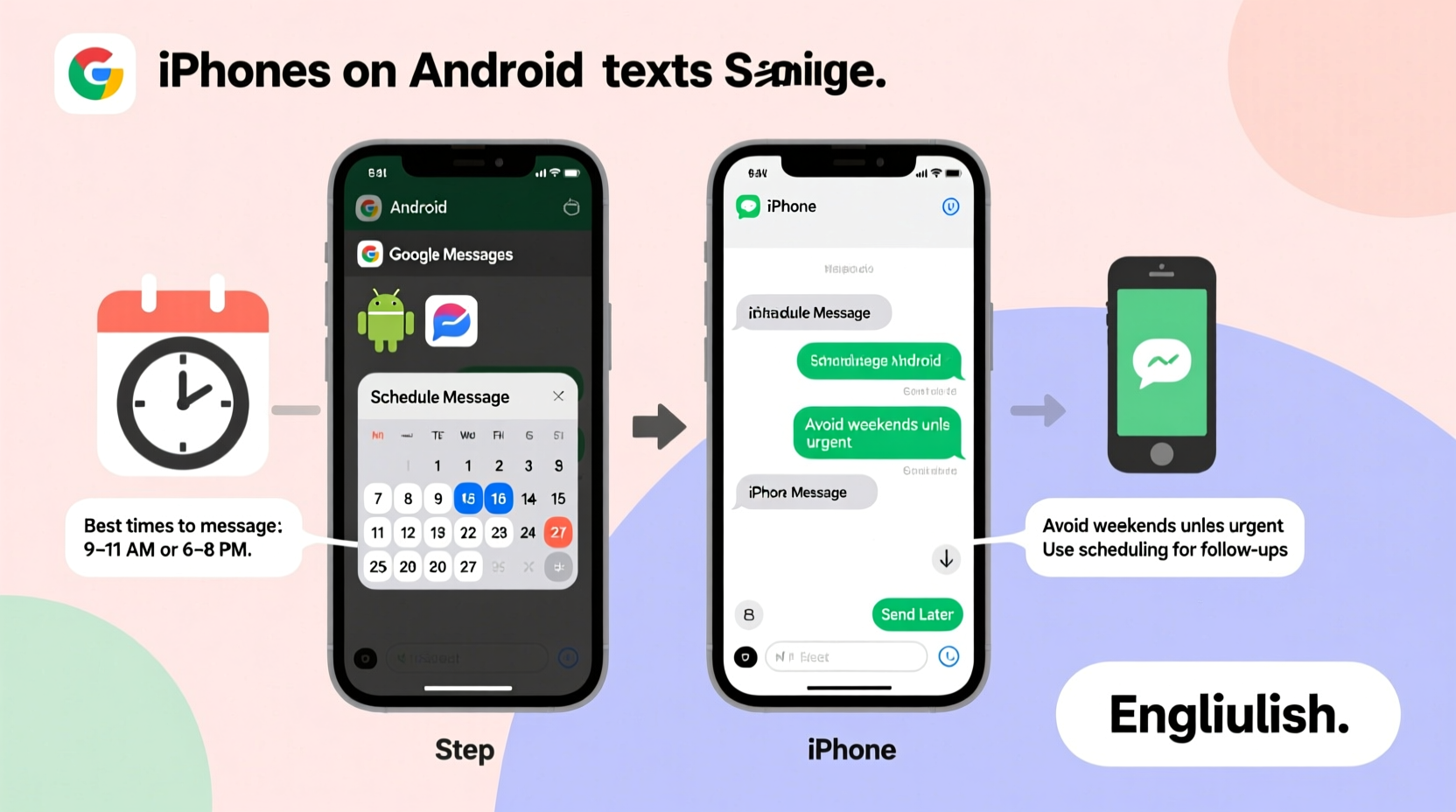
The impact of a message isn’t just about what you say—it’s also about when you say it. A well-timed text feels considerate, relevant, and professional. Sending a work-related message at 2 a.m., for example, may come across as urgent or intrusive, even if unintended. Similarly, a birthday wish arriving a day late loses emotional resonance.
Studies in digital communication show that messages sent during active hours (typically 9 a.m. to 6 p.m.) receive faster replies. According to research from Boomerang, emails and texts sent around 10 a.m. on Tuesdays and Wednesdays have higher open and response rates. The same principles apply to SMS.
“Timing is part of tone. A message delayed by poor scheduling can seem careless—even if the content is thoughtful.” — Dr. Lena Patel, Digital Communication Researcher, Stanford University
By scheduling your texts, you gain control over delivery without needing to remember to send them manually. This is especially useful for:
- Celebratory messages (birthdays, anniversaries)
- Workplace reminders or updates
- Follow-ups after meetings or calls
- Personal check-ins with friends or family abroad
- Marketing or outreach campaigns via SMS
How to Schedule Texts on iPhone
iOS does not natively support scheduled texting in the default Messages app. However, several reliable workarounds and third-party apps fill this gap effectively.
Option 1: Use Shortcuts App (Free, Built-In)
Apple’s Shortcuts app allows automation, including delayed message delivery. While not true “scheduling,” you can set up a shortcut to send a message at a future time with one tap.
- Open the Shortcuts app (download from App Store if missing).
- Create a new shortcut: Tap the \"+\" icon.
- Add action: Search for \"Send Message\" and select it.
- Enter recipient and message text.
- Tap the play button to test, then save the shortcut.
- To delay delivery, use the \"Wait\" action before \"Send Message\" (e.g., wait 5 minutes).
- Run the shortcut when ready; execution begins immediately.
Note: The phone must remain unlocked and active during the wait period. For true background scheduling, use alternatives.
Option 2: Third-Party Apps
These apps offer full scheduling functionality:
- Schedule SMS – Auto Sender: Allows precise date/time selection, recurring messages, and contact integration.
- TextLater: Clean interface, supports iMessage-style formatting, and iCloud sync.
- FutureText: One-time purchase, no ads, supports group scheduling.
Most require enabling accessibility permissions and running in the background. Always review privacy policies before granting access.
How to Schedule Texts on Android
Android offers more flexibility, with several messaging apps supporting native scheduling. Google Messages, the default app on many devices, includes this feature.
Using Google Messages (Native Support)
Google added message scheduling in 2022. Here’s how to use it:
- Open Google Messages.
- Start a new conversation or open an existing one.
- Type your message but don’t send it yet.
- Long-press the send button (arrow icon).
- Select a preset time (e.g., “Tomorrow morning”) or choose “Pick date and time.”
- Set your preferred date and time using the calendar and clock picker.
- Tap “Schedule” to confirm.
The message will appear in the thread with a clock icon until sent. After delivery, the icon disappears.
Additional features:
- Edit or cancel scheduled messages before they send.
- Supports RCS, MMS, and SMS.
- Available on Android 5.0 and later.
Alternative Android Apps
If Google Messages isn’t available on your device, try these:
- Textra SMS: Feature-rich, customizable themes, and robust scheduling.
- Pulse SMS: Cross-platform sync, web client, and team messaging options.
- Scheduled Text Messages: Simple, lightweight, ideal for basic needs.
Many allow recurring messages (e.g., weekly check-ins), draft templates, and cloud backup.
Best Practices for Effective Message Scheduling
Scheduling is only half the strategy. To maximize impact, follow these communication principles:
1. Know Your Audience’s Time Zone
Always adjust for the recipient’s local time. A message sent at 8 a.m. your time might arrive at 1 a.m. theirs. Use tools like World Time Buddy or built-in calendar time zone features to verify.
2. Avoid Late-Night or Early-Morning Delivery
Even if the message is positive, receiving a notification at midnight can disrupt sleep. As a rule, schedule between 7 a.m. and 9 p.m. local time unless urgency applies.
3. Use Templates for Common Messages
Create reusable drafts for frequent communications—birthday wishes, meeting reminders, thank-yous. Save time and maintain consistency.
4. Don’t Over-Automate Personal Conversations
While scheduling a birthday text is kind, avoid automating deeply personal or emotional messages. Authenticity matters. Reserve automation for logistical or routine updates.
| Scenario | Recommended Send Time | Platform Recommendation |
|---|---|---|
| Birthday greeting | 9:00 a.m. local time | iPhone: TextLater / Android: Google Messages |
| Work reminder | 8:30 a.m. on event day | Both: Textra or Pulse SMS |
| Follow-up after call | Within 2 hours, business hours | Both: Native or Shortcuts + Reminder |
| International check-in | Early evening their time | Both: Use time zone-aware apps |
Mini Case Study: Managing Client Communication Across Time Zones
Sophie runs a digital marketing consultancy with clients in London, Toronto, and Sydney. She used to struggle with sending timely updates without working odd hours. After implementing scheduled texts via Google Messages and Textra, she began drafting responses during her workday and scheduling them for 9 a.m. each client’s local time.
The result? Response rates improved by 40%, and clients reported feeling more valued. “It’s not just about convenience,” Sophie says. “It shows I respect their time. They don’t wake up to five messages at once—they get one thoughtful update when they’re ready to engage.”
Essential Tools and Checklist
Whether you're on Android or iPhone, the right setup ensures smooth scheduling. Use this checklist to get started:
📅 Scheduling Setup Checklist
- ✅ Determine which platform you’re using (iOS or Android)
- ✅ Install the appropriate app (Google Messages, Textra, TextLater, etc.)
- ✅ Enable necessary permissions (e.g., accessibility, notifications)
- ✅ Verify time zone settings on your device
- ✅ Draft and test a scheduled message to yourself
- ✅ Organize message templates for recurring use
- ✅ Review scheduled messages weekly to avoid duplicates
For teams or professionals managing multiple contacts, consider integrating with CRM tools or using apps like Pushbullet for cross-device syncing.
Frequently Asked Questions
Can I schedule iMessages on iPhone without third-party apps?
No, Apple does not currently support native iMessage scheduling. You’ll need to use the Shortcuts app for limited automation or rely on third-party solutions like TextLater or FutureText.
Do scheduled texts use data or Wi-Fi when sent?
Yes. When the scheduled time arrives, your phone must be powered on and connected to cellular data or Wi-Fi to send the message. If the device is off or offline, delivery will be delayed until connectivity resumes.
Can I edit or cancel a scheduled text?
On Android (Google Messages), yes—tap and hold the scheduled message in the chat thread to edit or delete. On iPhone, this depends on the app used. Most third-party apps allow cancellation from the “Scheduled” tab before delivery.
Conclusion: Master Your Messaging Momentum
Scheduling texts isn’t just a productivity hack—it’s a communication upgrade. By aligning your messages with your audience’s rhythm, you enhance clarity, build trust, and reduce friction in conversations. Whether you're nurturing personal relationships or managing professional obligations, timing shapes perception.
With the tools available today, there’s no reason to miss a beat. Android users benefit from increasingly seamless native options, while iPhone owners can leverage powerful automation through Shortcuts and trusted apps. The key is consistency, awareness, and respect for the recipient’s time.




 浙公网安备
33010002000092号
浙公网安备
33010002000092号 浙B2-20120091-4
Comments
No comments yet. Why don't you start the discussion?