
Spotify has transformed the way we access and enjoy music, offering an expansive catalog and personalized recommendations at our fingertips. But as playlists grow and devices multiply, managing your music library can become overwhelming. A cluttered library leads to wasted time searching, duplicated tracks, and missed listening opportunities. The key to a frictionless experience lies in mastering synchronization and organization across all your devices. With the right approach, you can keep your Spotify library clean, accessible, and perfectly tailored to your lifestyle.
Understanding Spotify’s Library Architecture
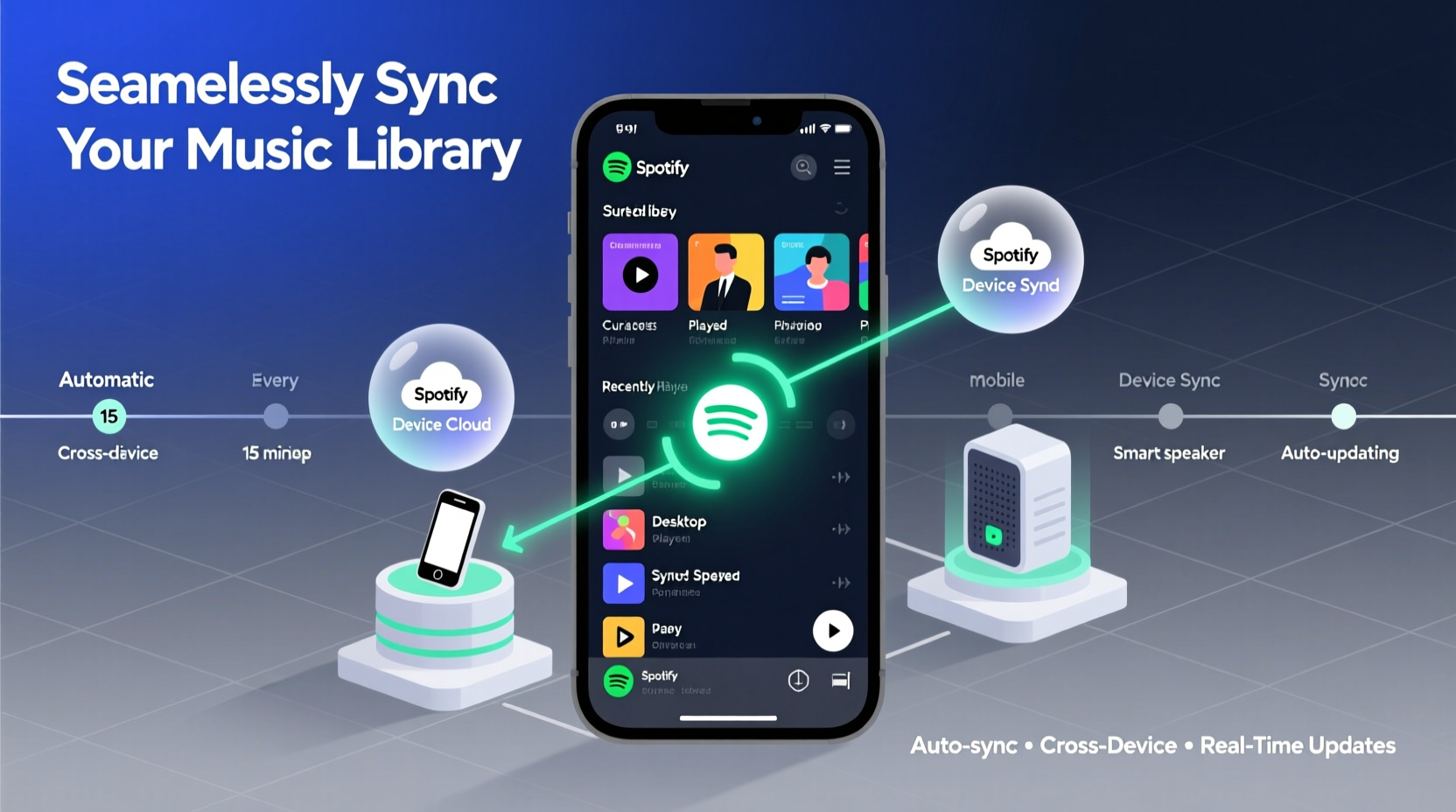
Before diving into management techniques, it’s essential to understand how Spotify structures your music. Your library consists of saved songs, albums, artists, and playlists. Unlike traditional file-based systems, Spotify uses cloud-based syncing—meaning your data is stored remotely and mirrored across devices when connected to the internet. This eliminates the need for manual file transfers but introduces new challenges: inconsistent syncing, offline availability issues, and duplicate entries from third-party imports.
Your library is tied to your account, not your device. When you save a song or playlist, it’s added to your profile in the cloud. However, offline downloads are device-specific. This distinction is crucial: saving ≠ downloading. To listen without Wi-Fi, you must explicitly download content per device. Misunderstanding this often leads users to believe their music “disappeared,” when in reality, it was never downloaded locally.
“Spotify’s strength is its ecosystem, but power users need to treat their library like a curated digital collection—not just a dumping ground.” — Lena Patel, Digital Music Archivist
Step-by-Step Guide to Sync Your Library Across Devices
Seamless syncing ensures that your latest saves, edits, and downloads appear consistently whether you’re on mobile, desktop, or smart speaker. Follow this timeline to establish reliable cross-device harmony:
- Log in to the same account everywhere: Ensure all devices use the same Spotify credentials. Use two-factor authentication for security.
- Enable automatic syncing: In Settings (gear icon), confirm “Sync Library” is toggled on under “Playback.”
- Update the app regularly: Outdated versions may fail to sync properly. Enable auto-updates in your app store.
- Force refresh the library: If changes aren’t appearing, log out and back in, or toggle airplane mode briefly to trigger a re-sync.
- Check connection stability: Weak Wi-Fi or spotty cellular data delays syncing. Perform major updates on strong networks.
- Verify download locations: On each device, go to “Your Library” > “Playlists” or “Albums” and ensure the download icon (arrow down) is active where needed.
Organizing Your Music: Best Practices for Long-Term Management
A well-organized library enhances discovery and reduces decision fatigue. Start by auditing your current content. Open “Liked Songs” and scroll through—do you still enjoy every track? Spotify doesn’t prompt you to curate, so periodic cleanup is essential.
Create thematic playlists instead of relying solely on algorithmic mixes. For example, “Morning Focus,” “Road Trip Anthems,” or “2010s Indie Rewind.” Naming conventions help: prefix workout playlists with “💪” or chill sessions with “🌙” for quick visual filtering.
Use folders to group related playlists. Right-click any playlist on desktop and select “Add to Folder.” Folders support nesting, so you might have a main folder called “Workout” containing subfolders like “Running,” “Yoga,” and “HIIT.” This structure keeps your sidebar navigable even with hundreds of playlists.
| Feature | Do | Don't |
|---|---|---|
| Playlist Creation | Limit to 100–200 songs for usability | Create endless “Everything I Like” dumps |
| Saving Songs | Review “Liked Songs” monthly | Save every song you hear once |
| Offline Access | Download only what you’ll consume soon | Download entire discographies “just in case” |
| Folders | Use broad categories (Mood, Genre, Activity) | Nest more than three levels deep |
Integrating Local Files and Third-Party Content
Many users maintain personal music collections outside Spotify—rare live recordings, self-produced tracks, or legacy MP3s. Spotify allows local file integration, but the process requires precision.
To add local files: Go to Settings > Local Files > Add Source. Select the folder(s) containing your audio files (MP3, WAV, M4P). Once enabled, these files appear in “Local Files” and can be added to playlists alongside streaming content. However, they do not sync across devices. Each device must have the same local folder path configured independently.
This limitation means true “seamless” syncing of local files isn’t possible within Spotify alone. For universal access, consider uploading your personal tracks to a cloud service like Google Drive or Dropbox, then use a dedicated music player app that supports both cloud storage and Spotify APIs, such as Evermusic or Musicolet.
Mini Case Study: Recovering a Cluttered Library
Jamal, a freelance designer and avid music lover, had over 12,000 songs in his “Liked Songs” and 300+ playlists. He struggled to find tracks during creative sessions and noticed frequent syncing lags between his laptop and phone. After a month-long reorganization, he reduced “Liked Songs” to 2,500 high-value tracks, archived inactive playlists, and grouped the rest into six master folders. He also set up a biweekly 30-minute “library maintenance” slot in his calendar. Result: faster navigation, consistent syncing, and improved focus during work hours.
His biggest insight? “I thought saving everything gave me more options. In reality, it made choosing harder. Curating my library actually expanded my enjoyment.”
Essential Checklist for Ongoing Library Health
- ✅ Audit “Liked Songs” every 30 days
- ✅ Delete or archive unused playlists quarterly
- ✅ Organize new playlists into folders immediately
- ✅ Verify offline downloads after travel
- ✅ Update Spotify app on all devices monthly
- ✅ Backup critical local files externally
- ✅ Use consistent naming and emoji cues for quick scanning
FAQ
Why aren’t my playlists showing up on my tablet?
This usually happens due to poor connectivity or disabled sync settings. First, check that you're logged into the correct account. Then, go to Settings > Playback and ensure “Sync Library” is enabled. Force-close and reopen the app to trigger a refresh.
Can I sync Spotify with Apple Music or other services?
No direct sync exists between Spotify and Apple Music. However, third-party tools like Soundiiz or Tune My Music allow one-time migration of playlists and favorites. These services don’t enable ongoing synchronization but are useful for initial transitions.
How do I stop duplicates from appearing in my library?
Duplicates often stem from multiple saves of the same track—once as a song, once in a playlist. Use Spotify’s search bar to look up the track, then review where it appears. Unsave redundant instances. For automated cleanup, tools like “Spotidy” (open-source) can detect and flag duplicates.
Conclusion
Managing your Spotify library isn’t about technical mastery—it’s about intentionality. Every save, playlist, and download should serve a purpose. By applying structured organization, routine maintenance, and smart syncing habits, you transform Spotify from a passive streamer into a dynamic extension of your musical identity. The goal isn’t to own every song, but to make the ones that matter effortlessly available whenever and wherever you need them.




 浙公网安备
33010002000092号
浙公网安备
33010002000092号 浙B2-20120091-4
Comments
No comments yet. Why don't you start the discussion?