
Lightweight inflatable decorations bring holiday cheer, festival flair, or promotional energy to any outdoor space. But when wind speeds climb—especially to 30mph gusts—these festive inflatables can quickly become airborne hazards. Traditional ground stakes aren’t always an option: concrete surfaces, rental properties, protected lawns, or temporary installations often make staking impossible. Fortunately, with the right techniques, materials, and a bit of physics know-how, you can keep your inflatables grounded safely and securely—even in blustery conditions.
The key lies not in brute force but in smart weight distribution, strategic placement, and redundancy. This guide walks through practical, tested strategies that prioritize stability without damaging surfaces or relying on permanent fixtures.
Understanding Wind Forces on Inflatables
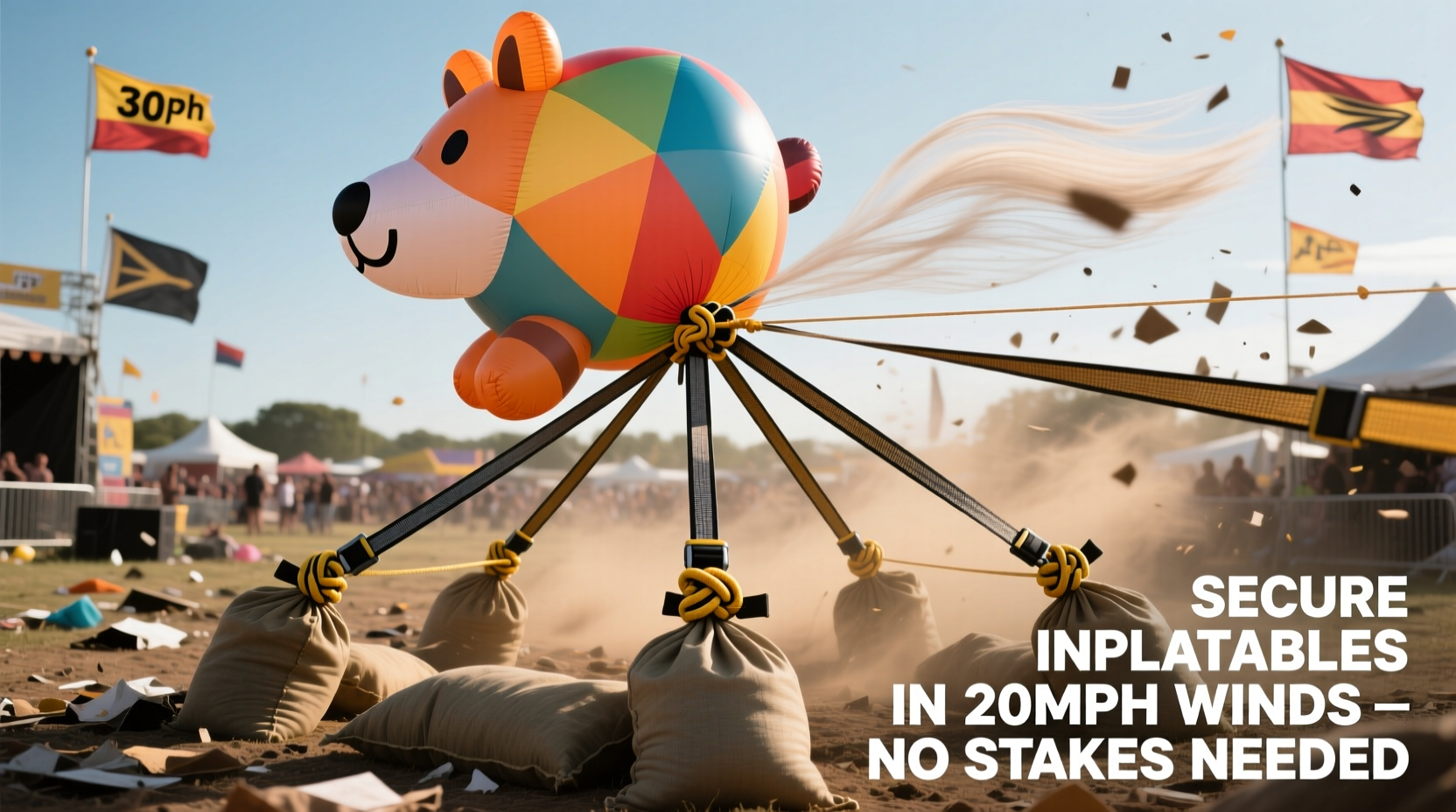
Inflatable decorations act like sails. Even moderate winds generate significant lateral and uplift forces. At 30mph, wind pressure reaches approximately 1.5 pounds per square foot. A medium-sized snowman (6 ft x 4 ft) presents about 24 square feet of surface area, equating to over 35 pounds of wind load. Without proper anchoring, this force easily overcomes the decoration’s minimal base weight.
Stakes work by transferring this force into the ground via friction and soil resistance. When stakes aren't viable, alternative systems must replicate this energy dissipation—using mass, drag reduction, and mechanical resistance instead.
Effective Non-Stake Anchoring Methods
Several alternatives to stakes provide reliable hold in high-wind conditions. The best solutions combine multiple methods for layered security.
1. Weighted Base Systems
Adding downward force counters lift and tipping. Use dense, stable objects connected securely to the inflatable’s anchor points.
- Sandbags: One of the most effective options. A single 25-pound sandbag provides substantial resistance. Attach via webbing loops or bungee cords tied to the base grommets.
- Water Jugs: Fill empty gallon jugs with water (8.3 lbs each). Nest them in a plastic crate around the blower unit for added stability and concealment.
- Cinder Blocks or Concrete Pavers: Drape heavy-duty straps over blocks and connect to inflatable tie-down points. Cover with fabric skirts for aesthetics.
For optimal performance, distribute weight evenly around the perimeter. Avoid placing all weight on one side, which can create a pivot point during gusts.
2. Friction-Based Ground Pads
Increasing surface contact reduces sliding. Rubber mats, non-slip shelf liners, or interlocking foam tiles placed beneath the inflatable increase grip on smooth surfaces like asphalt or patio stones.
Pair these with weights for maximum effect. For example, place a rubber horse stall mat under the blower end of a large archway, then set two sandbags on top. The friction prevents forward skidding while the mass resists tipping.
3. Tethering with Tension Lines
Use guy lines anchored to immovable objects—fences, railings, vehicles, or even heavy furniture. Nylon rope or paracord (rated for at least 500 lbs) works well.
- Attach lines to reinforced grommets at 45-degree angles from the inflatable.
- Run lines to anchor points at least twice as far from the inflatable as its height.
- Use tensioners like trucker’s hitches or ratchet straps to remove slack.
If no fixed structures are available, create artificial anchors using weighted containers (e.g., trash cans filled with gravel) laid on their sides and secured with straps.
4. Internal Ballasting
Some inflatables allow limited internal weighting. Place sealed, waterproof containers (like plastic food storage boxes) inside the base chamber before inflation. Ensure they don’t obstruct airflow or damage internal baffles.
This method keeps weight low and centralized, improving center-of-gravity stability. Never use sharp or bulky items that could puncture the material.
Step-by-Step Guide: Securing an Inflatable on Concrete in 30mph Winds
Follow this sequence for maximum reliability when installing on hard surfaces:
- Assess the Site: Note wind direction, nearby structures, power access, and potential anchor points.
- Prepare the Surface: Lay down a non-slip rubber mat (3' x 5') where the blower unit will sit.
- Position the Inflatable: Orient it so its smallest face meets the wind. For arched shapes, align the curve into the wind if possible.
- Inflate Partially: Begin inflation, but pause once the shape is defined but still pliable.
- Attach Weights: Clip two 20-lb sandbags to opposing base grommets near the blower. Add a third centered behind the unit.
- Install Tension Lines: Run two guy lines from upper grommets to anchored buckets filled with concrete (placed 6–8 feet away).
- Complete Inflation: Fully inflate and test stability with gentle shaking. Adjust line tension as needed.
- Monitor and Maintain: Check every 6–12 hours during windy conditions. Retighten lines after temperature shifts.
This layered approach combines friction, mass, and triangulated support to resist both tipping and sliding.
Do’s and Don’ts: Secure vs. Risky Practices
| Do | Don’t |
|---|---|
| Use multiple attachment points for tethers | Rely on a single rope or corner tie |
| Distribute weight low and wide | Stack all weight on one side |
| Inspect ropes and connectors daily | Use frayed cords or corroded clips |
| Face the narrow profile into the wind | Expose broad surfaces directly to gusts |
| Use padded connections to prevent abrasion | Tie ropes directly around thin seams |
Mini Case Study: Festival Display Survival in Coastal Winds
A community arts festival in Newport, Rhode Island, featured a 12-foot inflatable penguin as its centerpiece. Installed on a seaside promenade, it faced consistent 25–30mph coastal gusts. Stakes were prohibited to protect historic paving stones.
The event team used a hybrid solution: a custom wooden platform (3' x 4') lined with anti-slip rubber, bolted to four 30-lb sandbags via eye hooks. Two paracord guy lines ran diagonally to anchored steel drums filled with concrete, positioned 10 feet away. The blower intake was shielded with a windbreak made from a perforated banner.
The display remained upright throughout the three-day event, surviving a peak gust of 34mph recorded by a handheld anemometer. Post-event inspection showed no wear on tether points, confirming the success of distributed load management.
“Wind doesn’t just push—it lifts and twists. Your anchoring system must resist all three vectors. Redundancy isn’t overkill; it’s essential.” — Derek Langston, Outdoor Event Safety Consultant
Checklist: Wind-Resistant Inflatable Setup (No Stakes)
- ☐ Choose a low-profile installation site (behind barriers or shrubs if possible)
- ☐ Lay down non-slip ground mat or textured pad
- ☐ Position inflatable to minimize wind exposure
- ☐ Prepare at least three weighted anchors (minimum 20 lbs each)
- ☐ Use high-tensile cord (paracord or nylon rope) and secure knots (bowline or clove hitch)
- ☐ Install at least two tension lines at 45° angles
- ☐ Anchor lines to immovable or heavily weighted objects
- ☐ Test stability by gently rocking the unit
- ☐ Schedule regular wind and tether inspections
- ☐ Have a deflation plan for extreme weather alerts
Frequently Asked Questions
Can I use furniture as an anchor?
Yes, but only if the furniture is heavy and stable—like a cast-iron bench or full wooden cabinet. Avoid lightweight metal chairs or glass tables, which can become projectiles. Always secure the tether low on the object to prevent tipping.
Are bungee cords safe for anchoring?
No. Bungee cords stretch under load, creating dangerous rebound energy during gusts. They also degrade quickly in UV light. Use static ropes or ratchet straps instead for zero elasticity.
What if I have no nearby structures for tethering?
Create artificial anchor points using “deadman” equivalents: large containers (trash cans, coolers) filled with water, sand, or gravel. Weigh them down with additional bricks or cinder blocks. Securely strap the tether to the container’s handle or a threaded rod inserted through the sides.
Expert Tips for Long-Term Durability
Beyond immediate wind protection, consider long-term care. Repeated stress on grommets and seams shortens an inflatable’s lifespan. Reinforce weak points with adhesive PVC patches or sewn-on webbing tabs.
Store ropes coiled and dry. Sunlight degrades nylon over time—replace any cord showing brittleness or discoloration. Keep a small repair kit on hand with seam sealant, duct tape (for emergencies), and spare connectors.
Also, monitor weather forecasts proactively. Many inflatables should be taken down at sustained winds above 25mph. Automated blowers with wind sensors are emerging but remain rare. Until then, manual oversight is critical.
Conclusion: Stability Without Sacrifice
Securing lightweight inflatable decorations in 30mph gusts without stakes is not only possible—it can be done effectively and safely with thoughtful planning. By combining weighted bases, tensioned tethers, friction pads, and intelligent positioning, you neutralize wind forces that would otherwise send decorations flying.
Success lies in redundancy: never rely on a single method. The case study from Newport proves that even challenging environments yield to smart engineering. Whether you're decorating for a holiday, hosting an event, or running a promotion, your display can stand tall—without stakes—when you apply these principles.




 浙公网安备
33010002000092号
浙公网安备
33010002000092号 浙B2-20120091-4
Comments
No comments yet. Why don't you start the discussion?