
The A-line tweed skirt is a timeless staple in classic and contemporary wardrobes alike. Revered for its structured silhouette and textured elegance, it bridges the gap between polished sophistication and everyday wearability. Yet, not every A-line tweed skirt flatters every figure or complements every personal aesthetic. The key to unlocking its full potential lies in understanding how cut, proportion, fabric weight, and design details interact with your unique body shape and style identity.
More than just a fashion choice, selecting the right tweed skirt is an exercise in self-awareness and intentionality. When chosen thoughtfully, it can enhance your natural proportions, elevate your confidence, and become a cornerstone of versatile, season-spanning outfits. This guide breaks down what to look for—based on science, tailoring principles, and real-world styling—to help you find the perfect A-line tweed skirt that doesn’t just fit, but truly flatters.
Understanding the A-Line Silhouette and Tweed Fabric
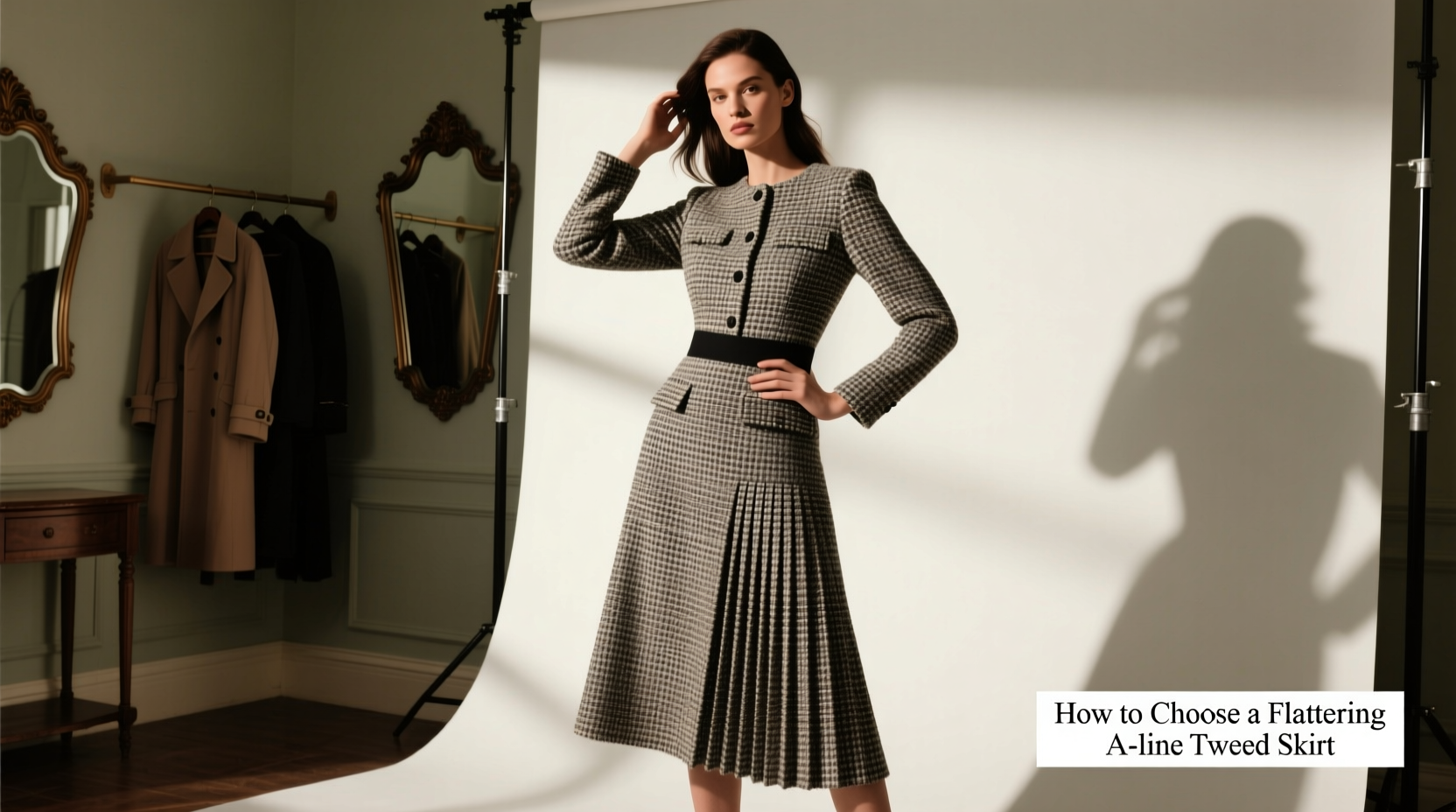
The A-line skirt earns its name from its shape: narrow at the waist and gradually widening toward the hem, resembling the letter “A.” This design naturally skims over the hips and thighs, making it one of the most universally flattering cuts. When crafted in tweed—a tightly woven wool or wool-blend fabric known for its durability and rich texture—the A-line gains both structure and visual interest.
Tweed’s inherent stiffness provides subtle support, helping the skirt hold its shape without clinging. However, not all tweeds are created equal. Some are lightweight and slightly pliable; others are heavy and rigid. The ideal balance depends on your body type and climate. For instance, heavier tweeds offer more shaping control but may overwhelm petite frames, while lighter weaves drape better on taller figures but might lack definition on softer silhouettes.
Matching Your Skirt to Your Body Shape
Finding a flattering A-line tweed skirt starts with identifying your dominant body shape. While many women blend characteristics, four primary types respond differently to this style: hourglass, pear, apple, and rectangle.
Hourglass Figure
If your bust and hips are balanced with a clearly defined waist, you have an hourglass shape. The A-line tweed skirt is a natural ally, especially when tailored to emphasize the waist. Opt for mid-thigh to knee-length styles that begin their flare just below the hip bone to preserve proportion. Avoid overly wide hems, which can disrupt the balance.
Pear Shape
With narrower shoulders and wider hips, pear-shaped bodies benefit from A-line skirts that start flaring at or just below the waist. This creates symmetry by visually widening the upper body. Choose tweeds in darker tones or subtle patterns to minimize lower-body emphasis. Pair with structured blazers or statement necklaces to draw attention upward.
Apple Shape
For those whose weight centers around the midsection, high-waisted A-line tweed skirts offer gentle smoothing without compression. Look for styles with a slight stretch panel or hidden elastic at the back for comfort. Lengths just above or below the knee work best, as very short or floor-length versions can shorten the leg line. Darker colors and vertical pinstripes in the weave help elongate the torso.
Rectangle Shape
With minimal waist definition, rectangle figures gain dimension from A-line skirts with built-in waist-cinching details—think wide belts, pleats at the waist, or double-button closures. Textured tweeds with herringbone or check patterns add visual volume. Aim for skirts that begin flaring immediately from the waist to create the illusion of curves.
“The A-line cut is one of the few silhouettes that can be universally flattering—if the proportions align with the wearer’s frame.” — Lydia Chen, Fashion Stylist & Fit Consultant
Choosing Details That Enhance Your Style
Your personal style should guide not only the color and pattern of your tweed skirt but also its finer details. These elements determine whether the piece feels authentic to you or merely trendy.
- Length: Midi (just below the knee) is the most versatile. Mini lengths suit bold, modern aesthetics but require confidence and balanced proportions. Maxi A-line tweeds exist but are rare due to fabric stiffness.
- Waist Height: High-waisted styles elongate legs and define the torso. Mid-rise offers comfort and ease. Avoid low-rise tweed skirts—they compromise the elegant structure of the fabric.
- Closure Type: Zippers should lie smoothly without puckering. Hidden side zippers are sleeker than back ones. Button-front styles make a strong vintage statement but may gap if not properly sized.
- Pockets and Trims: Flap pockets add British heritage charm but can add bulk. Consider your hip width when choosing. Braided trim or contrast piping can highlight the waistline if placed strategically.
Color and Pattern Guidance
Solid black or navy tweed skirts are wardrobe anchors, easy to pair and timeless. Houndstooth, herringbone, and windowpane checks add character without overwhelming. For fair complexions, avoid stark black-and-white checks; opt for heathered grays or warm camel tones. Deeper skin tones can carry bolder contrasts beautifully.
Step-by-Step Guide to Finding Your Perfect Skirt
- Assess your body shape using photos or measurements to identify where you carry weight and where you want emphasis.
- Determine your preferred length based on height and lifestyle. Petite? Stick to knee-length. Tall? Experiment with midi.
- Choose a tweed weight suitable for your climate and comfort. Light for spring/fall, heavy for winter.
- Select a waist height that flatters your torso-to-leg ratio. High waist = longer legs.
- Try before you buy, if possible. Walk, sit, and move in the skirt to test comfort and drape.
- Evaluate the finish: lining quality, seam strength, and button/hook durability matter for longevity.
- Style it instantly in-store with a top and shoes you own to visualize real-life wearability.
Do’s and Don’ts: A Quick Reference Table
| Scenario | Do | Don't |
|---|---|---|
| Hourglass figure | Emphasize waist with belt or fitted top | Choose boxy cuts that hide your waist |
| Pear shape | Pick skirts that flare from the waist | Wear tight skirts that cling to hips |
| Apple shape | Opt for soft high-waisted styles | Select low-rise or stiff, unforgiving fabrics |
| Rectangle shape | Add volume with pleats or layers | Wear straight-cut skirts that don’t define shape |
| All body types | Check for smooth drape and no pulling | Ignore discomfort for the sake of style |
Real Example: Sarah’s Successful Skirt Search
Sarah, 42, has a pear-shaped body and works in corporate communications. She wanted a tweed skirt that felt professional yet stylish for client meetings. After trying several off-the-rack options, she found most flared too low, accentuating her hips instead of balancing them. On the advice of a stylist, she tried a high-waisted A-line in charcoal herringbone tweed with a slight stretch. The skirt began flaring just below her waist, creating an inverted triangle that matched her shoulder-width when paired with a silk blouse. The length hit just above the knee, preserving leg length. Sarah now wears it weekly, calling it “the piece that made me finally understand fit.”
Frequently Asked Questions
Can I wear an A-line tweed skirt if I’m petite?
Yes, absolutely. Choose a shorter length (knee or just above) and avoid overly bulky tweeds. A higher waistline will elongate your legs. Pair with pointed-toe shoes to enhance height.
How do I style a tweed skirt for casual wear?
Swap the blouse for a fitted turtleneck or fine-gauge sweater. Add ankle boots or loafers and a crossbody bag. Roll the hem slightly if allowed by the fabric for a relaxed edge.
Is tweed appropriate for warm climates?
Traditional wool tweed is best for cooler weather. However, lightweight cotton or linen-blend tweeds are available for transitional seasons. Look for open weaves or blends labeled “summer tweed.”
Final Thoughts: Make It Yours
A flattering A-line tweed skirt isn’t about following trends—it’s about alignment. When the cut honors your shape, the fabric supports your lifestyle, and the details reflect your personality, the skirt stops being just clothing and becomes an extension of who you are. Take the time to evaluate not just how it looks on the hanger, but how it moves with you, fits your daily life, and makes you feel when you wear it.




 浙公网安备
33010002000092号
浙公网安备
33010002000092号 浙B2-20120091-4
Comments
No comments yet. Why don't you start the discussion?