
Canvas tote bags have become a staple in modern wardrobes—not just for their eco-friendly appeal, but for their versatility, durability, and effortless style. Whether you're commuting to work, running errands, or heading to the beach, the right tote can make all the difference. But not all totes are created equal. Choosing the correct size is critical: too small, and it won’t carry what you need; too large, and it becomes bulky, unbalanced, and impractical. The key lies in matching the tote’s dimensions to your daily lifestyle, intended use, and personal preferences.
Understanding Common Canvas Tote Bag Sizes
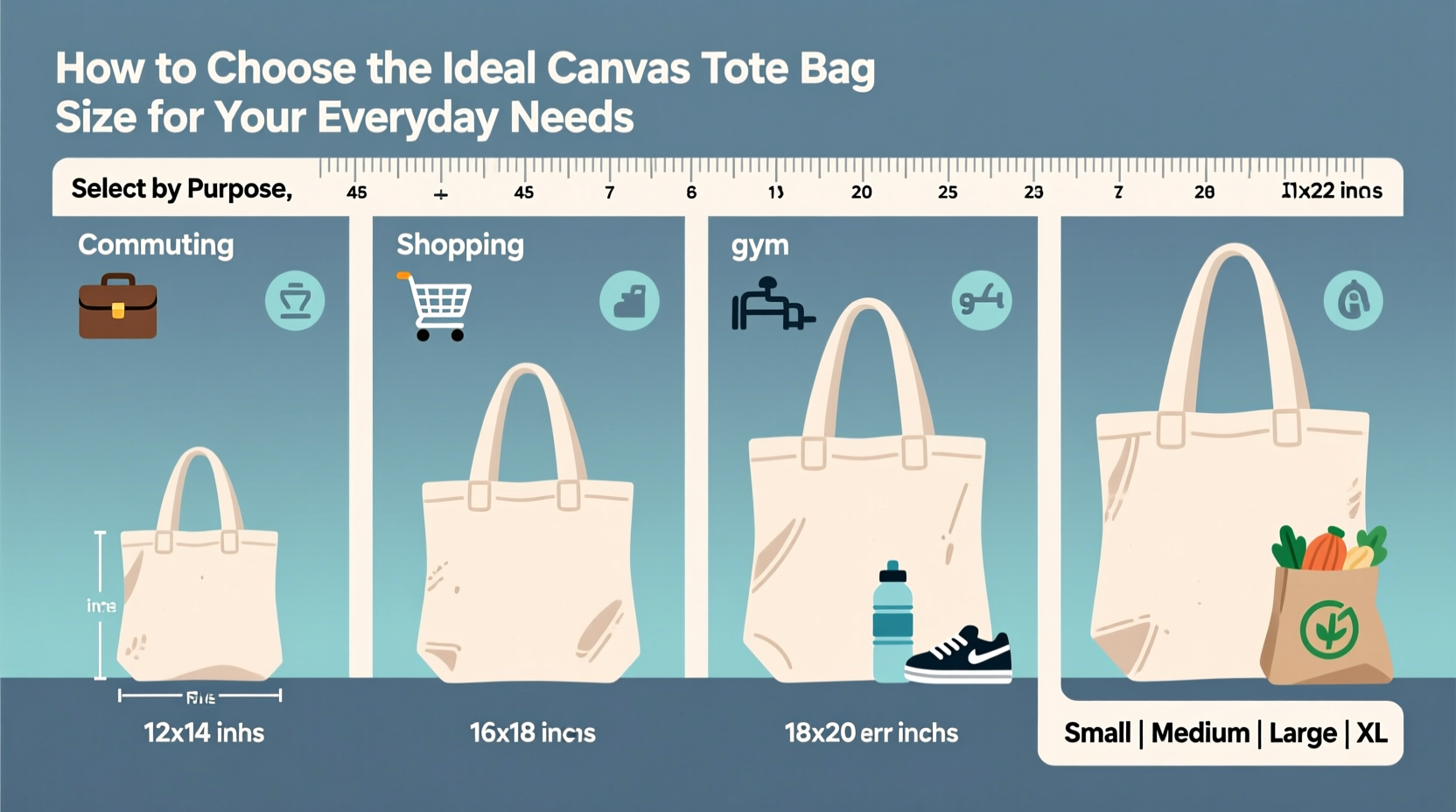
Tote bags come in a wide range of sizes, typically categorized by height, width, and depth. Most manufacturers label them as small, medium, large, or extra-large, but these terms vary across brands. To avoid confusion, focus on actual measurements—usually listed in inches or centimeters.
A standard small tote measures around 10” x 12”, suitable for carrying essentials like a wallet, phone, keys, and a small notebook. Medium totes (13” x 15”) offer more room and are popular for daily commutes, fitting laptops up to 13 inches, water bottles, and light snacks. Large totes (16” x 18” or more) are designed for heavy-duty use—ideal for grocery shopping, gym gear, or weekend trips. Extra-large totes exceed 20” in height and are best reserved for specific purposes like farmers' market hauls or beach days.
Matching Size to Your Lifestyle
The ideal tote isn’t determined by fashion alone—it should reflect your routine. Consider your typical day: where you go, what you carry, and how long you’ll be out. A mismatch between bag size and usage leads to discomfort, overpacking, or underutilization.
- For students: A medium tote (13”–15”) works well for textbooks, notebooks, and a laptop. Look for reinforced handles and internal pockets for organization.
- For professionals: A structured medium or large tote (14”–16”) accommodates a 13”–15” laptop, documents, and a change of clothes. Opt for sleek designs that transition from office to evening.
- For parents: Large totes (16”+) are essential for carrying diapers, wipes, snacks, and toys. Water-resistant lining is a bonus for spills.
- For shoppers: Extra-large totes (18”+) with sturdy straps handle heavy grocery loads. Foldable versions are convenient for impromptu purchases.
- For travel: Choose a large tote as a personal item or day bag. It should fit a tablet, water bottle, jacket, and passport holder without bulging.
“The best tote bag disappears into your routine—light enough to carry, spacious enough to trust.” — Lena Patel, Sustainable Fashion Consultant
Key Factors to Evaluate Beyond Size
While dimensions are crucial, other design elements impact functionality and comfort:
| Feature | Why It Matters | Ideal for |
|---|---|---|
| Handle Length | Determines carry style (hand, shoulder, crossbody) | Longer handles suit shoulder carry; shorter for hand grip |
| Material Weight | Heavy canvas adds durability but increases overall weight when loaded | Daily commuters may prefer lighter blends |
| Interior Pockets | Help organize small items like keys, pens, or phone | Professionals and students benefit most |
| Base Structure | Flat, reinforced bottoms prevent sagging and protect contents | Grocery totes, laptop carriers |
| Closure Type | Zippers or snap buttons add security; open tops allow quick access | Use zippers in crowded areas or when carrying valuables |
Real-Life Example: Choosing the Right Tote for a Freelancer
Sophie, a freelance graphic designer based in Portland, used to carry a large 18” canvas tote every day. She packed her 15” laptop, sketchbook, charger, water bottle, and lunch. While everything fit, she often complained of shoulder strain and found the bag too bulky on public transit. After reassessing her needs, she switched to a structured medium tote (14” x 12”) with padded laptop sleeve and external pocket for her water bottle. She began leaving non-essentials at her co-working space and using a foldable tote for grocery runs. The change reduced her load by nearly 30%, improved posture, and made her daily commute more enjoyable.
This case illustrates that the “ideal” size isn’t always the biggest—it’s the one that aligns with realistic needs and promotes ergonomic comfort.
Step-by-Step Guide to Selecting Your Ideal Tote Size
Follow this five-step process to find your perfect match:
- Inventory Your Daily Carry Items
List everything you bring with you on an average day. Include laptop, wallet, umbrella, reusable bottle, etc. - Measure Your Essentials
Use a ruler or tape measure to determine the combined volume. Stack your laptop, notebook, and bottle to simulate packing. - Determine Primary Use
Will the tote be used for work, shopping, travel, or casual outings? Prioritize features accordingly. - Test Dimensions Against Real Bags
If shopping in-store, bring your items to test fit. Online? Compare product dimensions to a bag you already own and like. - Consider Long-Term Versatility
Choose a size that can adapt to occasional heavier loads without being oversized for daily use.
Common Mistakes to Avoid
- Choosing style over function: A beautiful oversized tote may look chic, but if it encourages overpacking, it defeats its purpose.
- Ignoring weight distribution: Wide, padded handles reduce shoulder pressure, especially for medium and large totes.
- Overlooking portability: If you frequently fold or store your tote, ensure it’s made of flexible canvas that won’t crack when bent.
- Assuming one size fits all: You may need multiple totes for different purposes—one compact for evenings, one larger for errands.
Frequently Asked Questions
Can a canvas tote fit a 15-inch laptop?
Yes, but only if it’s a medium or large tote (14”+ height) with a dedicated laptop compartment or sufficient internal space. Always verify interior dimensions before assuming compatibility.
Is a bigger tote always better for groceries?
Not necessarily. While large capacity helps, oversized bags can become unwieldy when full. Look for reinforced stitching, double-layered canvas, and long handles that distribute weight evenly across the shoulder.
How do I know if a tote is too big for daily use?
If you consistently carry less than half the bag’s volume, or if it sways when walking, it’s likely too large. A well-sized tote feels balanced and stays close to your body.
Final Checklist Before Buying
- ✅ Measure your essential items
- Know the total footprint of what you carry daily.
- ✅ Define your primary use
- Work, school, shopping, or multi-purpose?
- ✅ Check handle comfort
- Ensure they’re long enough for shoulder carry and thick enough to prevent digging.
- ✅ Verify interior structure
- Pockets, sleeves, and base stability improve usability.
- ✅ Assess material quality
- Look for tightly woven, medium-weight canvas (8–12 oz) for durability without excess bulk.
Conclusion: Make the Right Choice Today
Selecting the ideal canvas tote bag size isn’t about following trends—it’s about designing a smarter, more comfortable daily routine. By aligning bag dimensions with your actual needs, you gain efficiency, reduce physical strain, and extend the life of your tote. Whether you're replacing an old favorite or buying your first high-quality canvas bag, take the time to assess, measure, and prioritize function alongside style.




 浙公网安备
33010002000092号
浙公网安备
33010002000092号 浙B2-20120091-4
Comments
No comments yet. Why don't you start the discussion?